Hello,
I’m Lee Juri, the head doctor at Seoul Bardi Dental Clinic.
The start of orthodontic treatment begins
with bonding brackets to the teeth.
But...
It seems there are many questions about this.
From person to person,
because the sequence of bracket placement varies depending on the patient,
people wonder,
“Is this really the right way?”
It seems like many of you are curious.
Can brackets be placed all at once?
I had the upper and lower teeth bonded separately.
Yes, both are possible.
Today’s post is about bracket placement.
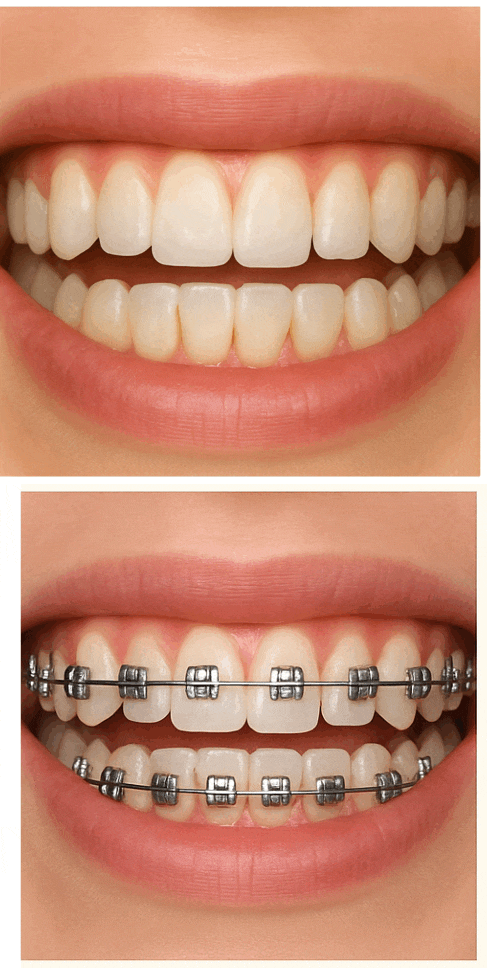
<Table of Contents>
| Bracket placement is the beginning of orthodontic treatment. |
|---|
| 2. The sequence of bracket placement changes depending on the diagnosis |
Bracket placement: the first step is the most important.
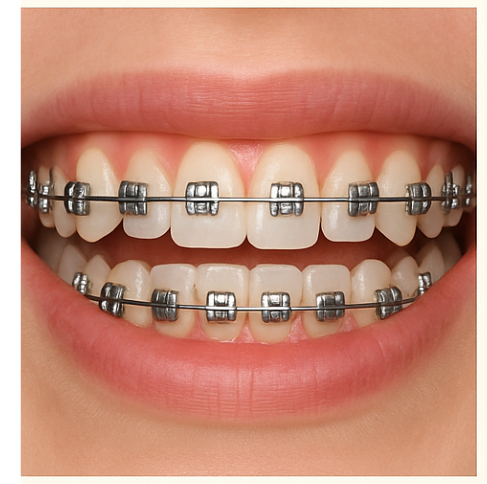
Upper and lower bracket placement
You may think braces are all bonded at once, all the way to the molars on the upper and lower teeth, but that is not the case.
I focus carefully at every moment, but
the moment I attach the brackets to the teeth
is the moment that requires the most precision.
Anything at the very beginning is a tense moment
for both the patient and me ^^
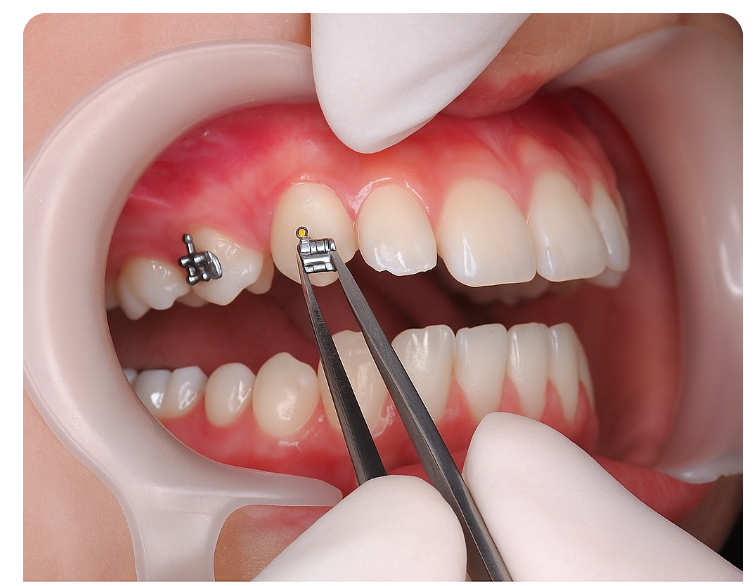 It’s important to choose the bracket position ^^
It is not something that can be easily removed and reapplied like a sticker,
and if the position is even slightly off,
it affects the orthodontic force.
(The result can be reversed.)
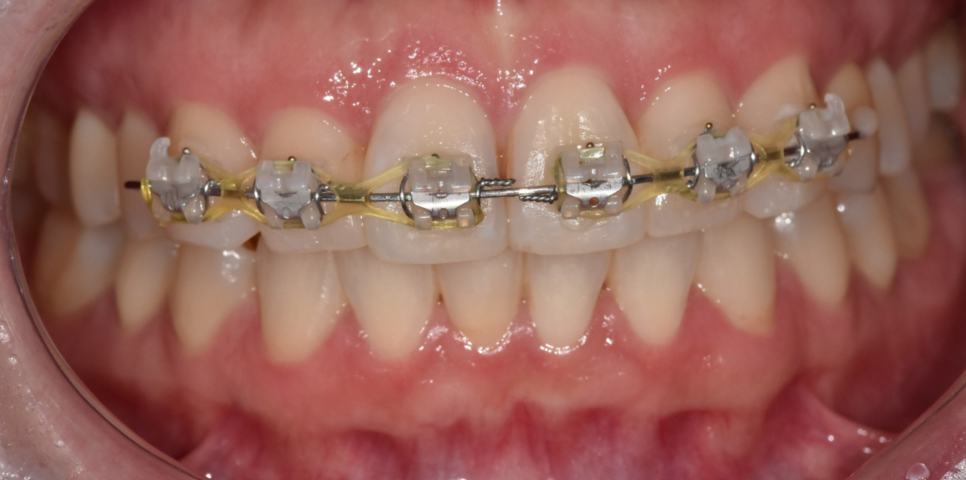
Only the upper arch bonded on 250818
Why are braces sometimes attached separately?
When placing braces, some patients have both the upper and lower teeth bonded at once,
while others have only the upper teeth bonded first and the lower teeth later.
Sometimes the molars are even bonded last.
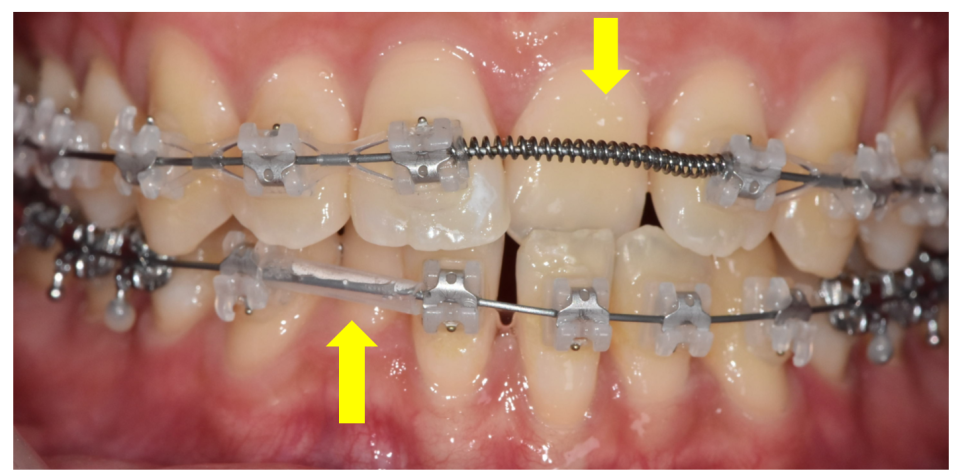
A case where certain teeth were not bonded yet on 250721
As shown in the photo, certain teeth may be bonded later.
Separating the bonding process is not for convenience in treatment,
but a process to improve treatment effectiveness and stability.
There are four reasons.
- To control tooth movement step by step
Braces apply force to move teeth little by little.
If braces are placed on all teeth at once,
force is delivered simultaneously, which can increase discomfort,
and tooth movement may become unstable.
Because tooth movement can involve issues such as root resorption,
this is one way to move teeth more safely.
- To prevent occlusal interference (contact/collision)
When the upper and lower teeth are bonded at the same time,
the braces may hit each other, come off, or make chewing uncomfortable.
If the patient has severe malocclusion,
interference may occur!
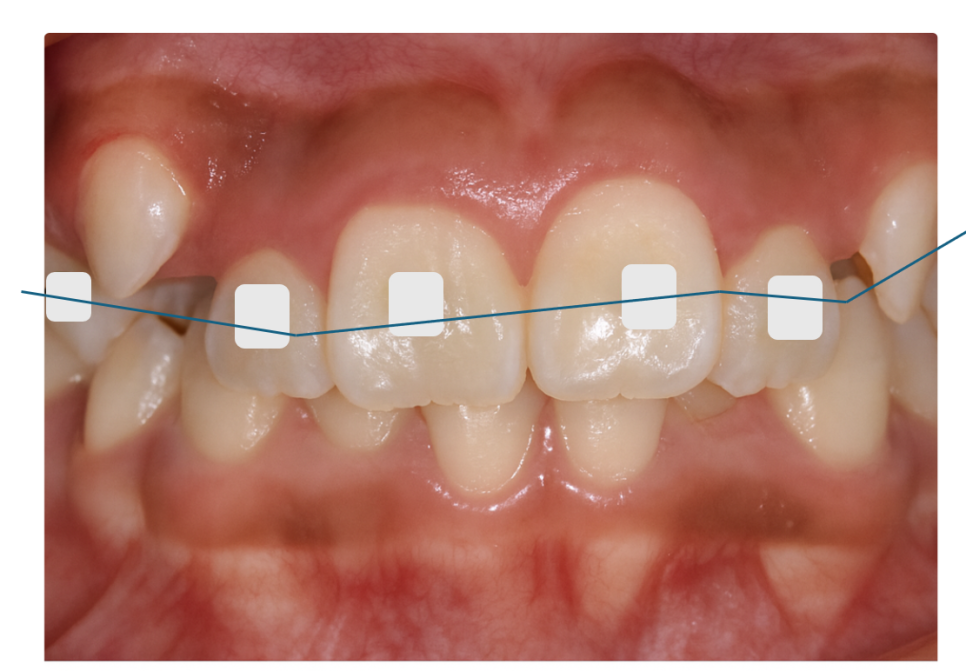
Sometimes only the front teeth are bonded first.
- Based on treatment priorities
If there are protruding teeth or areas with severe crowding,
we may start orthodontic treatment from the areas that need alignment first.
In other words, the bonding sequence changes depending on the patient’s condition and treatment plan.
(The third reason is the biggest!)
- To help the patient adjust
When braces are first attached, pain and discomfort from the foreign-body sensation can be significant.
Questions about pain on the first day of braces
are asked very often.
Allowing an adjustment period and bonding them in stages
can make the patient more comfortable.
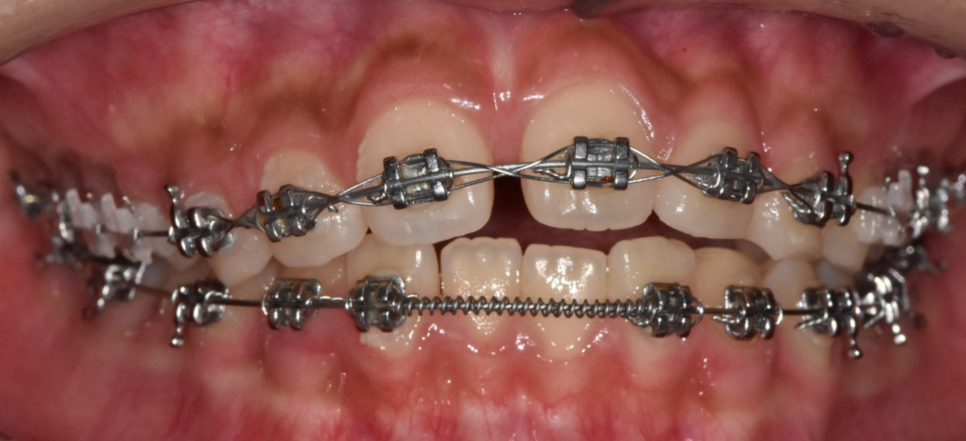
250804
Cases where the upper and lower teeth are bonded at once are when
the dental alignment is relatively simple
and
no major movement is needed,
when the risk of occlusal interference is low,
and when it is judged that the patient can adjust relatively well.
Ultimately, the reason the sequence of bracket placement differs from patient to patient
is that the treatment plan and bite condition are both different.
All you need to remember is that it is intentionally done differently
in order to make treatment more effective.
It is not faster to bond everything at once,
and bonding in stages does not delay treatment.
To finish orthodontic treatment sooner,
keep your dental appointments well
and
if you wear your elastics diligently,
it may be completed earlier than the estimated period.
Rather than worrying, “Why were mine placed separately?”
please rest assured that your treatment is being carried out according to the optimal plan for your teeth~~
The goal is the same either way.
This has been Lee Juri, head doctor.
Thank you!

Separately or all at once for braces? Click here if you’re curious