Blue Bite Blocks for Orthodontic Treatment: Everything You Need to Know, Organized.
Hello,
I’m Lee Juri, the CEO and head doctor of Seoul Bardi Dental Clinic.
We receive many complaints from patients about discomfort during orthodontic treatment.
Among them, one of the most notorious is a device that many patients say causes a lot of discomfort.
It’s the blue resin that people keep asking, “When do I get this removed?” even though it was only added once.
Today, I’ve organized what this resin is
and why it is used.
<Contents>
| 1. What is the blue thing attached to the teeth? |
|---|
| 2. Frequently asked Q&A |
What is the blue thing attached to the teeth?
A deep bite where the upper and lower teeth bite too deeply
This is called a deep bite.
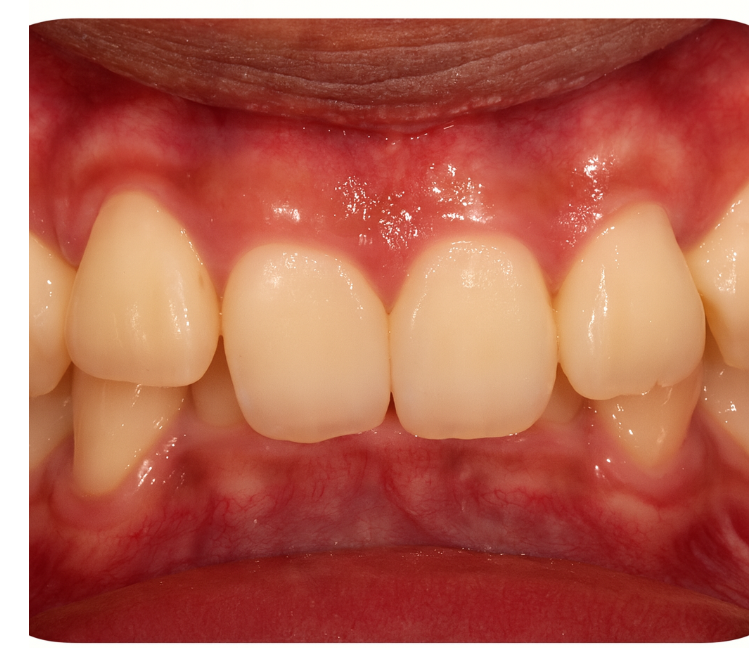
A deep bite where the lower front teeth are not visible
When the upper front teeth cover the lower front teeth excessively,
(in severe cases, the lower front teeth may not be visible.)
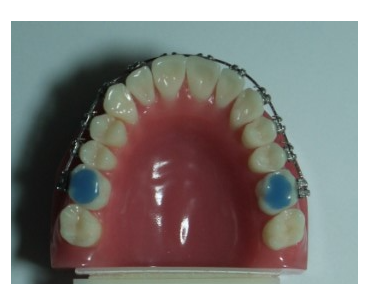
At this time, blue resin is selectively attached to the molars.
It prevents the upper and lower teeth from hitting each other
by keeping the molars from touching.
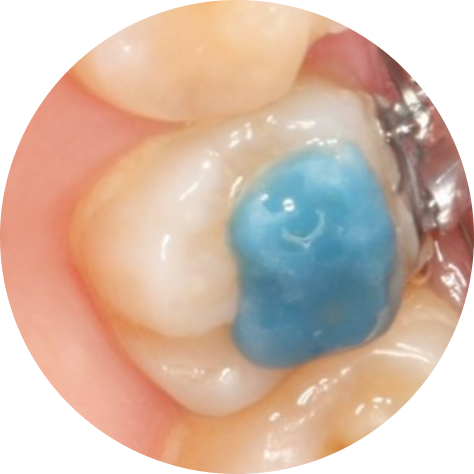
If blue resin is not attached to the teeth,
the upper and lower appliances can collide and break.
It is used when the bite needs to be artificially opened
so the teeth can move in the desired direction.
You can think of it as adjusting the position of the teeth.
It really does feel like having gum stuck on your teeth.
Bite blocks are the number one factor that makes orthodontic treatment uncomfortable.
Because the bite blocks touch first,
food does not cut well when chewing,
speech feels awkward,
and the teeth feel like they do not meet properly.
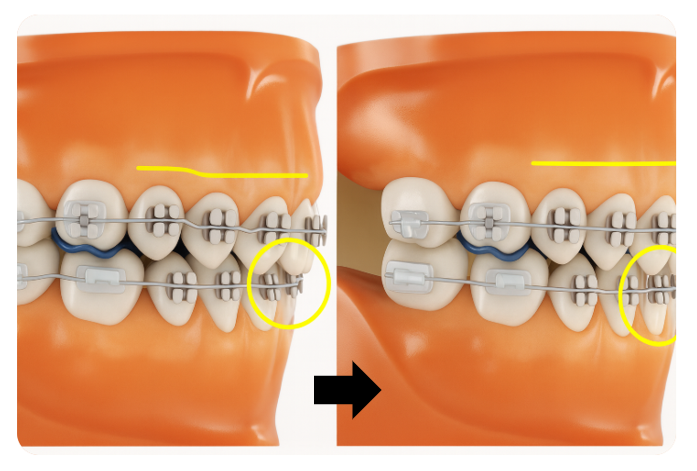 The space is secured by attaching blue resin instead of the front teeth touching each other.
Frequently asked Q&A
When do you remove it?
The space is secured by attaching blue resin instead of the front teeth touching each other.
Frequently asked Q&A
When do you remove it?
This is the question I hear most often ^^
It is not a device that is attached for life.
When the bite stabilizes,
there is no more risk of bracket collision,
and the tooth movement goals are achieved,
it is removed.
It is usually attached in the early stage of orthodontic treatment, when brackets are placed.
In the finishing stage of treatment,
it can actually become an obstacle, so it is removed in most cases.
I can’t eat well...
At first, eating is indeed inconvenient.
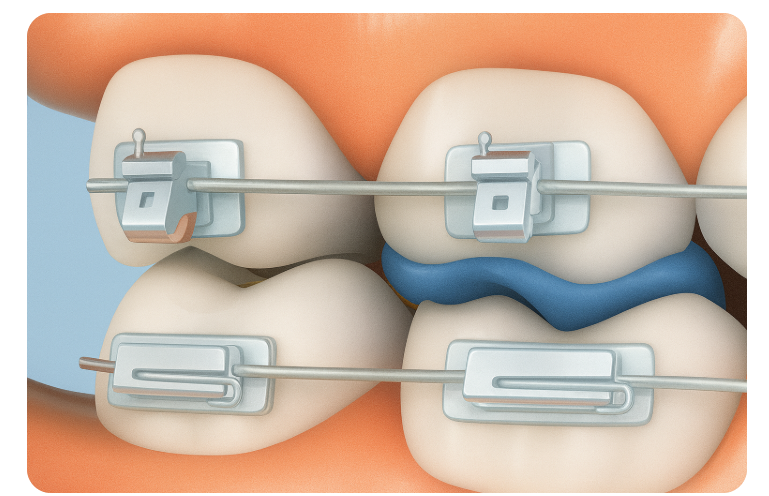 There is space secured between the molars, right?
This means chewing may not feel easy.
There is space secured between the molars, right?
This means chewing may not feel easy.
I’ve heard the answer, “I can’t chew my rice,” very often.
Even though people are creatures of adaptation,
by the time later comes, you may even wonder, “How do they eat like that...?”
they end up eating quite well.
You gradually figure out your own tips.
Until then, it is better to chop up food
and eat it in smaller pieces,
or focus on soft foods.
At this time, sticky and hard foods can cause
this blue resin to come off,
so it is better to avoid them.
Are there any side effects?
If it is used for too long,
it can put strain on the temporomandibular joint.
Because it is a temporary device,
after removal, the bite returns to its original state.
Attaching the device does not weaken the teeth.
It is the number one thing that makes orthodontic treatment uncomfortable, but,,,.
It plays an important role in making orthodontic treatment faster and safer.
Discomfort usually improves within 1–2 weeks,
and it helps make treatment faster
and more effective.
If using it feels very uncomfortable,
it would be very helpful to discuss the direction of treatment with the doctor
at the clinic where you are currently receiving orthodontic care.
Did that answer all of your questions today?
Thank you for reading.
| If you miss early treatment for an underbite in children, it can lead to surgery.#childrenunderbite #childrenunderbitetreatment #underbitesurgery #childrenunderbite #childrenunderbitetreatment #underbitesurgery Edit Like 2 Write comment Send to cafe Send to Keep Send memo Send other Expand Edit Delete Settings | |
Blue bite blocks for orthodontic treatment: Everything you need to know, organized.