Implant movement, if it falls under this case, it can be saved without reoperation.
Hello,
I’m the director of Seoul Vardy Dental Clinic.
If a normally functioning implant suddenly
starts moving,
you may have found yourself searching late into the night,
wondering, ‘Did something go seriously wrong?’
or ‘Do I have to go through that difficult surgery again?’
To get straight to the point,
an implant does not necessarily need reoperation
just because it is moving.
Fortunately, if it falls under ‘this case,’
it can be solved very simply without surgery.
The simple way to save it without reoperation,
I’ll explain it step by step from here,
so please take a moment to read.
- Why implants move and how to respond
Implant movement, if it falls under this case, it can be saved without reoperation.
When an implant moves,
we face two possible paths.
- Screw loosening
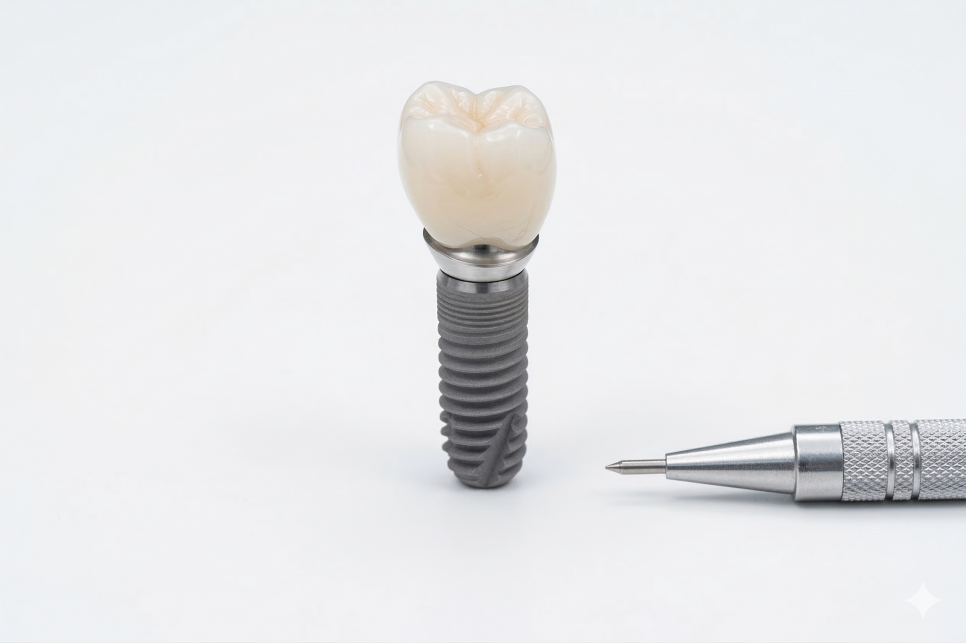
This is when the screw between implant components
has loosened.
Fortunately, in this case,
it can be fixed simply by retightening the screw
without surgery.
- Peri-implantitis
This is when gum disease causes the surrounding bone to dissolve,
so the implant fixture itself becomes loose.
In this case, unfortunately, the existing implant must be removed
and replacement placement considered.
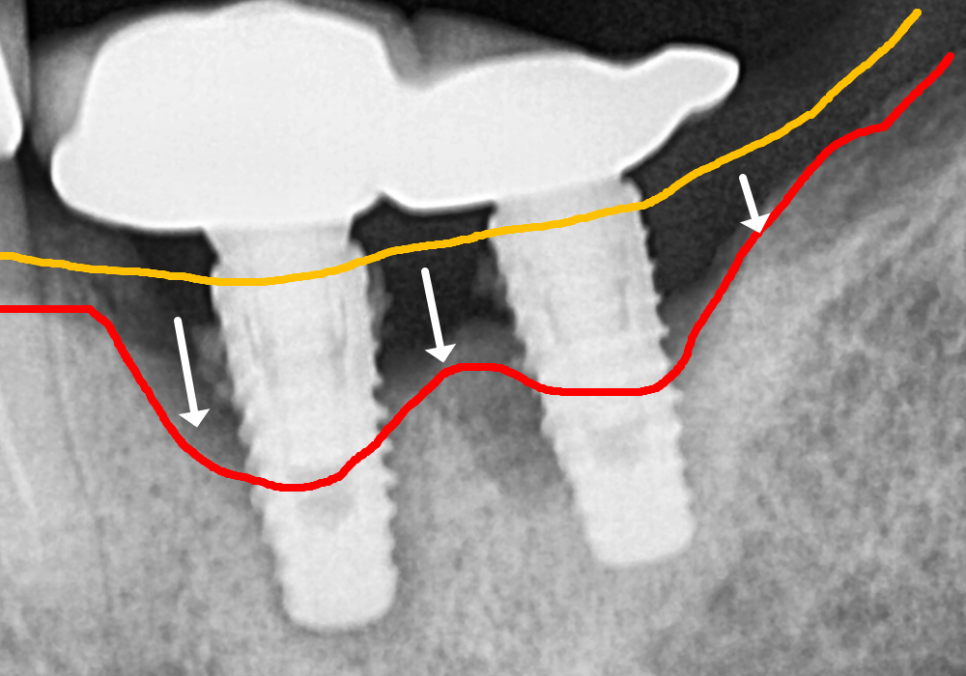
Fortunately, the loosening that many people experience is often the first case,
that is, ‘screw loosening.’
- If the screw comes loose, how is it tightened?
Implant movement, if it falls under this case, it can be saved without reoperation.
An implant is structurally connected by screws~
Even the door hinge we use every day
can have its screws loosen over time,
and implants also receive strong force from chewing food every day
(masticatory pressure),
so the screws can gradually loosen.
In this case, you just need to retighten the loose screw,
but this is where differences in method appear depending on the clinic!
If the implant restoration is a cement type,
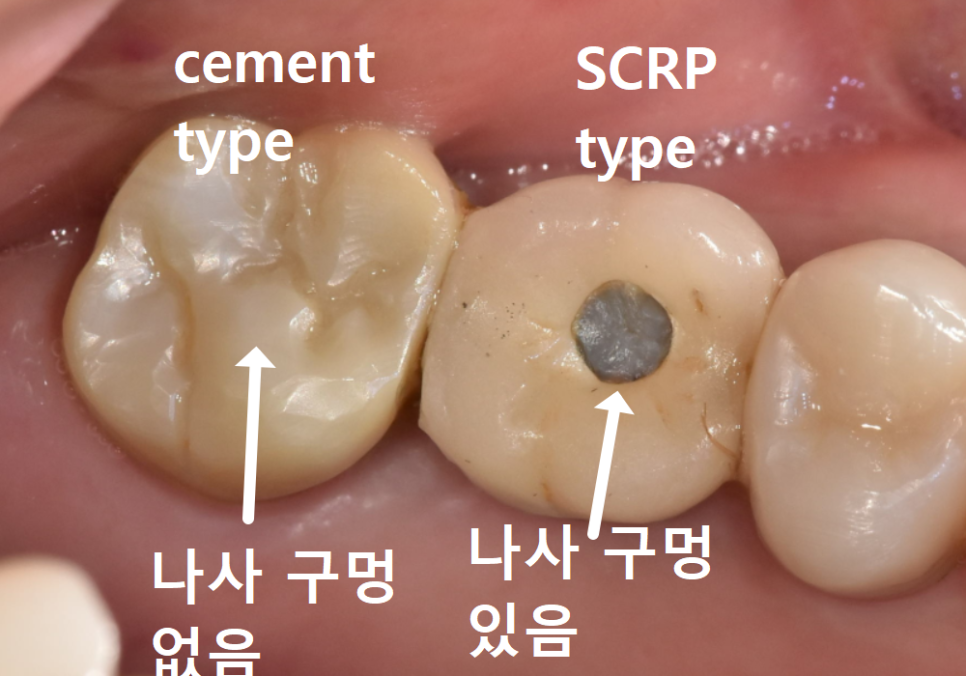
there is no screw access hole,
so the restoration may have to be removed.
It would be nice if it came off neatly,
but depending on the adhesive used,
if it is completely stuck tight!!
there is no choice but to grind it down and remove it.
That is why we prefer the SCRP method.
What is the SCRP method?
It is a method where the restoration is bonded with adhesive,
but an ‘emergency exit (screw access hole)’
is made on the chewing surface.
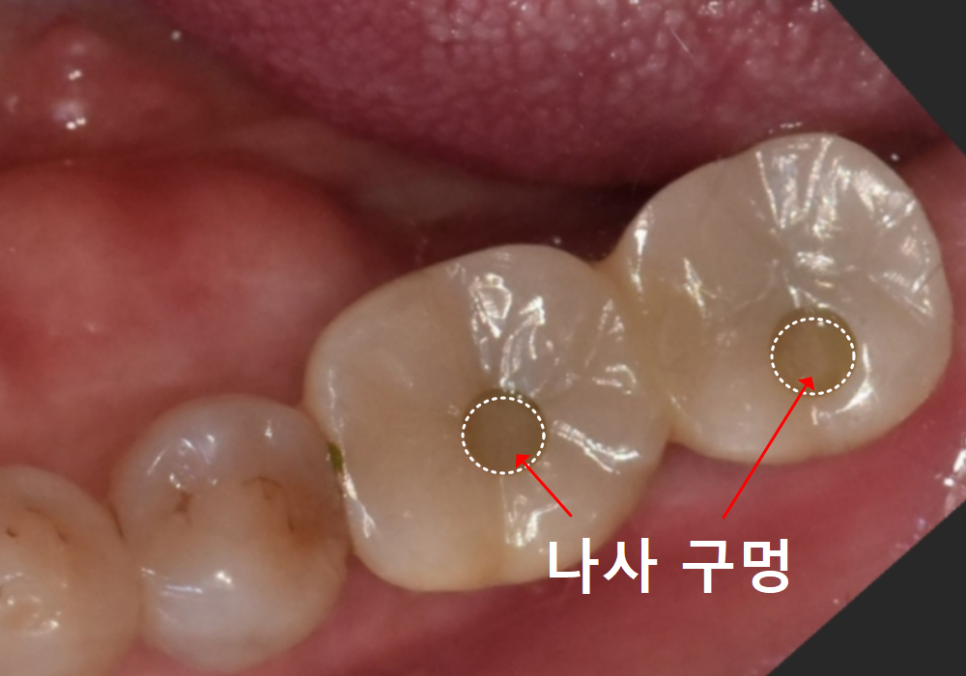
Normally, the hole is filled with a material called resin.
If the screw ever comes loose later,
you only need to tighten it through the screw access hole,
so there is no need to remove the restoration!
- Even after tightening the screw several times, it keeps loosening! (Patient case)
Implant movement, if it falls under this case, it can be saved without reoperation.
Sometimes, even after we tighten the screw firmly,
it keeps coming loose repeatedly.
This patient who recently visited us
had an implant done at another clinic,
and the screw kept loosening, so they came to our hospital~
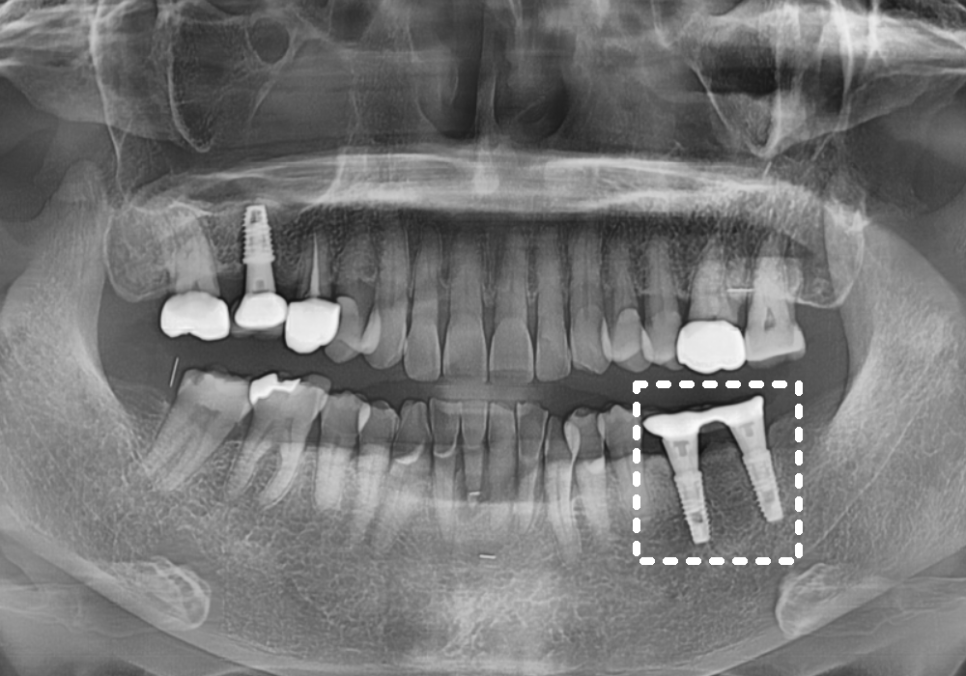
They said it had already loosened for the fourth time ㅠㅠ
Even though the screw had been tightened firmly..
why does it keep loosening?
After examining the inside of the mouth,
we could see that the implant restoration had been made low and small.
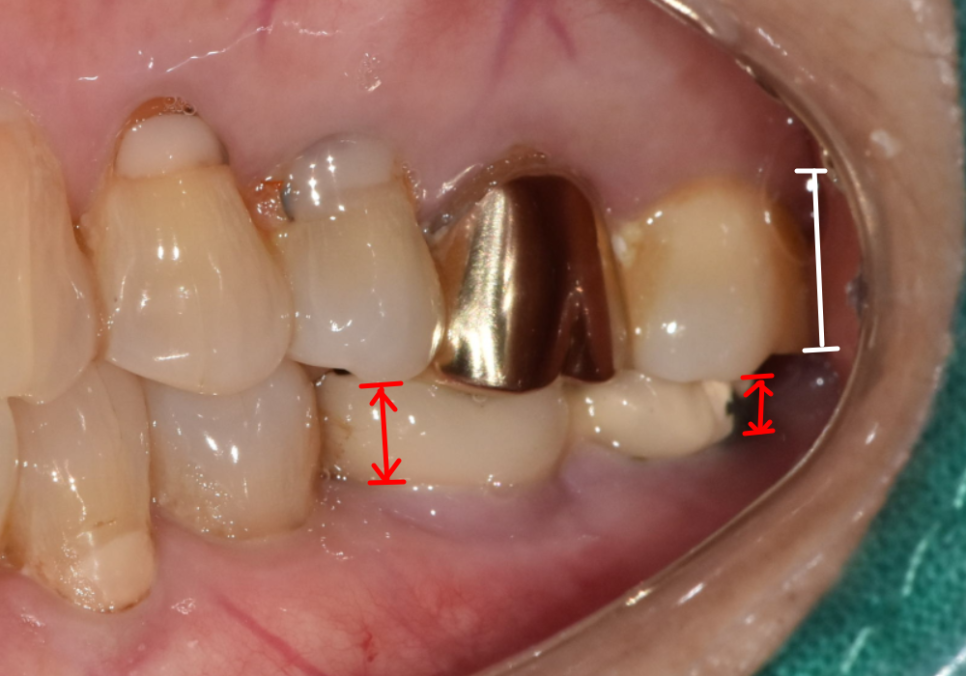
It was made of porcelain, and the broken area was visible,
and the screw access hole was fully exposed...
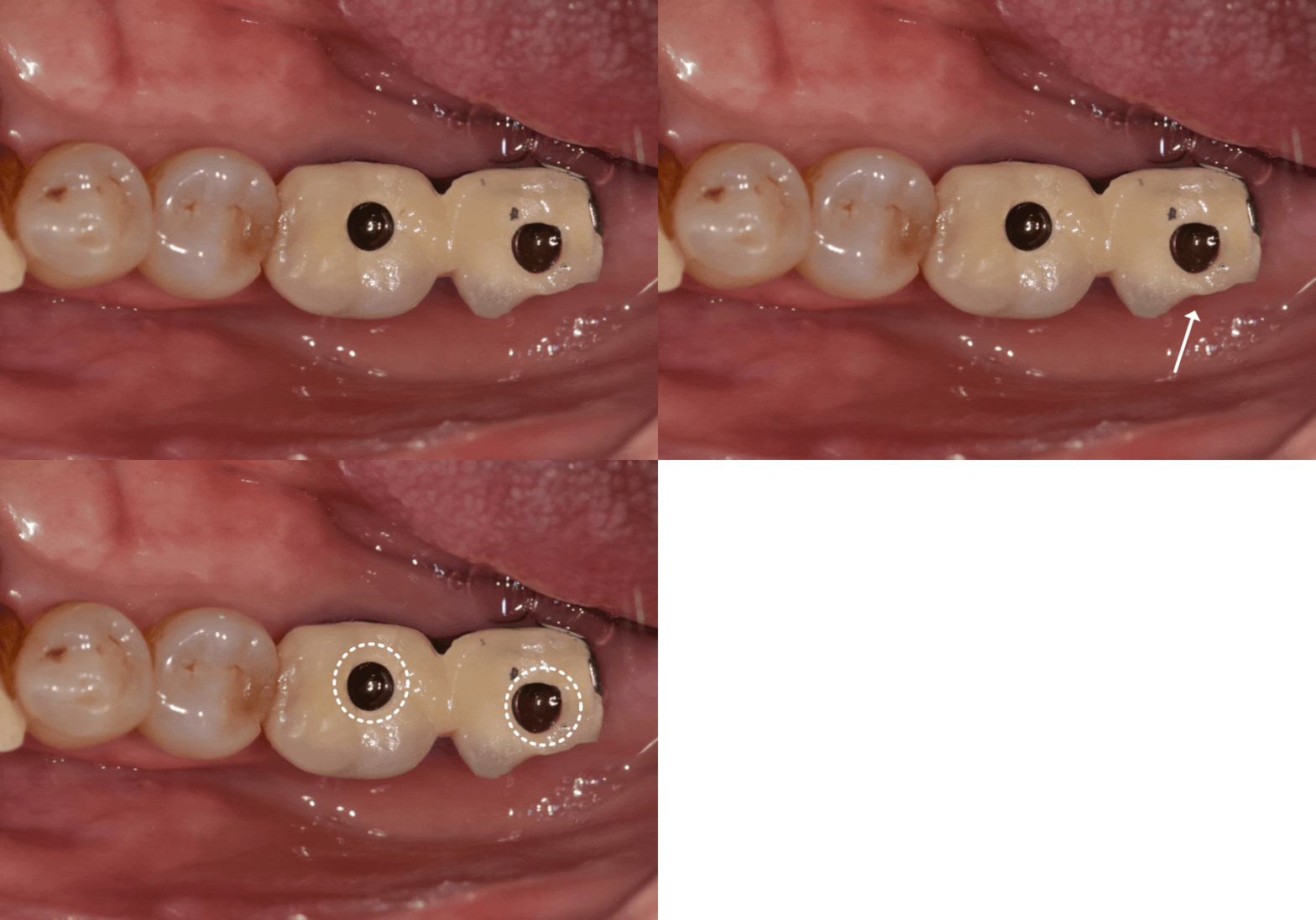
If an implant restoration is made too low,
its retention naturally decreases,
so the screw can loosen more easily~
No matter how tightly the screw is fastened,
because the implant restoration itself is low,
the passage where the screw sits is also short,
so the screw keeps loosening!
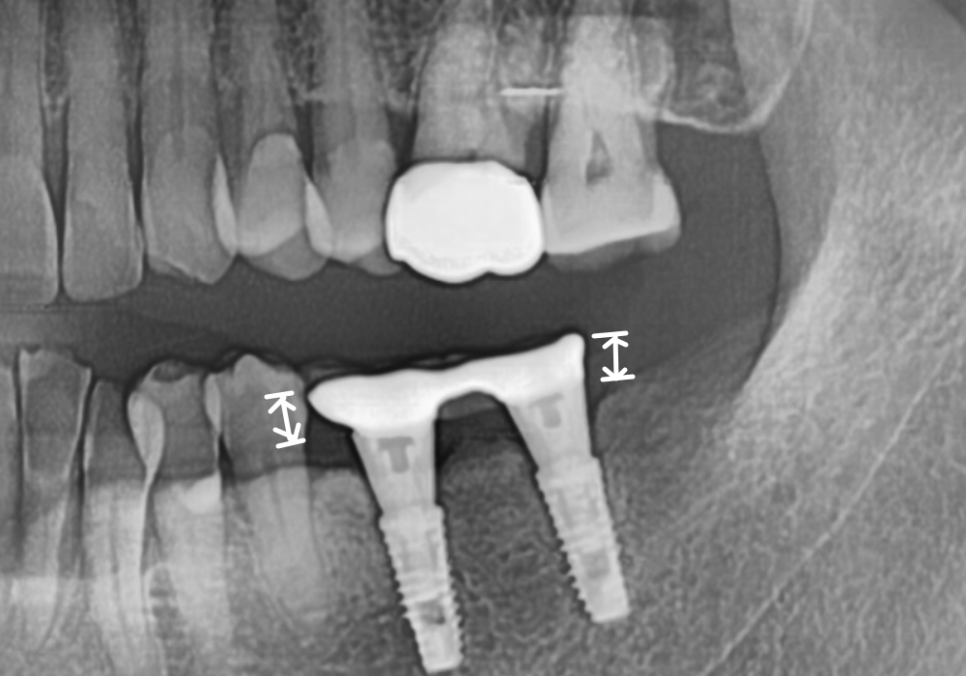
Especially, the post connecting the implant fixture and the restoration
used a prefabricated cylindrical post,
which further reduces the retention of an already low restoration...
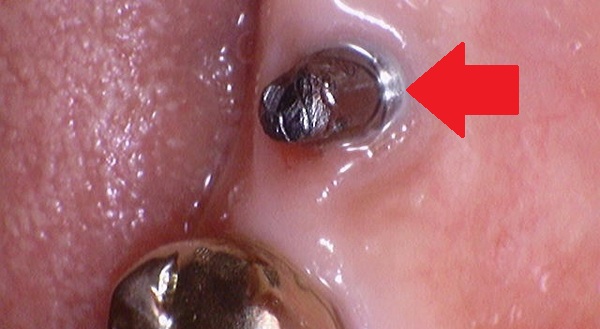
In the end, this patient decided to remove both the existing post and the implant restoration
and have a new one made.
The problem was that the opposing tooth had come down,
so the space was narrow, and if it were made as is,
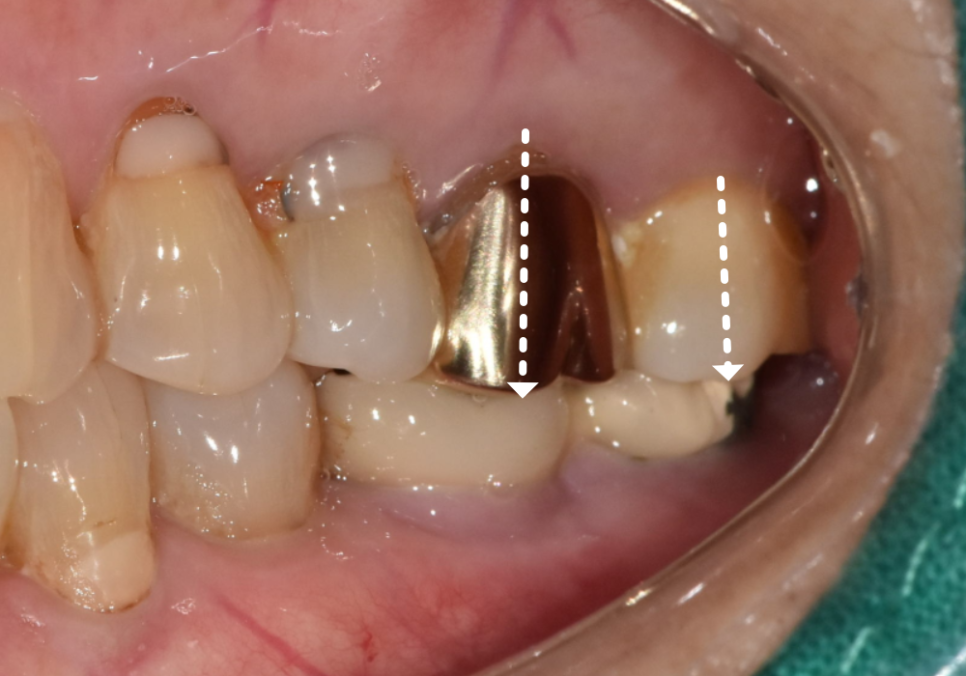
it would inevitably be made low again.
“Then isn’t it the same whether you do it again or not~??????”
Yes, that’s right. ^^
So!!!
we used the UCLA method,
which maintains strong retention even in limited space.
What is the UCLA method?
Implant movement
Normally, the [implant fixture - post - crown]
are made separately and assembled,
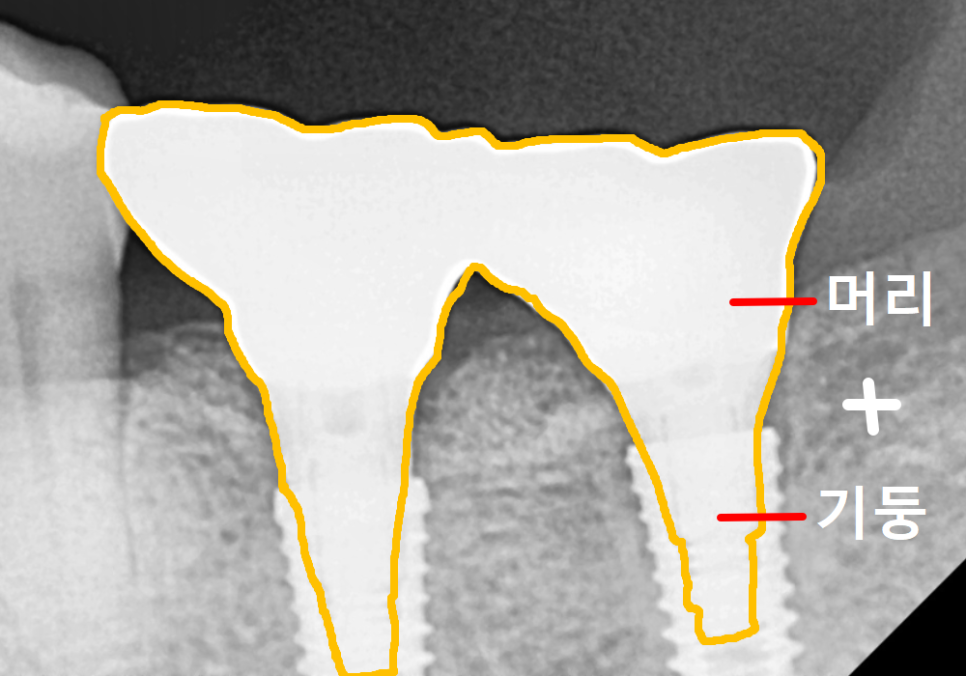
but the UCLA type makes the post and crown as one piece,
all at once.
Because the parts are connected as a single unit
without needing assembly,
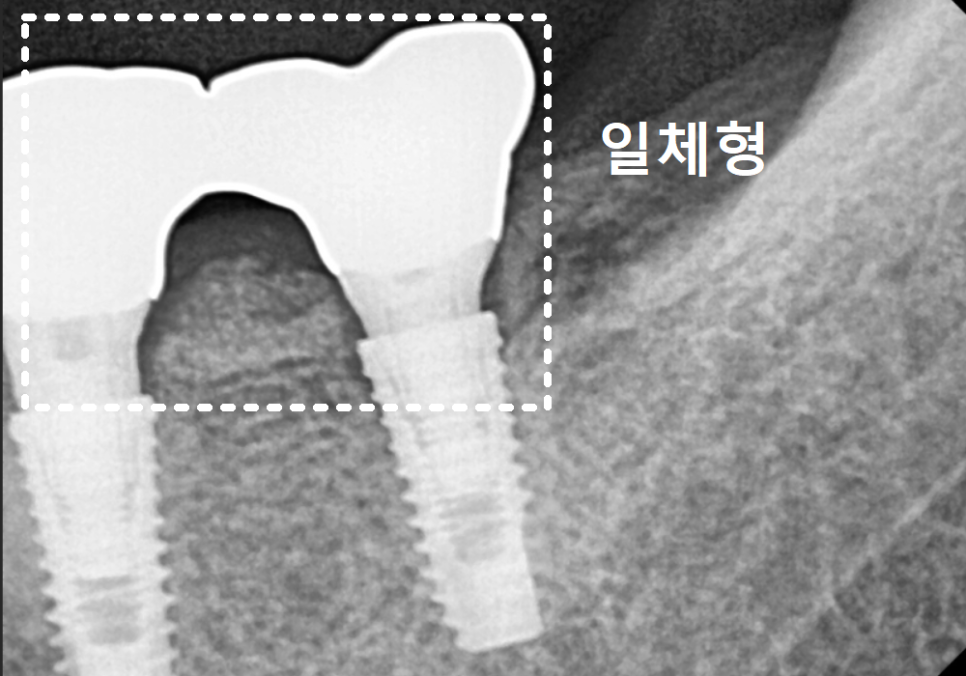
it is a very effective method
when the space between the upper and lower teeth is too narrow
and making a standard restoration is difficult.
As a result of making a durable zirconia restoration
with this UCLA method,
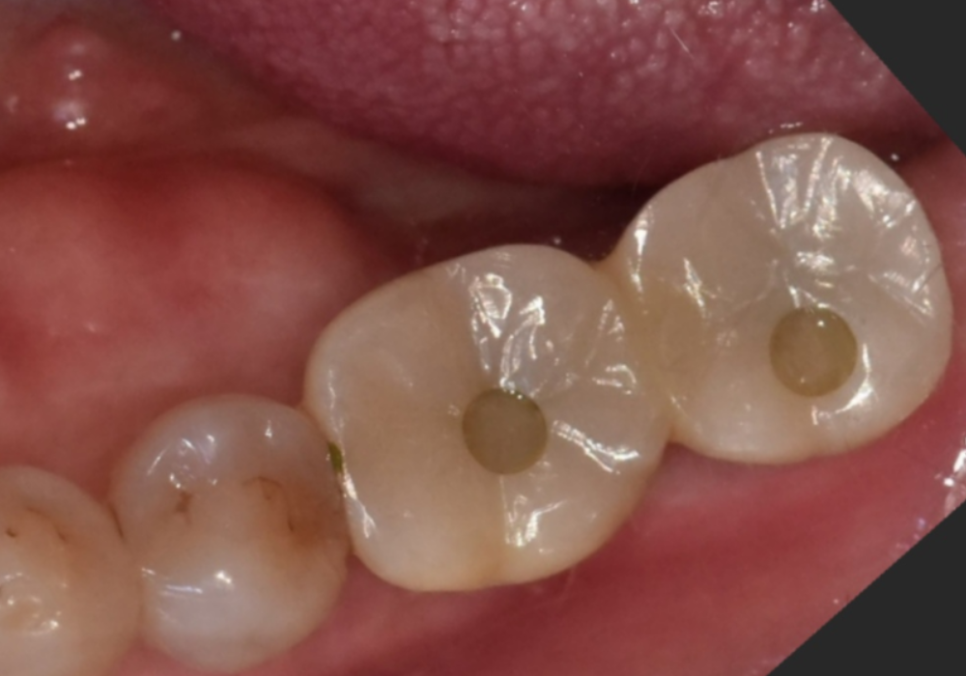
the patient has been eating comfortably
without the screw loosening even once so far. ^^
If, after long-term use, the screw does loosen,
just like with the SCRP method, we can simply tighten the screw
through the screw access hole
and fill it with a hard material, so it is easy.
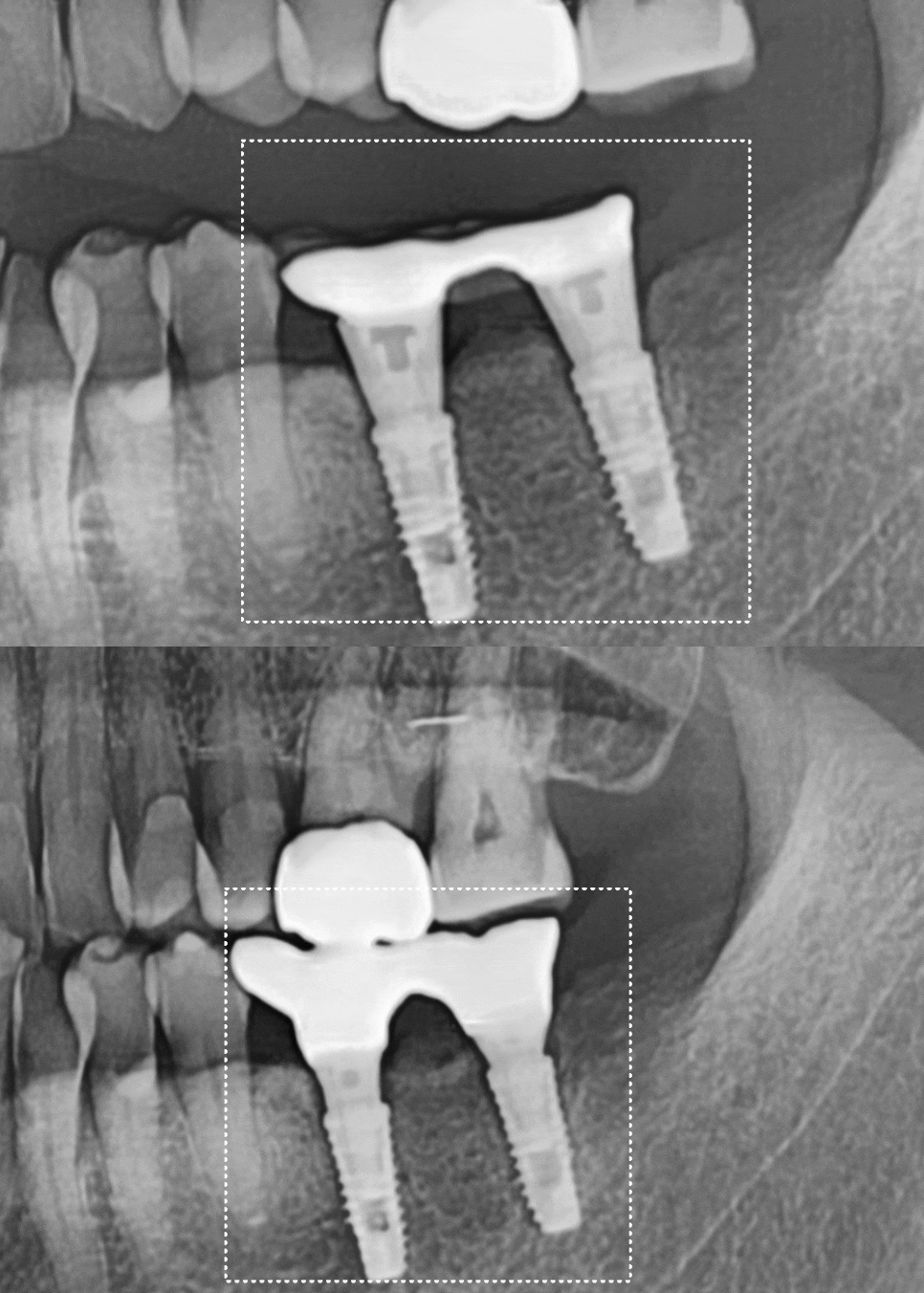 20251127 / 20260119
Just because an implant moves,
don’t be discouraged and assume it has ‘failed.’
The first step is to accurately diagnose whether it is simply a loose screw
or whether a structural improvement (such as the UCLA method)
is needed.
Before taking the heavy path of reoperation,
we will help you find the most precise and honest way
to save your current implant.
Thank you. ^^
▼Check the dental clinic location▼
Implant movement, if it falls under this case, it can be saved without reoperation.
| Go to call for an appointment |
|---|
| 02-481-4278 |
| This post was written directly by Seoul Vardy Dental Clinic for the purpose of providing medical information in compliance with Article 56, Paragraph 1 of the Medical Service Act’s advertising regulations. The information provided is recommended for reference only, and for symptom assessment and accurate management methods, please visit a medical institution and receive guidance from a medical professional. All procedures/surgeries performed at the dental clinic may involve individual risks (such as inflammation, bleeding, swelling, etc.). Please make decisions after sufficient consultation with the medical staff in advance. The treatment cases in this post were photographed with the consent of patients who completed treatment at our clinic, and the before-and-after photos were taken under the same conditions. |