Hello,
I’m the director of Seoul Bardi Dental Clinic.
When most people think of cavities, they first picture a black spot appearing on the top surface of a tooth (the chewing surface), right?
But from a dentist’s point of view,
the truly scary cavities are different.
They are cavities that form at the boundary between the tooth and the gums,
that is, on the "root side."
Why are root cavities especially dangerous?
From now on, I’ll explain the reasons and what can happen if they are left untreated.
Please take a moment to read through it!
- Why root cavities are especially dangerous
The boundary area between the gums and the tooth
is called the cervical area.
Cavities that form here are far more serious
than those in other areas.
The reason lies in the internal structure of the tooth.
A tooth is made up of enamel, dentin, and the nerve (pulp).
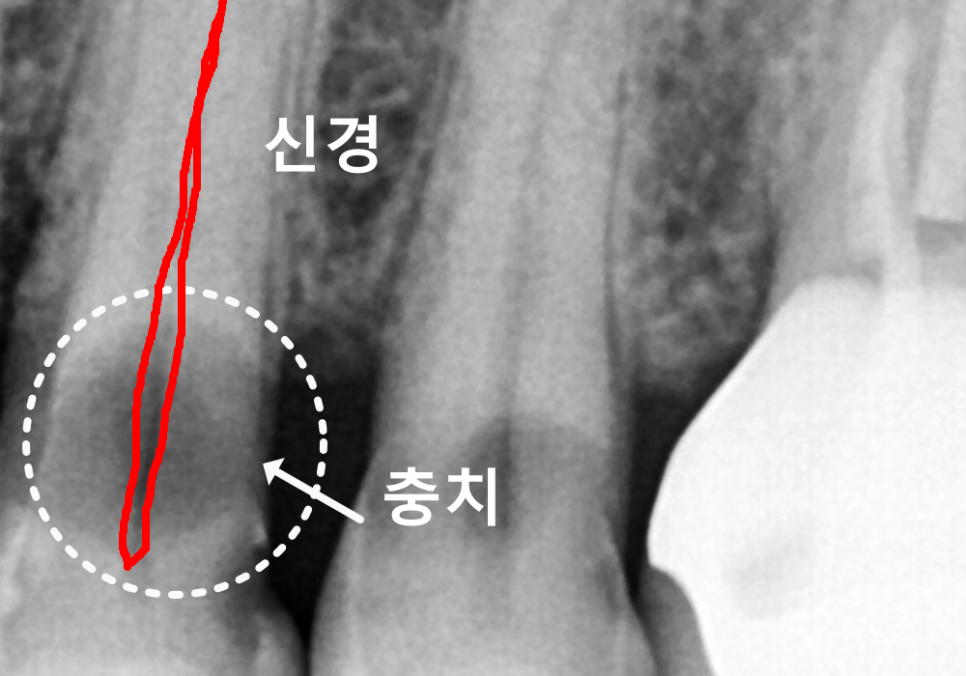
If you look at the photo above, the part marked in red
is the nerve (pulp).
From now on, take a close look at the distance between the nerve and the outer surface of the tooth~
- The crown of the tooth (occlusal surface)
When you look at the distance to the nerve,
it seems relatively far compared to the side of the tooth, right?
That is why, even if a cavity develops,
it takes a relatively long time to reach the nerve.
- The side of the tooth (cervical area)
On the other hand, because the side of the tooth is very close to the nerve,
a cavity that starts on the side can reach the nerve
in no time.
As a result, if you let your guard down even a little,
it can immediately lead to root canal treatment,
or in severe cases, the root can be eaten away,
making the tooth likely to break off suddenly.
- A case where root cavities led all the way to implants
A bigger problem with root cavities is that
patients have a hard time noticing them.
Cavities on the chewing surface can be seen in a mirror,
and pain often appears relatively early,
but root-side cavities are structurally hard to see,
and by the time pain appears,
it is often already too late to do anything.
A patient who recently visited our clinic because of tooth pain
was the same.
Even though the outside looked fine, we immediately took X-rays
to find the real hidden cause in the unseen area.
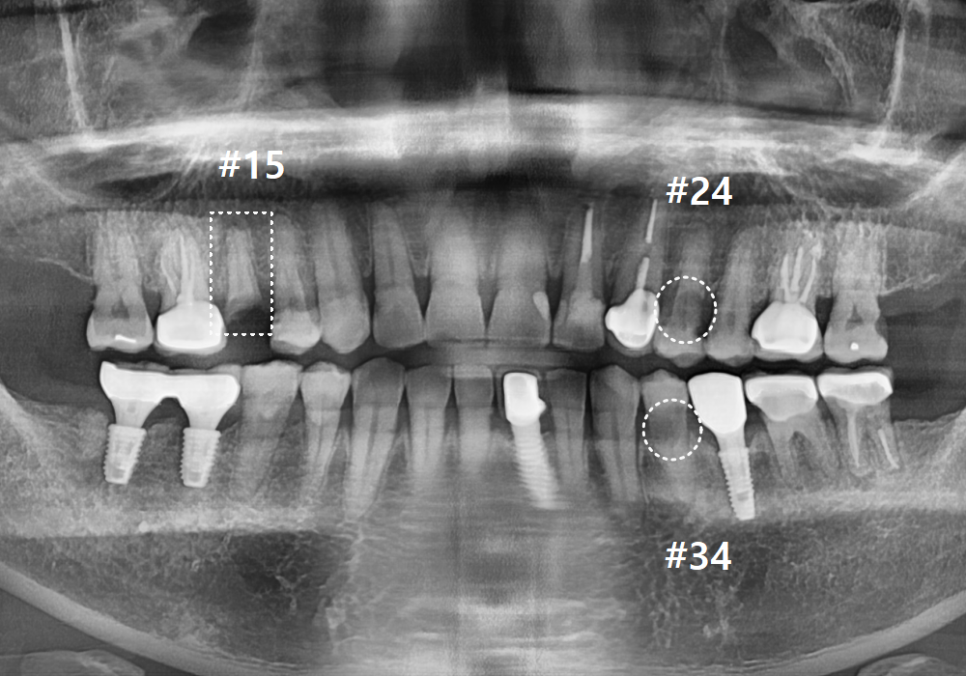
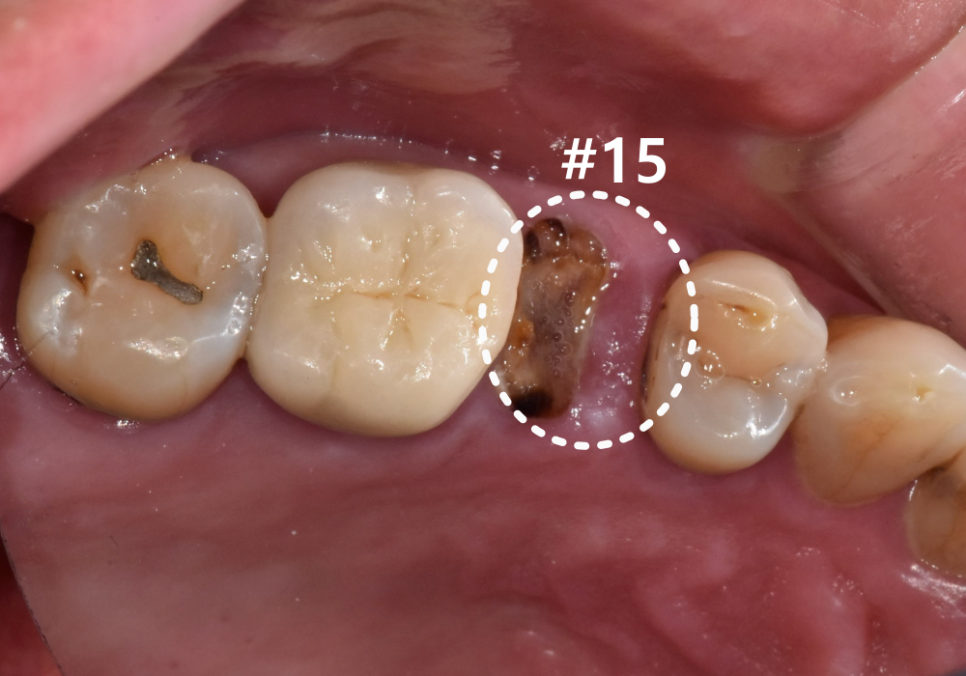
When we looked at the X-ray, the situation was quite serious.
The upper right premolar (#15) had already broken off due to decay,
leaving only the root behind,
and the upper and lower molars on the left (#24, #34)
also had deep decay progressing on the root side.
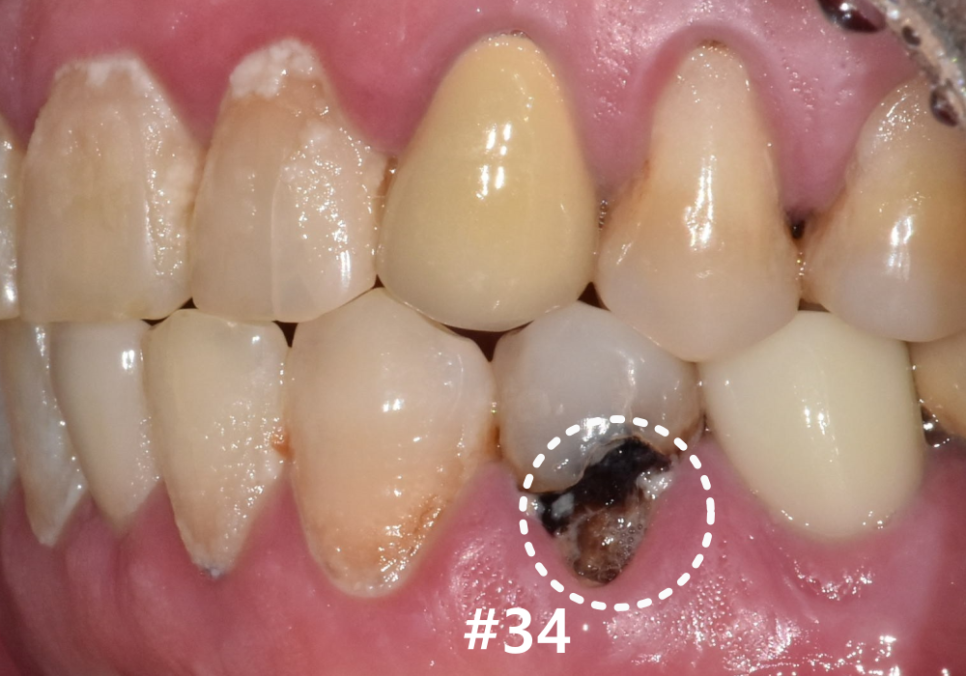
"It looked clean on the outside,
I had no idea it was this bad...ㅠㅠ"
The part that surprised the patient the most
was the upper left molar (#24).
It looked fine on the surface thanks to a resin restoration
that had been placed earlier,
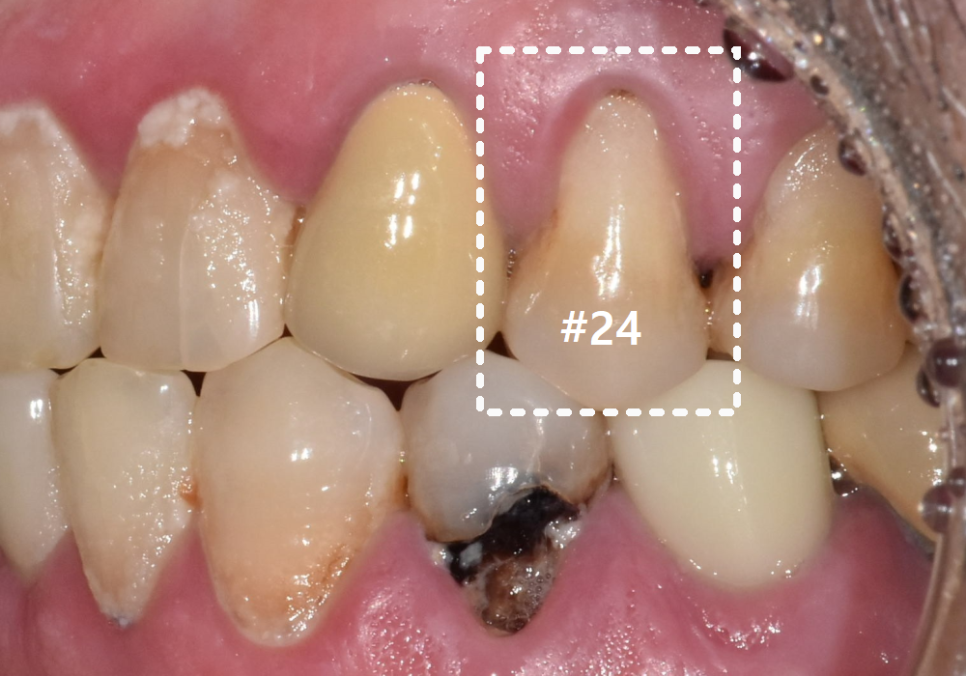
but decay had spread underneath it and everything up to the nerve
had already rotted away.
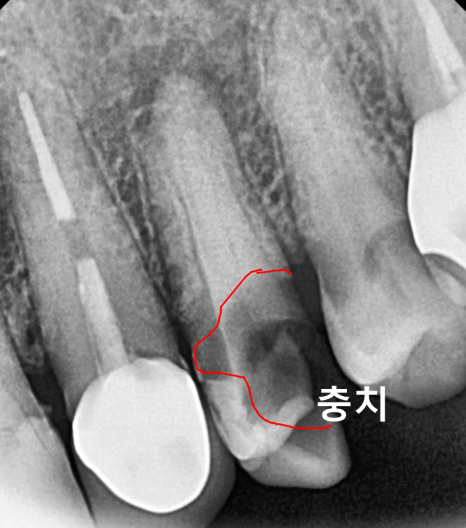
That is why, rather than examining only the inside of the mouth,
it is important to diagnose accurately even the invisible areas
through X-rays.
Treatment plan
After taking a closer look at the patient’s oral condition,
we found a thick layer of the white bacterial film called
"plaque" firmly attached at the boundary between the tooth roots and the gums!
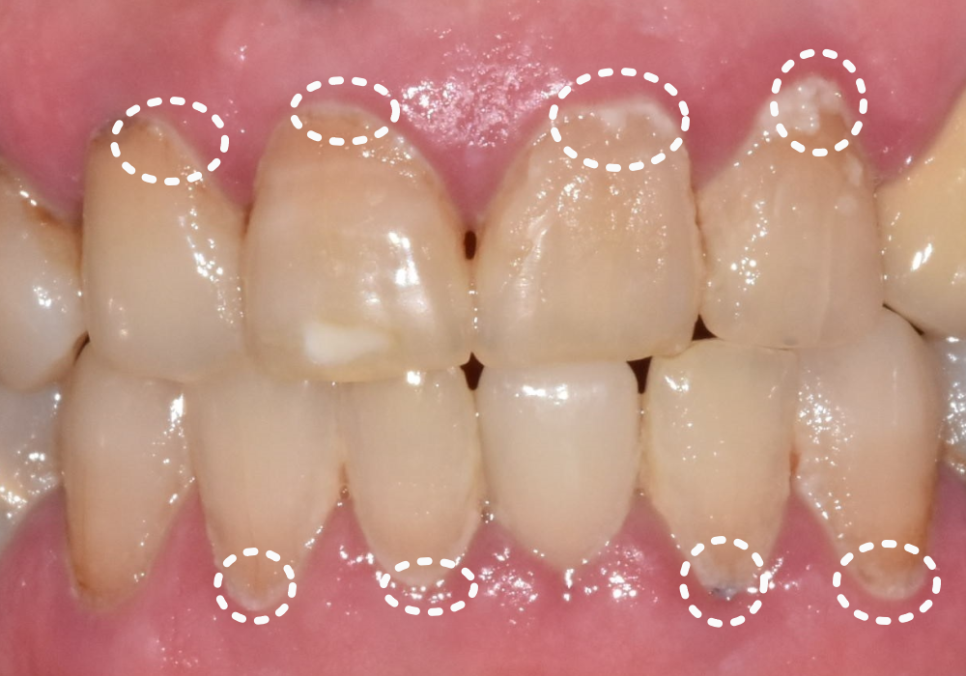
This bacterial film not only causes cavities,
but also releases toxins into the gums. ㅜㅜ
In fact, we could see that the gum margin in this patient
was generally red and swollen.
Unfortunately, the teeth that were too deeply decayed to be saved
were scheduled for extraction,
and we decided to proceed with overall gum treatment at the same time.
Treatment results
The teeth that had only roots left or whose nerves had completely decayed (#15, 24, 34)
were treated with same-day implant placement after extraction.
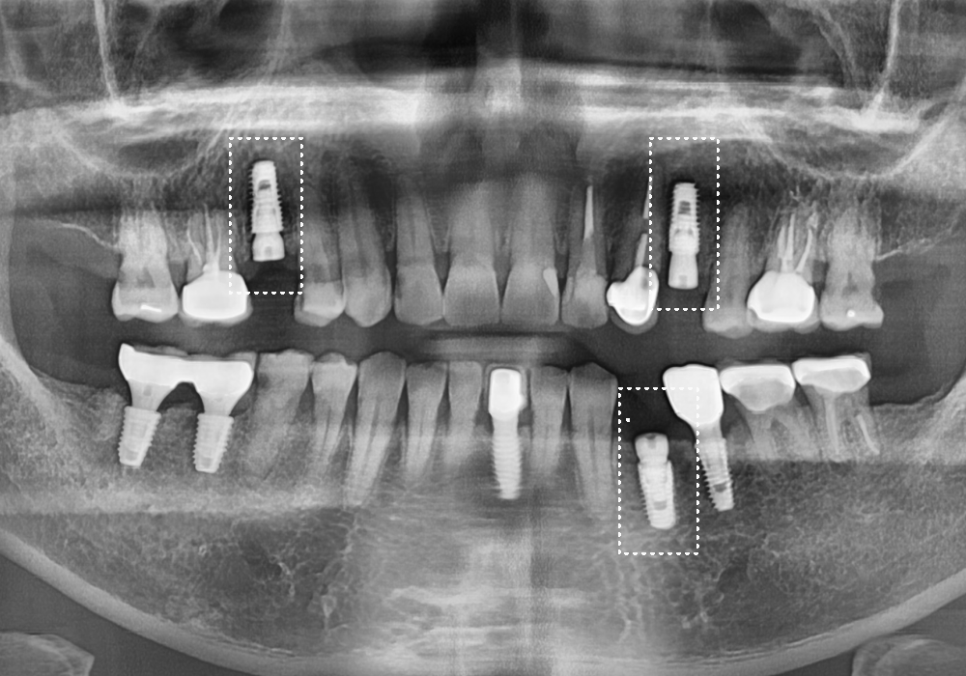
About two months later, after confirming that the implant roots and the bone had firmly integrated,
we completed the restoration with zirconia prosthetics.
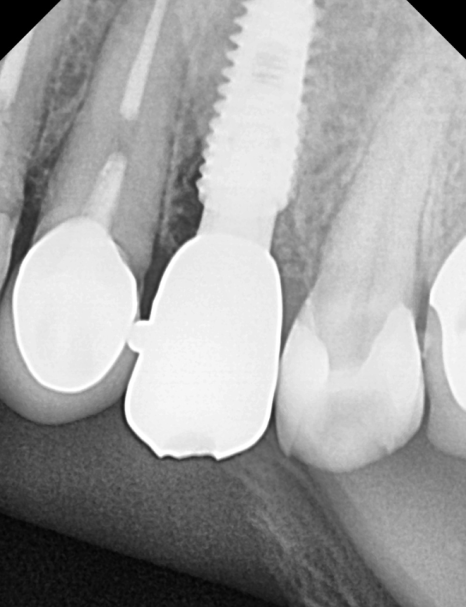
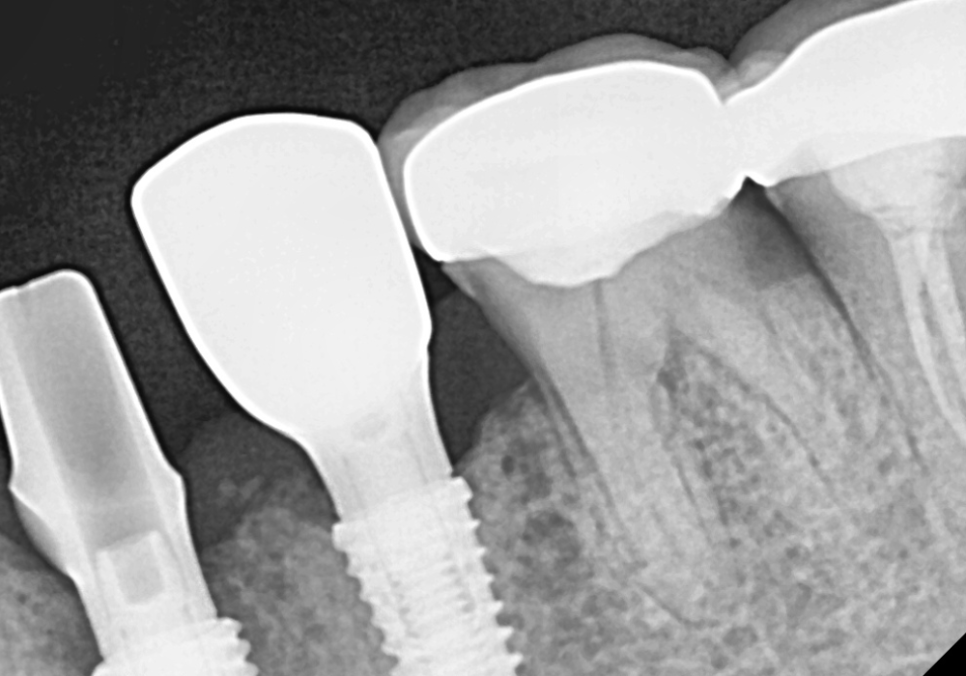
Thanks to receiving gum treatment throughout the implant period,
the red, swollen gums improved a lot as well.^^
Root cavities may look fine on the outside,
but inside, the tooth may already be preparing to break.
Rather than simply cleaning the visible areas,
the priority is to get an accurate diagnosis to check whether there are root-side cavities progressing without your knowledge.
If you’re worried, "Could I have a cavity I don’t even know about?"
please feel free to visit us anytime.
We will help you find the most precise and honest way to save your teeth right now.
Thank you. ^^
▼Check the dental clinic location▼
.
| Go to call for an appointment |
|---|
| 02-481-4278 |
| This post was written directly by Seoul Bardi Dental Clinic for the purpose of providing medical information in compliance with Article 56, Paragraph 1 of the Medical Service Act governing medical advertising. We recommend that the information provided be used as a reference only, and that symptoms and accurate management methods be obtained through medical staff after visiting a medical institution. All procedures / surgeries performed at the dental clinic may involve possible side effects depending on the individual (inflammation, bleeding, swelling, etc.). Please make decisions after sufficient consultation with medical staff in advance. The treatment cases in this post were photographed with the consent of patients who completed treatment at our clinic, and the before-and-after photos were taken under the same conditions. |