Hello.
I’m the director of Seoul Bardi Dental Clinic.
After losing a lot of teeth,
there really is a lot to worry about, right??
If you’re considering implants,
the first thing that comes to mind is the high cost,
and if you think about dentures instead,
you hesitate because you’ve heard so many people say,
“they hurt and keep falling out, so you can’t use them.”
So after all this 고민, these days many people look up YouTube or the internet themselves,
and come in having already studied the ‘snapping denture (implant overdenture),’
a solution said to make up for the shortcomings of regular dentures.
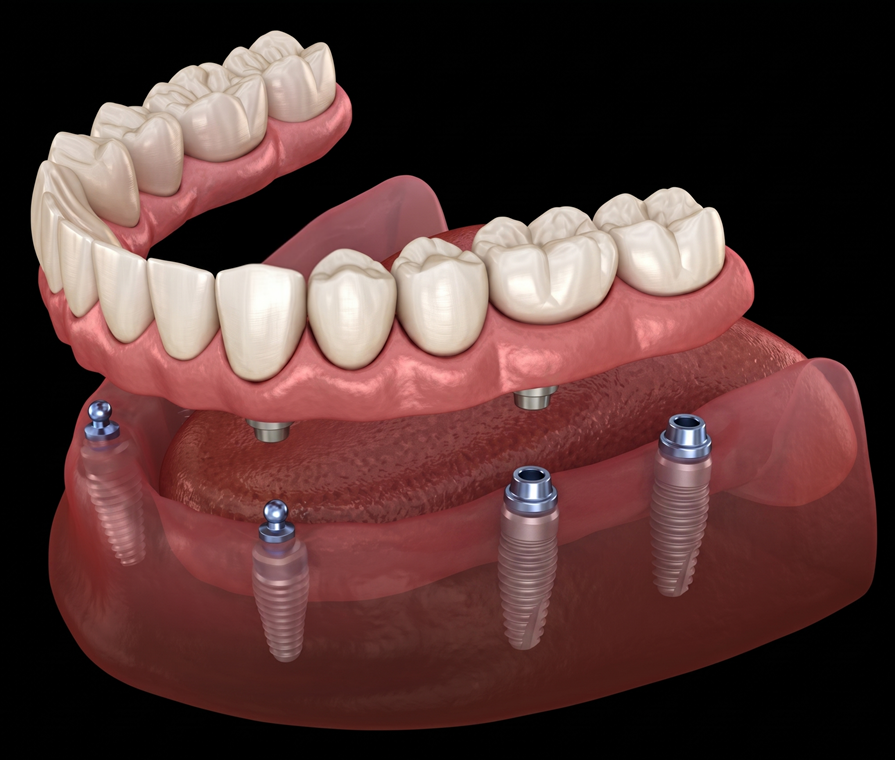
With the explanation that a few implants can be placed to hold the denture like a button,
they come in hoping, “Ah, this will save money and be comfortable to use.”
You may be tempted by the idea that it’s better than dentures!!
But a snapping denture is still just a denture,
with an added retention device.
You should not forget that it still falls under the category of a ‘denture.’
Even though the implants hold it in place and it may feel firm and comfortable at first,
there is a structural limitation: over time, the unique wobbling,
foreign-body sensation, and gum pain of dentures can return.
Today, I’ll explain in detail through a real case why an older patient using a snapping denture started feeling discomfort again,
and how we addressed that discomfort.^^
- What is a snapping denture?
Gangdong-gu Snapping Dentures: Are They Really a One-Size-Fits-All Solution? Why Do They Wobble Every Time You Eat?
A snapping denture is technically called an
‘implant-retained overdenture.’
As the name suggests, it’s easiest to understand if you think of the ‘snap buttons’ on clothing.
A small number of implants, usually 2 to 4,
are placed in areas with strong jawbone,
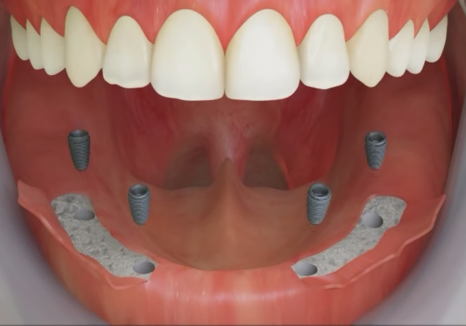
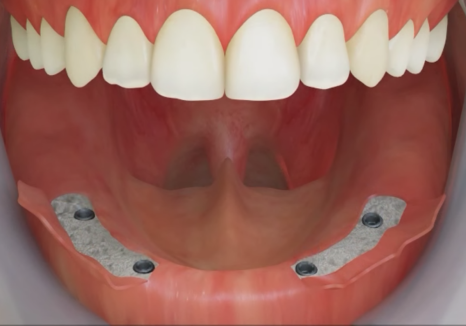
and then a button-shaped special attachment (locator)
is placed on top,
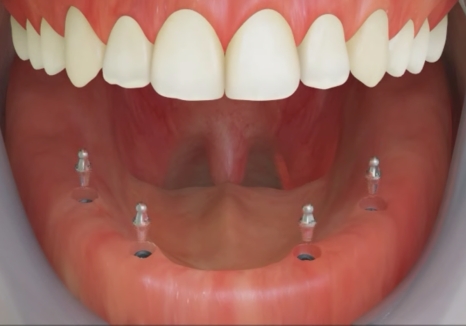
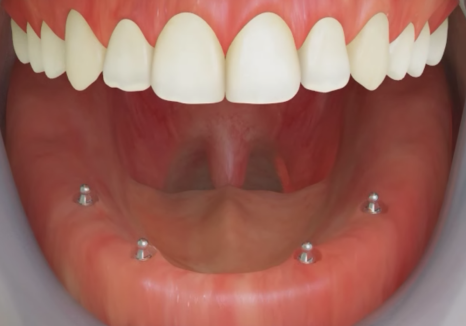
so that it clicks into the denture.
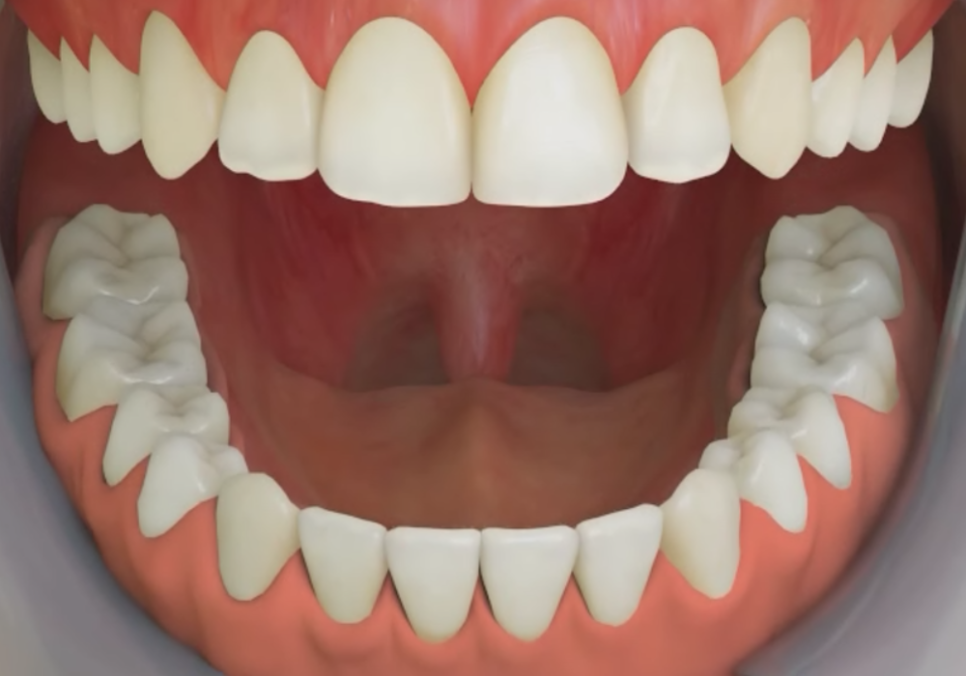
The advantage of a snapping denture is that it has stronger retention than a regular denture,
so it is less likely to come out,
and the chewing force is much stronger as well.
▽If you’re curious about snapping dentures,
please refer to my previous post~
- But why does it start wobbling over time?
Gangdong-gu Snapping Dentures: Are They Really a One-Size-Fits-All Solution? Why Do They Wobble Every Time You Eat?
A snapping denture has better retention and stronger chewing force than a regular denture,
but it has one critical drawback.
That is,
it gradually becomes loose the longer you use it.
Why does that happen?
- Wear-and-tear parts:
The snap components inside the denture (such as nylon caps)
wear down with use.
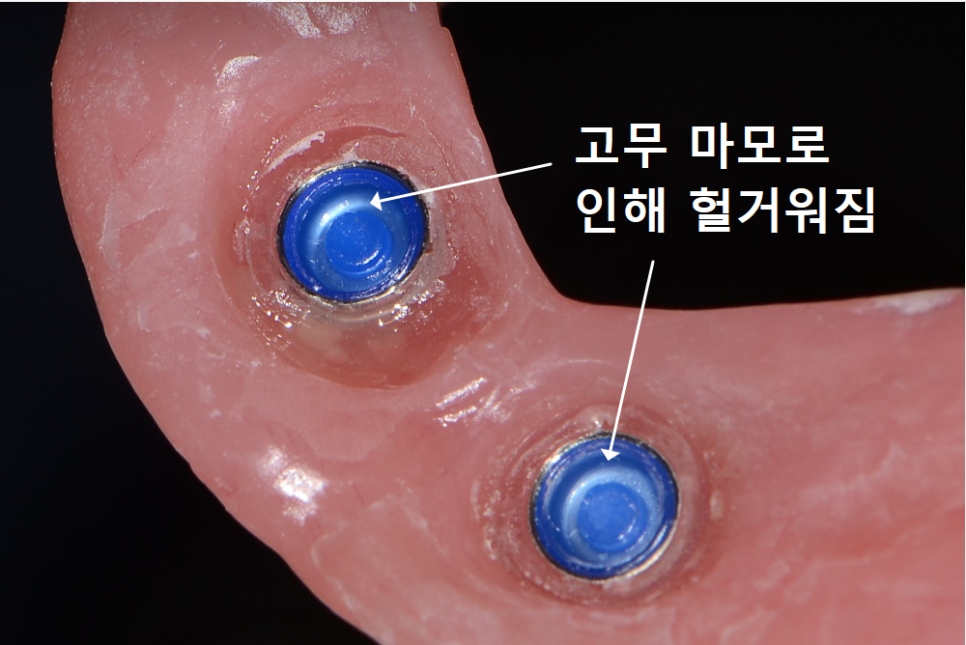
Over time, it naturally becomes loose.
- Changes in the gums:
As the jawbone is gradually resorbed over time,
space forms between the denture and the gums.
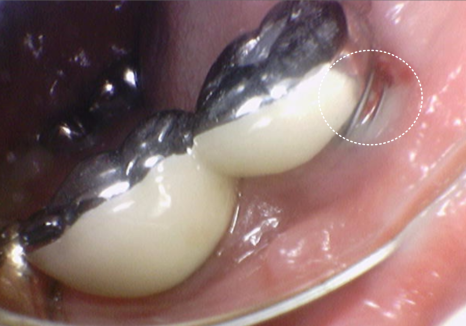
In this process, the implant posts may become exposed outside the gums,
or peri-implantitis may develop.
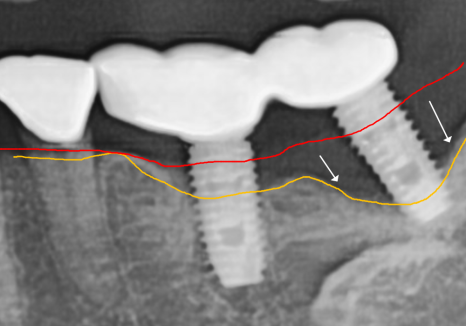
As a result of these causes,
what once felt firm gradually loses that initial stability,
and the discomfort of wobbling every time you eat returns.
- [Patient case] My snapping denture keeps coming out.
Implant treatment case
Gangdong-gu Snapping Dentures: Are They Really a One-Size-Fits-All Solution? Why Do They Wobble Every Time You Eat?
“A friend said they got implants here instead of dentures,
so I was referred and came in.”
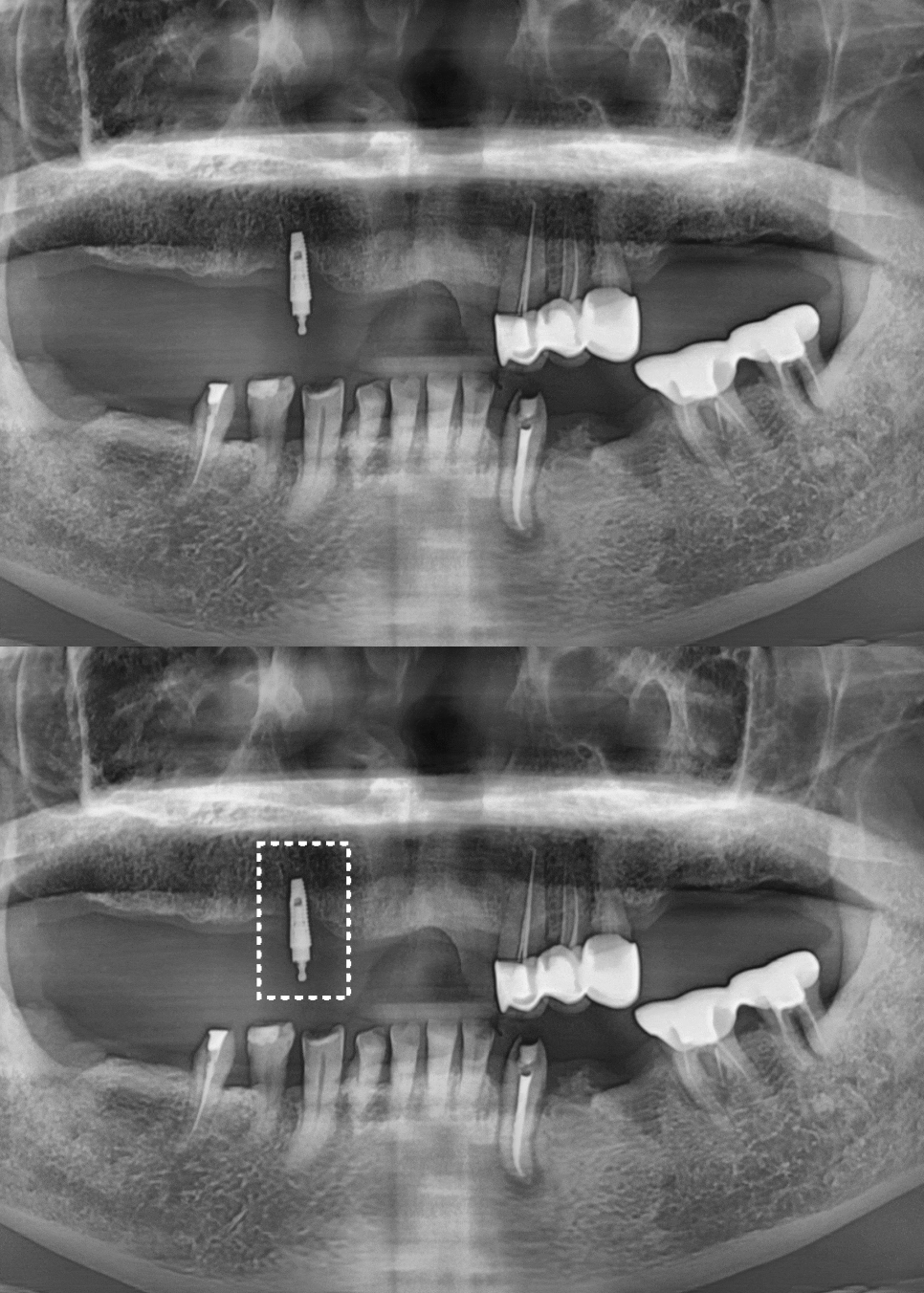
The patient was using a snapping denture in the upper jaw,
and came to us after being referred because it kept coming loose and wobbling during meals.
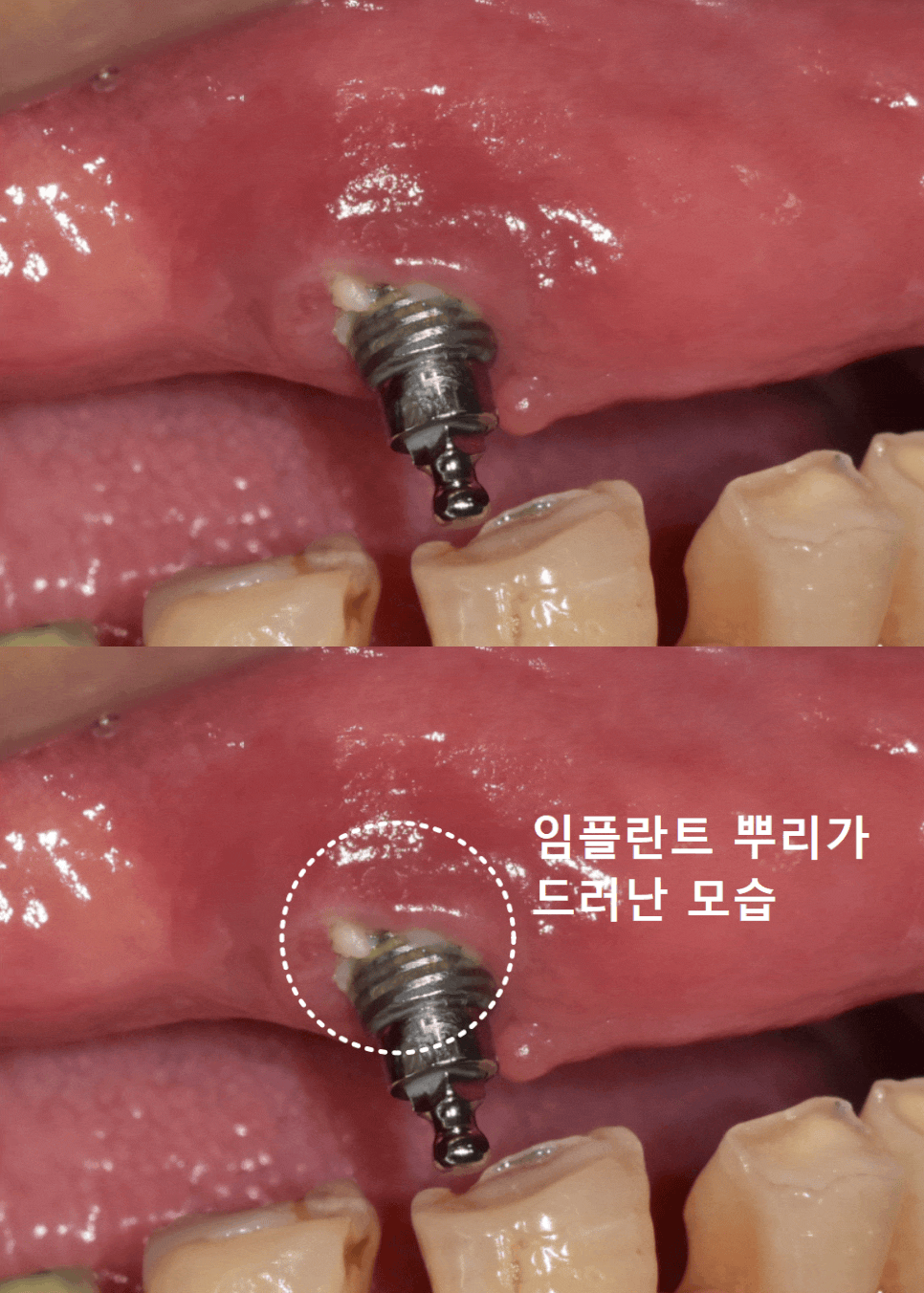
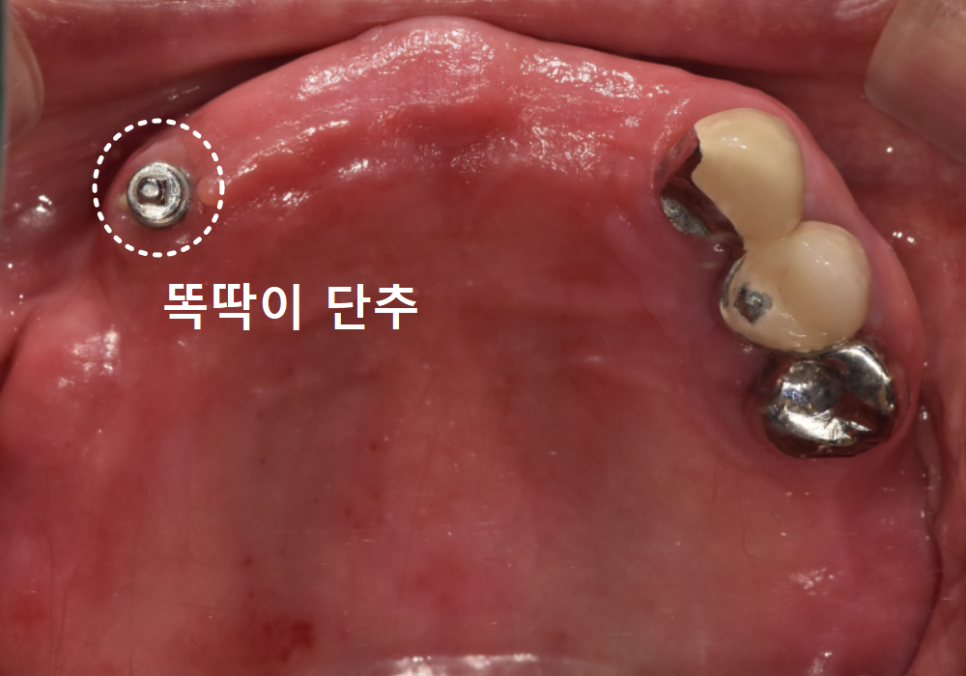
When we examined the mouth,
the right implant post (the button part)
was clearly exposed outside the gums.
On the X-ray as well,
more than two-thirds of the bone around the implant root had been resorbed...
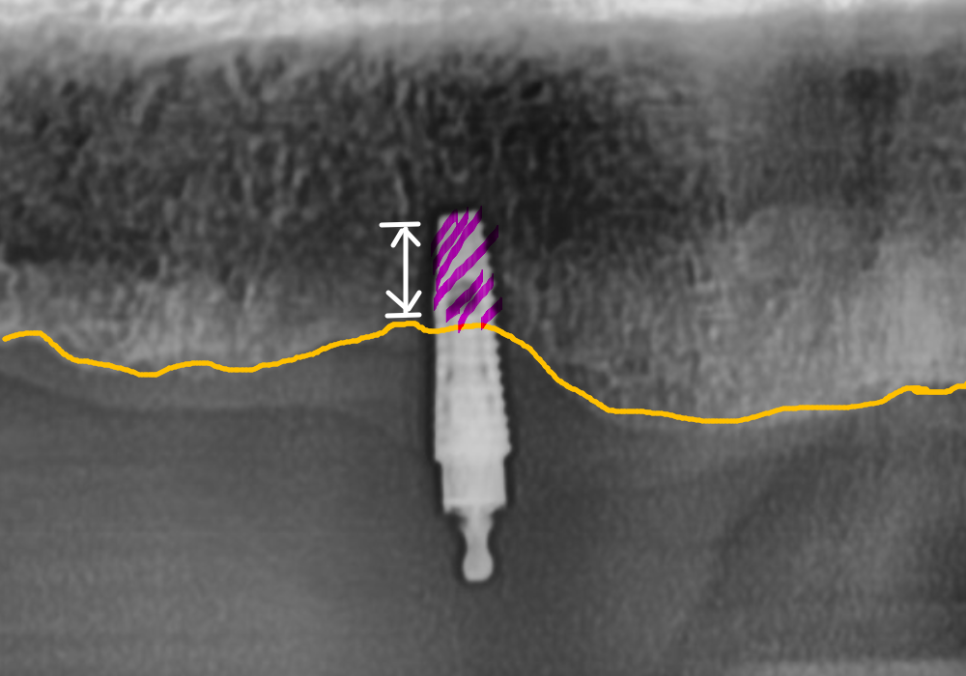
Because food particles trapped around the implant allowed bacteria to grow,
the bone around the implant root gradually dissolved away.
Because of that, the implant’s retention decreased,
and the denture placed on top of it had no choice but to tilt and wobble like a seesaw every time the patient chewed.ㅜㅜ
Unfortunately, the implant that had reached the end of its lifespan was removed,
and a total of 6 implants were placed.
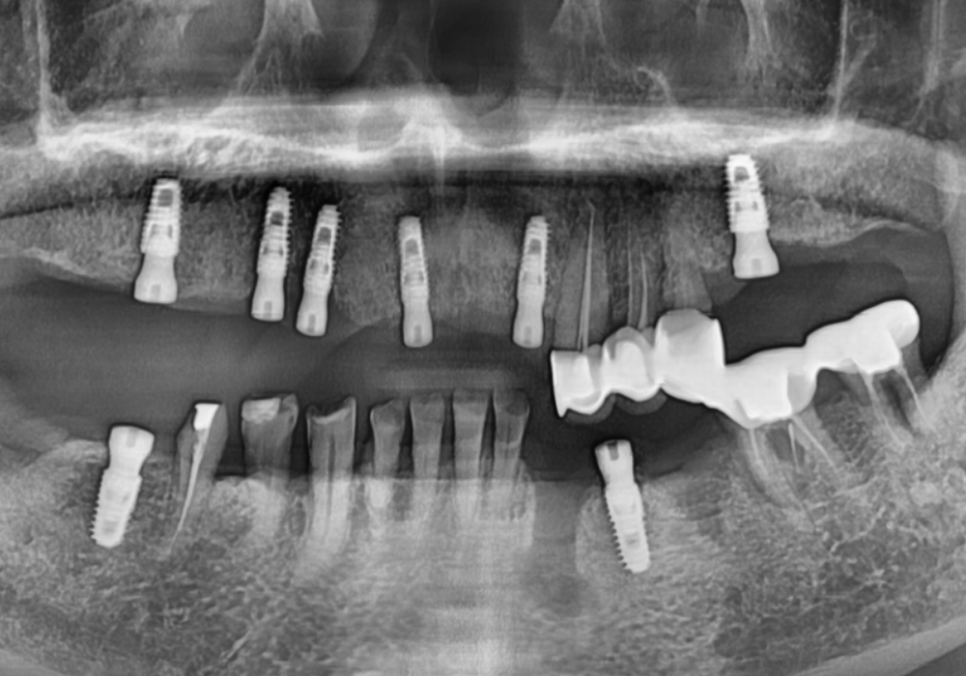
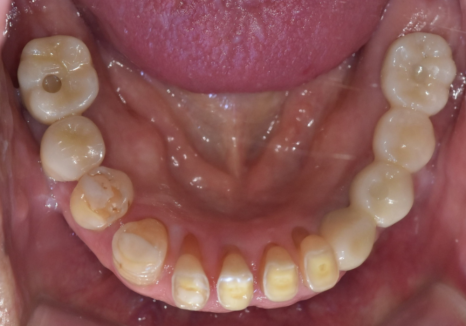
Looking at the lower teeth as well,
there were areas where teeth had been lost in several places,
and the left lower canine (#33)
and two molars (#36, #37) were in poor condition due to root inflammation,
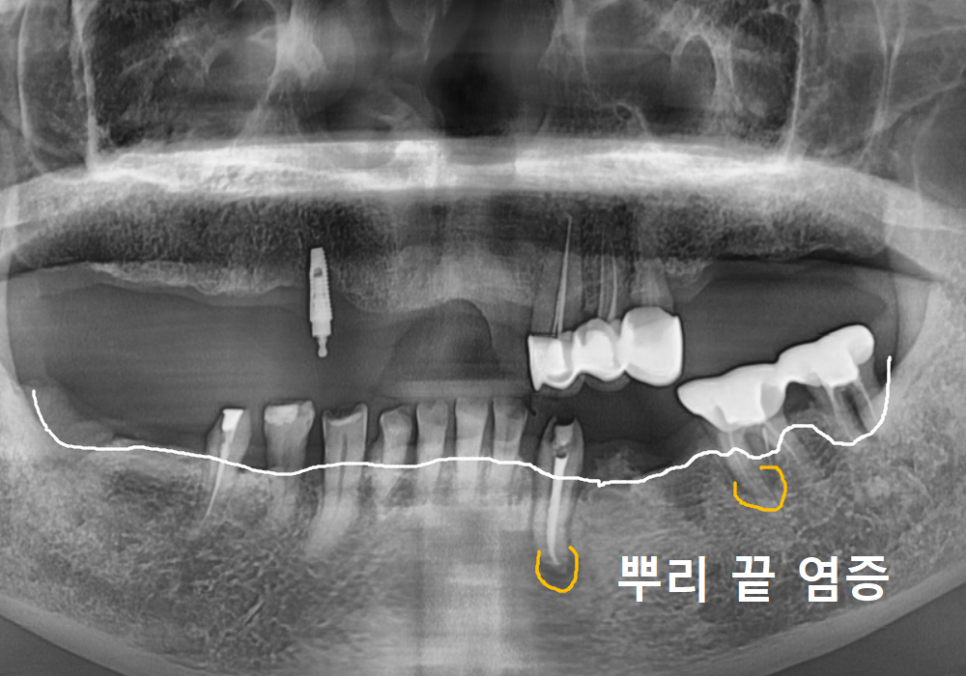
so after extraction, implant treatment was carried out.
Do you have to live without teeth during the treatment period?
When you undergo implant surgery,
the shape of the gums changes,
so the denture you were using before no longer fits properly.
Many people worry after surgery,
“Do I have to go without teeth during this time?”
We have an in-house dental lab,
so quick and convenient immediate repairs are possible!
While the implants are integrating with the bone over several months,
we provide real-time help so you can continue using your existing denture comfortably.
Don’t worry. ^^
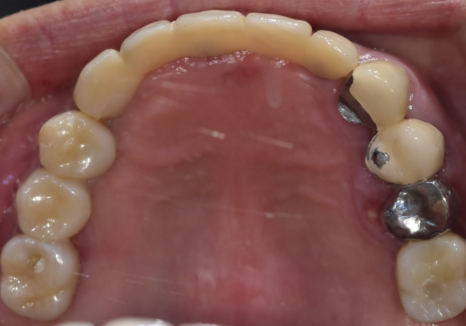
Treatment result
After about 6 months of healing for the bone and implant roots to fuse,
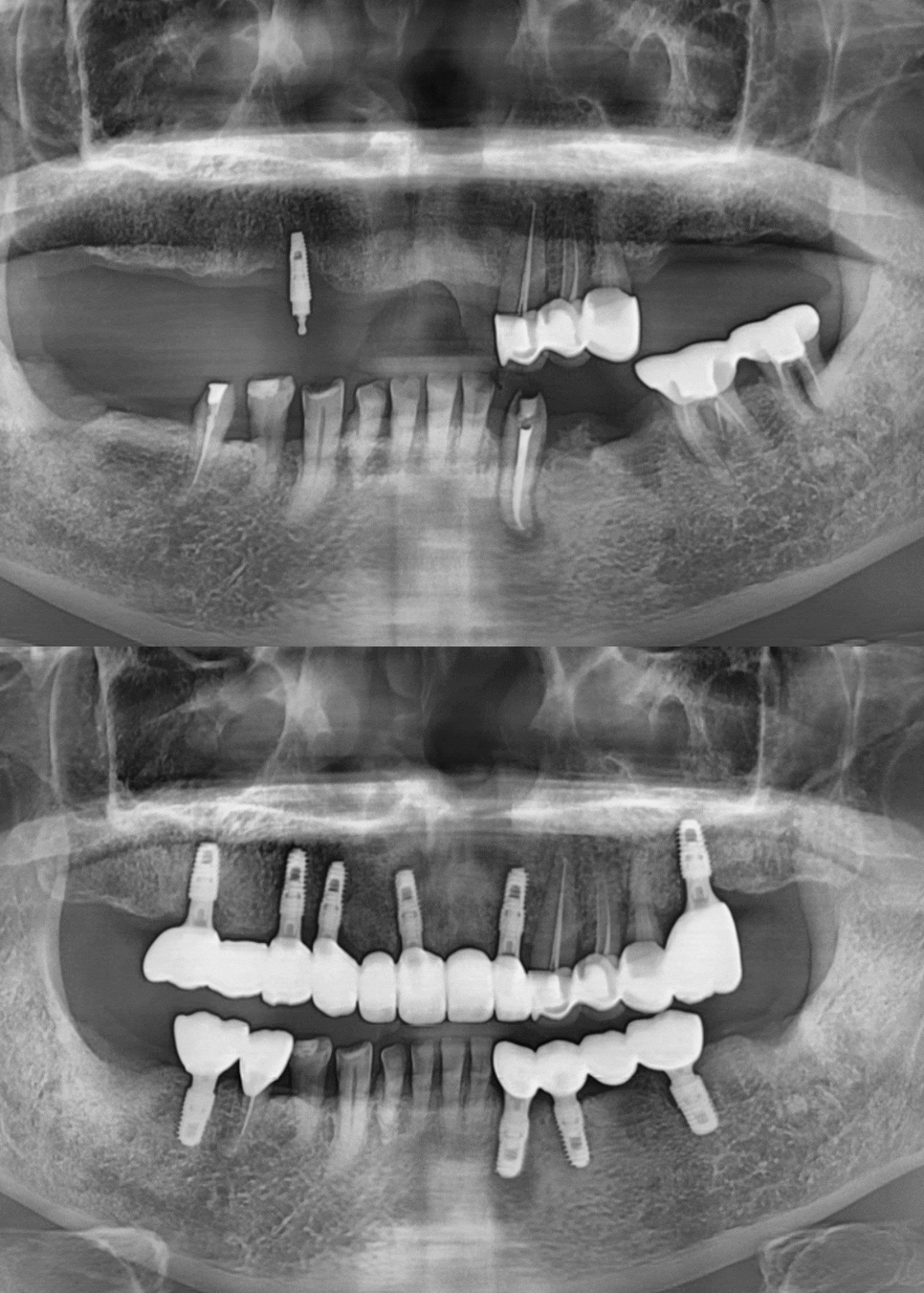 251016(before) 260424 (after)
we finally completed all the teeth with zirconia prosthetics.^^
 260424
A snapping denture is also a good alternative,
but because the gums continue to change,
many patients ultimately come in for full-arch implants after multiple repairs.
“Can I really have surgery again at my age?”
While you spend time worrying,
the jawbone may be gradually resorbing.
Before it gets any later,
for the sake of the patient’s healthy later years,
we’ll carefully look at what the most efficient solution is.
We will honestly tell you what treatment is truly necessary now,
without overtreatment.
Thank you for reading such a long post today. ^^
▼Check the dental clinic location▼
Gangdong-gu Snapping Dentures: Are They Really a One-Size-Fits-All Solution? Why Do They Wobble Every Time You Eat?
| Go to make a reservation call |
|---|
| 02-481-4278 |
| This post was written directly by Seoul Bardi Dental Clinic for the purpose of providing medical information in compliance with Article 56, Paragraph 1 of the Medical Advertising Act. The information provided is for reference only, and we recommend visiting a medical institution to receive symptom assessment and exact management guidance from medical professionals. All procedures/surgeries performed at the dental clinic may involve possible risks depending on the individual (such as inflammation, bleeding, swelling, etc.). Please make decisions after sufficient consultation with the medical staff in advance. The treatment cases in this post were photographed with the consent of the actual patients who completed treatment at our clinic, and the before-and-after photos were taken under the same conditions. |