Hello,
I’m the director of Seoul Bardi Dental Clinic.
The bone around our front teeth is originally
much thinner than the bone around our molars.
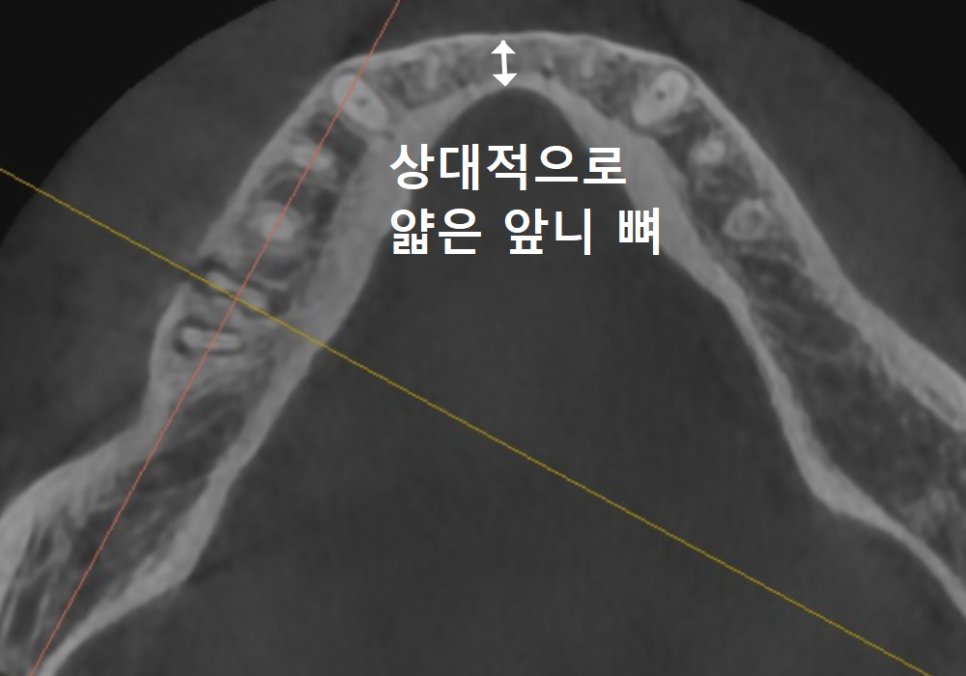
So when a tooth is extracted because of inflammation,
bone resorption happens quickly,
and the gum that covered it
also sinks down and looks sunken.
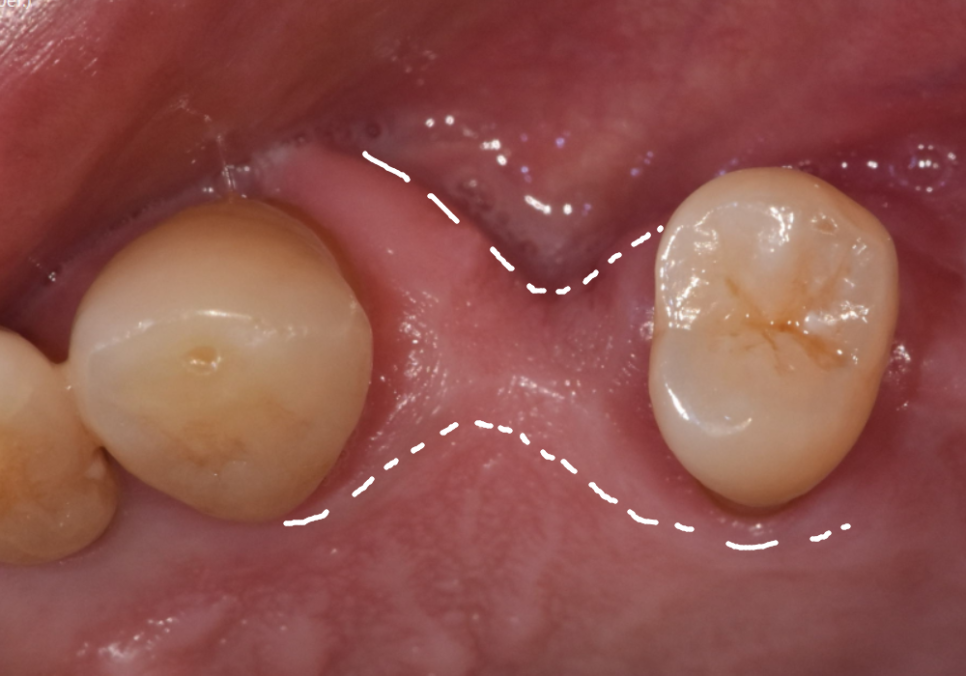
In situations like this, patients
often say the same thing.
"If I wait, won’t the gum
fill back in on its own?"
Gum recession in the front teeth
Just as skin heals and new tissue forms when you get a cut,
you may want to believe the gums will do the same,
but unfortunately, my answer is
"No."
Once the gum has receded,
it does not naturally fill back in on its own. ㅜㅜ
Then...
Wouldn’t a gum graft solve it?
Of course, a gum graft can be one option.
 Gum recession in the front teeth: Introducing a way to get implants without gum grafting.
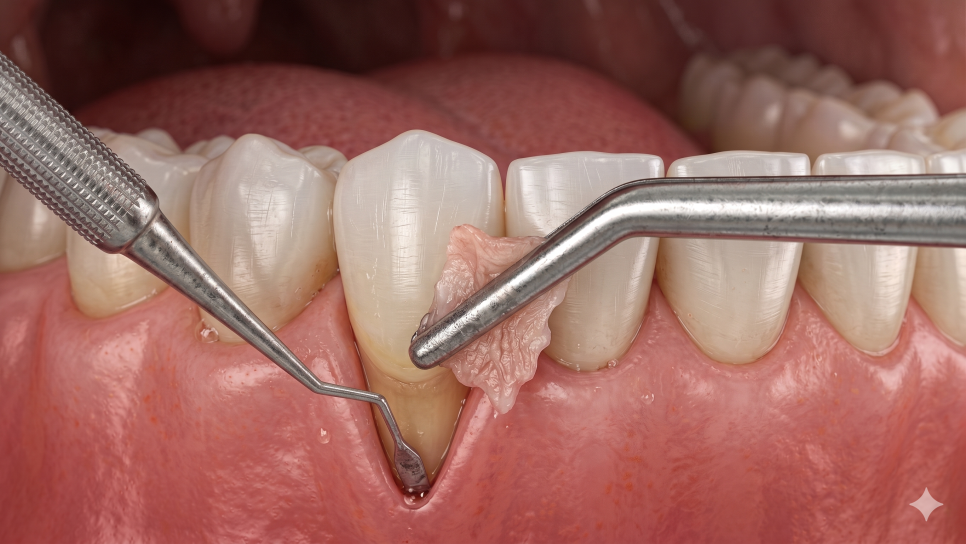
However, a gum graft requires taking tissue from the palate
and transplanting it,
so postoperative pain and a long recovery period
are often a major burden for patients.
That is why today I’d like to introduce
an actual case that solved a sunken front-tooth area
without the large surgery of a gum graft.
A patient case with gum recession after front tooth extraction
Gum recession in the front teeth: Introducing a way to get implants without gum grafting.
This is a case of a patient who recently visited our clinic.
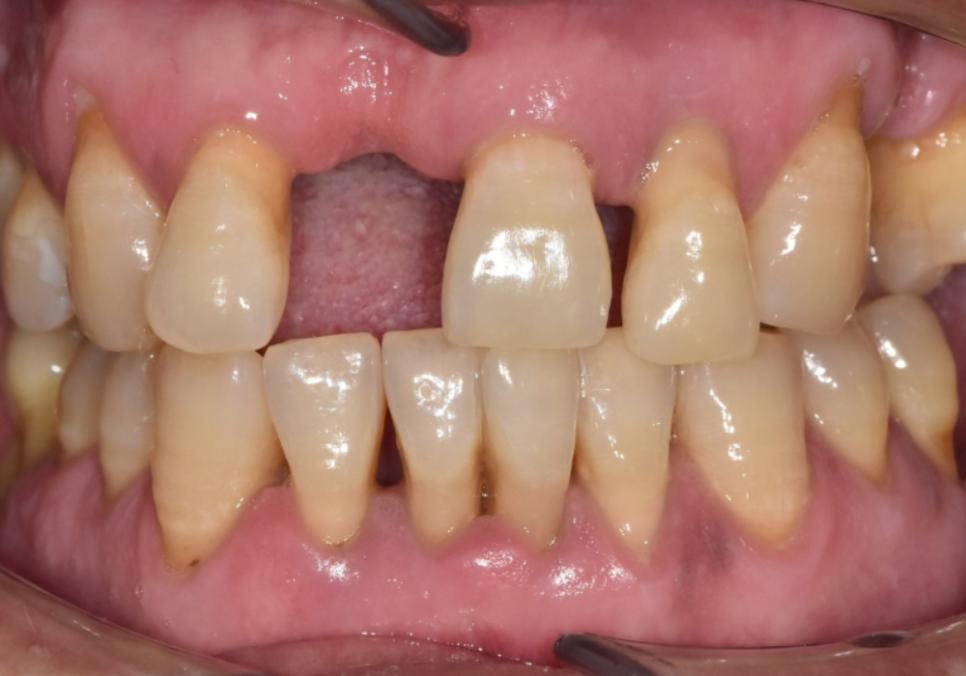 250611
After having a front tooth extracted at another clinic due to inflammation,
they came in for an implant consultation.
When I examined the mouth, the gum
in the extracted front-tooth area was deeply sunken.
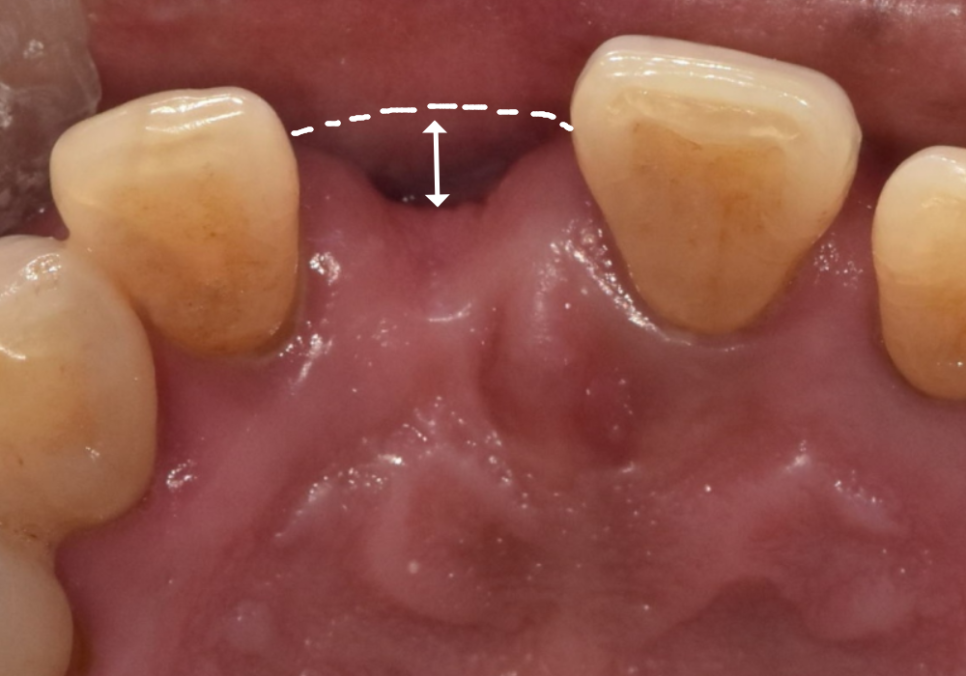
From the side, the gum line was pulled inward
so much that
bone resorption was severe.

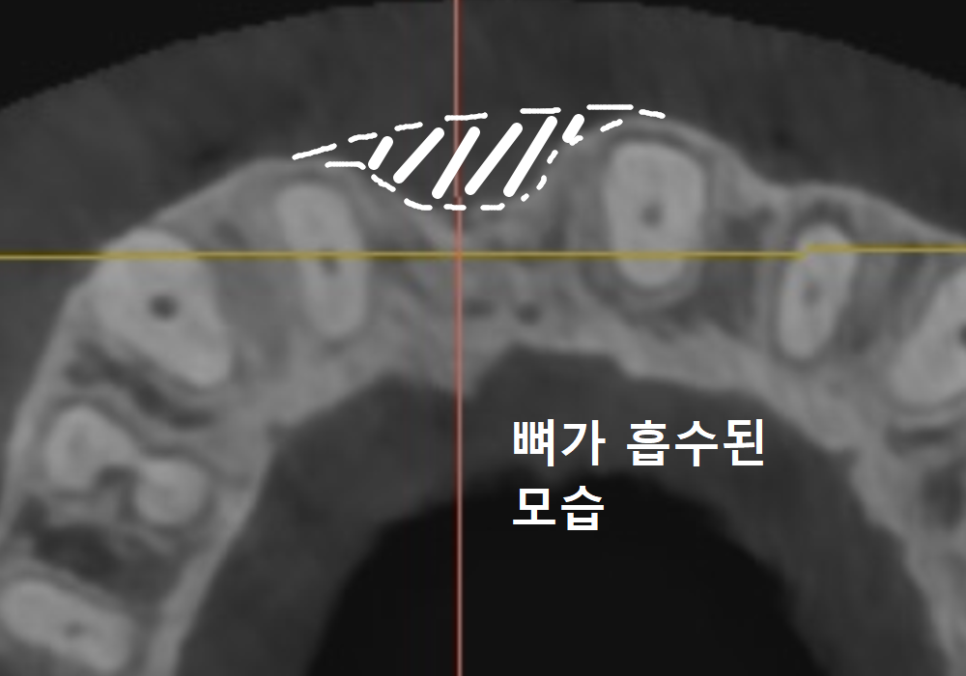
After taking a CT scan, the bone on the lip side
had already melted away significantly,
leaving the bone width thin.
If we just pack in a lot of bone powder,
won’t it fill back in?
Usually, when the gums are deeply sunken like this,
bone grafting and gum grafting are the standard ways
to restore the lost volume.
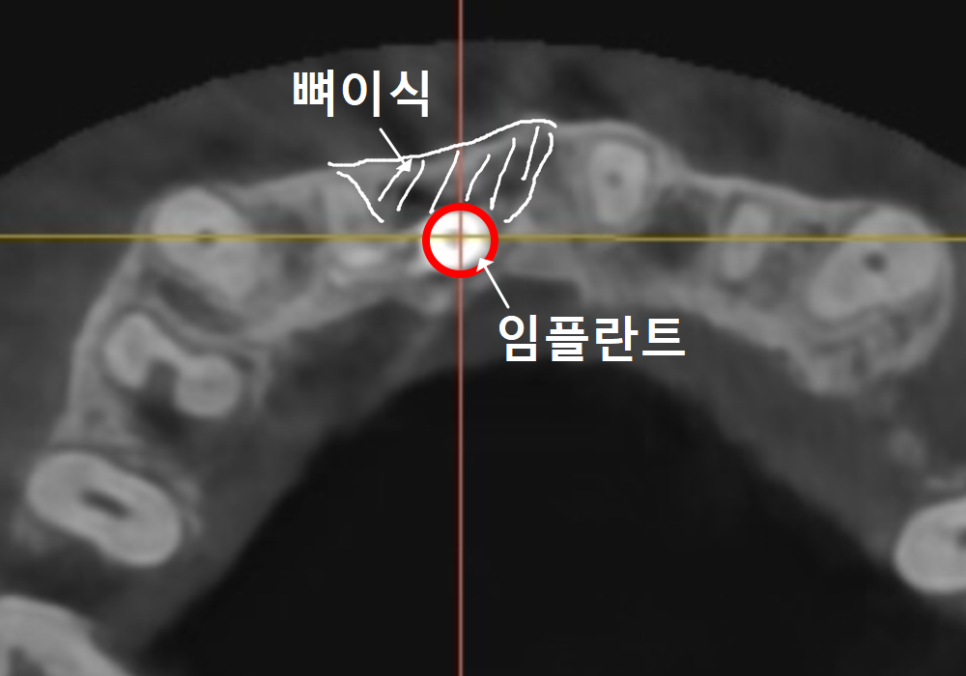
But in reality,
it is not that simple..
To get straight to the point,
just placing bone powder on top
does not mean it will all become bone.
For bone powder to become my real bone,
first, blood circulation needs to be good.
But in an environment where there is no "inner bone (cancellous bone)"
for blood to circulate through, and only a thin layer of hard "outer bone (cortical bone)" remains,
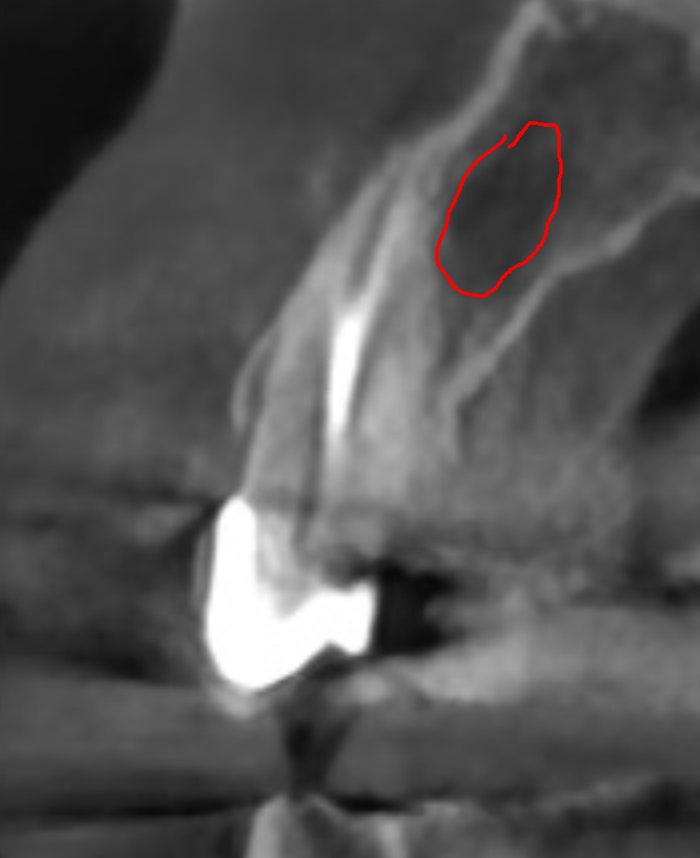
no matter how much bone powder you place,
it is more likely to be
simply absorbed and disappear
rather than harden into your own bone.
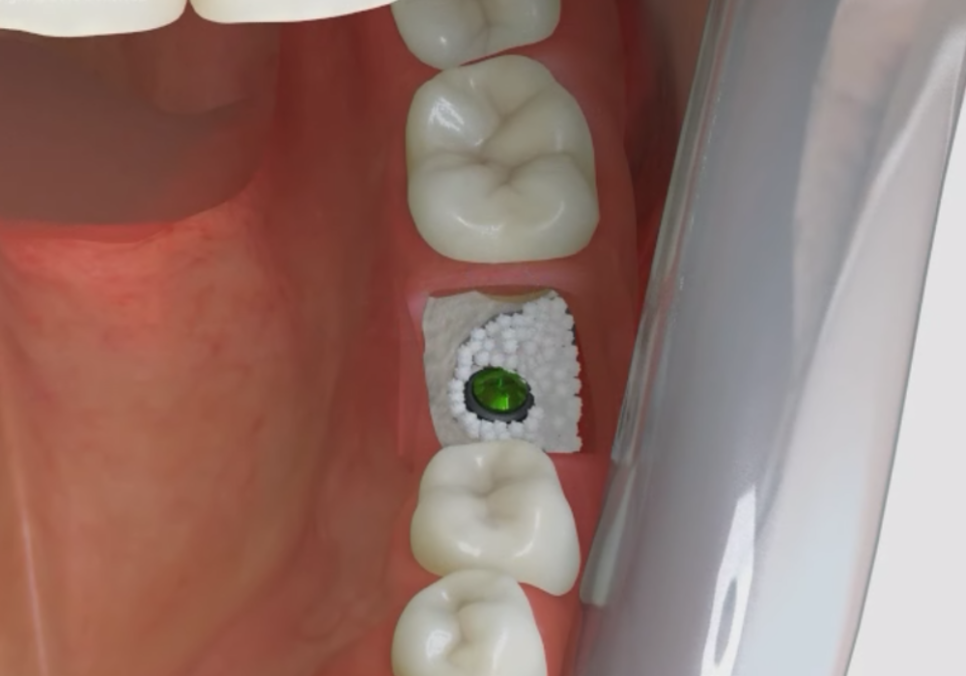
So for patients whose bone has resorbed significantly,
bone grafting often cannot be completed in one session
and has to be done in stages.
Another problem arises when the gum tissue is thin.
If the soft tissue, meaning the outer gum tissue that covers the bone,
is thick, that is at least somewhat better,
but in patients with both thin soft tissue and thin hard tissue,
there is a risk that the bone could tear while placing the implant.
As a result, gum grafting, which involves taking tissue from the palate
and attaching it to the sunken gum,
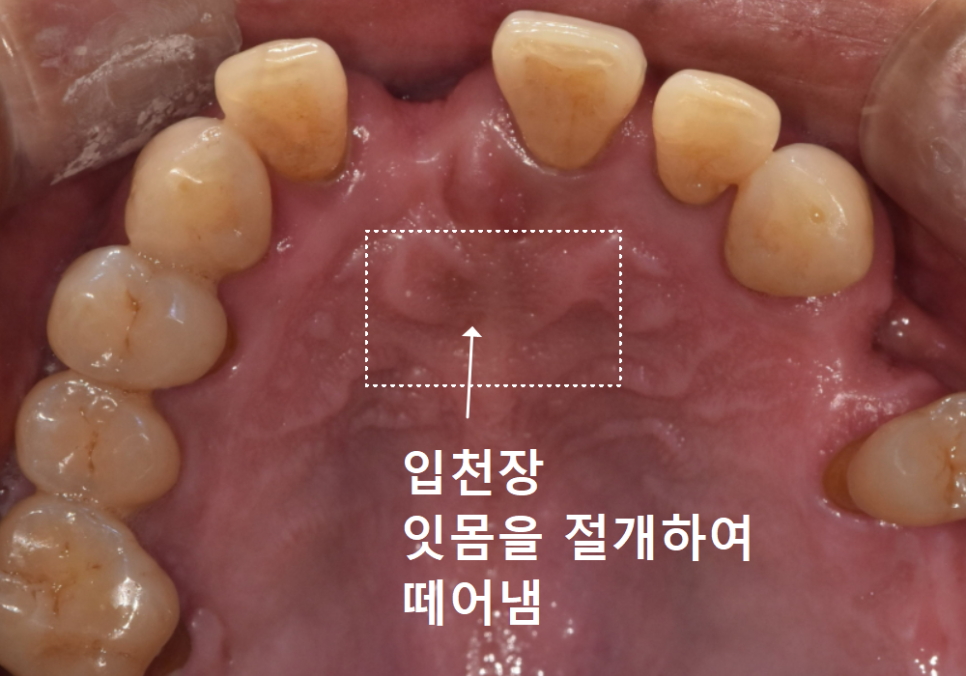
is often performed at the same time.
In principle, it would require "gum grafting," where gum tissue is taken from the palate and attached,
along with multiple bone grafts.
But the patient was about to leave the country soon,
and had absolutely no time to repeat surgery and recovery.
Treatment plan
Gum recession in the front teeth: Introducing a way to get implants without gum grafting.
Considering the patient’s situation and bone condition,
I suggested not forcing surgery to create bone,
but instead solving it neatly with a prosthetic technique:
"pink porcelain."
The name may sound unfamiliar.
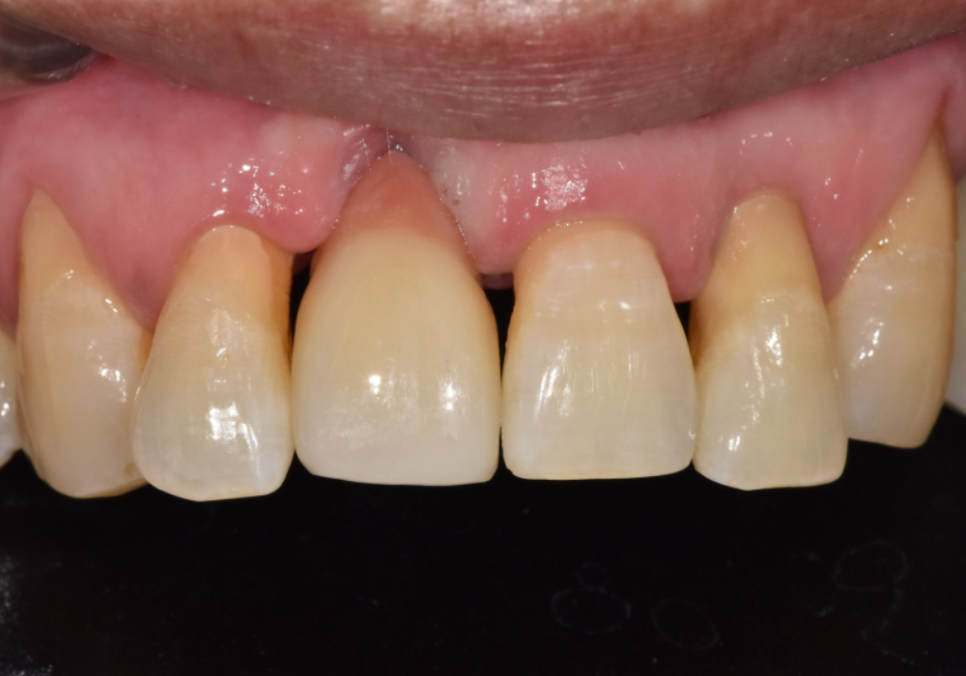
Simply put, if you just make the tooth longer to compensate for the receded gum,
it looks like "rabbit teeth"
and becomes very unnatural.
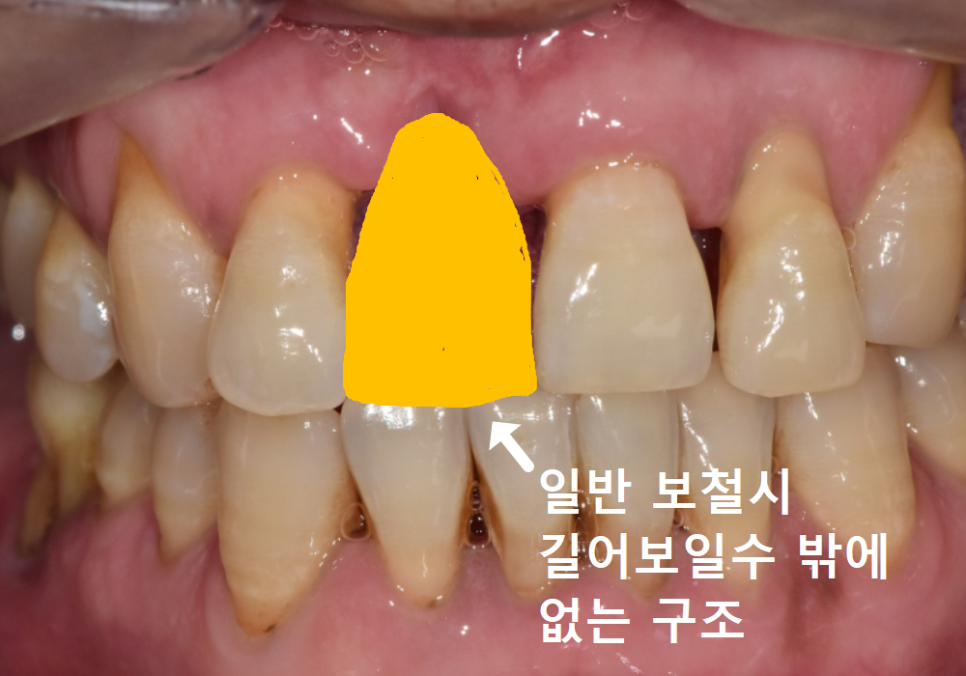
To prevent this, a pink porcelain material in the exact same color as the gums
is applied to the upper part of the prosthesis.
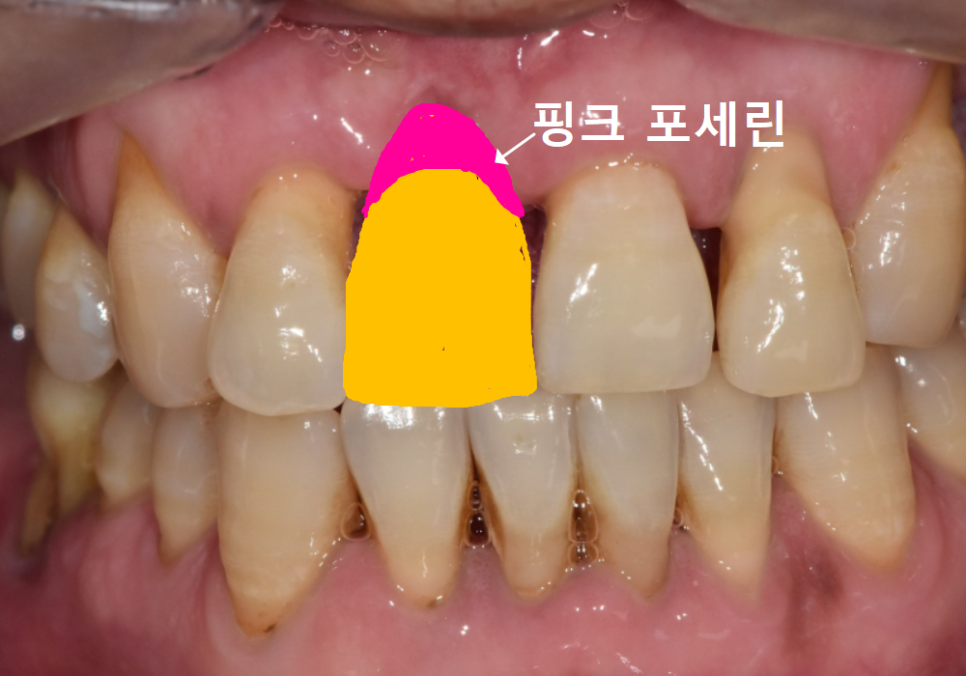
Without going through the difficult and painful surgery of gum grafting,
the prosthesis itself plays the role of the gum,
so it can save both the number of surgeries and the time required.
I think that is its biggest advantage.
The sunken area was naturally filled by the pink porcelain,
so the teeth did not look too long,
and blended seamlessly with the neighboring teeth. ^^
 260225
This was a case in which we completed the implant relatively quickly
without going through multiple surgeries,
helping the patient leave the country safely.
Front-tooth implants
are not simply about "placing the implant" and calling it done.
I believe true skill means considering everything:
the patient’s bone condition, gum thickness,
and even their current time constraints,
and creating the most comfortable and aesthetically pleasing result.
If you are also considering an implant because of receded gums,
please do not worry too much and feel free to come in for a consultation anytime.
Without unnecessary treatment, I promise an honest answer
that is truly needed for the patient right now.
Thank you for reading this long post today. ^^
▼Check the clinic location▼
Gum recession in the front teeth: Introducing a way to get implants without gum grafting.
| Go to call for reservation |
|---|
| 02-481-4278 |
| This post was written directly by Seoul Bardi Dental Clinic for the purpose of providing medical information in compliance with Article 56, Paragraph 1 of the Medical Advertising Act. The information provided is for reference only, and we recommend that you visit a medical institution and receive guidance from medical professionals for symptom assessment and accurate management methods. All procedures/surgeries performed at the dental clinic carry the possibility of individual side effects (inflammation, bleeding, swelling, etc.). Please decide after sufficient consultation with medical staff in advance. The treatment cases in this post were photographed with the consent of patients who completed treatment at our clinic, and the before-and-after photos were taken under identical conditions. |