Hello.
I am the director of Seoul Bardi Dental Clinic.
Some people occasionally say, “It’s more comfortable to chew on one side anyway.”
Some people have a one-sided chewing habit because of habit,
and others insist on using only one side because the opposite teeth are missing or hurt, so
there are cases where they have no choice.
However, our bodies are designed to be healthiest when both sides are balanced.
Did you know that one-sided chewing, where you keep eating on only one side,
is more than just a matter of eating habits?
It can even change the shape of your face and jaw joints.
Today, I’ll explain in detail what kind of results can come from the habit of chewing on only one side,
through an actual patient case.
What effects can one-sided chewing have on our bodies?
If You Eat on Only One Side, This Is What Eventually Happens.
If the habit of chewing food on only one side continues for a long time,
it can cause various problems not only for the teeth but for the entire face.
- Temporomandibular joint disorder and headaches
Both jaw joints are supposed to share the workload evenly,
so if only one side keeps doing the work, it naturally gets overloaded, right?
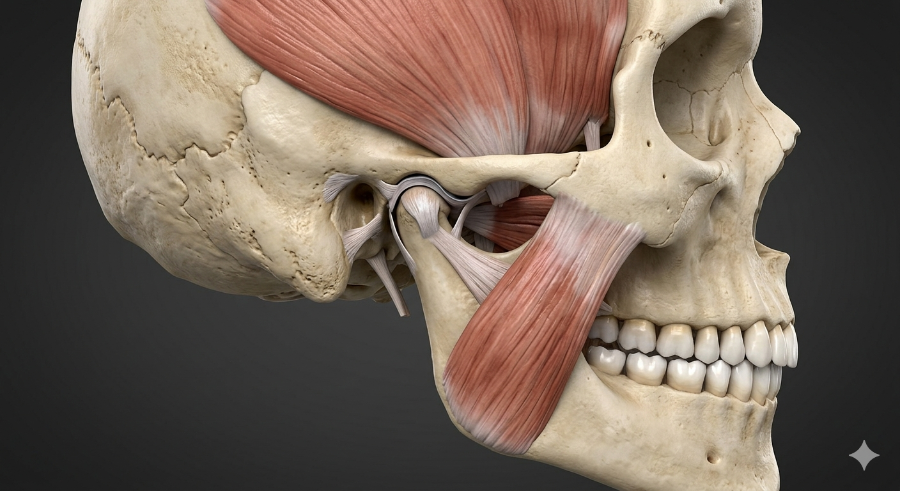
When opening the mouth, a clicking sound may occur, along with jaw pain,
and in severe cases, it can lead to headaches and shoulder pain as well.
- Gum disease
Surprisingly, chewing food has a “self-cleaning” effect that helps clean the teeth.
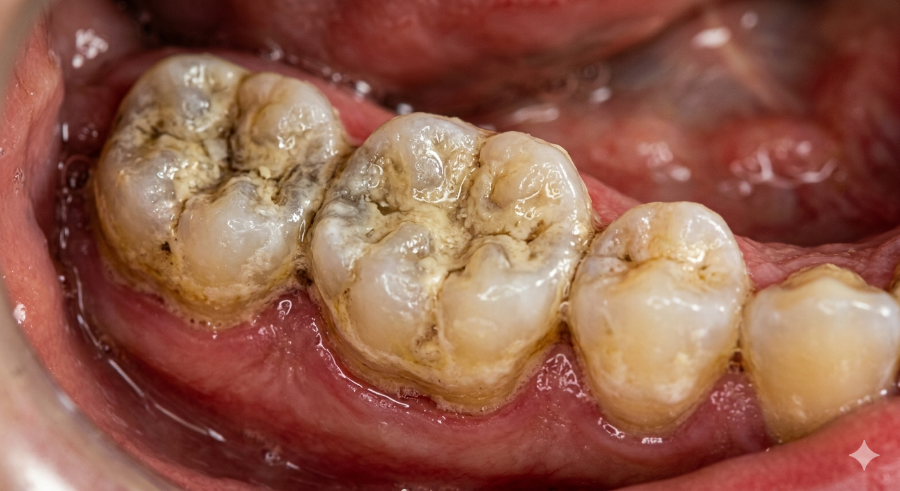
The side that is not used tends to accumulate plaque and tartar more quickly,
and gum disease can develop more easily.
- Facial asymmetry
Muscles develop with use, right?
If only one side’s muscles become abnormally larger,
facial left-right symmetry can be disrupted, leading to facial asymmetry.
- Tooth wear and fracture
Since one side’s teeth have to take on all the work that both sides should share,
small cracks can form in the teeth,
or they can wear down quickly, shortening their lifespan.
[Patient Case] Why did a patient who ate on only one side end up with jaw joint pain too?
If You Eat on Only One Side, This Is What Eventually Happens.
A patient who recently came to our clinic was someone who usually ate mostly on only one side, the right side.
Looking at the intraoral photo, it may seem like the molars on both sides are all present,
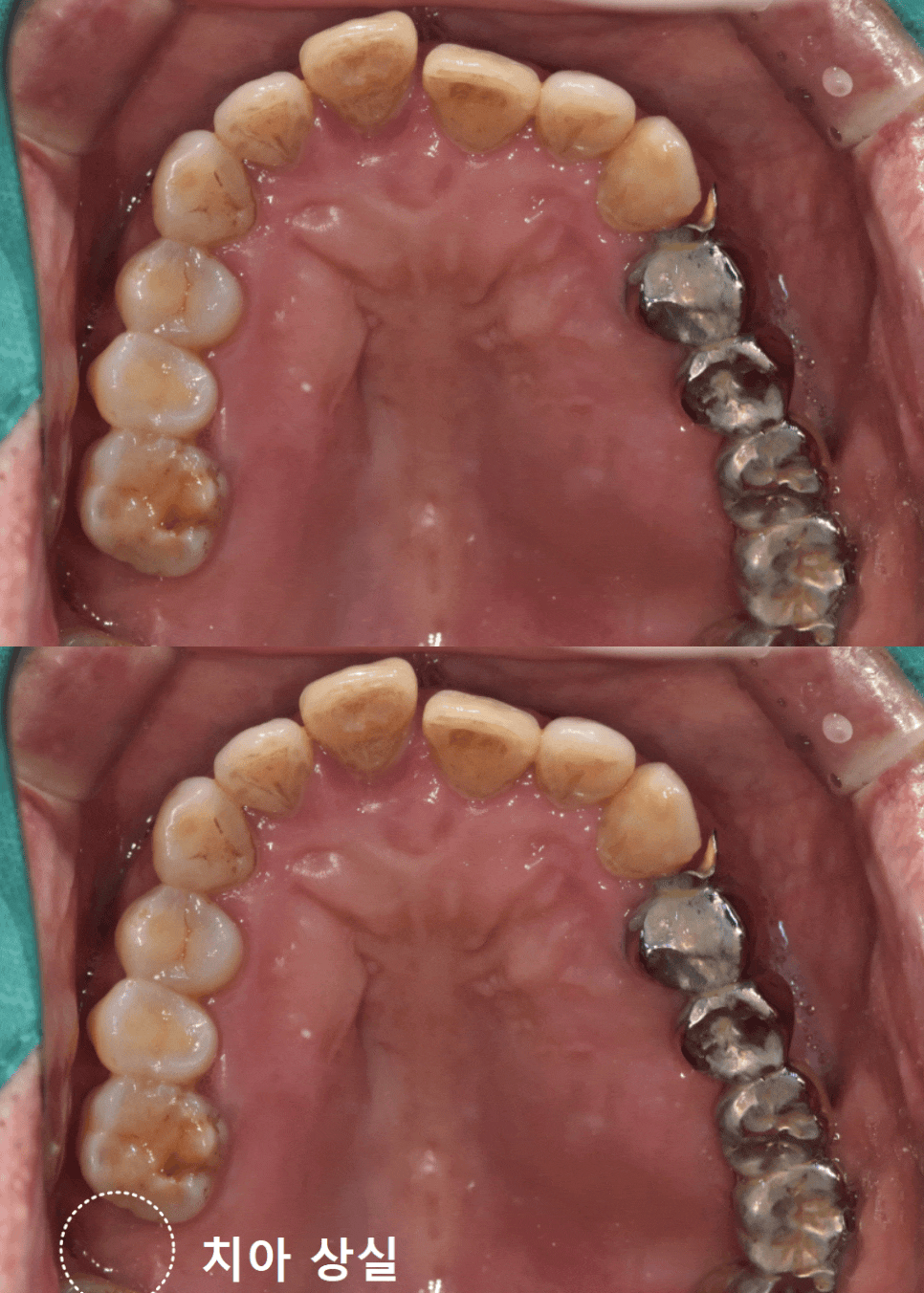
but in fact, one of the very back molars on the right side was missing.
You might think, “Wouldn’t it actually be more uncomfortable to eat on that side if the very back molar is missing?”
But the photo below will show why the patient had no choice but to eat only on the right side, where a tooth was missing.
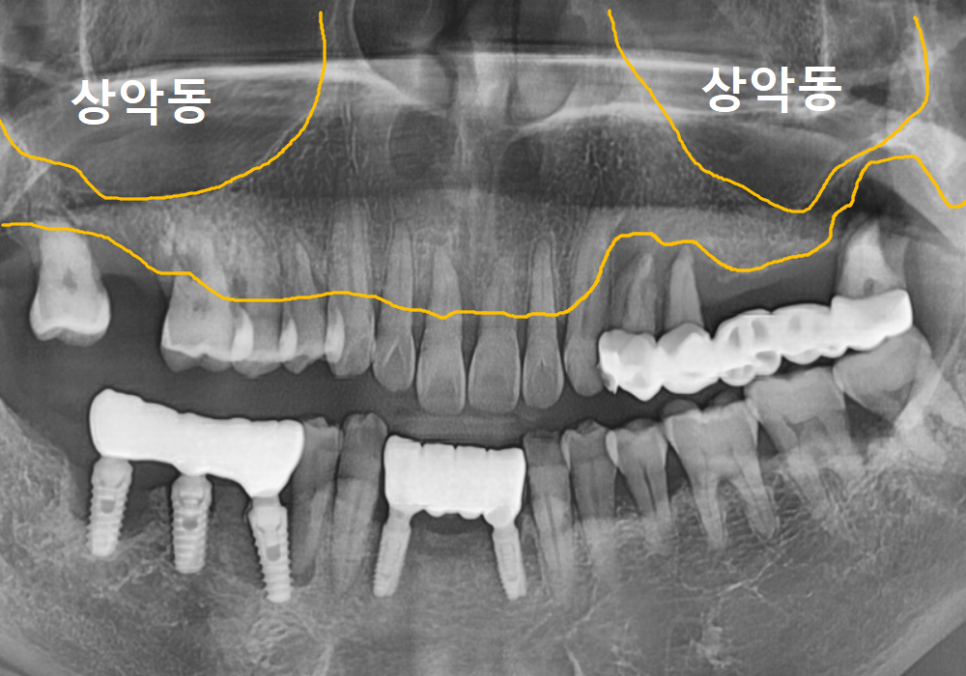
Let me show you a radiograph (panoramic image).
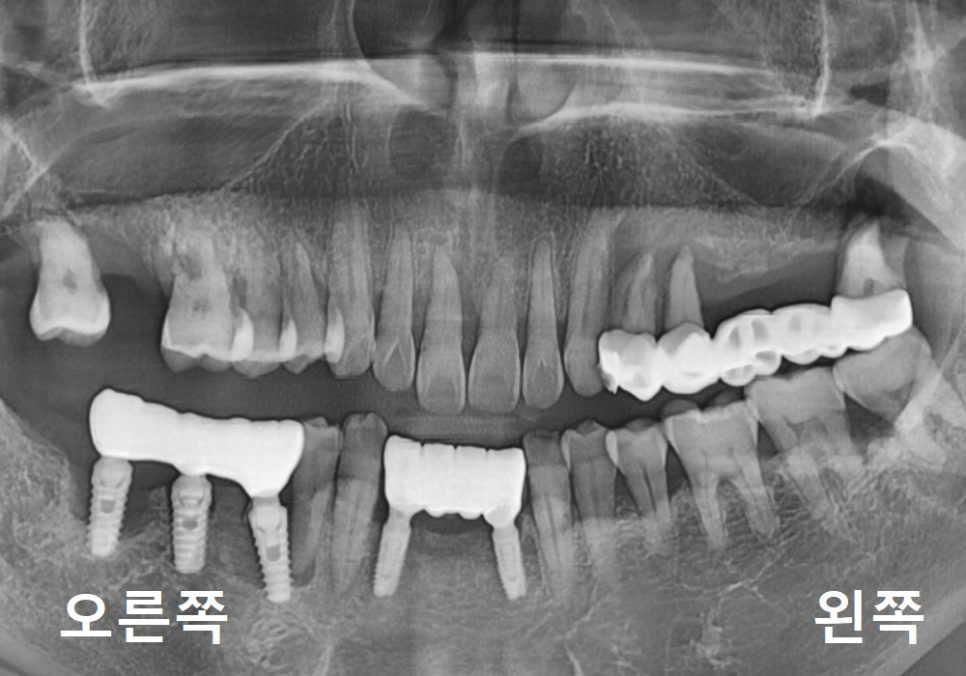
(Because dental photos appear reversed left and right,
please interpret them in the opposite way! ^^)
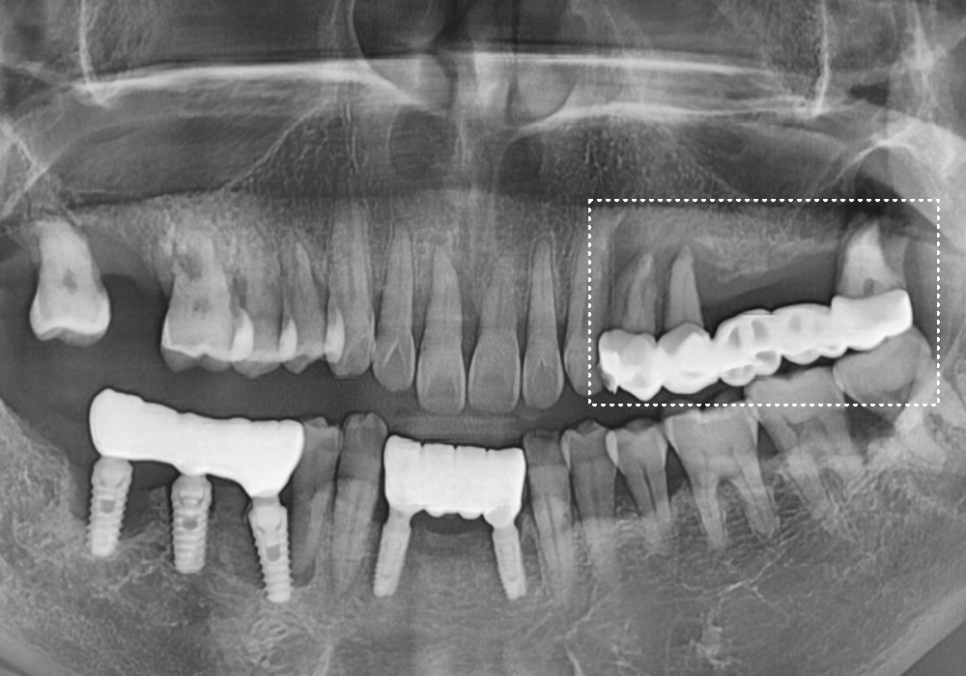
If you look at the upper left molar area,
you can see that the teeth were connected in a long bridge.
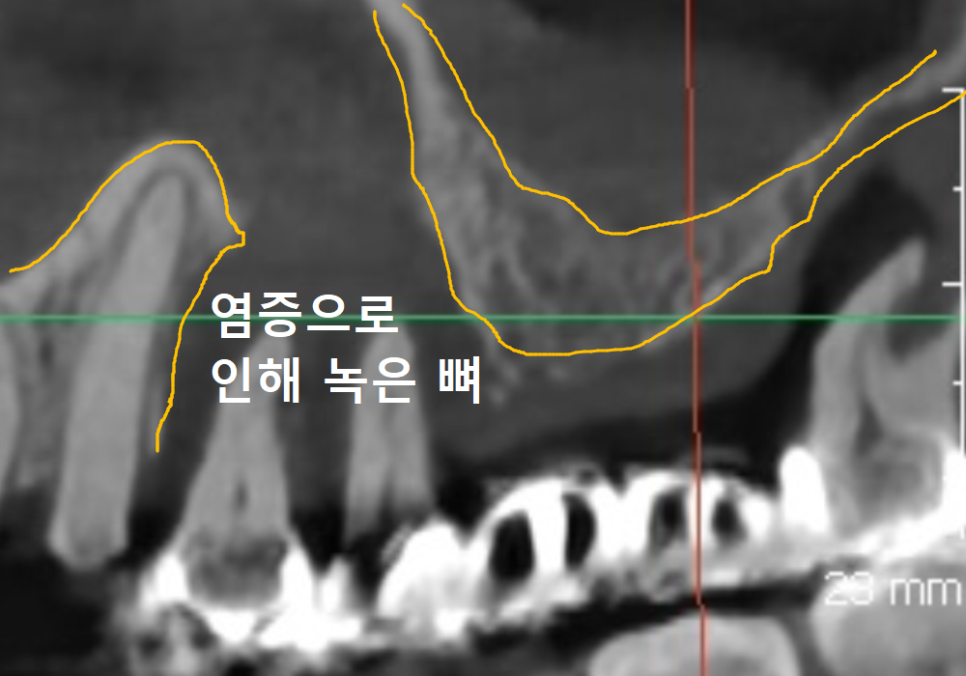
Let’s take a look at the root area supporting this bridge.
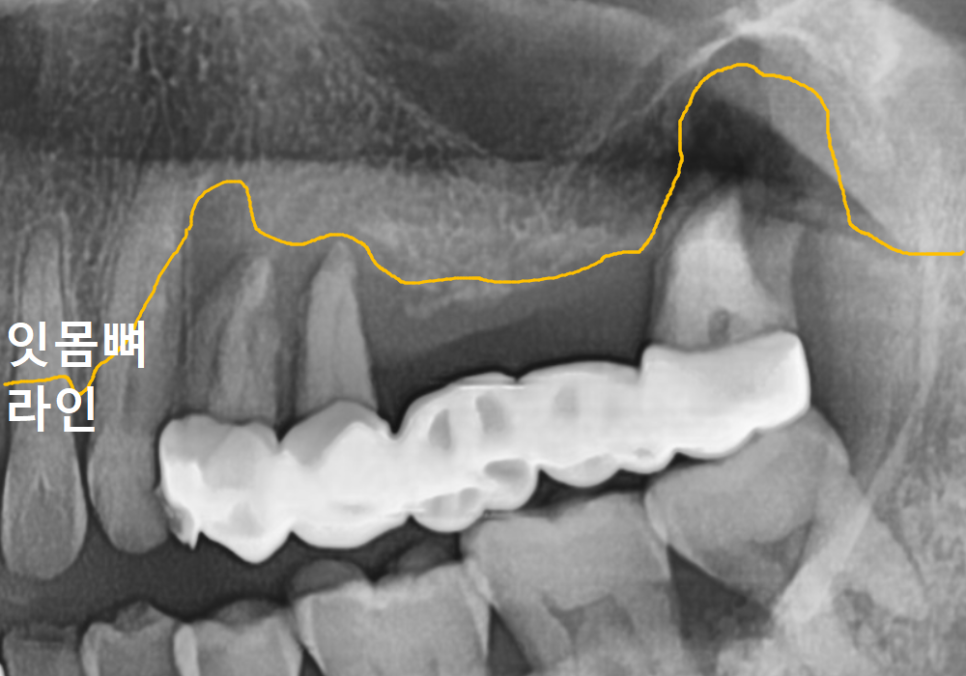
How is it?
Can you clearly see why the patient couldn’t chew on the left side?
The answer is that the bone had been completely lost due to inflammation around the root.
Whenever food touched the left side during eating, the long bridge
would wobble and move, causing pain.
In the end, the patient instinctively avoided the painful left side,
and even though one tooth was missing,
he ended up eating only on the relatively stronger right side.
 If You Eat on Only One Side, This Is What Eventually Happens.
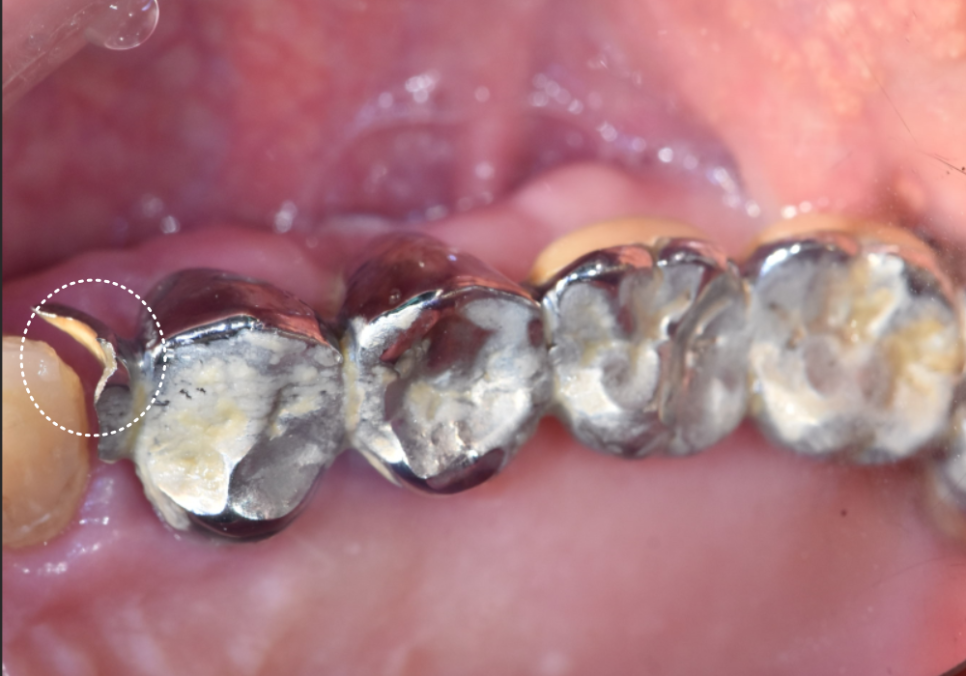
In fact, when we looked inside the mouth again,
we could also confirm that the restoration had come loose from the front teeth as it became unstable.
The problem was that after eating on only one side like this,
the patient recently came to us because a problem had developed in the jaw joint.
As explained earlier,
both jaw joints are supposed to share the workload evenly,
but what happens if only one side keeps doing all the work?
Naturally, the jaw joint becomes overloaded
and pain can occur.
Treatment process
If You Eat on Only One Side, This Is What Eventually Happens.
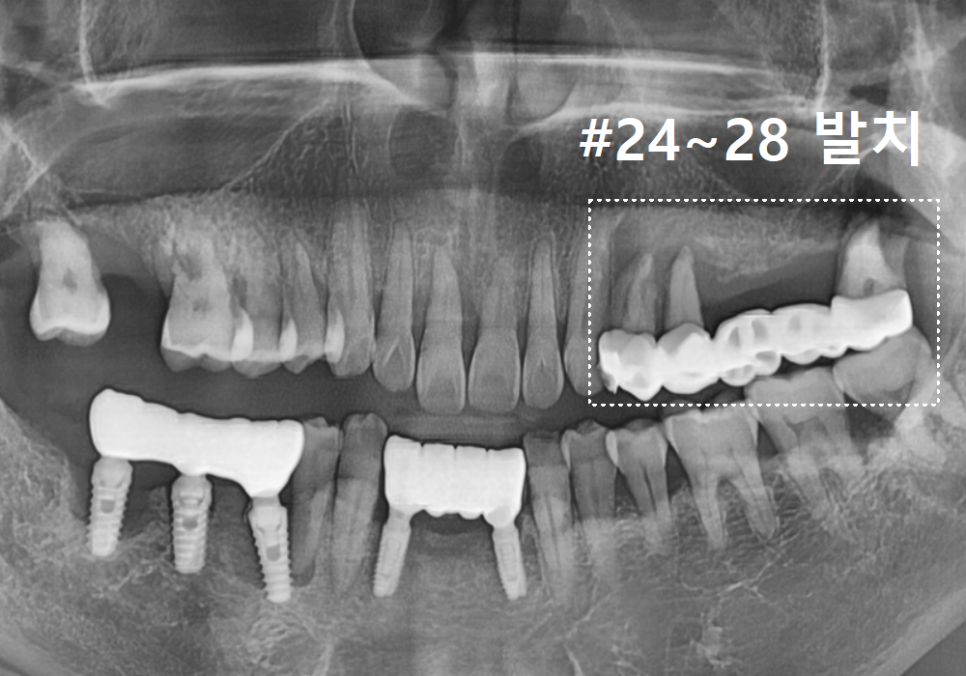
To restore balance on both sides,
and to prevent bigger problems,
we quickly extracted the problematic teeth and set up an implant plan.
Looking at the CT scan of the left molars, where the inflammation was severe,
because the inflammation had spread over a long period of time, the bone had been extensively destroyed even into the maxillary sinus
(the empty space above the roof of the mouth).
In cases like this, a procedure called a "sinus lift," in which a thin membrane is lifted and bone graft material is placed,
is absolutely necessary.
If you’re wondering exactly what kind of treatment a sinus lift is,
please be sure to refer to the post I previously organized below! ^^
Treatment results
If You Eat on Only One Side, This Is What Eventually Happens.
After extracting three teeth,
we combined the sinus lift and bone grafting
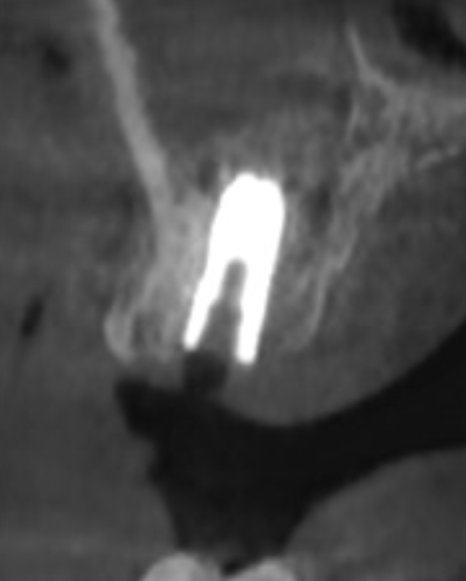
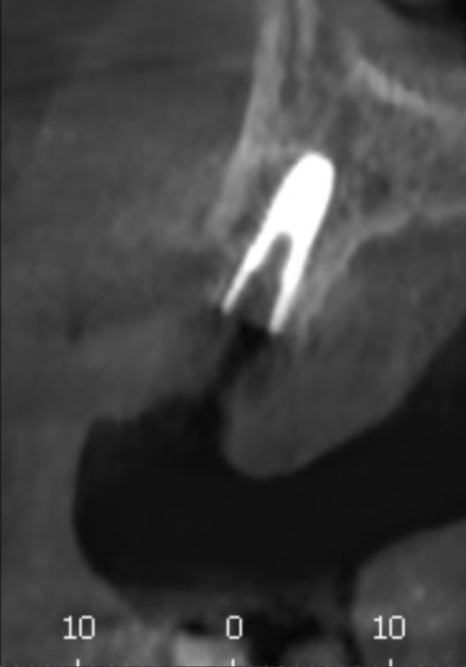
and successfully placed four implants in the proper positions.
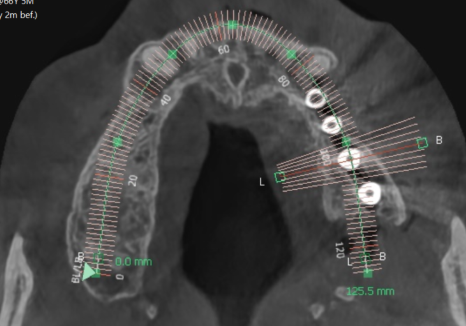
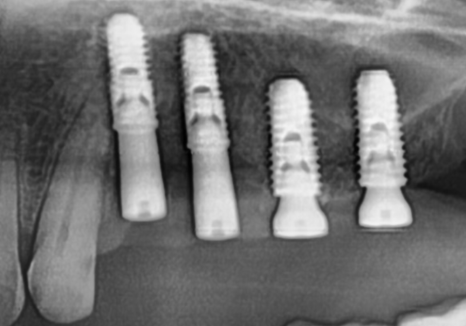
After confirming that the bone had firmly healed,
we finished the restoration beautifully with strong and aesthetic zirconia.
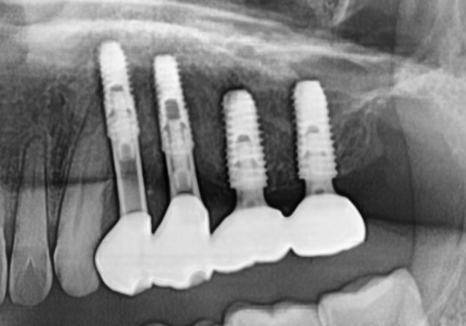
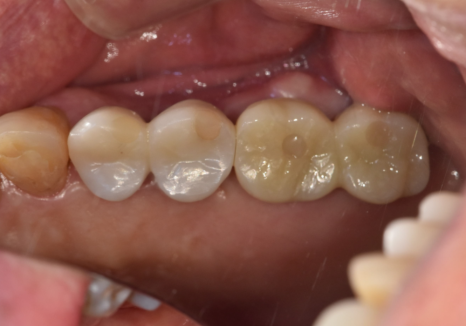
Now we look forward to the patient being able to eat comfortably on both sides without pain. ^^
The habit of chewing on only one side is not simply a matter of “one side feels more comfortable.”
In the end, it also damages the healthy opposite-side teeth and the jaw joints.
Are you also eating on only one side because of a painful tooth?
Please don’t leave it untreated just because “it’s a little uncomfortable, but still manageable,”
and make sure to get a detailed examination before it’s too late.
We promise an honest answer based on exactly what the patient needs now, without unnecessary treatment.
Thank you for reading this long post today. ^^
▼Check the clinic location▼
If You Eat on Only One Side, This Is What Eventually Happens.
| Go to make a reservation call |
|---|
| 02-481-4278 |
| This post was written directly by Seoul Bardi Dental Clinic for the purpose of providing medical information, in compliance with Article 56, Paragraph 1 of the Medical Advertising Act. The information provided is for reference only, and we recommend visiting a medical institution to receive guidance from medical professionals for symptom assessment and accurate management methods. All procedures/surgeries performed at the dental clinic may carry risks depending on the individual (e.g., inflammation, bleeding, swelling). Please make decisions after sufficient consultation with the medical staff in advance. The treatment cases in this post were photographed with the consent of patients who completed treatment at our clinic, and the before-and-after photos were taken under the same conditions. |