Hello.
I’m the director of Seoul Vardi Dental Clinic.
When people hear “sinusitis,”
they usually think of it only as a nasal condition caused by a lingering cold or rhinitis, right?
In fact, when your nose is blocked and yellow nasal discharge keeps coming out,
you naturally go to an otolaryngology clinic first.
But while receiving treatment at an ENT clinic,
quite a few people hear something unexpected like,
"It seems to be a tooth problem, so please visit a dentist once."
Thinking it was a nose problem,
they later come to our clinic
because it actually started from the teeth:
odontogenic maxillary sinusitis (sinusitis caused by teeth).
Today, I’ll explain in an easy way, along with real cases,
why you can have nasal symptoms when a molar hurts,
and how it should be treated.
- Why is the cause the "teeth" when it seemed like sinusitis?
This explains why sinusitis caused by teeth means you should go to the dentist when your nose hurts.
Inside the cheeks of our face,
there is a large air-filled space called the maxillary sinus.
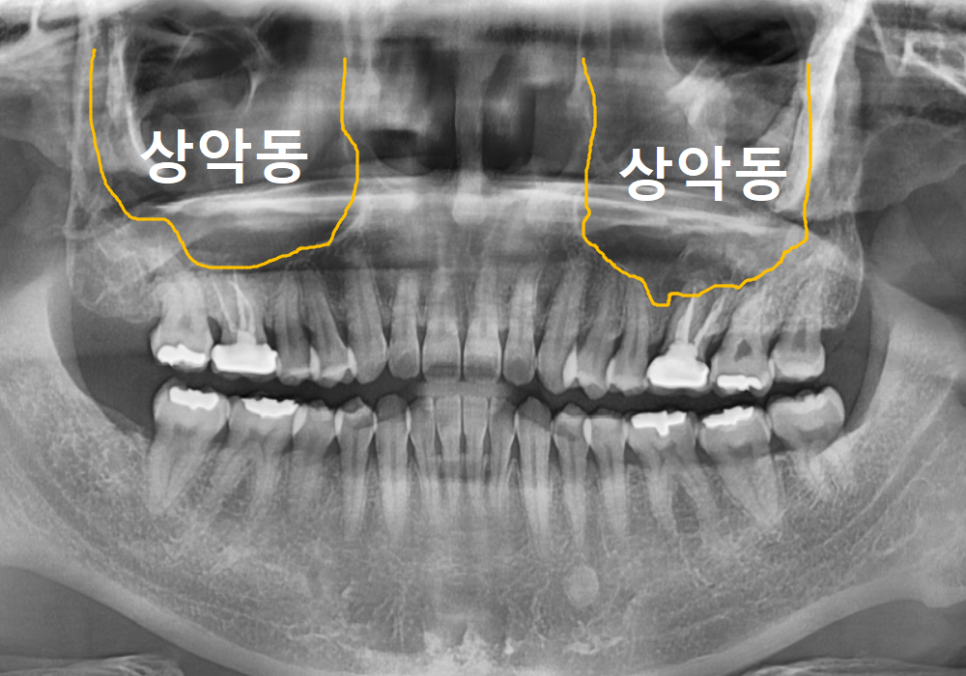
But the roots of the upper molars
are right next to the floor of this maxillary sinus,
separated only by a very thin layer of bone.
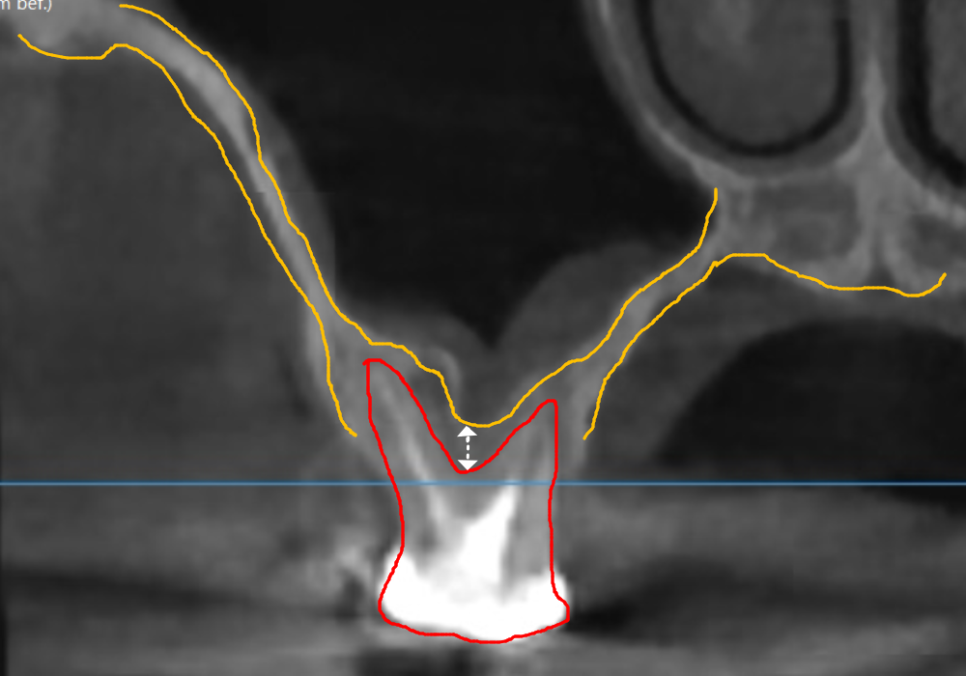
Because they are so close structurally,
if a severe cavity develops in an upper molar,
and inflammation occurs at the root tip, that inflammation can break through the thin bone
and spread into the maxillary sinus.
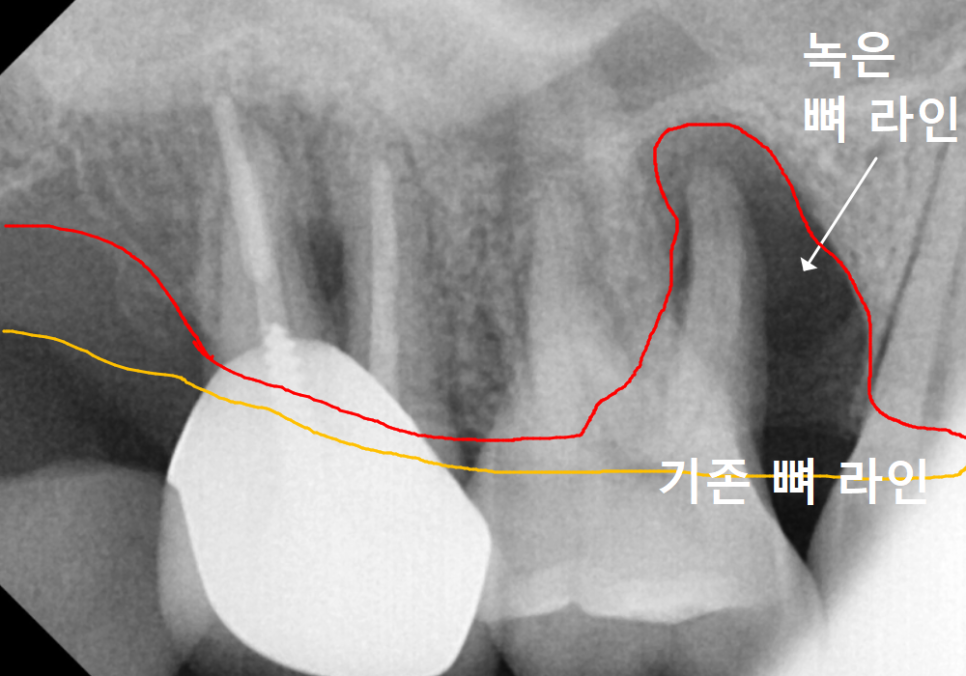
This is what odontogenic maxillary sinusitis is.
- What are the symptoms of odontogenic maxillary sinusitis?
This explains why sinusitis caused by teeth means you should go to the dentist when your nose hurts.
Sinusitis caused by teeth
has a few features that are a little different from regular sinusitis.
- Symptoms appear only on one side of the nose.
Usually, instead of both sides, only the side of the nose
corresponding to the problematic tooth has yellow discharge and congestion.
- There is a strong, unexplained bad smell.
A foul odor like rotten cheese or a sewer smell may come from the nose.
- Toothache and facial pain occur together.
The molar throbs, and at the same time there is a heavy, painful sensation around the cheekbone.
- [Real case] A patient who suffered from chronic sinusitis and tooth pain
This explains why sinusitis caused by teeth means you should go to the dentist when your nose hurts.
A patient who recently visited our dental clinic
had a similar case.
As the sinusitis symptoms were getting worse,
and tooth pain was also present, the patient had a CT scan at an ENT clinic,

and came to us after being told,
"It seems to be a tooth problem."
Diagnosis result
Sinusitis caused by teeth, odontogenic maxillary sinusitis
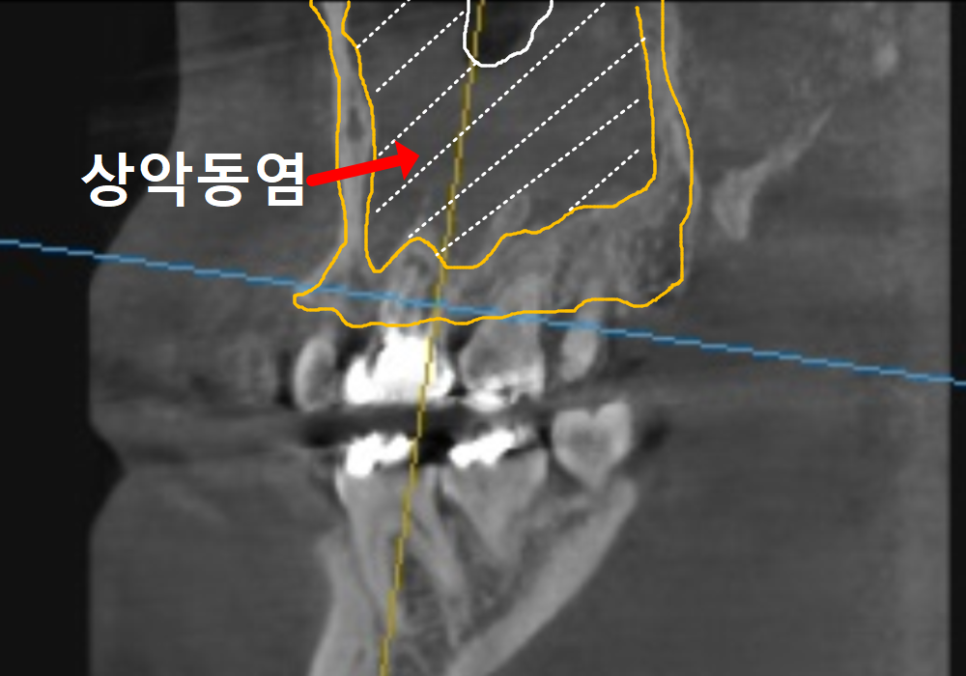
After checking the CT..
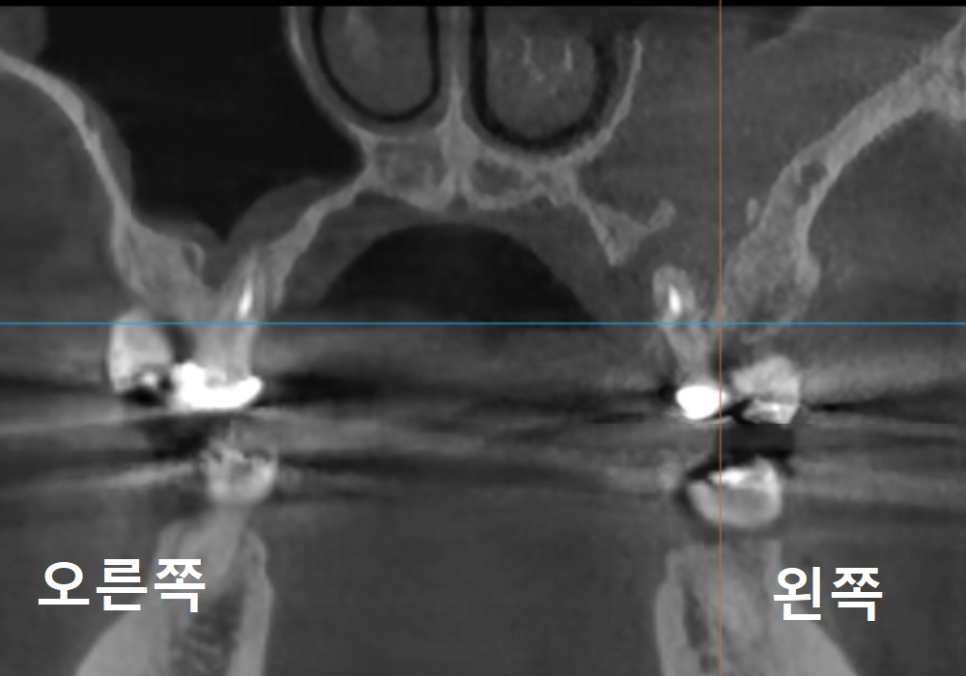
Did you notice that the area above the right and left molars looks clearly different?
Normally, a healthy air cavity (the maxillary sinus)
should contain only air, so it should appear "black."
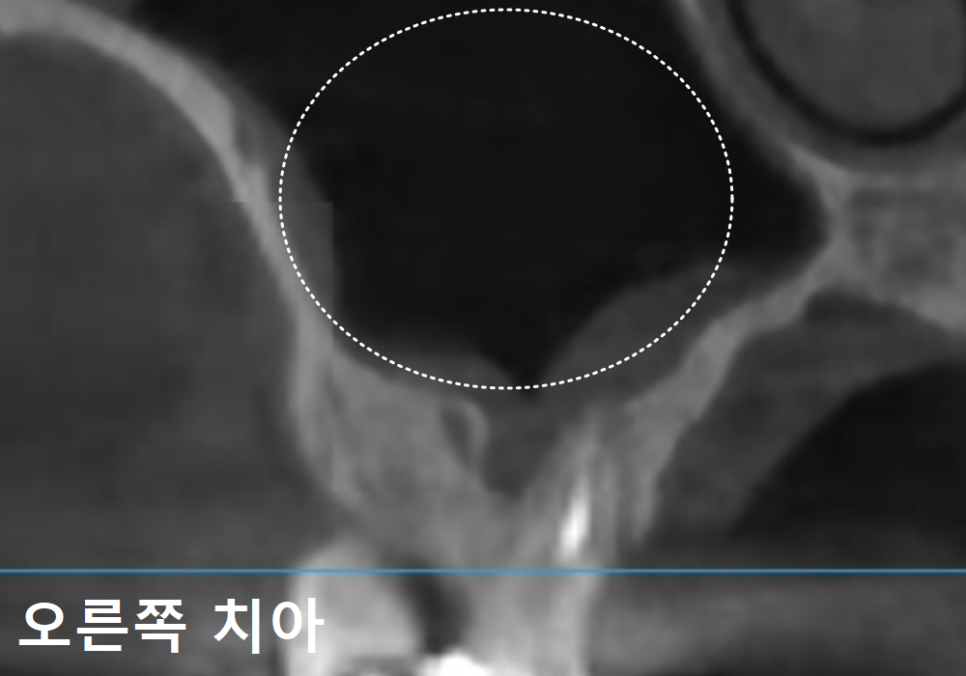
But on one side, it has turned "white," as if covered by a hazy mist, right??
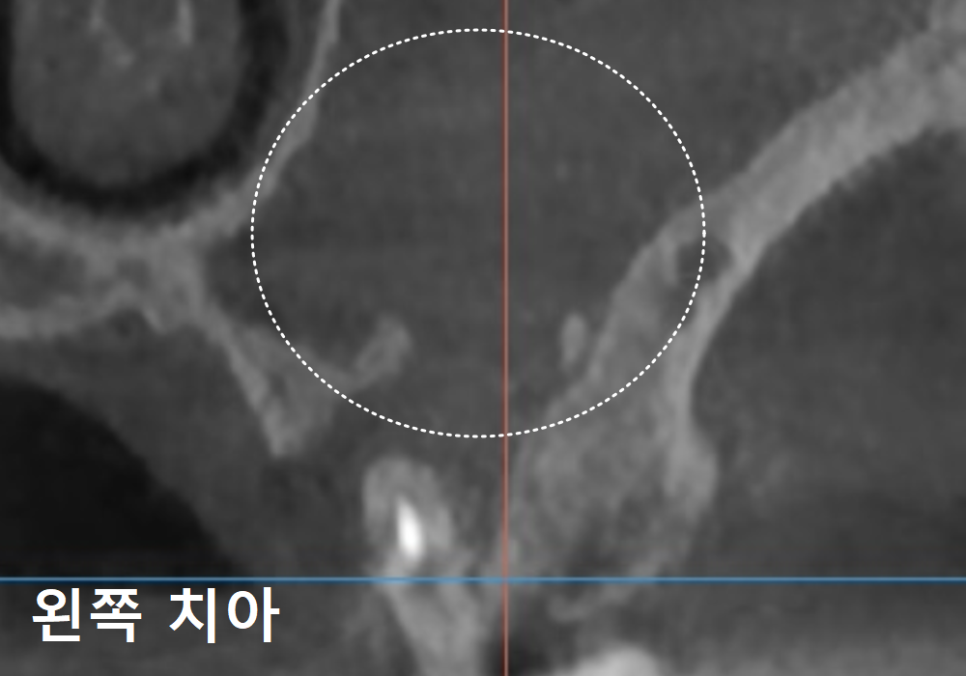
This was not due to a nasal condition,
but because inflammation that started at the tip of the tooth root
had broken through the thin bone and filled the maxillary sinus.
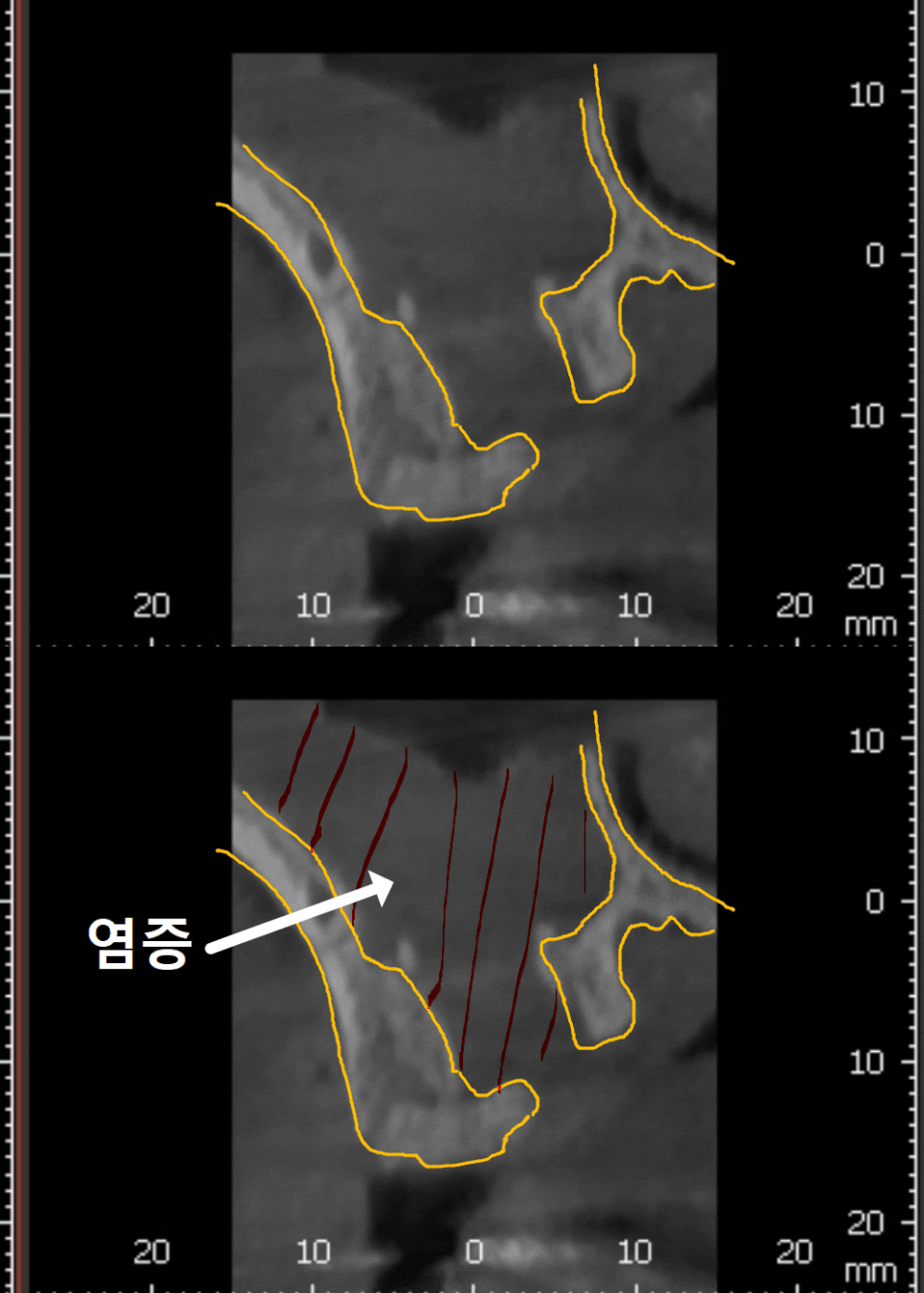
In this patient, the inflammation had already become chronic,
and the surrounding bone had been significantly resorbed.
An implant needed to be placed,
but because the bone had resorbed, the available height for implant placement
was visibly very thin at a glance...
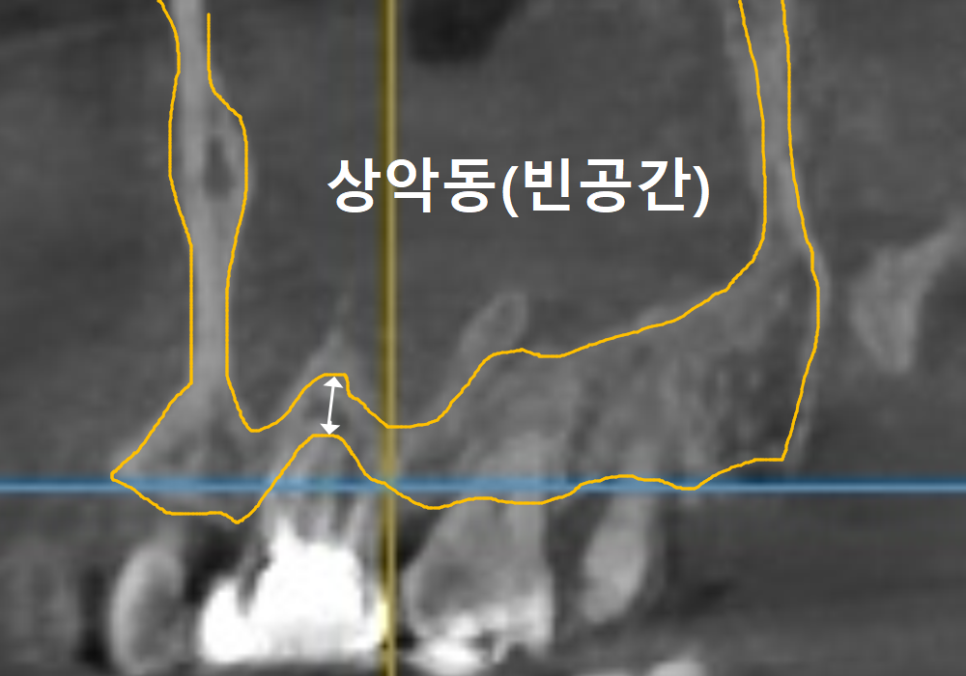
In cases like this, because the inflammation was so extensive,
placing an implant right away could only increase the chance of failure.
ㅜㅜ
So, even though it would take a little time, I decided to proceed with the safest method: delayed placement.
▼If you are curious about delayed placement,
please refer to the post I summarized below earlier. ^^
Treatment plan and process
Sinusitis caused by teeth, odontogenic maxillary sinusitis
First, we extracted the tooth that was causing the ongoing sinusitis.
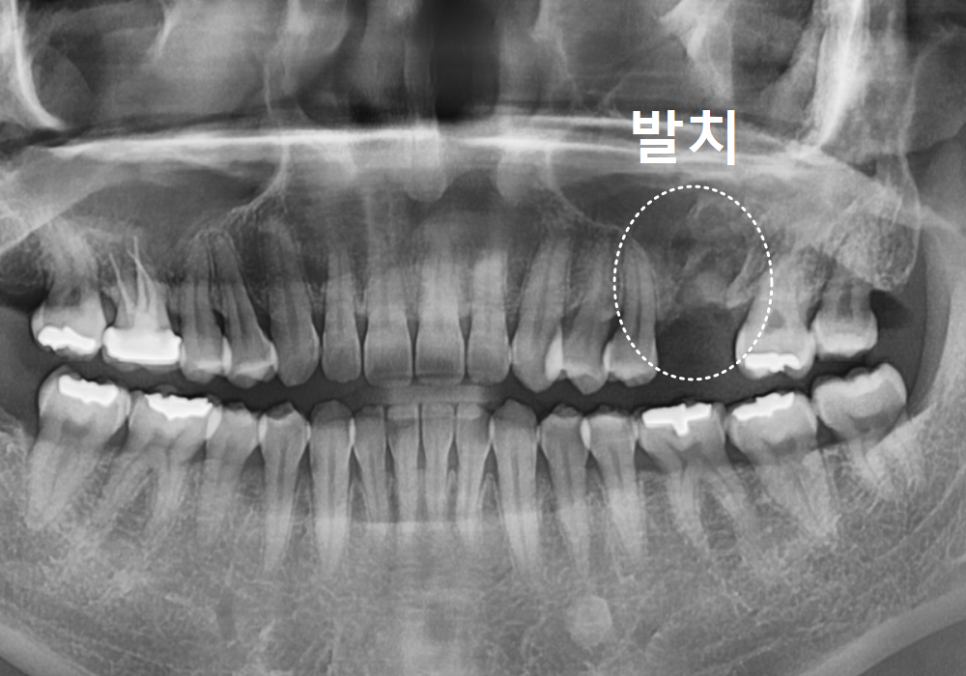
Because the inflammation inside the nose was so severe,
we decided to proceed safely by combining dental treatment with ENT care
and going through a process to reduce the inflammation.
Usually, after extracting the tooth,
people want to move quickly to the next surgery at the same time!!
But when the inflammation has spread widely like in this patient,
you need to allow enough time for the inflammation to subside.
If you do not give the inflammation trapped inside the bone time to calm down and clean itself up,
no matter how good the bone grafting material is,
the chance of failure becomes high.
So, one month later, after confirming that the inflammation had settled,
we performed a sinus lift procedure.
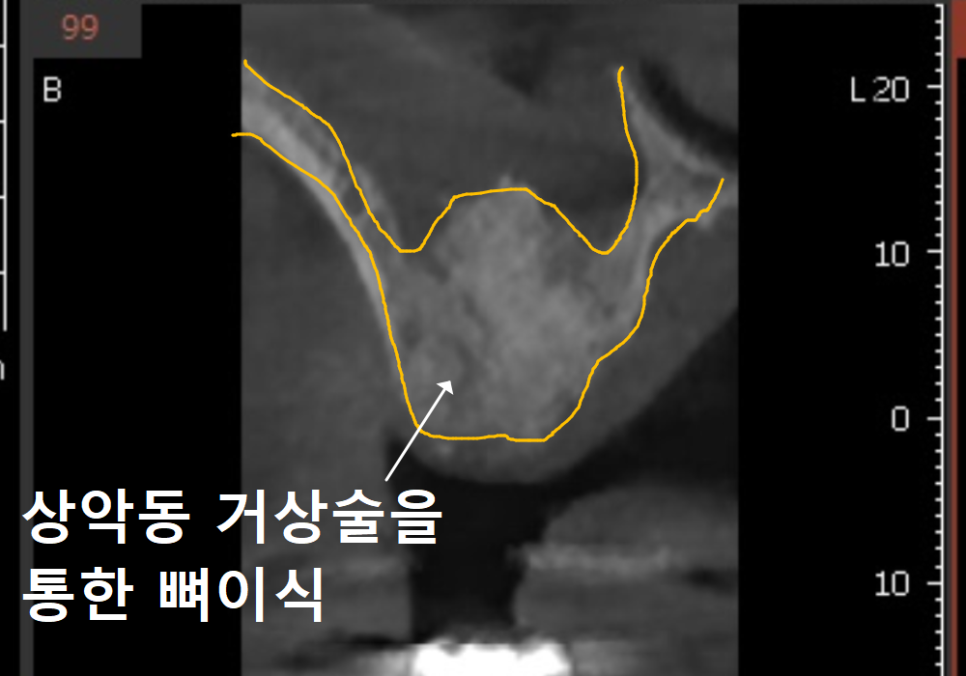
Three months later, fortunately, the bone had filled in well~
After confirming that the bone had filled in safely,
we placed the implant fixture in the desired position.
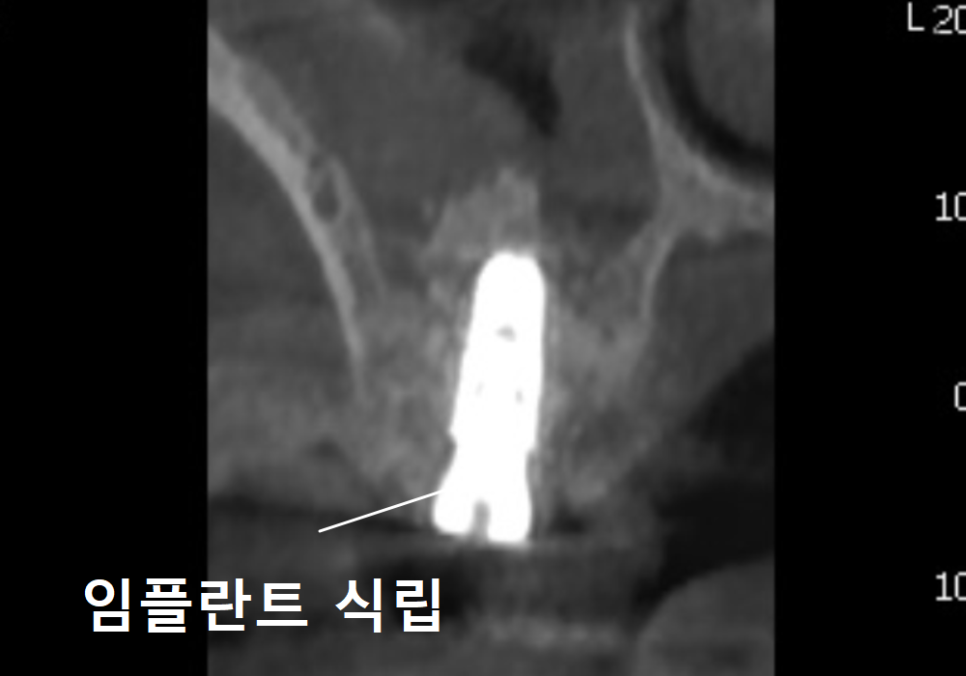
Three months after surgery, we measured the ISQ value
to see how well the implant had integrated with the bone.
Usually, a value above 70 is considered very stable,
and fortunately, it came out to be a very high 84.^^
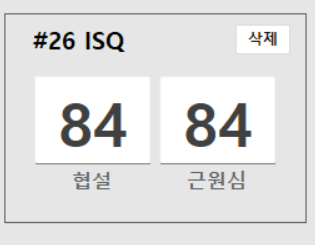
The integration was so good that it is hard to believe this was an area where there had almost been no bone because of inflammation~
After that, we finished the case with a strong and natural zirconia prosthesis.
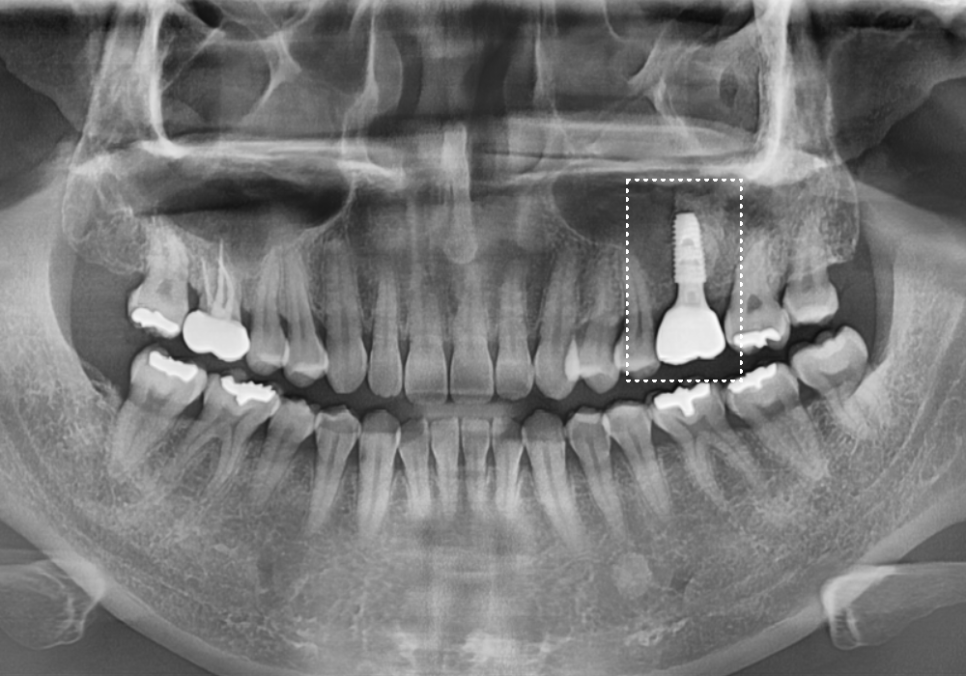
I feel very relieved and proud that the sinusitis that had troubled the patient for so long
has now completely disappeared.^^
If we had treated only the nasal symptoms,
the problem would likely have kept recurring and been difficult for the patient.
This change was possible because we properly solved the tooth problem,
which was the root cause.
Do not assume that sinusitis is simply caused by a cold or rhinitis.
Especially if symptoms appear only on one side of the nose or there is a bad smell,
please get a detailed examination before it gets any worse.
We promise honest answers tailored to what the patient truly needs,
without unnecessary treatment.
Thank you for reading this long post today! ^^
▼Check the clinic location▼
This explains why sinusitis caused by teeth means you should go to the dentist when your nose hurts.
| Go to make a reservation call |
|---|
| 02-481-4278 |
| This post was written directly by Seoul Vardi Dental Clinic for the purpose of providing medical information in compliance with Article 56, Paragraph 1 of the Medical Advertising Act. The provided information is recommended for reference only, and for symptom assessment and accurate management methods, please visit a medical institution and receive guidance from medical staff. All procedures/surgeries performed at the dental clinic may involve individual risks (inflammation, bleeding, swelling, etc.). Please make a decision after sufficient consultation with the medical staff in advance. The treatment cases in this post were photographed with the consent of the actual patients who completed treatment at our clinic, and the before-and-after photos were taken under the same conditions. |