Hello!
I am the director of Seoul Bardi Dental Clinic.

▼ Check the clinic location ▼
| This post was written directly by Seoul Bardi Dental Clinic for the purpose of providing medical information, in compliance with Article 56, Paragraph 1 of the Medical Advertising Act. We recommend that you use the information provided only as a reference, and we ask that you visit a medical institution to receive guidance from medical staff regarding symptom assessment and accurate management methods. All procedures / surgeries performed at the dental clinic may involve risks depending on the individual (inflammation, bleeding, swelling, etc.). Please make your decision after sufficient consultation with medical staff in advance. The treatment cases in this post were photographed with the consent of patients who completed treatment at our clinic, and the before-and-after photos were taken under the same conditions. |
| Directions |
A working professional who lives near Sangil-dong Station said this in the consultation room.
"Transparent aligners are appealing,
but some people say braces are better....
I just can’t decide."
Many of you may be up late searching because of a similar concern.
If you search online, there is so much information,
and some posts say
transparent aligners are better,
while others say
wire braces are more accurate.
It only makes things more confusing,
and you end up wondering what is actually right.
To start with the conclusion,
for these two methods,
the key is not "which is better,"
but "which is suitable for my teeth."
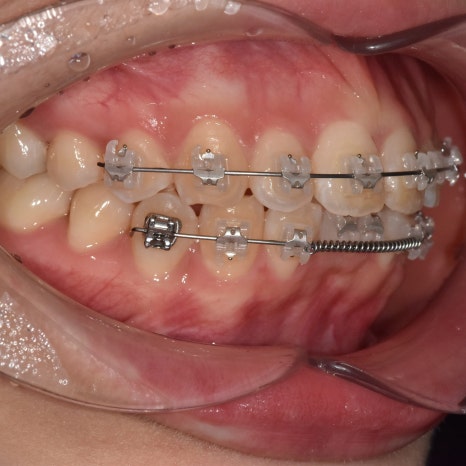
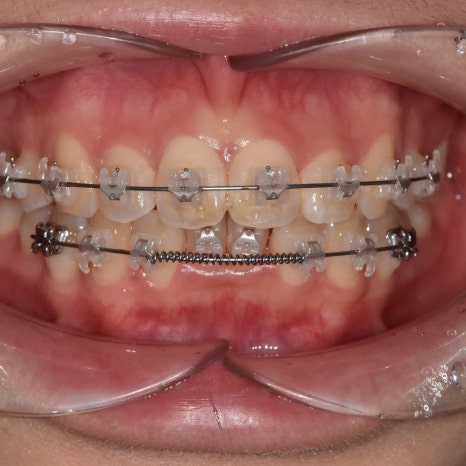 Example photos
The reason diagnoses can differ from clinic to clinic
also comes down to this difference.
Even for the same teeth,
the conclusion can change depending on
what aspect is given more weight.
In fact, studies comparing the two methods
have continued to be published.
Today, based on those research findings,
I will summarize three real differences
between transparent aligners and wire braces,
and explain which method is most suitable
for which type of patient.
| Chapter 1. The [accuracy] of tooth movement is different. |
This is the most important difference.
Transparent aligners do not move teeth
100% exactly as planned by the computer.
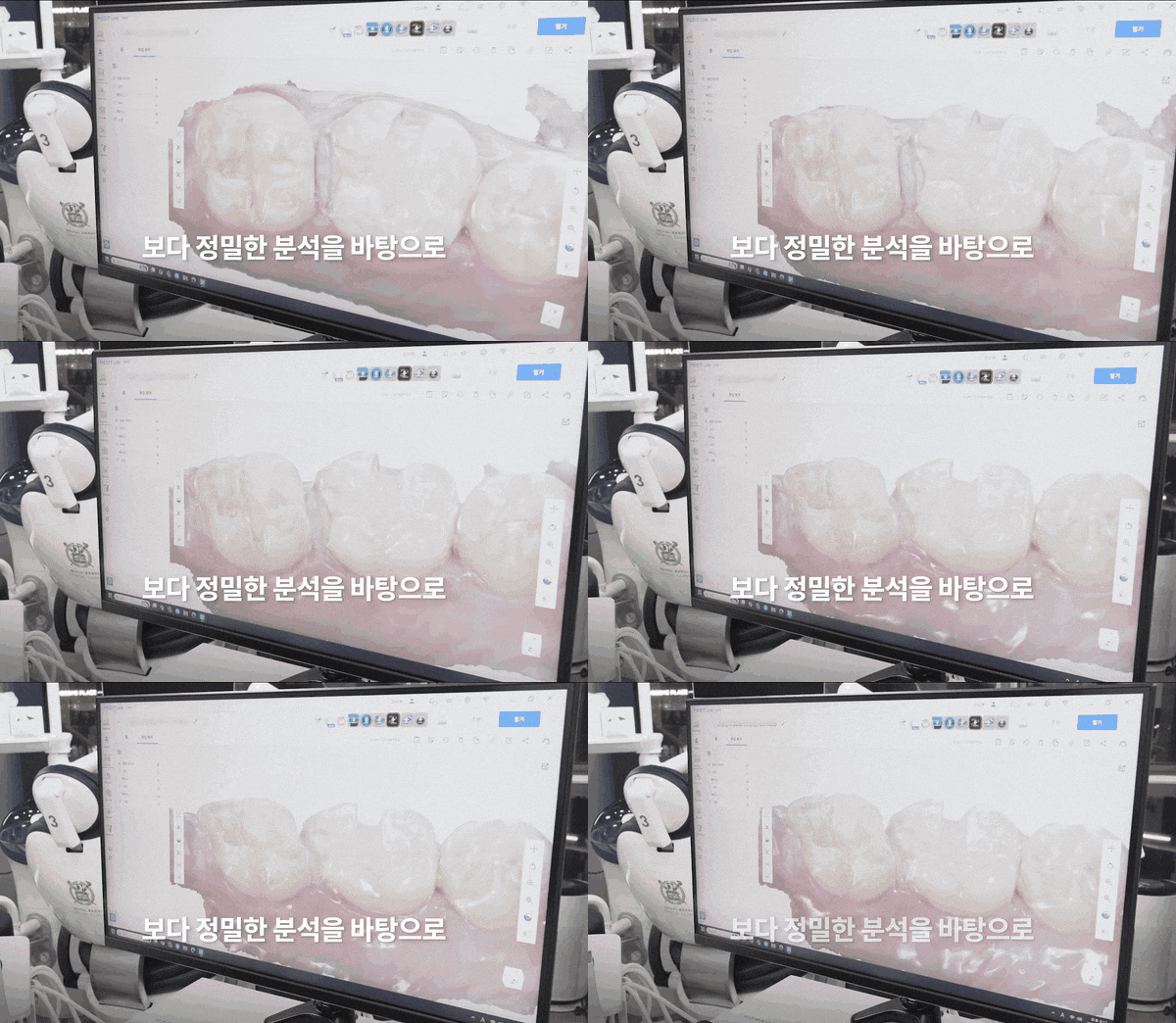
According to a study by Dr. Kravitz published in the 2009 Journal of Orthodontics,
the overall tooth movement accuracy of transparent aligners
was about 41% on average.
What is especially difficult
is rotational movement.
Rotating round teeth like canines
has an accuracy of only about 36%
with transparent aligners.
Of course, as technology has improved,
accuracy has also increased.
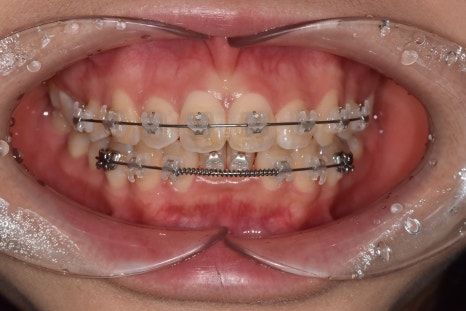
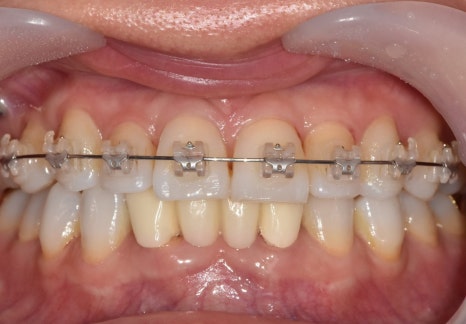 Example photos of wire braces
Simply put,
transparent aligners
"apply force well to the crown of the tooth,
but moving the entire root is a bit difficult."
On the other hand, braces that move teeth with wires
have brackets firmly attached to the teeth,
so the roots can be adjusted
with precision.
The difference is especially large in complex cases
where many teeth need to be moved,
such as extraction treatment.
According to a study published in Nature Reports in 2025,
when extraction cases were treated with transparent aligners,
cases were reported in which the front teeth tilted inward
and the molars tipped forward.
That is why, in cases requiring extraction
or for protruding mouth correction,
most orthodontic specialists
recommend wire braces.
| Chapter 2. Transparent aligners are more advantageous for gum health and tooth roots. |
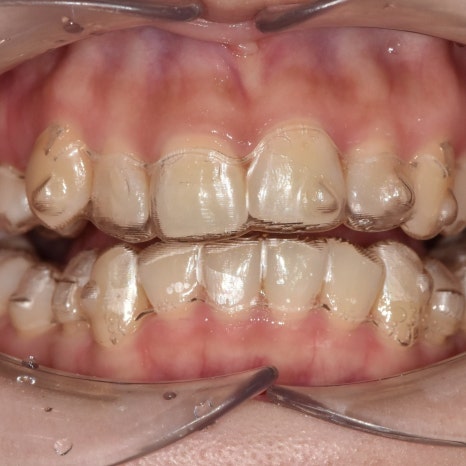
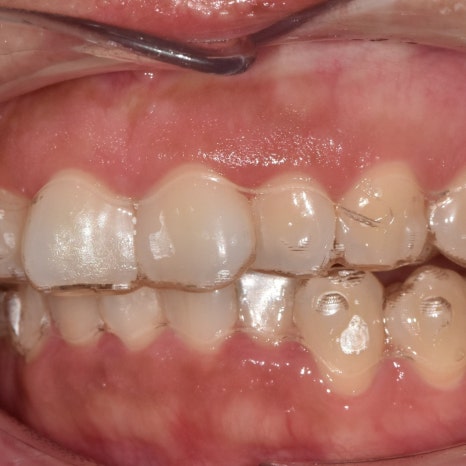 Example of transparent aligners
This is a clear advantage of transparent aligners.
When undergoing orthodontic treatment,
a phenomenon called "root resorption," where the tip of the tooth root becomes slightly shorter,
commonly occurs.
Most of the time, this is not a clinical problem,
but in severe cases,
it can affect the lifespan of the tooth.
Transparent aligners are removed when eating
and also when brushing,
so the area around the teeth can be kept cleaner,
and because force is applied intermittently,
there are reports that root resorption tends to be less.
Unlike wire braces, where food can easily get stuck
between the brackets and the wire,
transparent aligners are removed for brushing,
which also helps with gum care.
However, these advantages apply only on the condition
that they are worn properly for 20–22 hours a day.
If they are left out for long periods,
these advantages disappear.
| Learn more about transparent aligners |
| Conclusion |
Transparent aligners and wire braces
each have their own strengths and limitations.
So rather than asking which appliance to choose...
what comes first is accurately understanding
what your teeth condition is like.
We compare the methods objectively
and provide guidance based on each patient’s case.
It does not have to be our clinic.
But when you receive a consultation,
make your decision at a clinic that explains
the differences between the two methods thoroughly.
Because these are teeth you will use for 10 or 20 years.