Hello!
I’m the director of Seoul Bardi Dental Clinic.
▼ Check the clinic location ▼
| Directions |
While looking in the mirror,
there are times when
one front tooth
looks strangely darker.
"I guess whitening will fix it?"
I bought a self-whitening kit,
and while the other teeth become brighter,
only that one tooth
doesn’t change color...
To give you the conclusion first,
in this case,
regular whitening
does not solve the problem.
Because the cause is not on the tooth surface,
but inside the tooth.
Today, I’ll explain why
and how to treat it.
| Chapter 1. Why only one front tooth becomes darker |
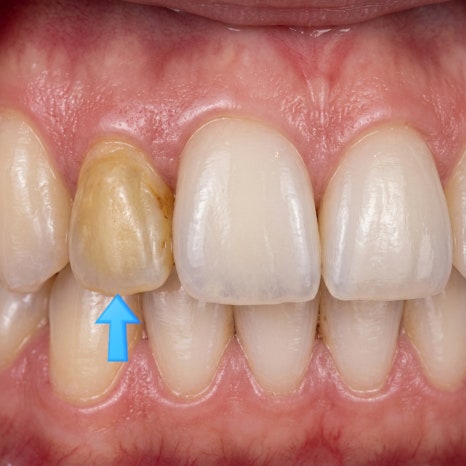
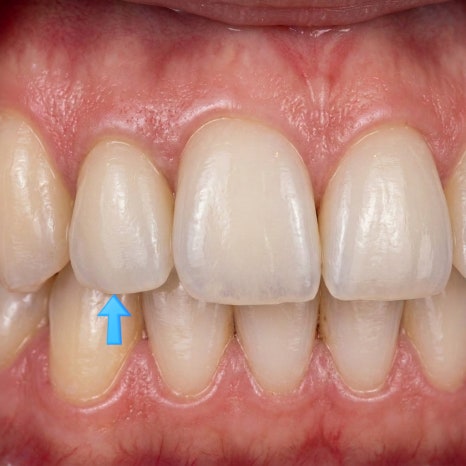
When only one tooth
becomes darker,
there are usually one of two causes.
First,
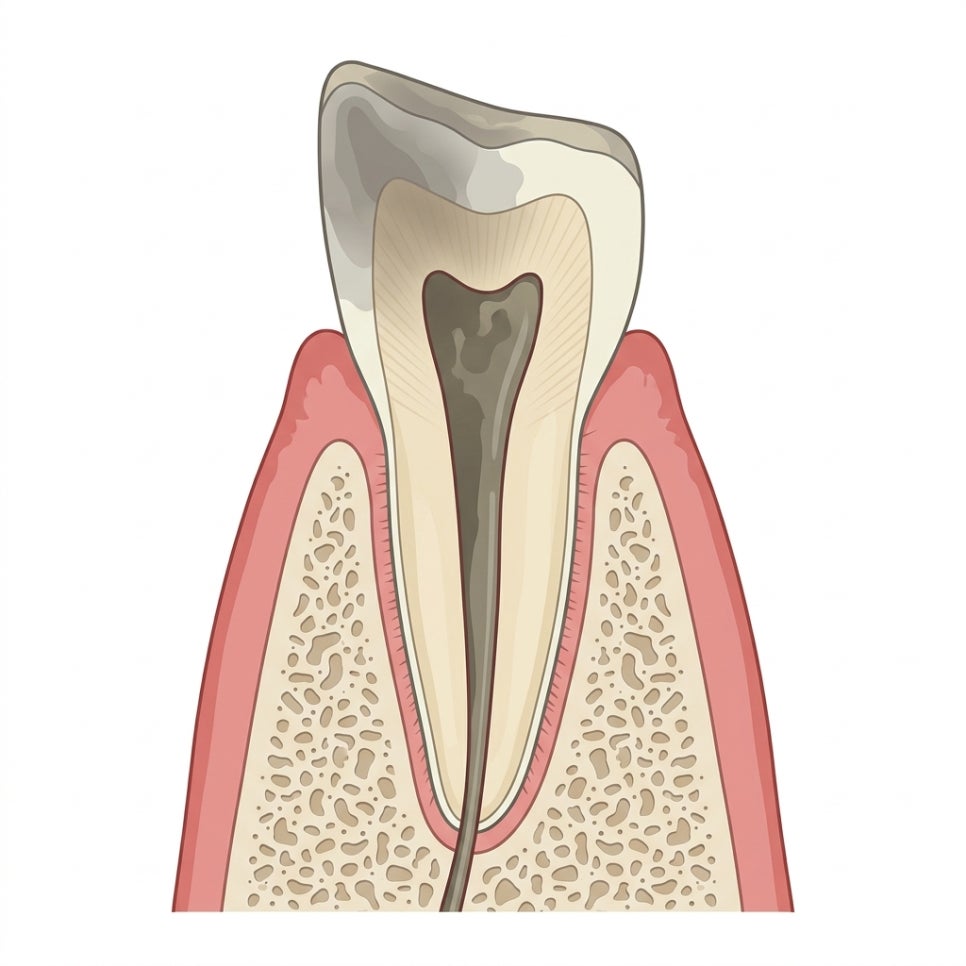
when the nerve has died
Inside the tooth,
there is a tissue called the pulp,
which contains nerves and blood vessels.
If the cavity was deep,
if the tooth was hit a long time ago,
or if the tooth had root canal treatment
in the past,
the pulp can slowly die,
and the tissue inside can degenerate.
The pigment formed at that time
seeps into the inside of the tooth
and changes the tooth color.
Second,
a history of dental trauma
Did you ever fall and
hit your front teeth when you were young?
Even if it looked fine at the time,
if there was minor bleeding
inside the tooth,
color change may appear
gradually over time.
This is the part that surprises patients
the most.
| Chapter 2. Why regular whitening doesn’t work |
This is where many people
waste time.
Tooth discoloration is broadly divided
into extrinsic and intrinsic types.
| Extrinsic discoloration |
Coffee, wine, cigarettes, etc.
can be addressed with scaling
or regular whitening.
| Intrinsic discoloration |
This is when the nerve has died,
or the internal tooth tissue has degenerated,
causing the dentin inside the tooth
to change color first.
This kind of discoloration
does not fade just by applying agents
from the outside.
Because the location where the pigment is settled
is different.
To put it simply,
coffee stains on a white blanket
can be removed with detergent,
but
if the cotton inside the blanket is discolored,
the color will not come out
no matter how much you wash it.
| Chapter 3. The solution is non-vital tooth whitening. |
Intrinsic discoloration is treated with
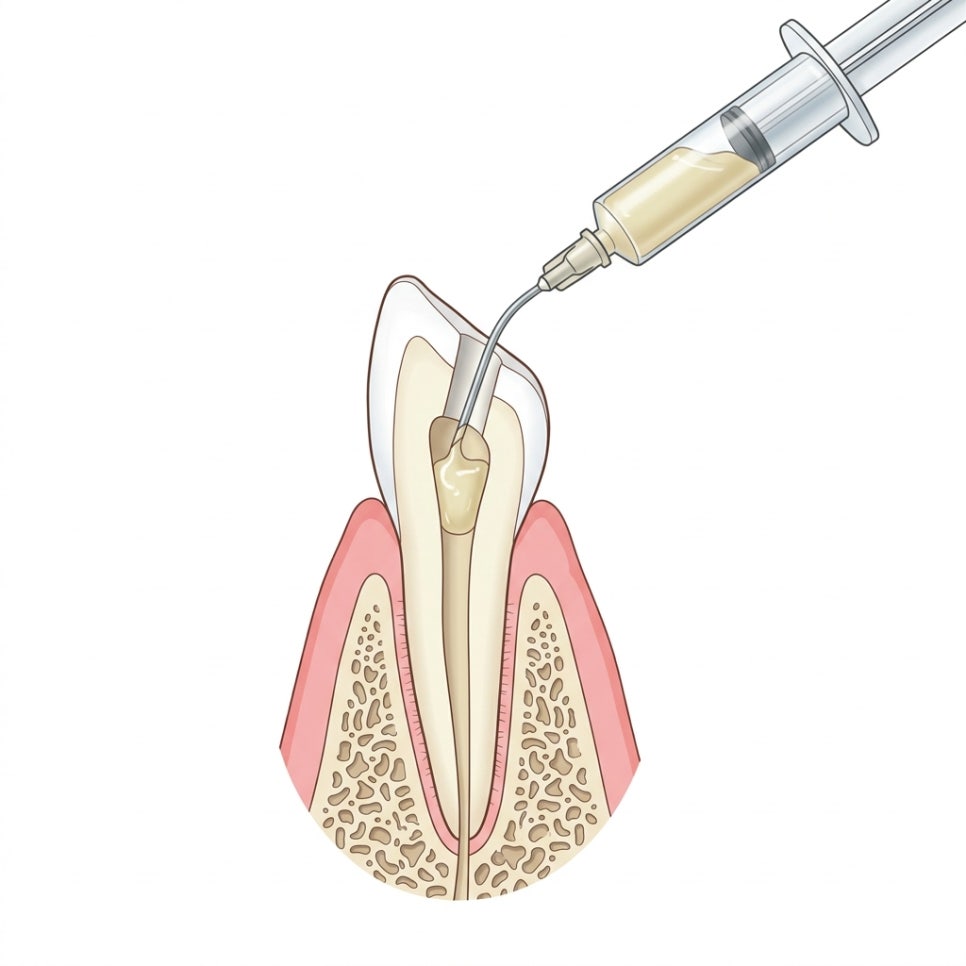
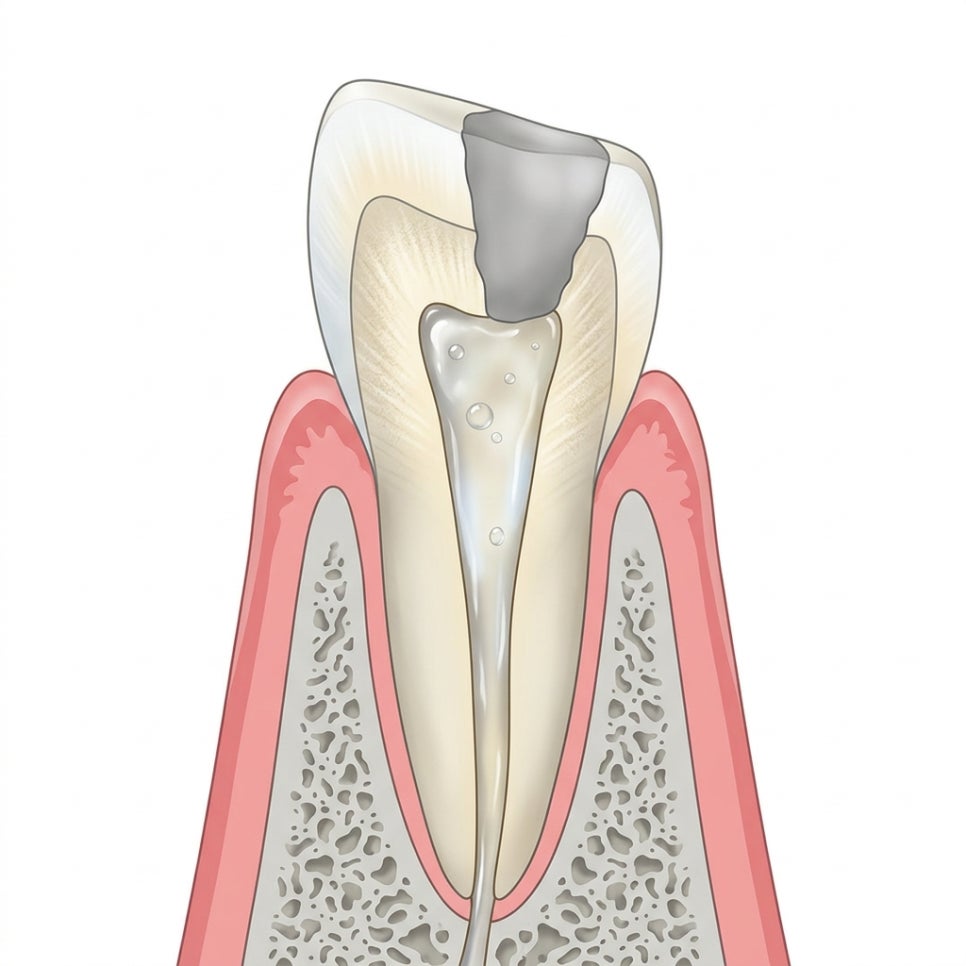
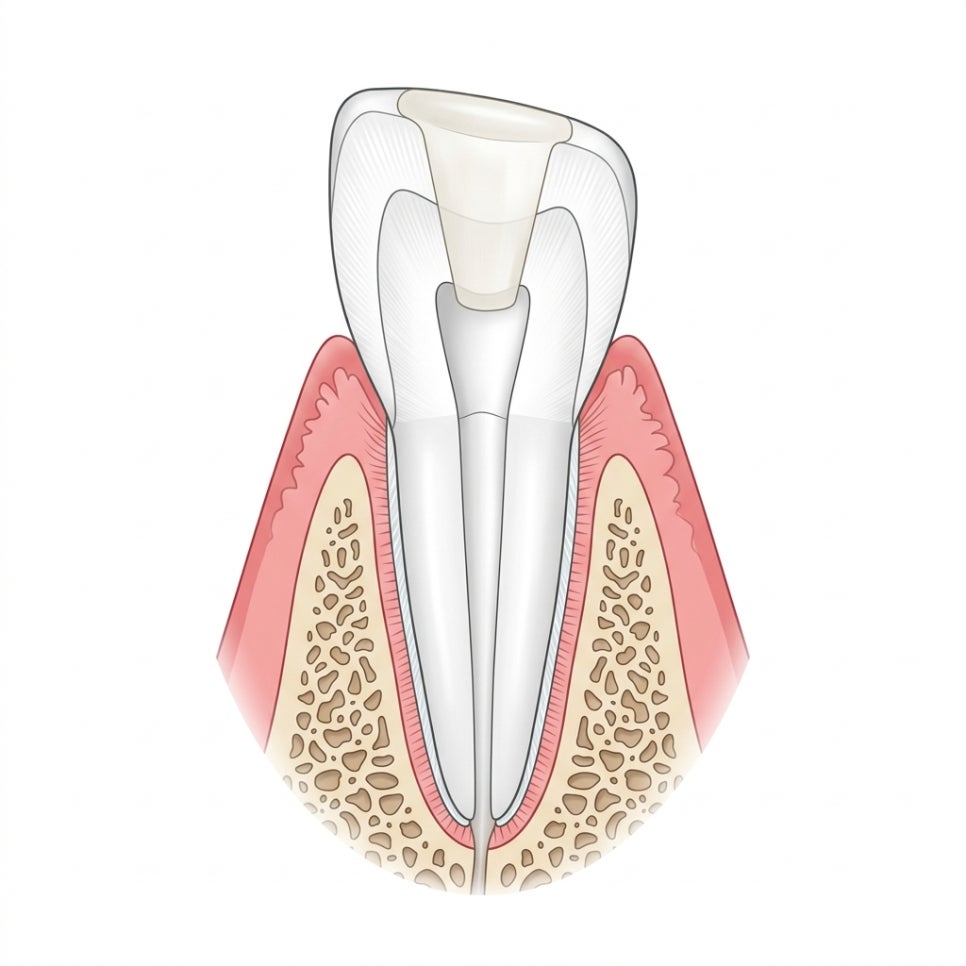
non-vital tooth whitening (walking bleach).
Simply put,
it is a treatment that places whitening medication
inside the tooth
to remove the color from within.
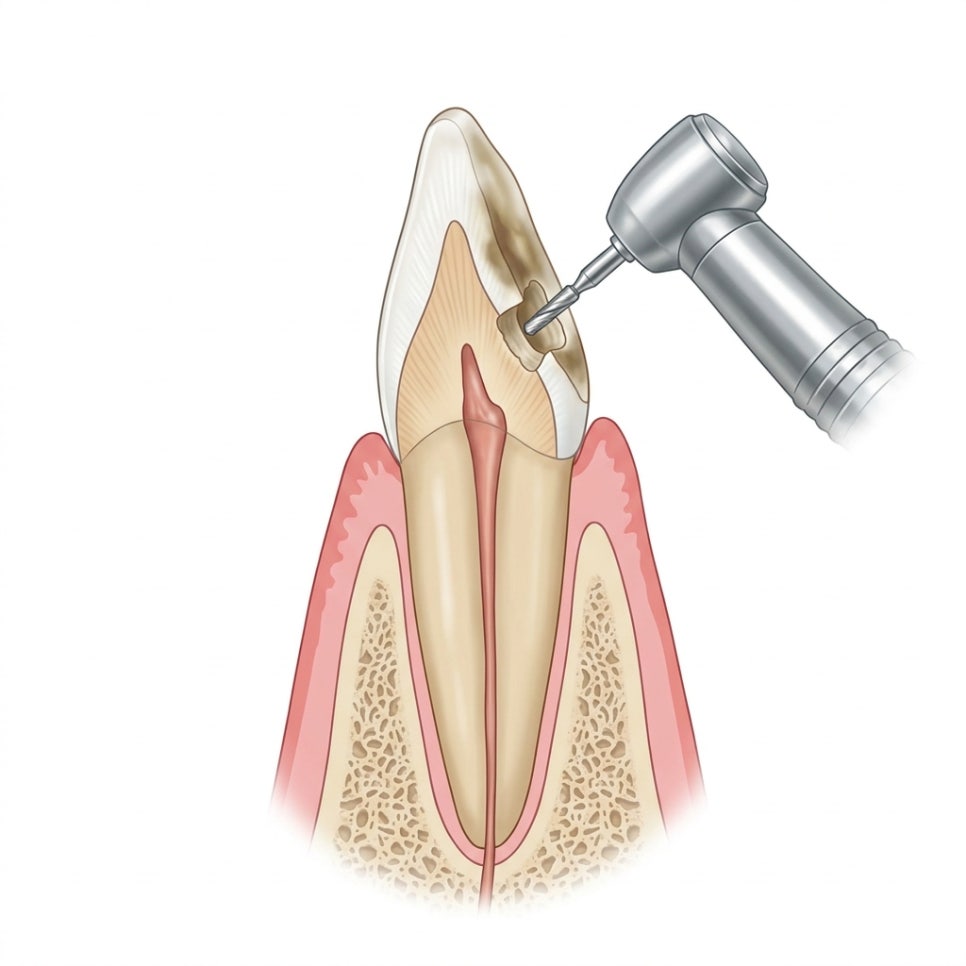
Treatment process
Previous image
Next image
Through an opening on the back side of the tooth,
we place a high-concentration hydrogen peroxide agent
inside,
and seal it with temporary material.
The agent is usually replaced every week,
and after repeating the process about 2 to 3 times on average,
the tooth can recover close to its original color.
One thing to keep in mind, however.
With non-vital tooth whitening,
after about one year on average,
the color tends to gradually darken again.
Just as white clothes get dirty again
after being worn for a long time.
At that point, you can try non-vital tooth whitening again
or choose a covering restoration
for a more permanent solution.
Conclusion
When only one front tooth has darkened,
regular whitening
does not solve the problem.
Because the cause is inside the tooth.
When you receive a consultation,
it is best to start with a place
that can identify the cause accurately.
As a specialist in integrated dentistry,
let me add one more thing:
discoloration in front teeth
does not improve with time.
If it is left untreated while the nerve has died,
inflammation can occur at the root tip,
and later on, it may become impossible
to save the precious tooth.
If you look in the mirror and think,
"Huh? Something seems wrong with this tooth?"
please don’t put it off;
check the cause first.
Teeth do not give us
endless opportunities
as time goes by.
| This post was written directly by Seoul Bardi Dental Clinic for the purpose of providing medical information in compliance with Article 56, Paragraph 1 of the Medical Advertising Act. The provided information is for reference only, and we recommend visiting a medical institution to understand your symptoms and receive guidance from medical professionals on the correct management method. All procedures/surgeries performed at the dental clinic may involve risks that vary by individual (inflammation, bleeding, swelling, etc.). Please make decisions after sufficient consultation with medical staff in advance. The treatment cases in this post were photographed with the consent of patients who completed treatment at our clinic, and the before-and-after photos were taken under the same conditions. |