Hello!
I’m the director of Seoul Bardi Dental Clinic.
▼ Check the clinic location ▼
| This post was written directly by Seoul Bardi Dental Clinic for the purpose of providing medical information in compliance with Article 56, Paragraph 1 of the Medical Advertising Act. The information provided is for reference only, and we recommend visiting a medical institution and receiving guidance from medical staff for symptom assessment and accurate management methods. All procedures / surgeries performed at the dental clinic may involve risks depending on the individual (such as inflammation, bleeding, swelling, etc.). Please make decisions after sufficient consultation with medical staff in advance. The treatment cases in this post were photographed with the consent of patients who completed treatment at our clinic, and the before-and-after photos were taken under the same conditions. |
| Directions |
Have you had a consultation for orthodontic treatment,
but found it hard to decide right away?
"With partial orthodontics, it’ll take 6 months.
You only need to treat the front teeth."
It sounds shorter and costs half as much,
but for some reason, it just doesn’t feel reassuring.
Partial orthodontics
is a good treatment.
But that is only true
when your teeth meet the conditions
for partial orthodontic treatment.
There are cases where people start after hearing only that it’s quick and simple,
only to end up moving on to full orthodontics.
Today, if you’ve been recommended partial orthodontic treatment,
I’ll organize the 3 things you must check.
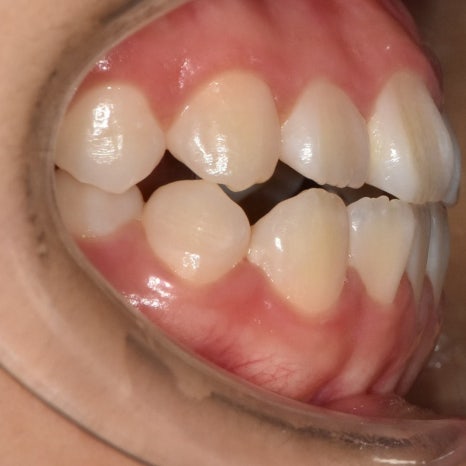
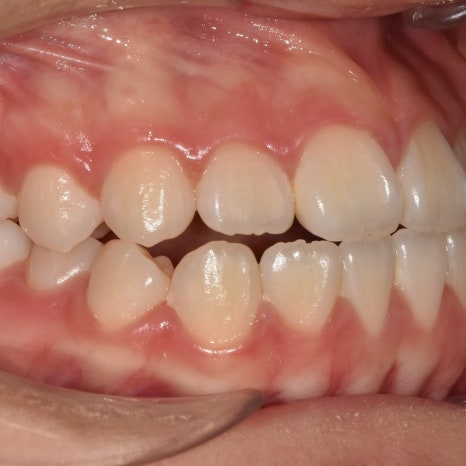 Oral photo example
It doesn’t have to be our clinic.
Wherever you get a consultation,
you can ask these questions as they are.
| Check 1. Is the molar bite okay? Check 2. What is the cause of the front teeth being crooked? Check 3. How should maintenance be handled after orthodontic treatment is finished? |
First, let’s go over
what makes partial orthodontics
different from full orthodontics.
Full orthodontics
moves all teeth, including the molars,
reattuning the upper and lower bite (occlusion)
more comprehensively.
Depending on the condition of the teeth,
it usually takes about 1 to 2 years.
Partial orthodontics is a treatment that moves only 6 to 8 teeth, mainly the front teeth,
so it usually finishes in 6 to 8 months.
The cost is also
lower with partial orthodontics.
At this point, it may seem like partial orthodontics is always the better deal
because it takes less time and costs less.
But the most important point
is something else.
The 28 teeth
work together in balance as they fit against each other.
The real criterion for whether partial orthodontics is possible
is whether that balance will remain intact
when only the front teeth are adjusted.
You can judge this based on the 3 points below.
| Check 1. Is the molar bite situation okay? |
The first premise of partial orthodontics
is that the molar bite
is normal.
The front teeth
are supported by the balance
created by the molars.
If you move only the front teeth
when the molar bite is misaligned,
it may look straight for a while,
but it will not be maintained for long.
Specialists also prioritize this point.
In partial orthodontics,
the molar bite is what should be considered first,
and if the bite relationship is poor,
partial orthodontic treatment itself may be difficult.
If not only the front teeth but the entire dentition is misaligned,
or if there is a severe protrusion,
or if the canine teeth are in a crowded, overlapping position,
front-tooth partial orthodontics can also be difficult.
| Signs that partial orthodontics is difficult · When the molar bite itself is misaligned · When not only the front teeth but the entire dentition is misaligned · When there is severe protrusion or the dental arch is narrow · When the canine teeth are protruding as crowded teeth |
| Check 2. What is the cause of the front teeth being crooked? |
Even when the front teeth look crooked,
the cause can be different.
If one or two front teeth are slightly overlapping
or there is only a small gap between them,
partial orthodontics may be enough.
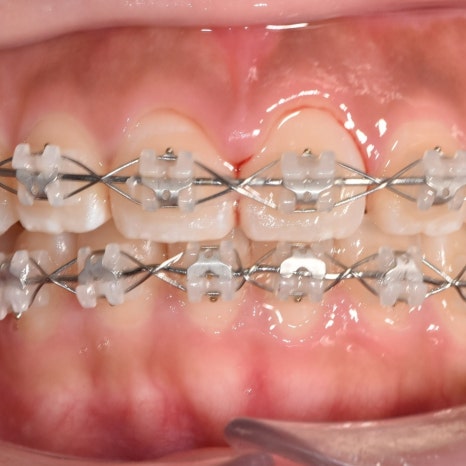
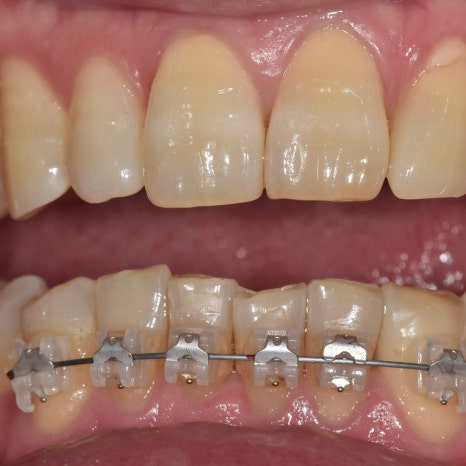
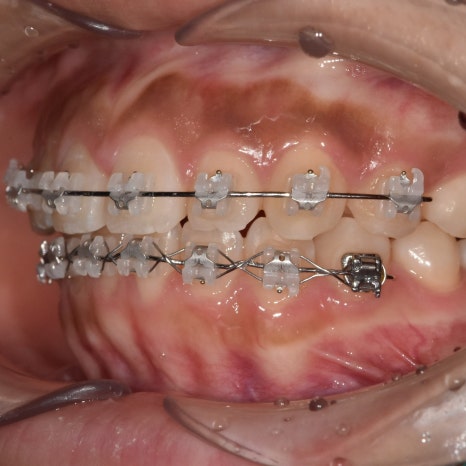 Orthodontic appliance examples
In cases like this, there is already space
for the teeth to move,
so that space can be used.
The problem is when the crookedness
is caused by lack of space.
If the teeth are crooked because there is not enough room for them,
then even if you force the front teeth into alignment,
there is no space for them to go.
If you push ahead with partial orthodontics in such a case,
it is difficult to achieve the desired result.
| Cases where full orthodontics is needed · When the range of teeth that need to be moved is wide · When there is a problem with the upper and lower bite itself · When extraction is necessary or a jaw skeletal issue is also present |
| Check 3. How will maintenance be handled after orthodontic treatment is finished? |
A commonly overlooked part of orthodontics
is what happens after treatment ends.
Teeth have a tendency
to return to their original position.
In particular, the lower front teeth
tend to crowd inward again
as you get older.
Partial orthodontics is no exception.
Because it ends more quickly,
if you do not secure the position with a retainer after treatment,
the teeth can return to their original state quickly.
In fact, half of orthodontic relapses after treatment
occur within 2 years.
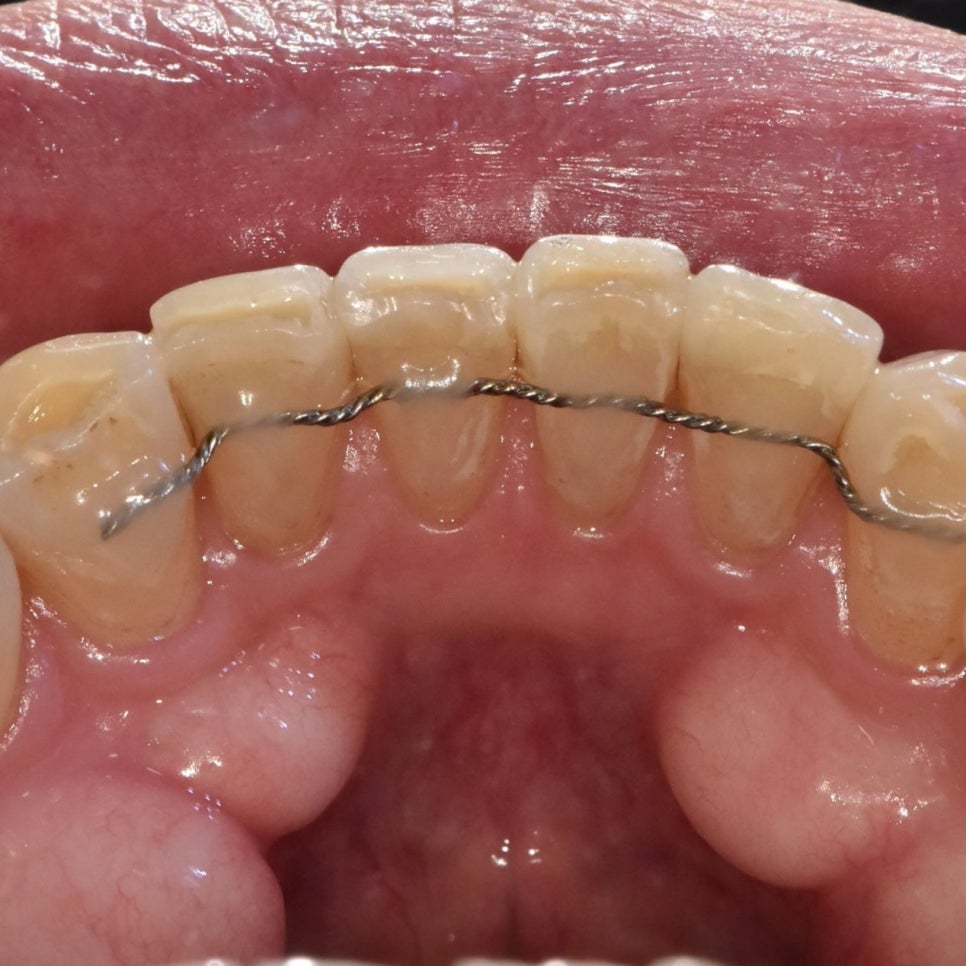 Retainer example
A place that clearly explains maintenance,
not just the start of treatment,
Partial orthodontics is a good treatment
because it is fast and less burdensome.
But the priority is not "fast and cheap";
it is whether it suits the condition of your teeth.
An accurate diagnosis is
most important in orthodontics.
That is why, once orthodontic treatment is decided,
a detailed examination is performed.
↓
If you are 고민 about partial orthodontics
or full orthodontics,
please feel free to contact us.
We will help answer your questions
↓↓