Hello!
I am the director of Seoul Bardi Dental Clinic.
▼ Check the clinic location ▼
| This post was written directly by Seoul Bardi Dental Clinic for the purpose of providing medical information in compliance with Article 56, Paragraph 1 of the Medical Service Act. We recommend that you use the provided information for reference only, and we ask that you visit a medical institution and receive guidance from medical staff for symptom assessment and accurate management methods. All procedures / surgeries performed at the dental clinic may involve risks such as inflammation, bleeding, swelling, etc., depending on the individual. Please make your decision after sufficient consultation with medical staff in advance. |
| Directions |
"They say orthodontics
makes your face slimmer too..."
Let me give you the conclusion first.
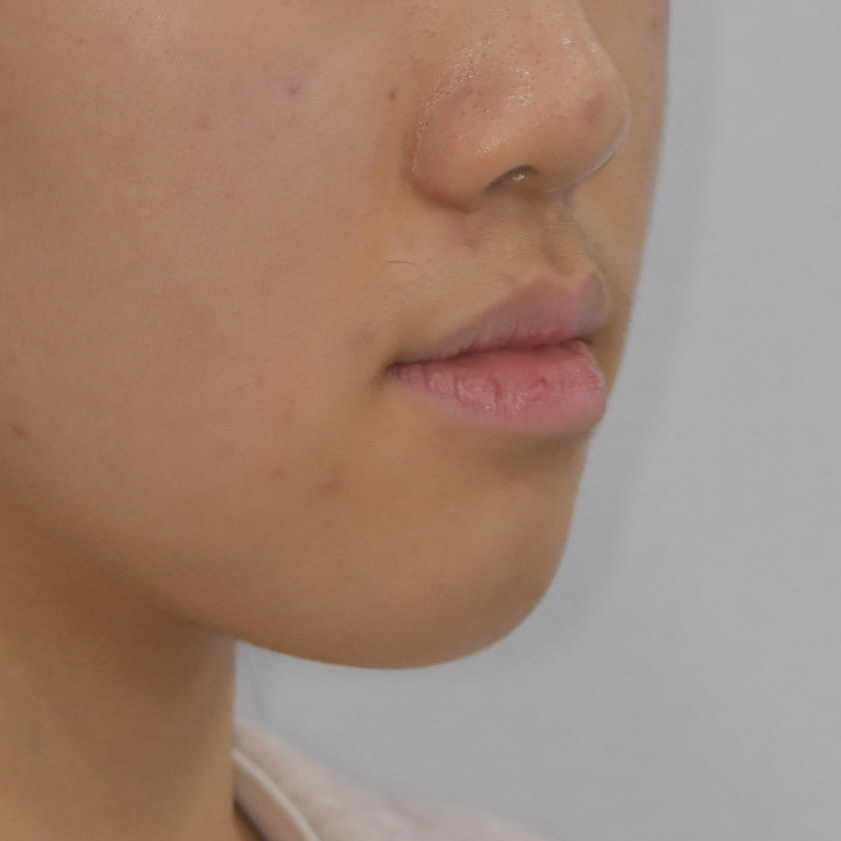 Photo example
It changes.
But what changes is
not the "face shape,"
but the "impression around the mouth."
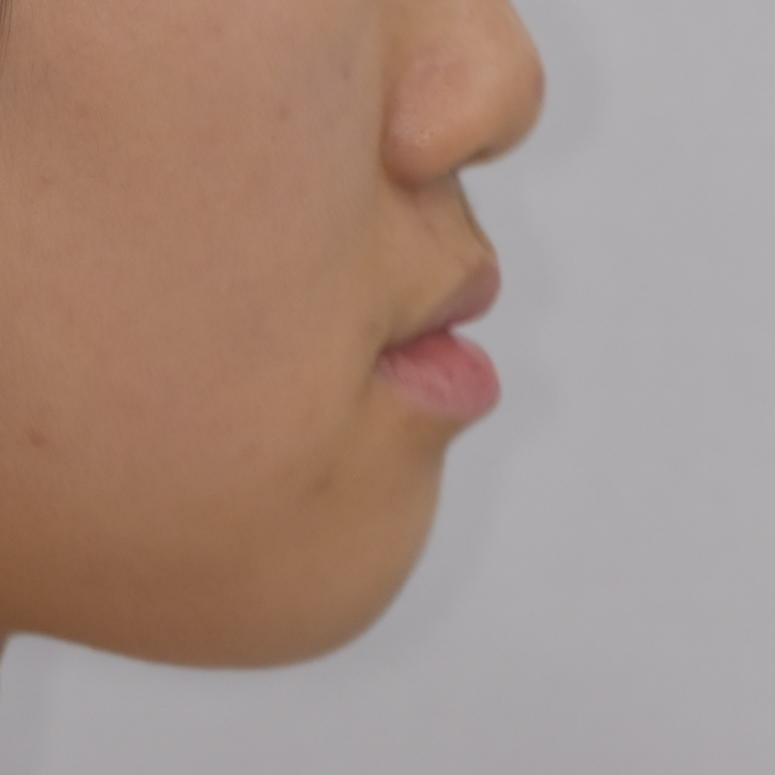 Photo example
Many places mix these two together
when advertising,
but they need to be clearly distinguished
so there is no disappointment or side effects.
Hello,
this is Seoul Bardi Dental Clinic.
Today, we’ll go over a question many people have:
does orthodontic treatment really change your face?
Here’s the order:
- What changes with orthodontic treatment
- What does not change with orthodontic treatment
- Negative effects that can happen if it is done incorrectly
| 1. The thing that really changes is the "mouth and side profile." |
It is true that orthodontic treatment
can change the overall impression of the face.
The key is that as the lips move inward,
the side-profile line becomes more refined.
When the front teeth stick out
(protrusion),
if the teeth are moved back,
the lips resting on top of them
also move inward.
So in the side view,
what used to look like a protruding mouth
becomes smoother,
and a mouth that was hard to close
can close more naturally.
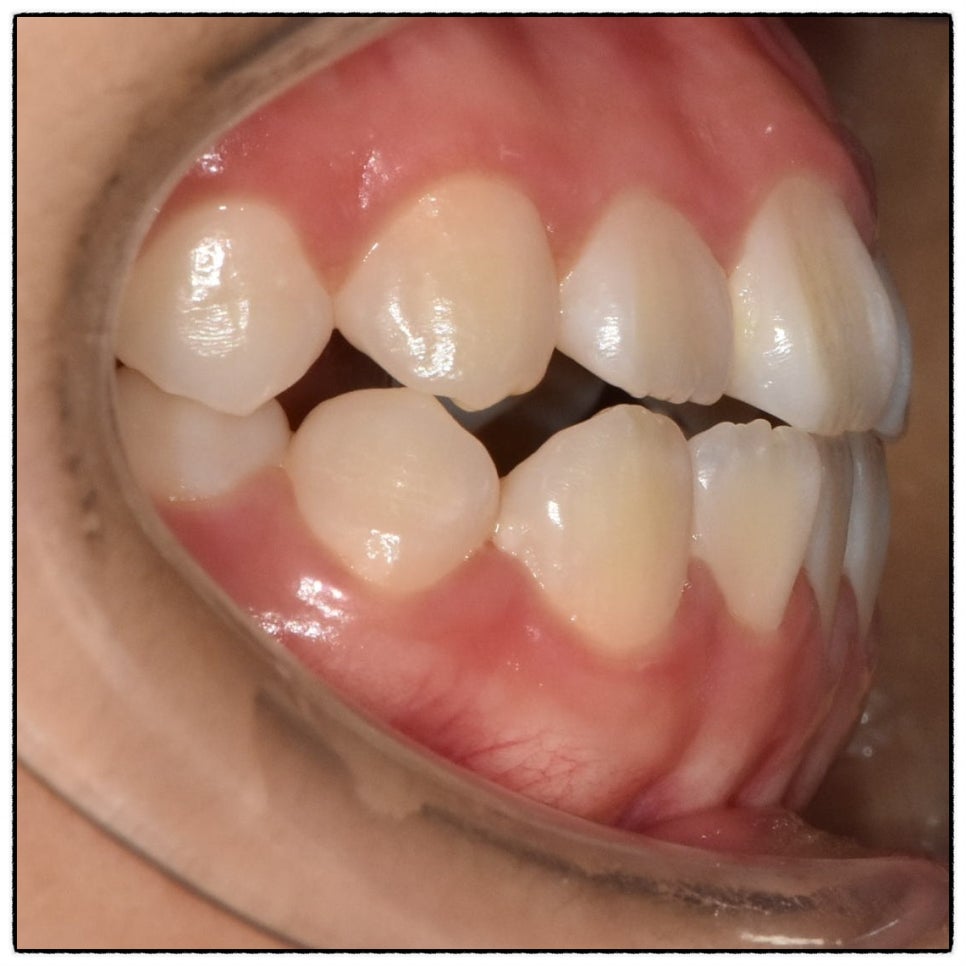
This change is especially noticeable
for people whose upper lip is fuller
and whose mouth was difficult to close.
This is what people mean when they say,
"My face looked prettier after orthodontics."
It is not that the facial skeleton changed;
what changed was the impression around the mouth.
| What orthodontic treatment changes Side-profile lip line (E-line) How easily the mouth closes The impression of protrusion around the mouth |
| 2. What does not change is the "jawbone and face size." |
This is where it becomes important.
Orthodontic treatment moves teeth;
it is not a treatment that shaves down
or reduces bone.
So things like a square jaw, cheekbones,
and the overall size of the face,
which come from bone structure,
do not change with orthodontic treatment.
The phrase "orthodontics makes your face smaller"
is an exaggeration here.
The reason a face may look more angular
or larger can be due to bone structure,
or it can be due to the distribution of soft tissues
such as fat and muscle.
This is not within the scope of orthodontics,
but rather the area of contour surgery or other treatments.
Sometimes after orthodontic treatment,
people feel that their face has become slimmer,
but this is often not because the jawbone has become smaller;
it is because clenching habits have decreased,
so the chewing muscles have become less developed.
Since this is a muscle change rather than a bone change,
it varies from person to person
and is not an effect that can be guaranteed.
| What orthodontic treatment does not change Bone structure such as a square jaw or cheekbones Overall face size Asymmetry caused by skeletal structure -> This falls under other treatments, not orthodontics |
| 3. If done incorrectly, it can have the opposite effect. |
There are side effects that can occur
when chasing facial changes.
The main issue is when the mouth becomes too sunken in.
If protrusion is not severe but extractions are done unnecessarily,
or if the teeth are moved back too much,
the mouth can end up looking sunken.
As the volume around the lips disappears,
the center of the face becomes flatter,
and as a result the nasolabial folds
may become more noticeable,
or the face may look older,
creating a "hollowed-in face."
Some people feel that nasolabial folds
appeared after orthodontic treatment,
but in most cases the folds
were not newly created.
As the mouth moves inward,
the volume decreases,
causing the original folds
to appear more prominent.
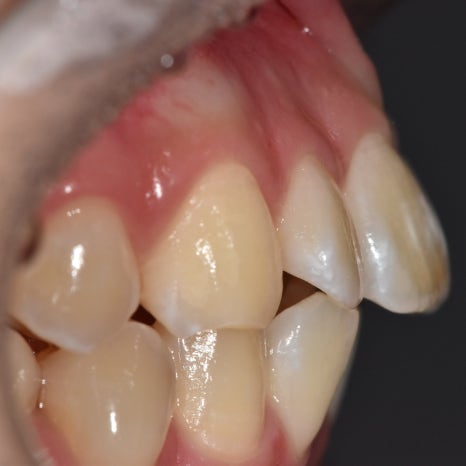
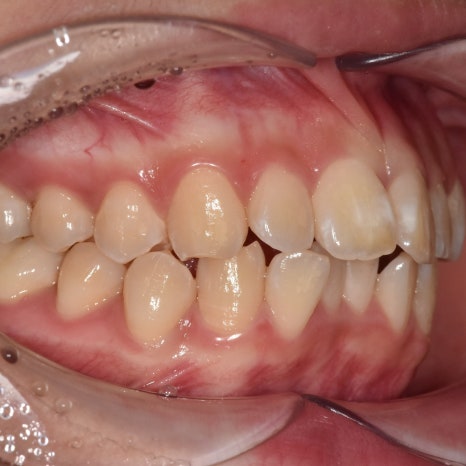
So the request, "Please pull it back as much as possible
so the mouth goes in," is a risky one.
The real skill is deciding how far to move it back
after considering the degree of protrusion,
the amount of tooth movement,
the jaw skeleton,
and soft tissue thickness.
Let me summarize.
Orthodontic treatment does change the face.
But what changes is the impression of the mouth and side profile,
not the jawbone or face size.
If you begin with the expectation that your face will become smaller,
you may be disappointed,
and if you ask for the mouth to be pulled in unconditionally,
it can have the opposite effect.
What matters most is first understanding
whether your face is the type that can change
with orthodontic treatment.
There are limits to answering that without a precise diagnosis.
It does not have to be with us.
Please start with a clinic that honestly tells you
what will improve after orthodontic treatment
from the very beginning.
Thank you
▼