Hello!
I am the director of Seoul Vardi Dental Clinic in Gangdong-gu.
▼ Check the dental clinic location ▼
| This post was written directly by Seoul Vardi Dental Clinic for the purpose of providing medical information in compliance with Article 56(1) of the Medical Advertising Act. The information provided is for reference only. For symptom assessment and accurate management guidance, please visit a medical institution and consult with a medical professional. All procedures and surgeries performed at a dental clinic may involve risks depending on the individual, such as inflammation, bleeding, and swelling. Please make your decision after having a thorough consultation with a medical professional in advance. The treatment cases shown in this post were photographed with the consent of patients who completed treatment at this clinic, and the before-and-after photos were taken under identical conditions. |
| Directions |
While looking at my child's teeth,
I sometimes wonder,
"Could it be because they take after me?"
Should my child get orthodontic treatment?
The front teeth are crooked,
and the upper teeth appear to protrude.
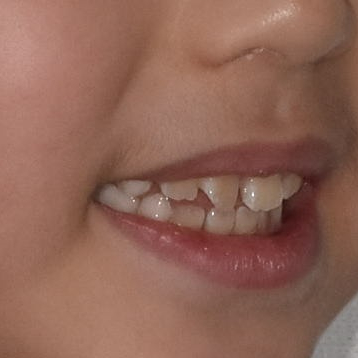
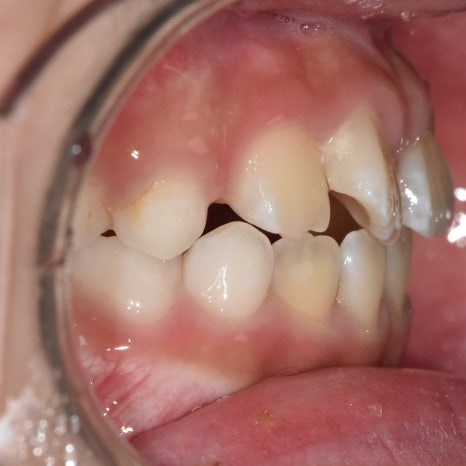
People around you may also make comments like these.
"They say it is better to get orthodontic treatment early.
I heard that if you wait until they are older, teeth may need to be extracted..."
Hearing things like that
can make you feel anxious.
You may wonder whether it will be too late if you do not start now.
Pediatric orthodontic treatment
is not necessarily better the earlier it begins,
and the appropriate timing differs for each child.
Starting early is not always advantageous,
but there are also definitely cases
that should be evaluated early.
I will organize the questions most frequently asked by parents who are considering orthodontic treatment for their children.
| When should the first examination be? When should treatment begin immediately vs. when is it fine to wait? Is it true that orthodontic treatment in childhood means having to undergo treatment twice? |
| Chapter 1. When Should the First Examination Be? |
The timing of treatment
and the timing of an examination
are different.
Confusing the two
only makes you more anxious.
Orthodontic specialists generally recommend
that the first examination take place
around age 7.
Around this time,
the permanent front teeth begin to emerge,
so it becomes possible to see
how the teeth may develop
and what the relationship between the upper and lower jaws is like.
The important point is that
having an examination at age 7
does not mean starting treatment at age 7.
In most cases,
the recommendation is to "continue observing for now,"
with only regular checkups.
The purpose of an examination
is to identify problems early,
not to start treatment early.
Therefore, the true purpose
of an examination at age 7
is twofold:
To identify issues that require immediate intervention.
And to allow you to wait with peace of mind
until the optimal time for the remaining issues.
| Common recommendation from orthodontic societies in the United States and Korea: The recommended age for the first orthodontic examination is around age 7. |
| Chapter 2. When Should Orthodontic Treatment Begin Immediately vs. When Is It Fine to Wait? |
That does not mean
that you should "always wait."
There are certainly cases
where early intervention
is advantageous.
<When immediate evaluation is needed>
Underbite
(the lower jaw extends farther forward than the upper jaw)
Because it is directly related to jawbone growth,
treatment during the growth period
can be more effective.
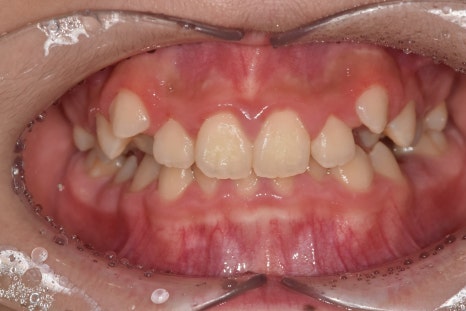
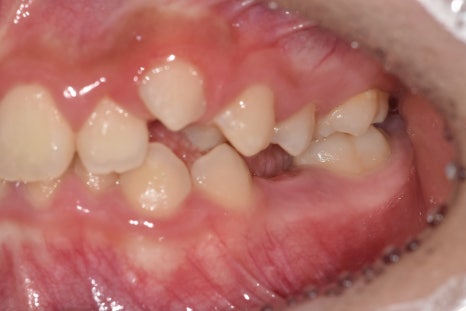
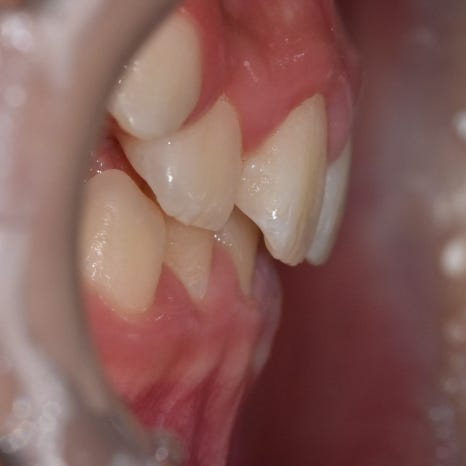
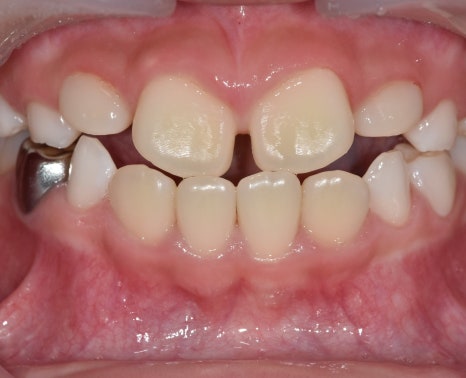
When the front teeth protrude severely
Early treatment in such cases
is considered to reduce the risk of trauma
from the front teeth colliding.
When the protrusion is severe,
the likelihood of injuring the front teeth
when falling or hitting something is higher.
Oral habits such as thumb-sucking
and tongue thrusting
These habits can continue to push
the teeth and jaws out of position,
so correcting them early can be beneficial.
<When it is fine to wait>
When only a few teeth are crooked
Temporary irregularity during the natural process
of baby teeth falling out
and permanent teeth coming in
A mild alignment issue
with no problem in the relationship
between the upper and lower jaws
| Chapter 3. Is It True That Orthodontic Treatment in Childhood Means Having to Do It Twice? |
This is the point
that parents who come for consultations
feel most frustrated about.
Here is the summary.
Early, first-phase orthodontic treatment
is generally intended to guide jaw growth,
stop harmful habits,
and alleviate severe problems.
Once all the permanent teeth have erupted,
many children then undergo second-phase orthodontic treatment
(the comprehensive phase)
to align the teeth properly.
Therefore, depending on the situation,
both first- and second-phase treatment may be necessary.
However, in a typical case,
treatment is carried out once
during the permanent-teeth stage.
That is why the first step
is to accurately determine
whether your child truly needs
first-phase orthodontic treatment.
To summarize:
Pediatric orthodontic treatment
is not better simply because it starts earlier.
It is treatment that should begin
at the right time for each child.
Making this distinction accurately
can help you avoid worrying about treatment
that is not necessary
or missing the appropriate time
for treatment that is necessary.
If your child is around age 7,
please be sure to schedule an examination.
If different orthodontists offer different opinions,
it is also fine to visit two or three clinics.
You will then have a clearer understanding of the situation.
If you have any questions about your child's orthodontic treatment,
please feel free to contact us.
We look forward to seeing you in the treatment room.