Hello!
I am the director of Seoul Bardi Dental Clinic.
▼ Check the Dental Clinic Location ▼
When you start looking into veneers,
it sounds appealing at first.
You hear that your teeth will not be shaved,
the procedure will be finished in a week,
and your teeth will become whiter
and more even.
But then, when you read reviews about side effects,
you suddenly start to feel worried.
“Your healthy teeth are shaved down,
and you regret it for the rest of your life.
They become so sensitive that you cannot live normally.”
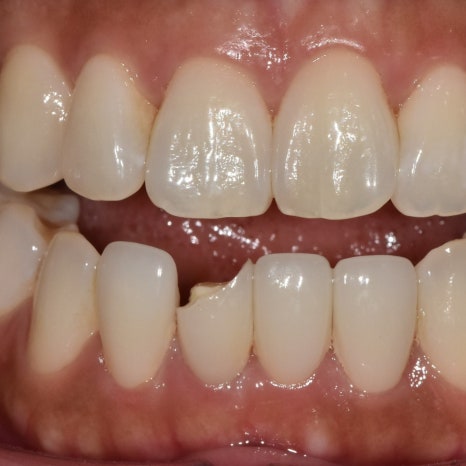
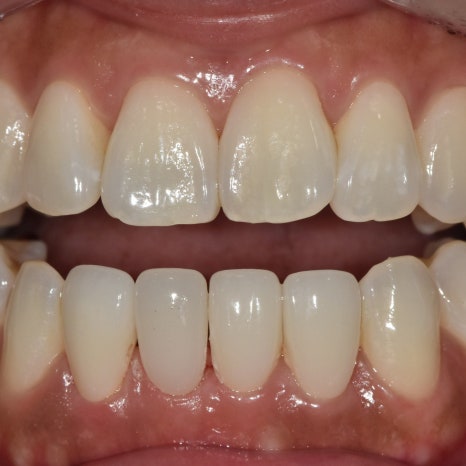
It was clearly described as a no-prep procedure,
but somewhere else they say the teeth are shaved.
So what is actually correct...?
Today,
I will explain whether
no-prep veneers
are suitable for your teeth.
| Chapter 1. Do no-prep veneers really involve no tooth shaving? |
This is the question I am asked most often.
The conclusion is that,
rather than saying “the teeth are not shaved at all,”
it depends on the condition of your teeth.
Veneers are a treatment in which
thin ceramic shells are bonded to the front surfaces of the teeth
to change their color and shape.
However, ceramic shells also
have a certain thickness.
If they are simply bonded on
without shaving anything,
the teeth may appear
that much thicker and more prominent.
Therefore, even when a procedure is called “no-prep,”
there are many cases in which
the teeth are lightly reshaped,
depending on the case.
The key point is that the procedure is performed minimally,
without touching the nerve or dentin,
and only within the enamel.
Therefore, you should not look only at the word “no-prep”
and assume that it is “always completely safe because nothing is shaved.”
In fact, instead of creating space by shaving the teeth,
no-prep veneers require thin ceramic shells
to be precisely placed over the natural teeth,
which makes the design and bonding process more demanding.
What matters more than the amount of tooth reduction
is the standard of handling the teeth
<only as much as necessary and with precision>.
| Chapter 2. I heard that veneers come off easily. Is that true? |
“Veneers come off after only a few years”
is something you may have heard often.
However, the data show that they last
much longer than you might expect.
Studies tracking the long-term outcomes of veneers
show that even after 10 years,
approximately 95% remained in place
without significant problems.
Of course, the rate of veneers coming off
or breaking is not zero.
However, the causes are usually predictable.
They include habitually biting hard objects,
having a teeth-grinding habit,
or an insufficiently precise bonding process.
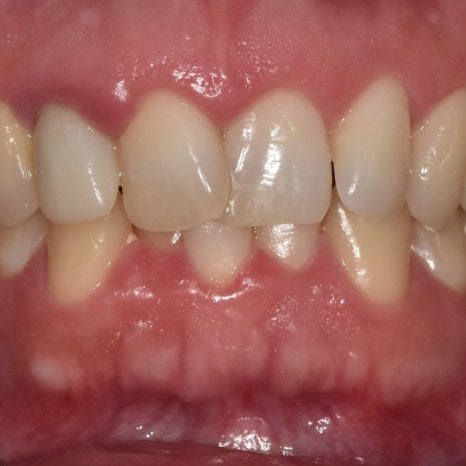
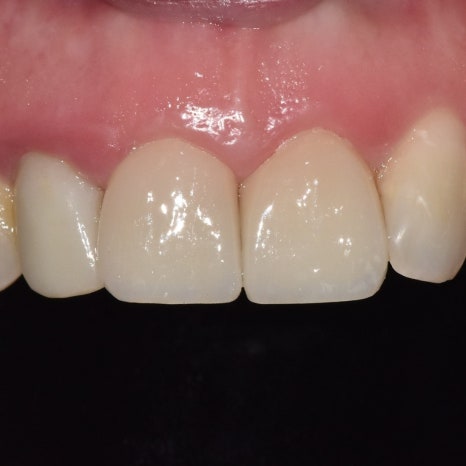
Especially, habits such as opening bottle caps with your front teeth
or biting ice
can be severely damaging to veneers.
Therefore, rather than asking “Do they come off easily?”
what determines their lifespan is
“how they are cared for”
and “how precisely they are bonded.”
If a veneer comes off
or breaks,
do not leave it untreated.
You should visit a dental clinic right away.
| Chapter 3. I heard that veneers make your teeth sensitive and damage them. Is that true? |
This is actually the most important question.
This is where the real reason for no-prep
and minimal-prep procedures lies.
Teeth consist of
hard enamel on the outside
and dentin underneath.
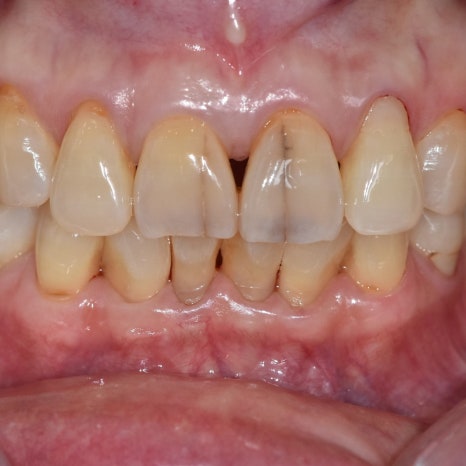
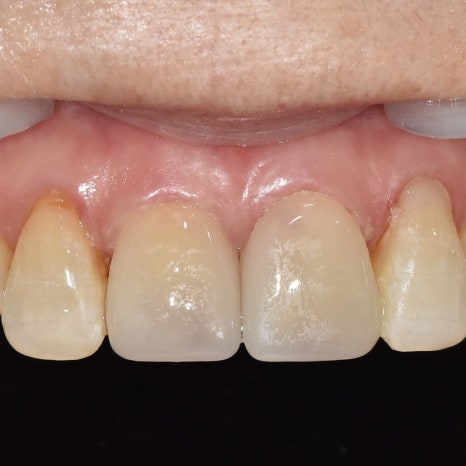
Sensitivity usually occurs when the dentin
becomes exposed.
Dentin contains tiny channels connected to the nerve,
so when this area is exposed,
the tooth becomes sensitive
and more vulnerable to stimulation.
The scientific conclusion is that preserving as much enamel as possible
reduces sensitivity
and helps veneers last longer.
However, if the teeth are significantly protruded,
insisting on a no-prep procedure
may actually make them appear even more prominent.
In such cases, precisely reshaping only as much as necessary
within the enamel
can help prevent sensitivity
and create a natural appearance.
Let me summarize.
No-prep veneers
can be summarized as follows.
No shaving
-> It means almost no shaving.
They come off easily
-> More than 95% remain in place after 10 years.
They become sensitive because too much is shaved
-> When the procedure is performed minimally within the enamel,
sensitivity is reduced
and the veneers last longer.
What matters is not how little is shaved,
but precisely handling only as much as necessary
within the enamel
according to the condition of your teeth.
That is the way to reduce sensitivity
and help your veneers last longer.
It does not have to be our clinic.
However, do not make your decision based only on the term “no-prep.”
Ask for a detailed explanation of what is possible
for your teeth.
If the clinic explains the options
using diagnostic materials,
you are less likely to have regrets.
Thank you for reading this long post.
| This post was written directly by Seoul Bardi Dental Clinic for the purpose of providing medical information, in compliance with Article 56, Paragraph 1 of the Medical Service Act concerning medical advertising. The information provided is for reference only, and you are advised to visit a medical institution and receive guidance from a medical professional for an assessment of your symptoms and accurate management methods. All procedures and surgeries performed at a dental clinic may involve risks that vary from person to person, including inflammation, bleeding, and swelling. Please make your decision after having a sufficient consultation with a medical professional in advance. The treatment cases in this post were photographed with the consent of patients who completed treatment at our clinic, and the before-and-after photographs were taken under the same conditions. |