Hello!
This is Seoul Vardi Dental Clinic.
Is scaling really as beneficial as people say?
Afterward, my teeth feel sensitive for several days,
my gums seem to have receded further,
and sometimes I wonder if I should have had it done at all...
Let me start by saying this.
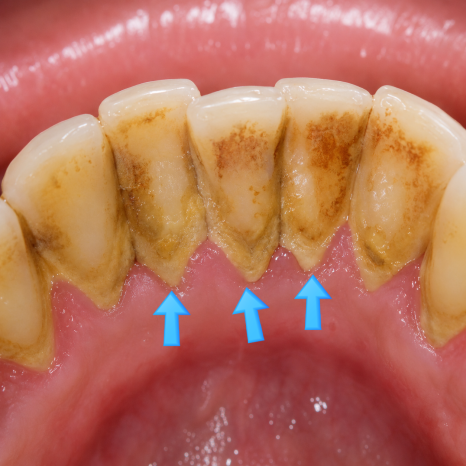
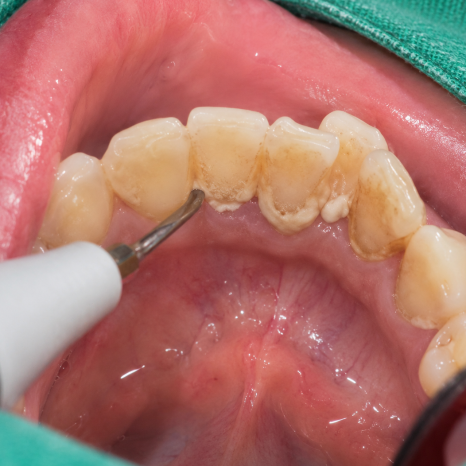
Example photos
Tooth sensitivity after scaling is not abnormal;
it is a normal reaction experienced by more than half of patients.
And it can be reduced considerably.
The average incidence of dentin hypersensitivity after periodontal treatment has been reported at 54–55%.
(Von Troil B et al., 2011, J Clin Periodontol — systematic review)
Today, I will explain why teeth become sensitive after scaling
and summarize
3 ways to reduce the sensitivity.
Here is the order.
CHAPTER 1. The real reason teeth become sensitive after scaling
CHAPTER 2. How long does the sensitivity last?
CHAPTER 3. 3 ways to make scaling less uncomfortable
CHAPTER 4. How often should you have scaling done?
| Chapter 1. The Real Reason Teeth Become Sensitive After Scaling |
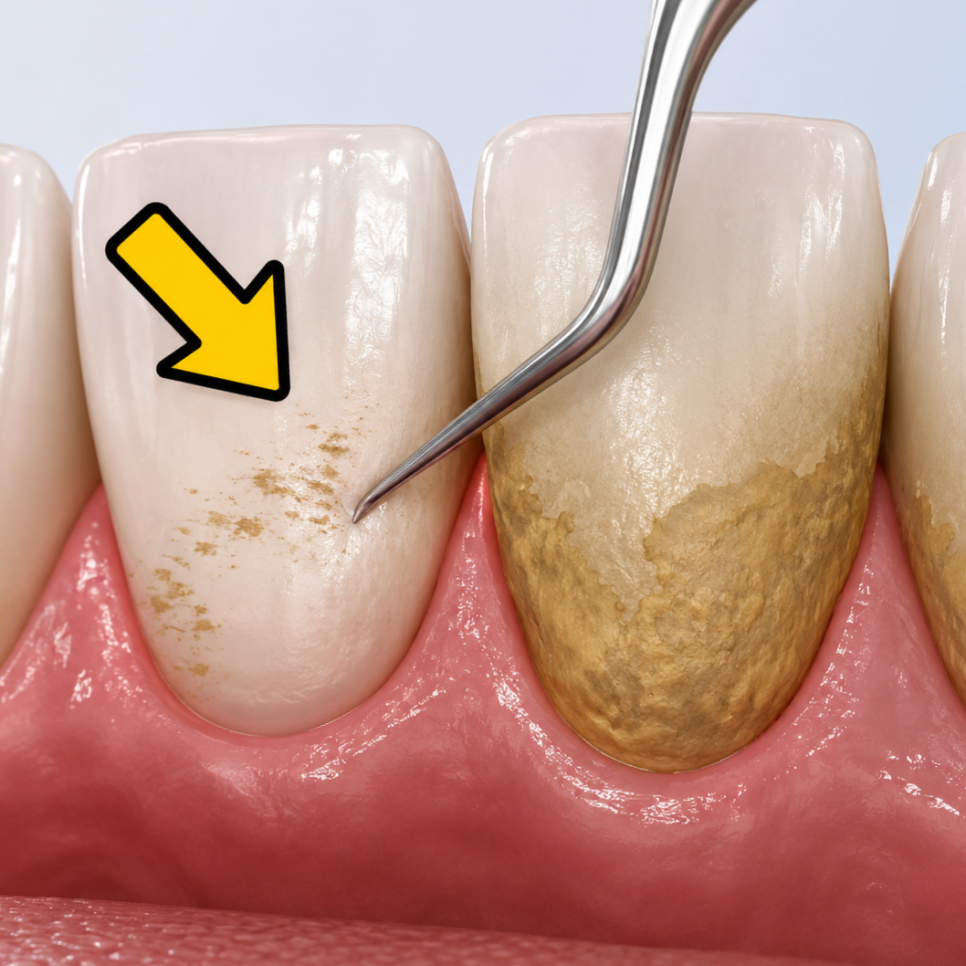
Calculus penetrates deep into the gums
and adheres to the surface of the tooth root.
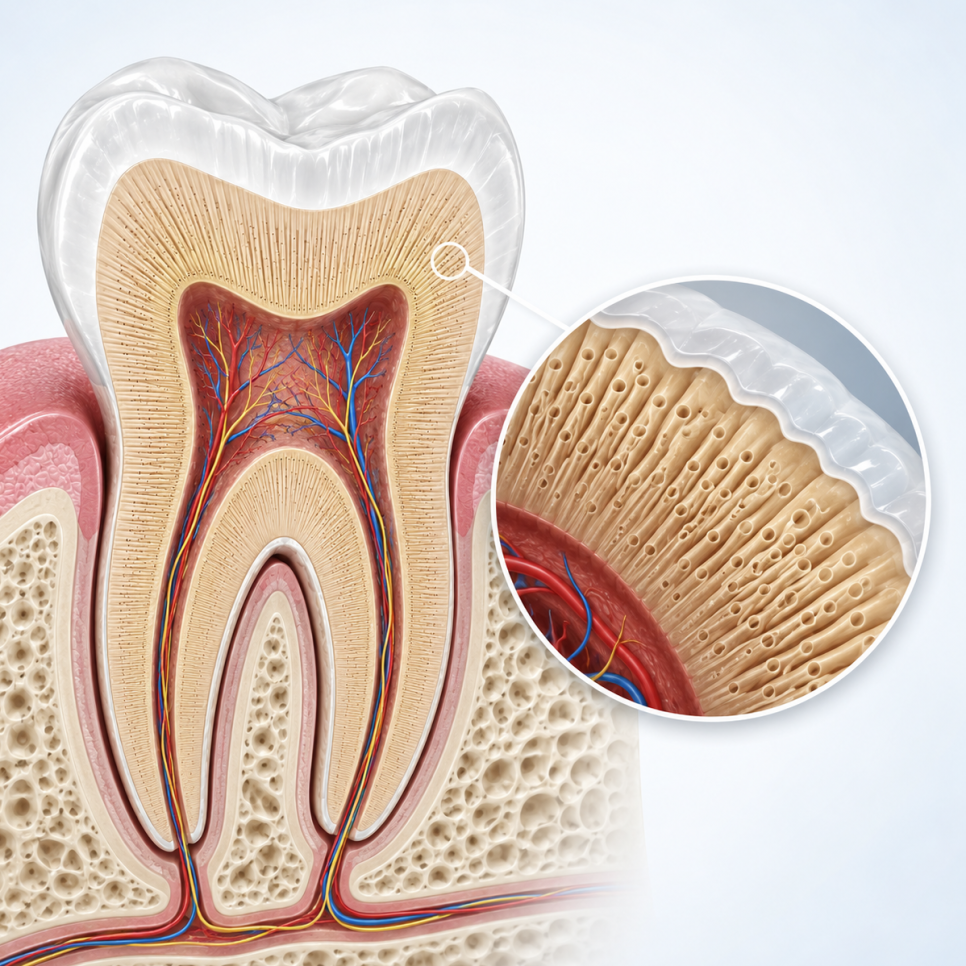
When this is removed with an ultrasonic scaler,
the dentinal tubules
(tiny channels leading into the tooth)
that had been covered by the calculus are temporarily exposed.
The exposed dentinal tubules contain fluid.
When stimuli such as cold water or cold air reach them,
the fluid moves and stimulates the tooth nerve.
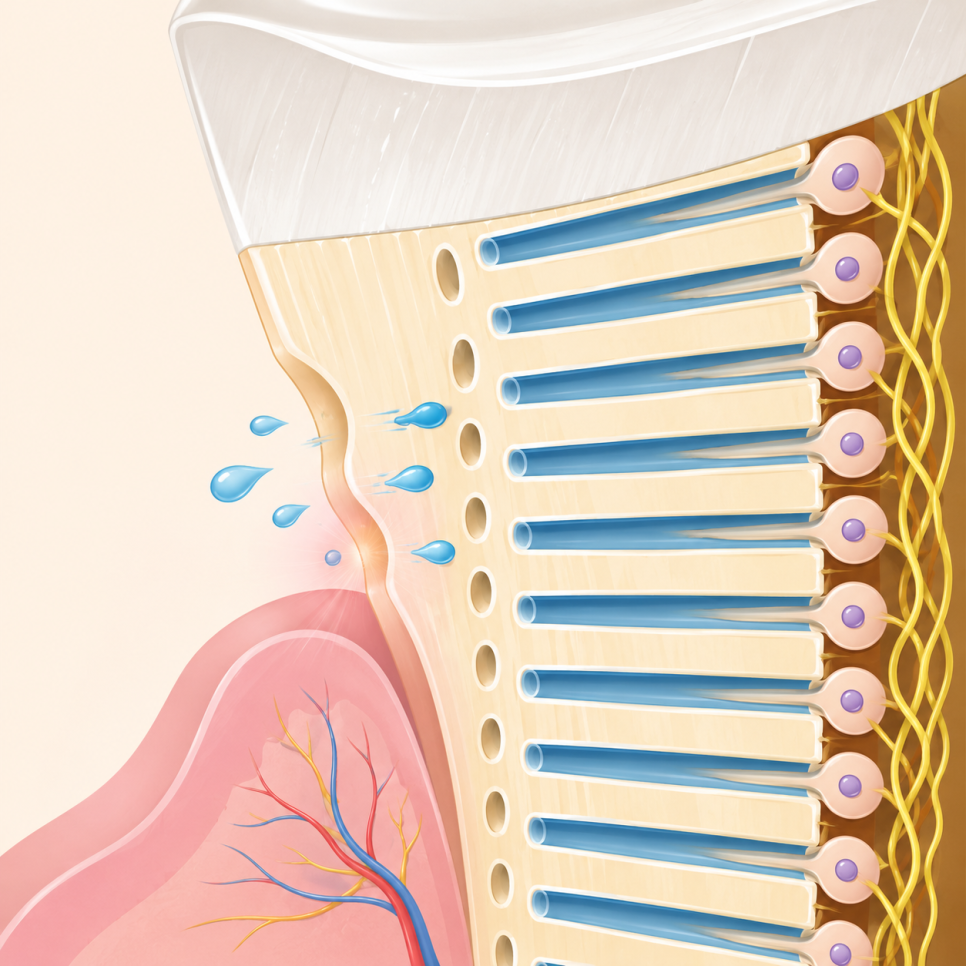
That is why the tooth feels sensitive.
It is not because the tooth has become weaker;
it is because an area that should normally be covered has briefly been exposed.
| Chapter 2. How Long Does the Sensitivity Last? |
The period when sensitivity is most intense is
1–8 weeks after treatment.
[Reference paper] Von Troil B et al. (2011) — Systematic review of dentin hypersensitivity after periodontal treatment: incidence of 54–55%, with the intensity peaking between 1 and 8 weeks https://pubmed.ncbi.nlm.nih.gov/23724545/
Over time, calcium and phosphate in saliva
gradually deposit at the openings of the dentinal tubules,
and a protective layer also forms on the surface,
so the sensitivity naturally improves.
Sensitivity tends to last longer in people who:
Have calculus accumulated deep below the gums
Have already experienced gum recession, exposing the tooth roots
Have postponed scaling for a long time and had a large amount removed at once
| Chapter 3. 3 Ways to Make Scaling Less Uncomfortable |
- A topical anesthetic mouth rinse can temporarily numb the oral mucosa.
It greatly reduces the sharp, tingling sensation caused by the vibration of the scaler.
- Applying fluoride immediately after scaling blocks the openings of the exposed dentinal tubules
and helps relieve dentin hypersensitivity.
It is a traditional method whose effectiveness in reducing sensitivity has been demonstrated.
- Scaling is more uncomfortable when a large amount of calculus has accumulated.
That is because all of the buildup that accumulated
is removed at once.
Having scaling done at regular intervals
can actually make the experience less difficult.
| Chapter 4. How Often Should You Have Scaling Done? |
In general, once every six months to one year is appropriate.
If your gums are healthy
and you have good brushing habits,
once a year is sufficient.
However, if you have gum inflammation
or have had treatment on many teeth,
the interval between dental visits should be shorter.
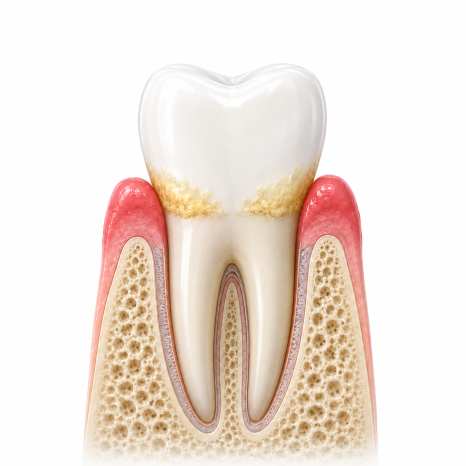
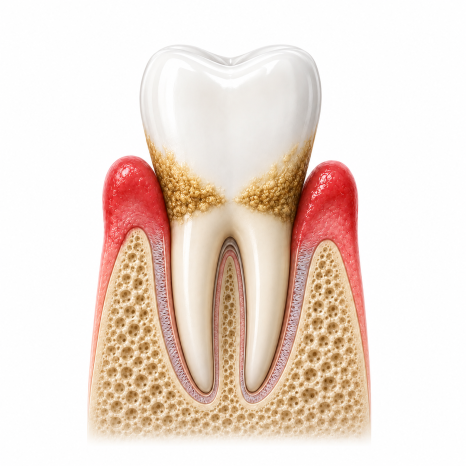
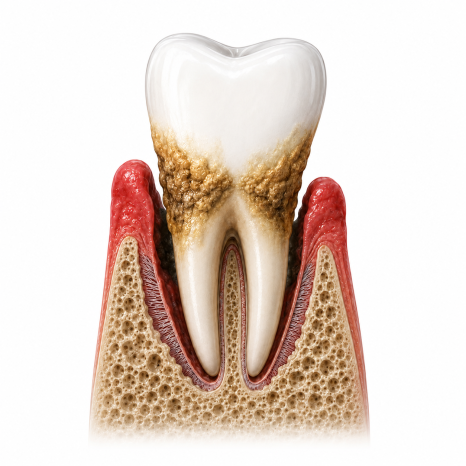
Let’s summarize.
Tooth sensitivity after scaling is caused by temporarily exposed dentinal tubules,
not by damage to the tooth.
“Don’t postpone scaling because your teeth are sensitive;
your teeth become more sensitive because you postpone it.”
Our dental clinic does not have to be the one you visit.
Wherever you have it done, try asking for both a topical anesthetic mouth rinse and fluoride application.
The procedure may feel much more comfortable.
[Reference Papers]
-
Von Troil B et al. (2011) — Systematic review of dentin hypersensitivity after periodontal treatment (54–55%) https://pubmed.ncbi.nlm.nih.gov/23724545/
-
Pinto SCS et al. (2017) — Clinical trial of photobiomodulation for dentin hypersensitivity after scaling https://www.ncbi.nlm.nih.gov/pmc/articles/PMC5429484/
-
Banfield N, Addy M (2013) — RCT on the effect of calcium sodium phosphosilicate paste https://www.ncbi.nlm.nih.gov/pmc/articles/PMC3675645/
▼ Check the Dental Clinic Location ▼
| This post was written directly by Seoul Vardi Dental Clinic for the purpose of providing medical information in compliance with Article 56, Paragraph 1 of the Medical Service Act concerning medical advertising. We recommend using the information provided for reference only. For symptom assessment and accurate care instructions, please visit a medical institution and receive guidance from a medical professional. All procedures and surgeries performed at dental clinics may involve individual risks, such as inflammation, bleeding, and swelling. Please make your decision after consulting sufficiently with a medical professional in advance. All images were generated by AI. |