Hello!
I am the director of Seoul Bardi Dental Clinic.
▼ Check the dental clinic location ▼
| This post was written directly by Seoul Bardi Dental Clinic for the purpose of providing medical information, in compliance with Article 56, Paragraph 1 of the Medical Service Act regarding medical advertising. We recommend using the information provided for reference only. Please visit a medical institution and receive guidance from medical professionals regarding symptom assessment and accurate care methods. All procedures and surgeries performed at a dental clinic may involve individual risks, such as inflammation, bleeding, and swelling. Please make your decision after having a thorough consultation with a medical professional in advance. All images were created using AI. |
| Directions |
The question I hear most often during whitening consultations
is just one:
"How white can they get?"
Knowing the answer accurately
can determine whether you will be satisfied
or disappointed with whitening.
To give you the conclusion first,
there is a definite limit to teeth whitening.
Teeth that are as white as a sheet of A4 paper cannot be achieved in natural teeth,
no matter how many times whitening is repeated.
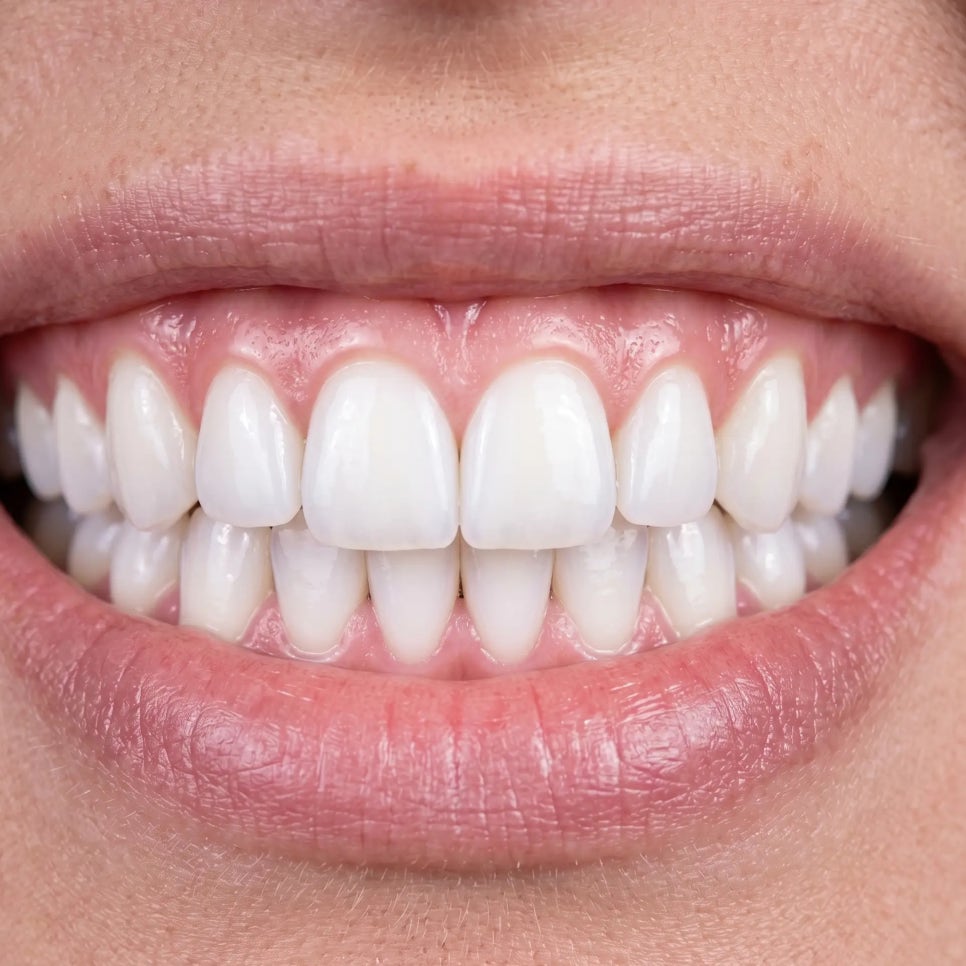
This is not a matter of the dental professional's skill.
It is a limitation that comes from the principle of whitening itself.
Today, I will explain
① what kind of procedure whitening is,
② why the results differ from person to person, and
③ how bright teeth can become,
along with clinical evidence.
| Chapter 1. Whitening Does Not “Paint” the Color; It Removes Pigments |
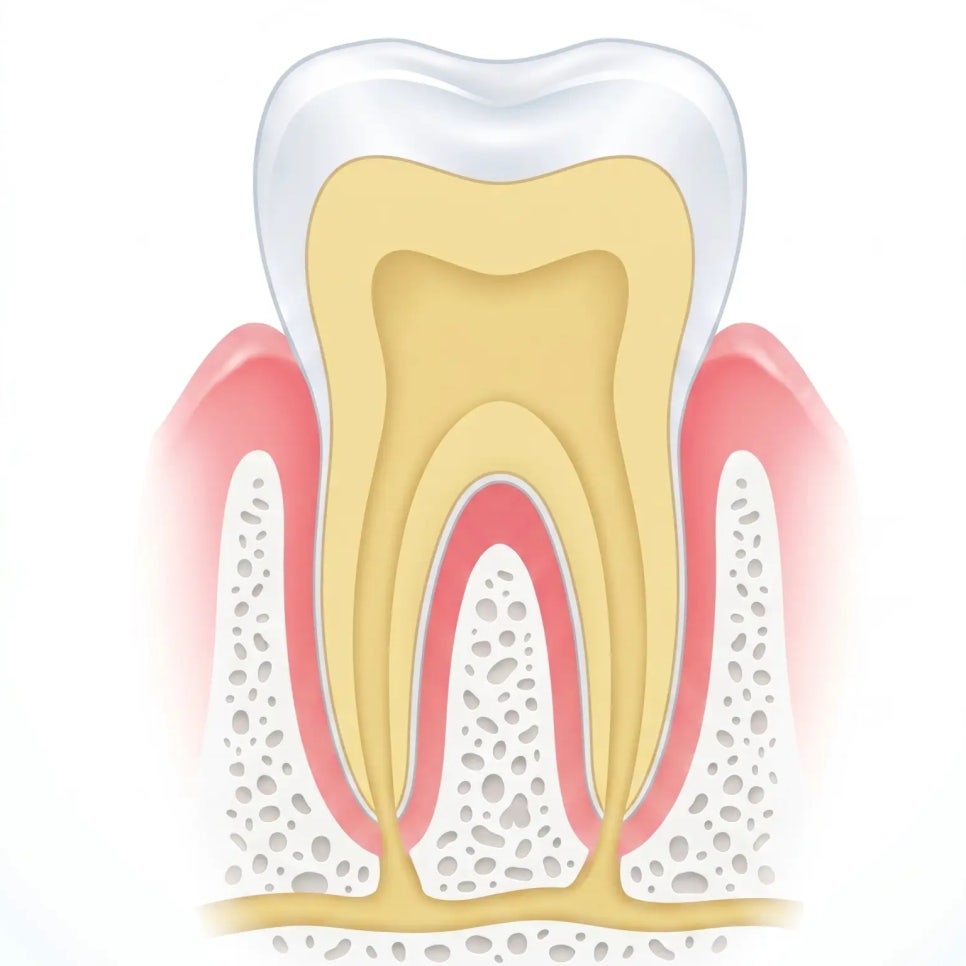
First, you need to understand how whitening works.
Our teeth consist of enamel on the outside
and yellowish dentin inside.
Whitening agents, such as hydrogen peroxide,
penetrate into the teeth
and break down the pigment molecules that cause discoloration.
As the smaller pigment particles reflect less light,
the teeth appear brighter.
(ADA, 2022 / StatPearls, 2024)
The key point here is that
whitening does not paint the teeth
an artificial white color.
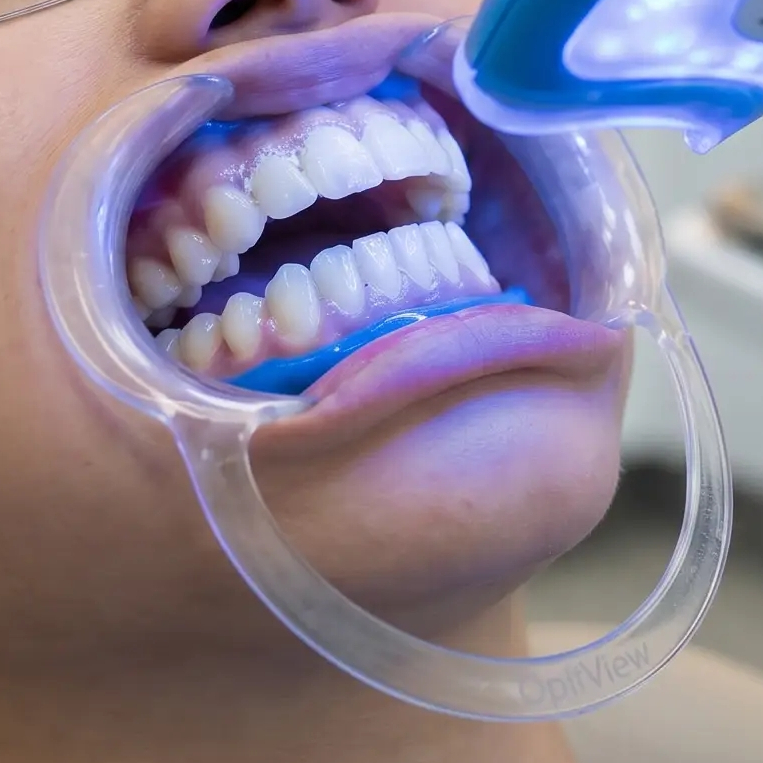
Example image
It removes pigments within the tooth's natural
color range
to make the teeth as clear and bright as possible.
What primarily determines tooth color is
not the enamel on the outside,
but the dentin inside.
Whitening cannot completely change
the dentin's natural color.
(escholarship, UCSF)
Therefore, if you want teeth as white as A4 paper,
you need to cover the tooth surface itself with veneers
rather than undergo whitening.
| Chapter 2. Why Do Whitening Results Differ from Person to Person? |
"My friend had whitening and her teeth became brighter,
so why are mine still so yellow?"
Just as people's skin tones differ even when they use
the same whitening product,
teeth differ as well.
The density and thickness of the teeth,
as well as the natural color of the dentin,
differ from person to person.
Because dentin has a major influence on tooth color,
people whose dentin has a stronger yellow tone
may reach different levels of brightness
even with the same whitening treatment.
| Chapter 3. This Is How Whitening Is Performed |
Dental whitening is performed in stages
while maintaining the safety of the teeth and gums.
- Shade check —
The current tooth color is measured
by comparing it with a shade guide,
and the target shade is discussed.
- Gum protection —
A protective agent is carefully applied
so that the high-concentration whitening agent
does not come into contact with the gums.
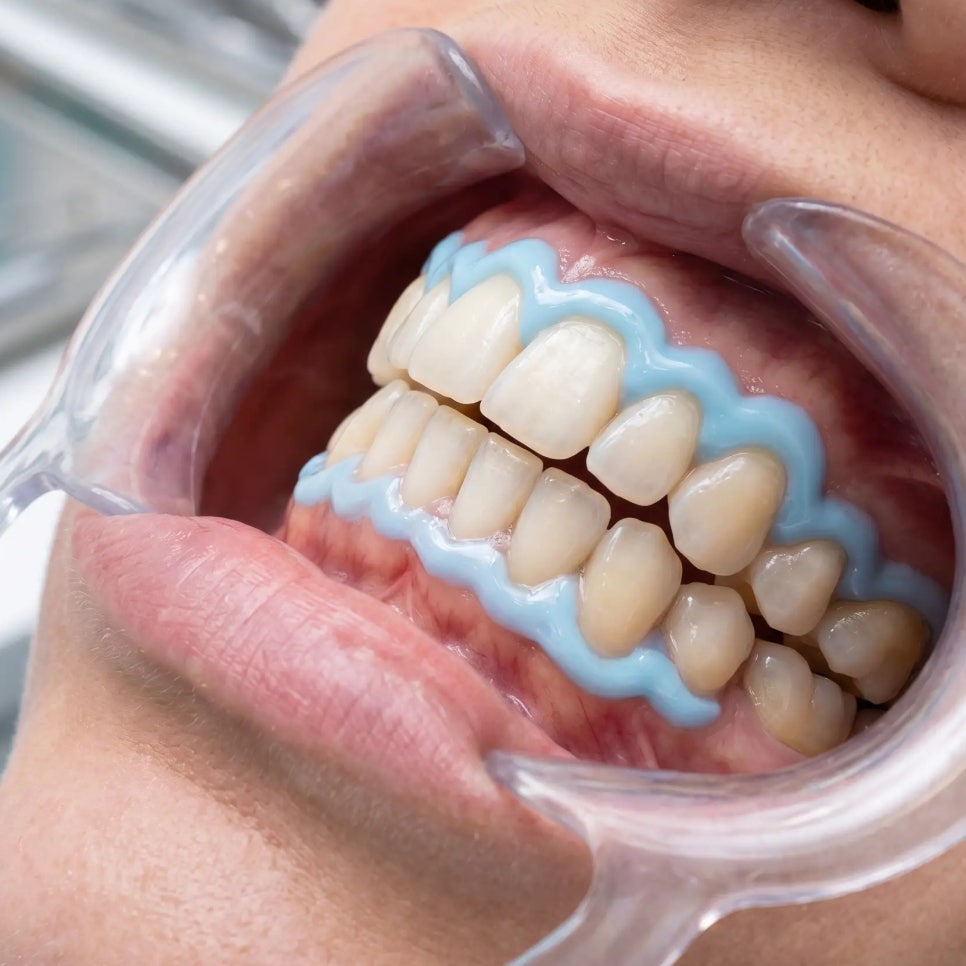
Example image
- Applying the agent and light activation —
The whitening agent is applied to the tooth surface,
and light is directed onto it.
- Repetition and finishing —
The process is usually repeated 2–3 times
for 15–20 minutes per session while checking the color change,
and is finished with a desensitizing treatment.
There is a reason we emphasize
“gum protection” and “desensitization.”
The most common side effects of whitening
are tooth sensitivity
and gum irritation.
(Cochrane Review, 2018 / ADA)
These are usually temporary
and subside when whitening is stopped,
but they are more likely to occur with higher concentrations
or excessively repeated treatments.
That is why it is important
not to skip the safety steps.
| Chapter 4. Will Teeth Keep Getting Whiter If Whitening Is Repeated? |
Many people ask,
"Will my teeth become whiter if I repeat whitening several times?"
That is true up to a certain point,
but once that point is exceeded,
the teeth will not become any brighter.
A tooth shade guide uses smaller numbers
to indicate lighter shades.
If your teeth currently have a strong yellow tone,
2–3 whitening sessions may bring natural teeth
up to A1, the lightest shade that natural teeth can typically reach.
(Of course, this varies from tooth to tooth.)
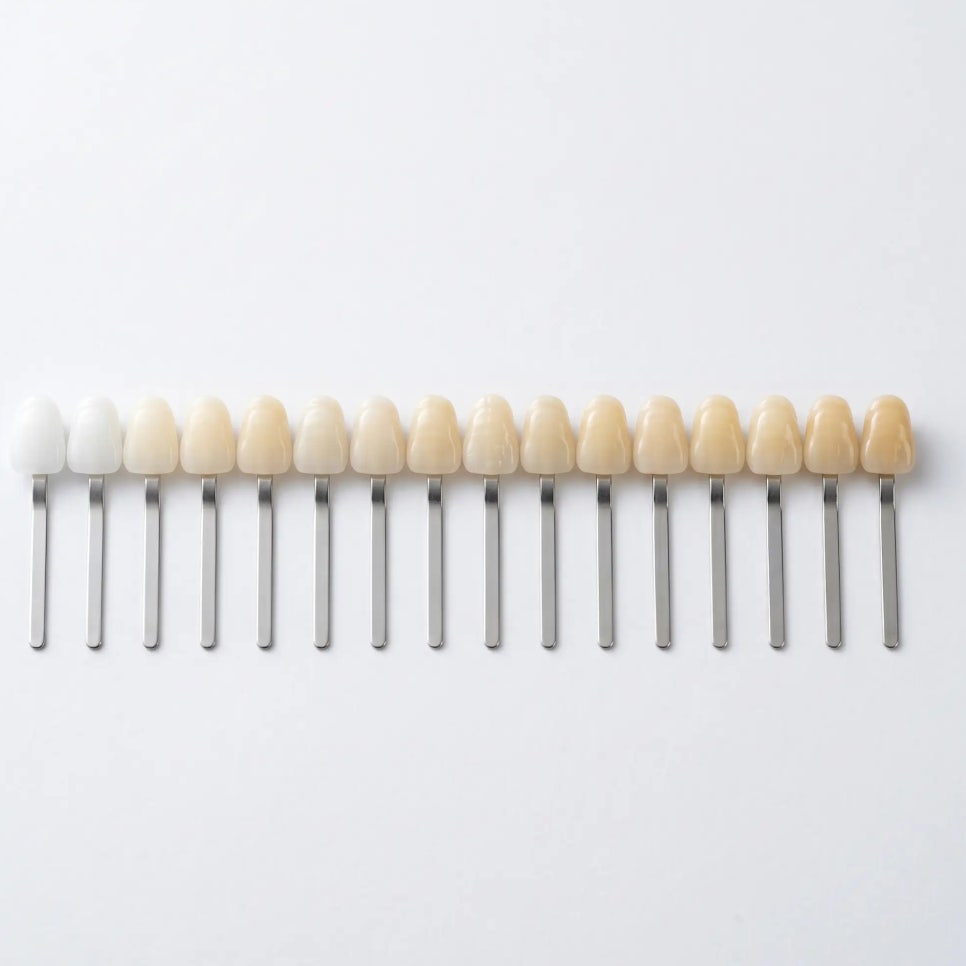
However, once the teeth have reached A1,
repeating the treatment 100 times will not produce
the artificial white color of veneers.
This is because natural teeth have a limit
to how bright they can become by removing pigments.
If you continue excessively beyond that limit,
rather than becoming brighter,
you may only experience increased sensitivity
and gum irritation.
| Chapter 5. Whitening Is Not Permanent |
Whitening effects
do not last a lifetime.
When teeth are exposed to pigmented foods and beverages
such as coffee, tea, and wine,
their color gradually returns.
The duration varies considerably from person to person,
but it is generally considered to last
from several months to several years at most.
(NHS, 2023)
< Differences Between At-Home Products and One-Day In-Office Whitening >
Therefore, rather than trying to make the teeth excessively white all at once,
it is better for dental health
to find an appropriate level of brightness
and maintain it through subsequent care.
In closing
To summarize,
whitening has clear limitations.
Whitening is a treatment that removes pigments
within the natural color range of the teeth
to bring them up to the lightest shade, A1.
It is not a procedure for creating
an artificial white color like that of celebrities.
It may be easy to attract people with claims that
teeth will become “pure white,”
but I cannot make such irresponsible statements.
In my view,
the most successful whitening treatment
is finding a natural level of brightness
that makes others think,
“Your overall appearance looks cleaner and brighter.”
Without unnecessary treatment,
I will honestly assess and explain
how far the “best achievable brightness”
can be reached based on the condition of your teeth.
Thank you for reading this long post today.
[References]
American Dental Association — Whitening (Oral Health Topics)
Cochrane Systematic Review (2018) — Side effects of at-home whitening products (tooth sensitivity and gum irritation)
StatPearls (2024), NCBI — Mechanism of tooth whitening
UK NHS (2023) — Duration of whitening effects