Hello!
I am the director of Seoul Bardi Dental Clinic.
▼ Check the Dental Clinic Location ▼
| This post was written directly by Seoul Bardi Dental Clinic for the purpose of providing medical information, in compliance with Article 56, Paragraph 1 of the Medical Service Act. We recommend using the information provided for reference only. Please visit a medical institution and consult a medical professional for an assessment of your symptoms and accurate management methods. All procedures and surgeries performed at a dental clinic may involve risks depending on the individual, such as inflammation, bleeding, and swelling. Please make your decision after having a thorough consultation with a medical professional. | AI-assisted images |
When there is
an odor around an implant
or the gums are slightly swollen,
it may be caused by one of two conditions.
Although both begin in the same area,
identifying the current stage early
can determine the longevity of the implant.
(Berglundh T et al., 2018, 2017 World Workshop on Periodontal/Peri-implant Diseases)
Today,
I will summarize
peri-implantitis
and three signs
that can help you recognize it early.
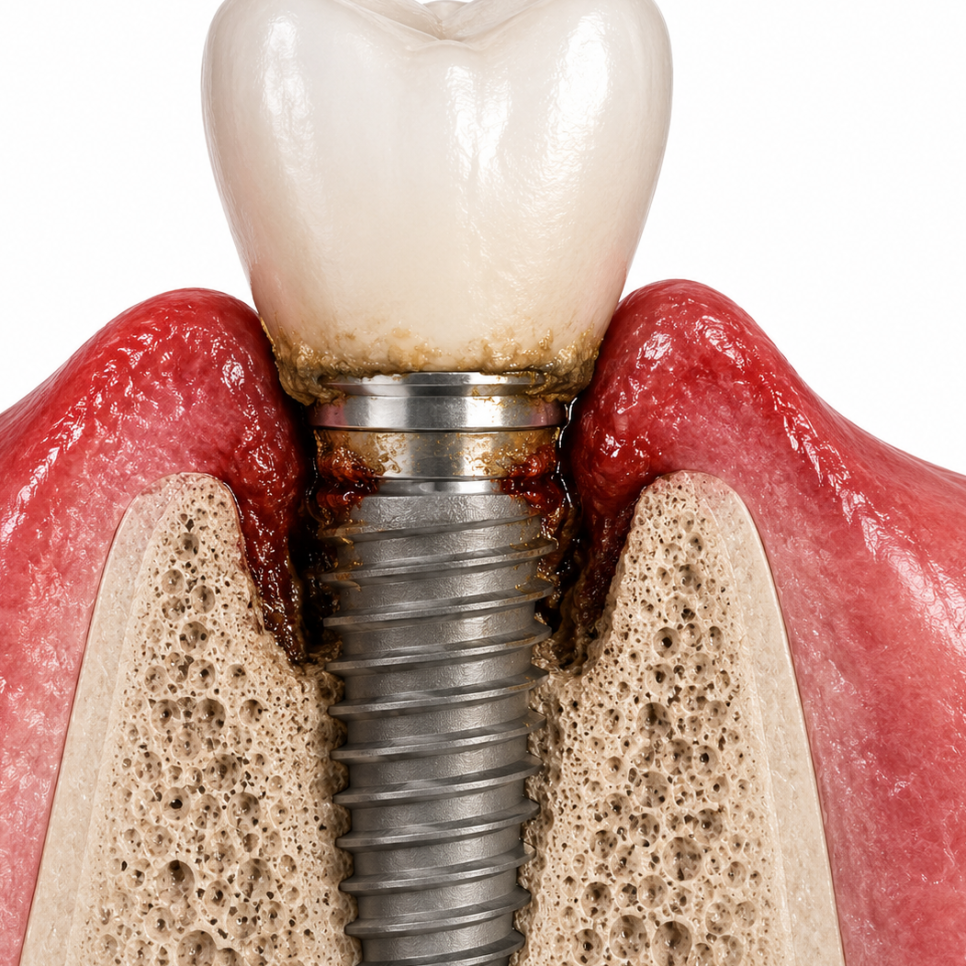
Example photo
Peri-implant mucositis vs. peri-implantitis
Although they may look similar,
they are clearly different stages
from a medical perspective.
Peri-implant mucositis
This is a condition in which inflammation is limited to the surface of the gums.
Bleeding when brushing, mild swelling, and a slight odor may occur.
The bone has not yet been lost,
and with appropriate treatment,
the gum condition can return to normal.
It is a reversible stage.
Peri-implantitis
This is a condition in which inflammation has progressed beyond the gums to the bone.
Bleeding, pus, deep gum pockets, and implant mobility may occur.
The bone has already been lost,
and once bone is lost, it does not naturally recover.
This is an irreversible stage.
The important distinction between the two
is whether bone loss has occurred.
It is difficult to determine this at home.
You need to visit a dental clinic, have an X-ray taken,
and receive an accurate diagnosis.
(Berglundh T et al., 2018, J Clin Periodontol — World Workshop definition)
Peri-implantitis,
1 in 5 people
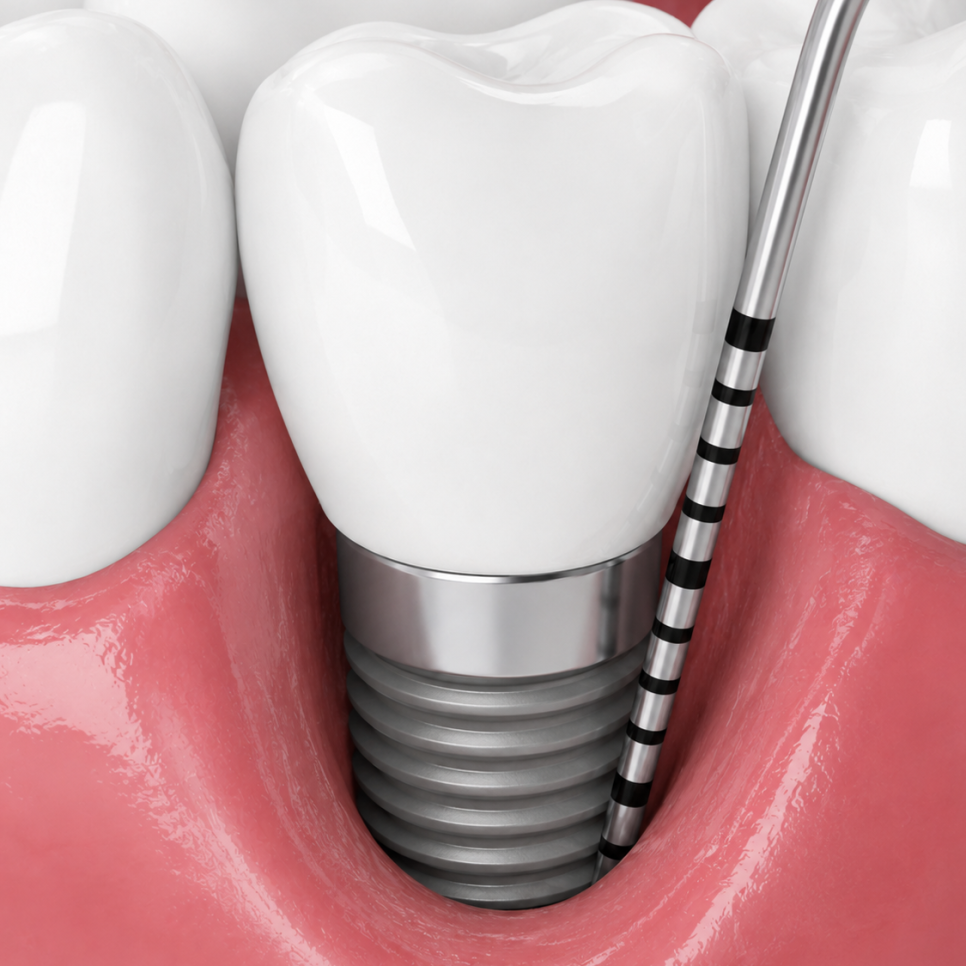
Example photo
According to a recent meta-analysis,
peri-implantitis occurs in approximately 19.53% of implant patients,
or approximately 12.53% when calculated by the number of implants.
(Gardelis P et al., 2025, Frontiers in Dental Medicine)
This means that it occurs in about 1 out of 5 people.
It is not a figure that makes it easy to assume, “My implant will probably be fine.”
Why does it progress faster than gum disease around natural teeth?
The decisive difference lies in the tissue structure.
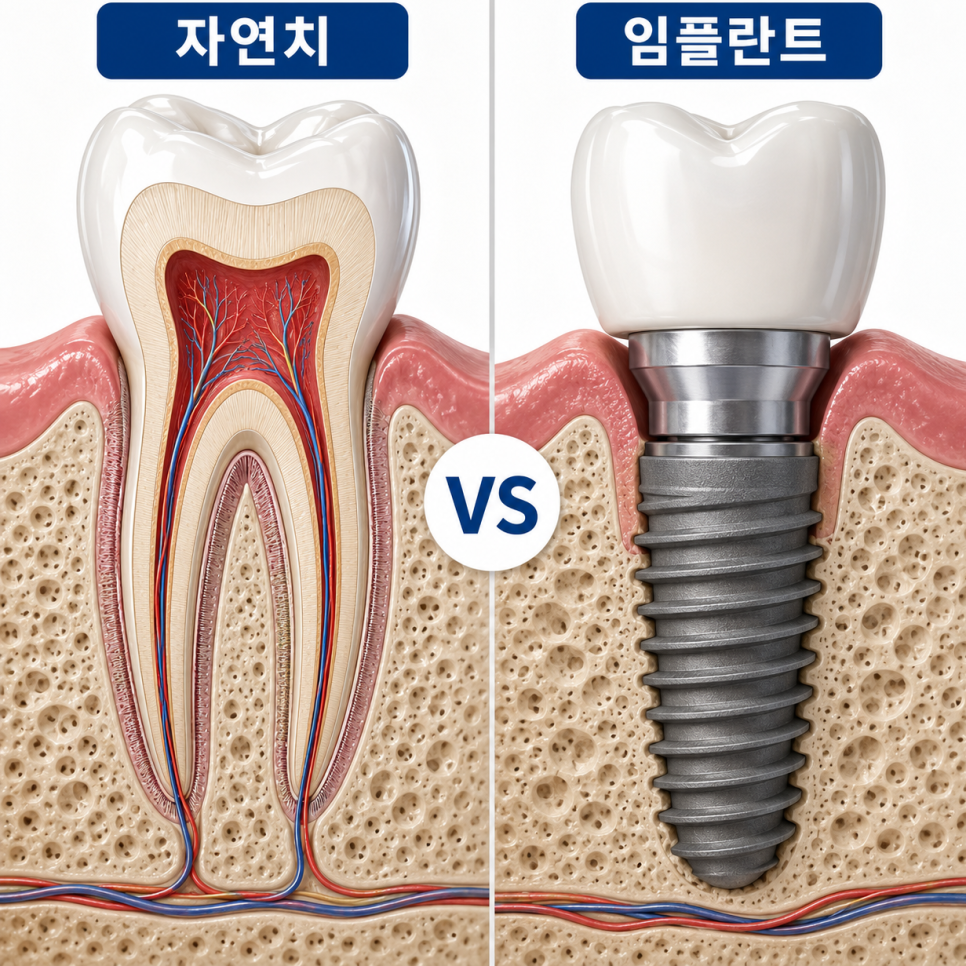
Natural teeth have
a periodontal ligament around the roots,
with a rich supply of blood vessels.
These blood vessels continuously supply immune cells,
providing some degree of defense
even when gum disease progresses.
In contrast, implants do not have a periodontal ligament.
Because the bone and implant are directly connected through osseointegration,
they have a much lower blood-vessel distribution than natural teeth.
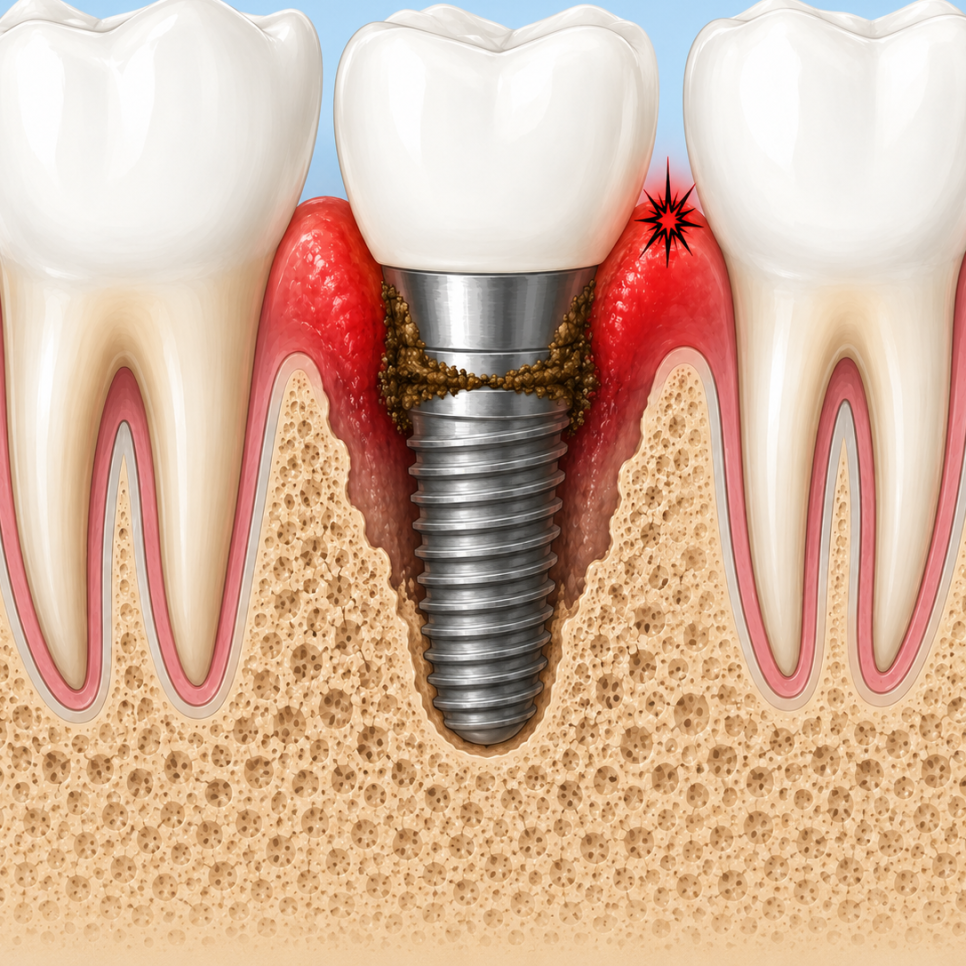
Therefore, once inflammation begins,
it progresses quickly because immune defenses are weaker,
and it can rapidly spread to the surrounding bone
because there is no cushioning tissue to contain the lesion.
It progresses more aggressively
and more quickly than gum disease around natural teeth.
Any disease can be stopped
if it is caught early.
If any of the following signs
persist for more than six weeks,
peri-implant mucositis is more likely.
- Bleeding around the implant when brushing or using dental floss
- A feeling that food gets trapped more often than before
- A feeling of a slight odor coming from the implant area
There is one important point here.
There is usually little to no pain in the early stages.
Gum-disease-related conditions
normally progress quietly
without noticeable symptoms in the early stages.
Therefore, by the time you feel pain,
it has often already progressed to peri-implantitis.
If any of the following applies to you,
it is advisable to have regular checkups more frequently.
| 1. People with a history of periodontitis (gum disease) affecting their natural teeth 2. People with diabetes 3. Smokers 4. People who have rarely attended regular checkups after receiving implants 5. People with implants in areas that are difficult to keep clean |
A history of periodontitis
is considered the strongest risk factor in particular.
If you lost a tooth due to gum disease around a natural tooth
and received an implant,
this means you are already in a higher-risk group.
Let me summarize.
Signs around an implant
are divided into two stages.
Mucositis, which involves inflammation limited to the gums, can be reversed,
but peri-implantitis, in which bone has been lost, cannot be reversed.
The stages cannot be distinguished by looking in a mirror;
they can only be accurately identified with an X-ray.
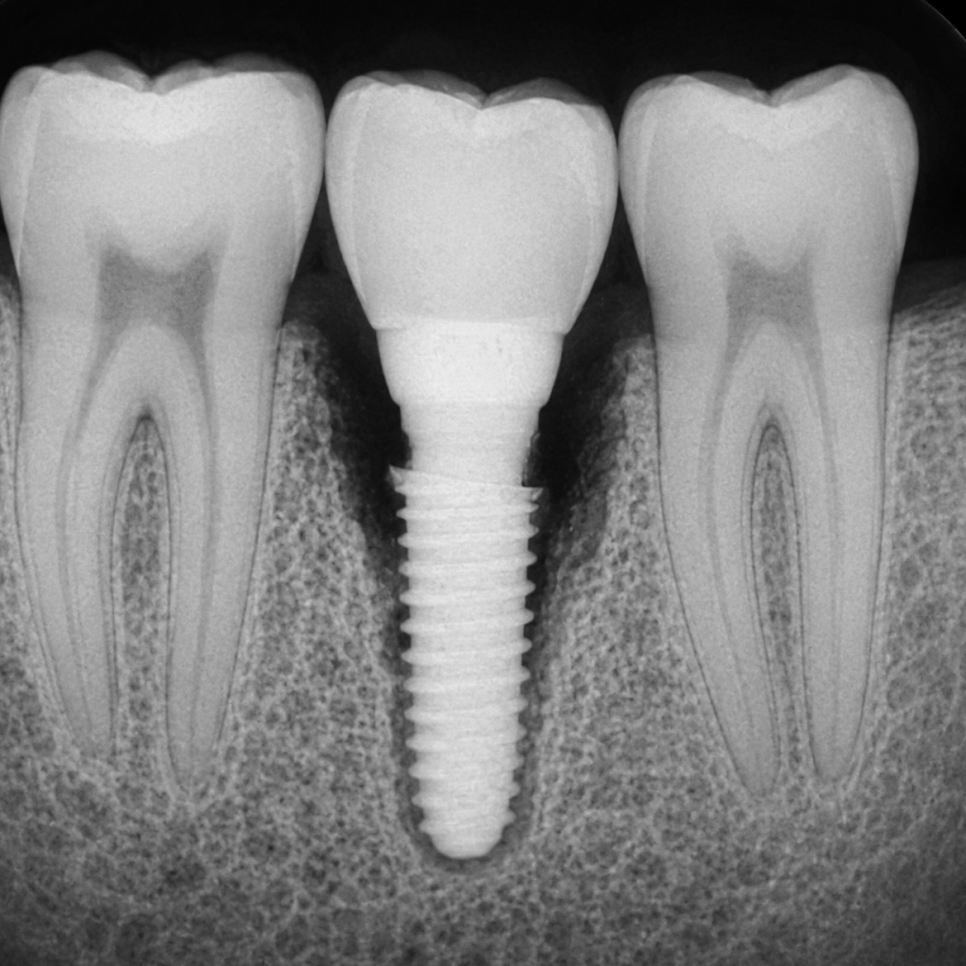
Example photo
Even without pain, having periodic checkups
is the most reliable way to detect any condition early.
If necessary,
we can use X-rays to examine areas that cannot be seen directly.
[References]
Berglundh T et al. (2018) — 2017 World Workshop definitions of peri-implant diseases
https://onlinelibrary.wiley.com/doi/10.1111/jcpe.12957
Gardelis P et al. (2025) — Meta-analysis reporting a 19.53% prevalence of peri-implantitis among patients with implants
https://www.frontiersin.org/journals/dental-medicine/articles/10.3389/fdmed.2025.1661369/full
Renvert S et al. (2018) — Analysis of risk indicators for peri-implantitis
https://onlinelibrary.wiley.com/doi/10.1111/jcpe.12954
Fransson C et al. — One-year follow-up study of bone resorption around implants