안녕하세요!
서울바르디치과 원장입니다.
▼ Check the Dental Clinic Location ▼
| This post was written directly by Seoul Bardi Dental Clinic for the purpose of providing medical information in compliance with Article 56, Paragraph 1 of the Medical Service Act. The information provided is for reference only. We recommend visiting a medical institution and receiving guidance from a medical professional to identify your symptoms and determine the appropriate management method. All procedures and surgeries performed at a dental clinic may involve individual risks, such as inflammation, bleeding, and swelling. Please make your decision after having a sufficient consultation with a medical professional in advance. The treatment cases shown in this post were photographed with the consent of patients who completed treatment at our clinic, and the before-and-after photos were taken under identical conditions. |
| Directions |
Orthodontic treatment may have been completed a long time ago,
yet it is more common than you might think for the front teeth
to become misaligned again.
It may bother you every time you look in the mirror,
but you may not feel ready to undergo full orthodontic treatment again,
and you may not want to have healthy teeth shaved down either, right?
In cases like this, we will explain, along with the relevant evidence,
whether it is possible to undergo orthodontic retreatment only for the front teeth
and, if so, under what circumstances.
| Chapter 1. Why Do Teeth Shift Again After Orthodontic Treatment? The Misconception That the Results 'Last a Lifetime' |
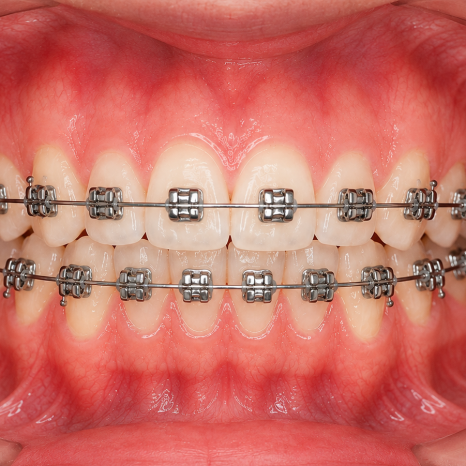
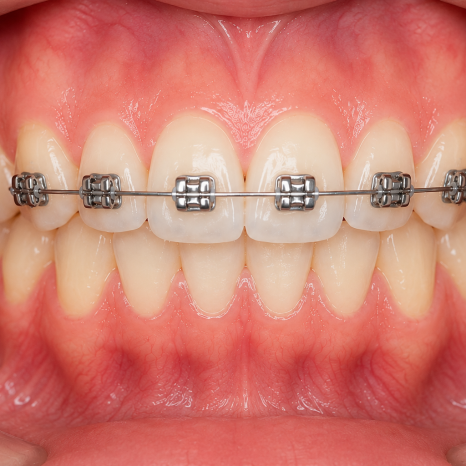
Example photos
“Once orthodontic treatment is finished,
if I take good care of my teeth,
won’t the results last a lifetime?”
Unfortunately, reality is different.
It is actually uncommon for teeth moved through orthodontic treatment
to remain permanently in the same position.
In fact, classic orthodontic studies have reported
that the alignment of the lower front teeth in particular
is almost never maintained unchanged
over the long term.
That is why post-treatment retention should be treated
as part of the treatment plan, they emphasize.
(Little et al., classic long-term study)
There is not just one reason; several forces overlap.
First, the tendency of the gingival fibers to return to their original state.
(Biology Insights, 2025 review)
When teeth are moved through orthodontic treatment, the fibers in the gums stretch.
Once the appliance is removed, they try to return to their original shape
and pull the teeth back.
Second, changes associated with age.
Tooth crowding tends to gradually recur
from adolescence through around age 60,
with the effect being particularly noticeable
in the lower front teeth
and in women.
In other words, a certain degree of shifting again
is not a failure of orthodontic treatment
but a natural part of aging.
(Semin Orthod review)
Third, not wearing the retainer.
Because the two forces described above act throughout life,
teeth can move again if the retainer that holds them in place
is neglected.
The front teeth are particularly noticeable,
so even a small shift can feel highly stressful.
| Chapter 2. Retainers Are Not the 'End of Treatment' but 'Lifelong Management' |
Many people think of retainers
only as the final stage of orthodontic treatment,
but in fact, they are essential appliances for preventing relapse.
A 2023 study found that,
after five years of follow-up,
lower front teeth were maintained
much more stably in patients who used
fixed retainers than in those who used removable retainers.
(Prog Orthod, 2023)
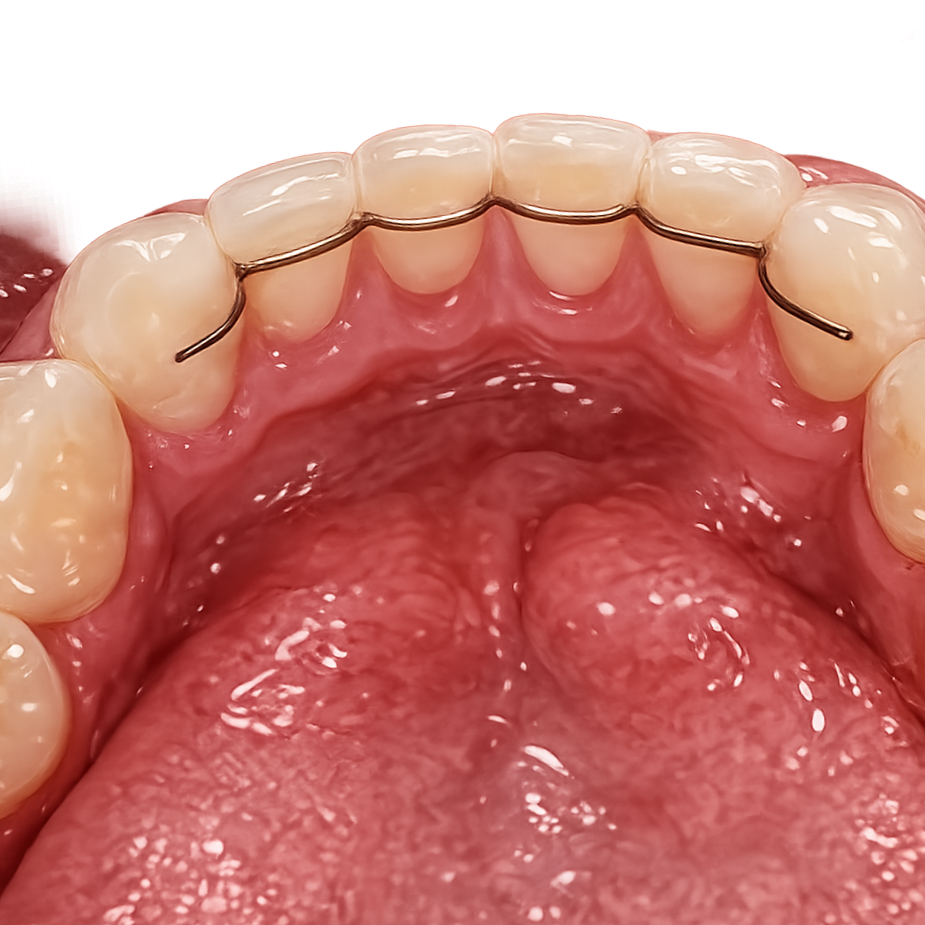
However, even when wearing a fixed retainer,
unexpected minor tooth movements may occur,
and changes associated with age and growth
continue throughout life.
Therefore, a retainer is not something you
'use once and finish with';
it needs to be checked and managed consistently.
(J review, 2024)
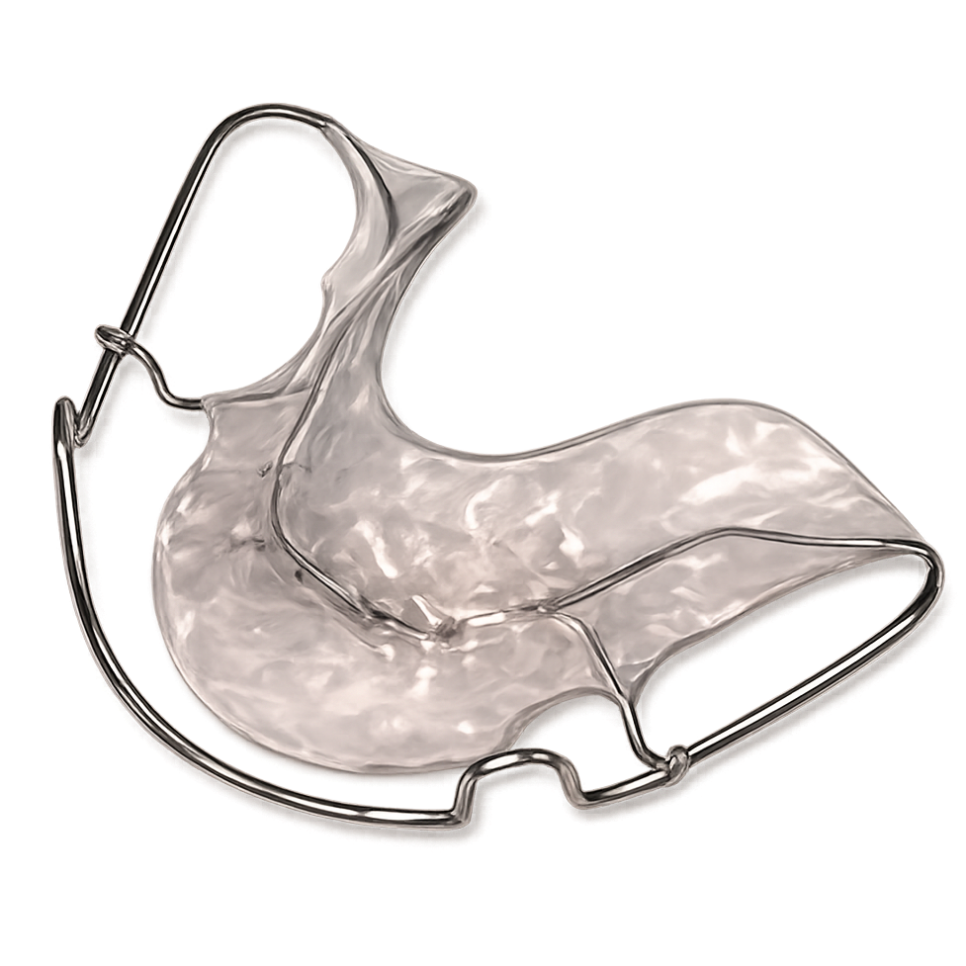
Even if you do not wear it for only a few days,
it may feel tight when you put it back in.
This is a sign that the teeth are constantly trying
to return to their previous positions.
| Chapter 3. Is It Really Necessary to Undergo Full Orthodontic Treatment Again for Retreatment? |
When people hear “retreatment,”
many imagine the same long and inconvenient
full orthodontic treatment they had the first time
and give up before even considering it.
However, not every relapse
requires full orthodontic treatment.
In fact, clear aligner treatment was originally developed
for addressing minor tooth movements,
particularly mild relapse that occurs after orthodontic treatment.
(J clinical study)
There are also short-term approaches that leave the molar bite unchanged
and focus on moving only the front teeth.
These methods use the molars as anchorage (support)
to maintain their positions while correcting
crowding or spacing of the front teeth.
(Clinical case study of limited anterior clear aligner treatment)
This type of partial retreatment involves a smaller range of movement
than the initial full orthodontic treatment,
so the treatment period is shorter, daily inconvenience is reduced,
and the financial burden is relatively lighter.
People who have undergone orthodontic treatment before
also tend to adjust more quickly.
| Chapter 4. However, It Is Not Suitable in Every Case: Indications and Limitations |
We also need to be honest about the limitations.
Partial orthodontic treatment (clear aligner treatment) is effective
for mild to moderate crowding.
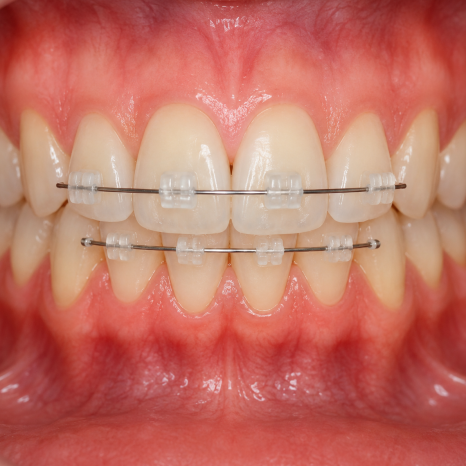
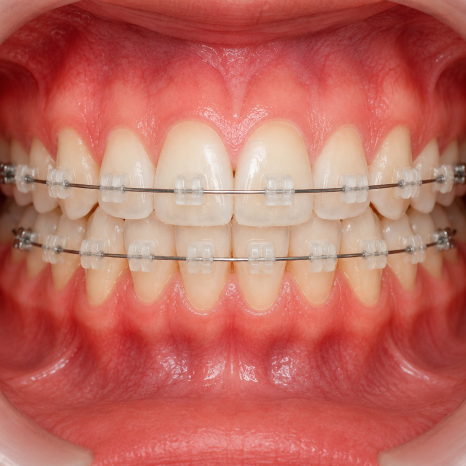
Example photos comparing partial and full orthodontic treatment
Expert consensus also recognizes that although it is effective within this range,
there are clear biomechanical limitations.
(International Delphi consensus, 2025)
Anterior crowding of approximately 6 mm or less
is commonly considered an indication for partial clear aligner treatment.
(Anterior clear aligner treatment study)
Conversely, if the bite (the way the upper and lower teeth meet) is also misaligned,
or if a skeletal problem is present,
working only on the front teeth may instead disrupt the bite,
so an overall diagnosis is necessary.
Retreatment also requires a more careful assessment
of the gums and bone than the initial orthodontic treatment.
If the teeth are pushed excessively,
the gums may recede or the bone around the roots may become thinner.
Therefore, the answer to “Can I have treatment only for the front teeth?” is:
“It is necessary to make an accurate determination after an examination,
but it is possible in many cases.”
A decision should be made after a detailed diagnosis
checks the degree of crowding, the bite, and the condition of the gums.
In conclusion
To summarize:
Teeth shifting again after orthodontic treatment
is the result of a combination of gingival fibers, age-related changes,
and inadequate retainer use,
and to some extent, it is a natural phenomenon.
Partial retreatment to correct only the front teeth again
is sufficiently feasible if the relapse is not severe
and the bite and gum conditions are satisfactory.
It is also shorter and less burdensome than full orthodontic treatment.
However, if left untreated, the teeth may become increasingly misaligned
and spaced over time.
If this is causing you stress,
we recommend having your condition evaluated, even if it is only an assessment.
It is not too late to consider your options after the evaluation.
Thank you.
[References]
Semin Orthod / J Clin (retention review) — Increase in crowding with age (from the mixed dentition period through age 60, particularly in the mandible and in women), multifactorial relapse
Biology Insights (2025) — Contribution of gingival fibers to relapse; comparison of fixed and removable retainers
Prog Orthod (2023, systematic review) — Effect of fixed retainers in preventing crowding of the lower front teeth
International Modified Delphi Consensus (2025) — Indications for clear aligner treatment (mild to moderate crowding) and biomechanical limitations
Anterior clear aligner clinical study — Indication range for anterior crowding of 6 mm or less