Hello!
I am the director of Seoul Bardi Dental Clinic.
▼ Check the Dental Clinic Location ▼
| This post was written directly by Seoul Bardi Dental Clinic for the purpose of providing medical information, in compliance with Article 56, Paragraph 1 of the Medical Service Act. The information provided is for reference only, and we recommend visiting a medical institution to receive guidance from a medical professional for symptom assessment and accurate management. All procedures and surgeries performed at the dental clinic may involve individual risks, such as inflammation, bleeding, and swelling. Please make your decision after sufficient consultation with a medical professional in advance. The treatment cases presented in this post were photographed with the consent of patients who completed treatment at our clinic, and the before-and-after photographs were taken under identical conditions. |
| Directions to the Clinic |
Even when parents notice a problem in their child’s mouth,
many think, “They’re still growing, so should we wait and see a little longer?”
In most cases, that may be fine,
but an important exception is an underbite.
An underbite does not improve the longer you wait;
it tends to become more severe as the child grows.
That is why the timing of treatment has a major influence on the outcome.
Today, I will explain why an underbite develops
and why the period of growth is so important,
along with the relevant evidence.
| Chapter 1. An Underbite Is Not Simply a Cosmetic Issue — “Crossbite” |
An underbite is a condition in which the lower jaw
extends farther forward than the upper jaw.
In dentistry, it is called a “crossbite,” meaning that the normal relationship between the upper and lower teeth is reversed.
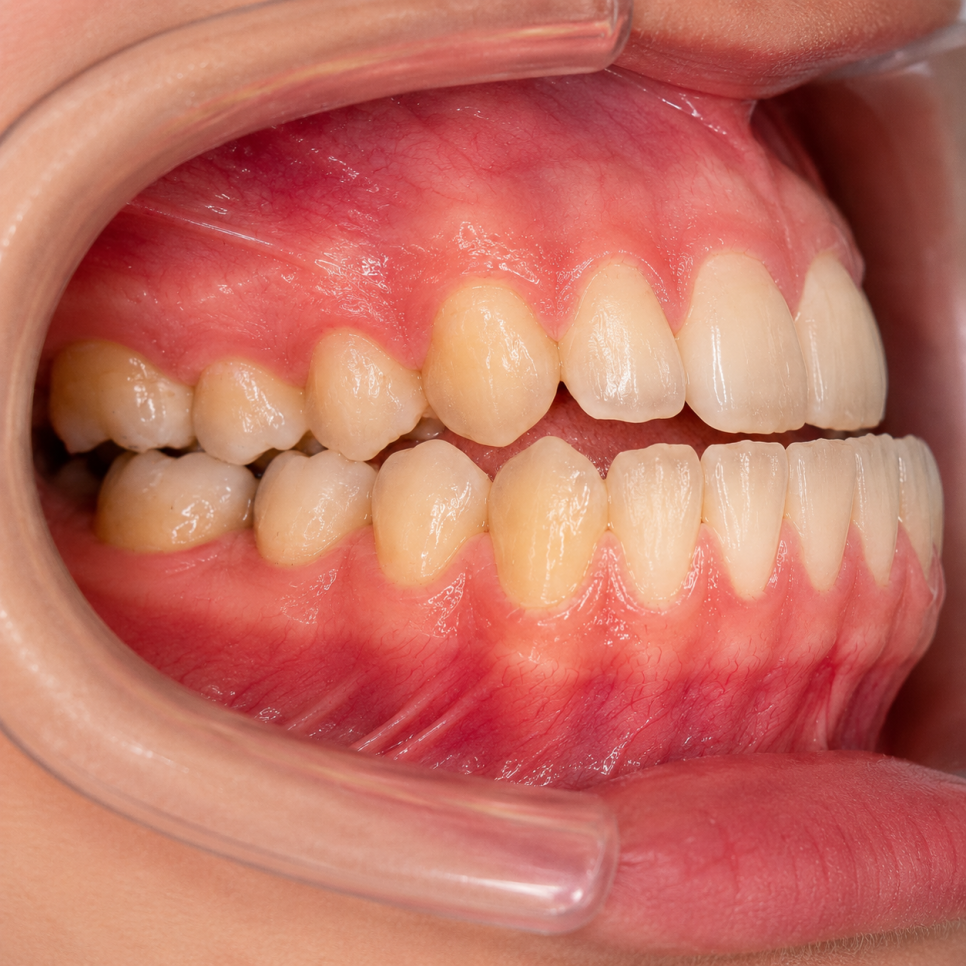
Example photograph
Although it can cause significant stress because of its appearance,
the problem does not end there.
It may be difficult to bite off food with the front teeth,
and pronunciation may become unclear.
Because the bite is unstable,
it may also affect jaw joint function.
For this reason, orthodontic treatment may be needed
not only for cosmetic reasons but also for functional reasons.
Genetic factors are a major cause in most cases.
If one parent has an underbite, the child is more likely
to develop the same skeletal characteristics.
In fact, Class III malocclusion (crossbite) is considered a developmental deformity that arises during growth through the combined effects of genetic and environmental factors.
(Int J Oral Sci, 2025)
| Chapter 2. Why Is Treatment Possible Only During “Growth”? |
This is the key point.
The success of underbite treatment
depends on when it is performed.
If left untreated, a crossbite tends to become
progressively more severe as the child grows.
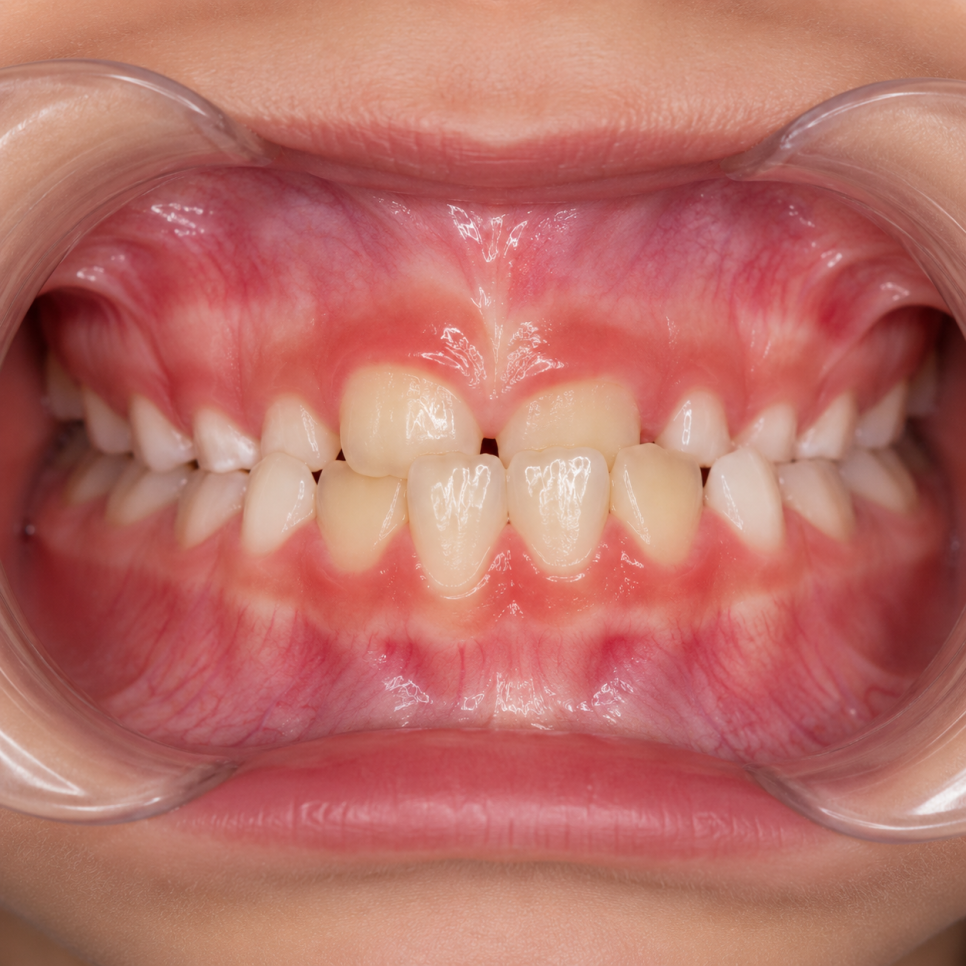
Example photograph
If treatment is not initiated early, it may interfere with normal jawbone growth
and eventually lead to severe facial deformity.
Therefore, the general principle is to intervene as early as possible
so that the skeletal foundation can develop normally.
(PubMed, 2012 / Int J Oral Sci, 2025)
In other words,
while the bones are still growing,
it is possible to influence the direction of that growth.
For a child with insufficient upper-jaw development,
upper-jaw growth may be encouraged,
while excessive lower-jaw growth
may be restrained.
This means using the force of growth as part of treatment.
In contrast, this approach does not work for adults
whose jawbone growth has ended.
Once the bones have matured, their direction cannot be changed with an appliance.
In severe cases, orthognathic surgery, which involves cutting and repositioning the bones, may be required.
This is the biggest reason early treatment is important.
When intervention takes place at the appropriate time, it may reduce the likelihood of eventually requiring surgery.
(Int J Oral Sci, 2025)
| Chapter 3. Treatment Timing Is Determined by “Bone Age,” Not Just “Age” |
Then, at what age should treatment begin?
In reality, it cannot be determined by chronological age alone.
Because the rate of bone growth differs from child to child,
treatment timing is determined by considering the clinical condition together with dental age and skeletal age.
(Int J Oral Sci, 2025)
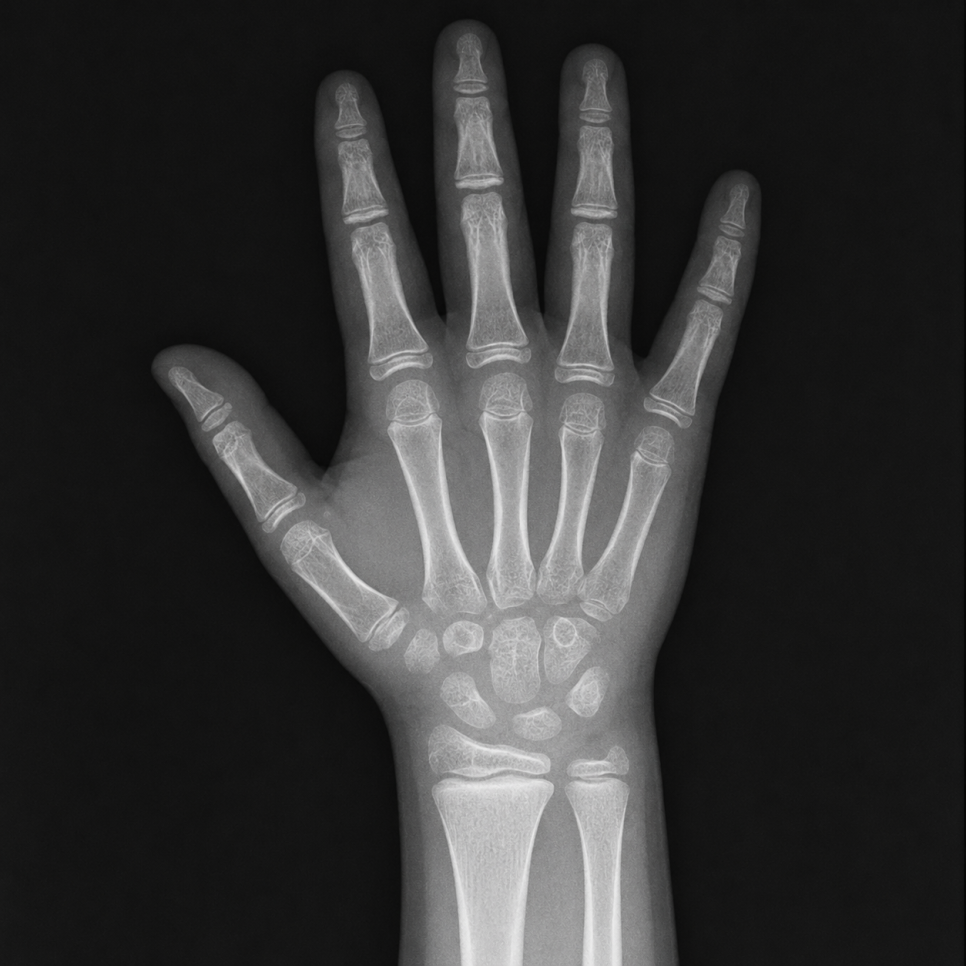
Example photograph
A hand X-ray (hand and wrist radiograph)
can also be used to determine
how much bone growth remains.
The important point is that there is a limited period
when this assessment is meaningful.
Once growth has ended, the bones no longer respond to appliances.
That is why “let’s wait and see” can be the riskiest choice.
| Chapter 4. Treatment Appliances Have Advanced, but Their Principles and Limitations Remain the Same |
In the past, appliances worn outside the face, such as face masks and chin caps, were commonly used to restrain lower-jaw growth.
Although they can be effective, children often disliked them because they were noticeable.
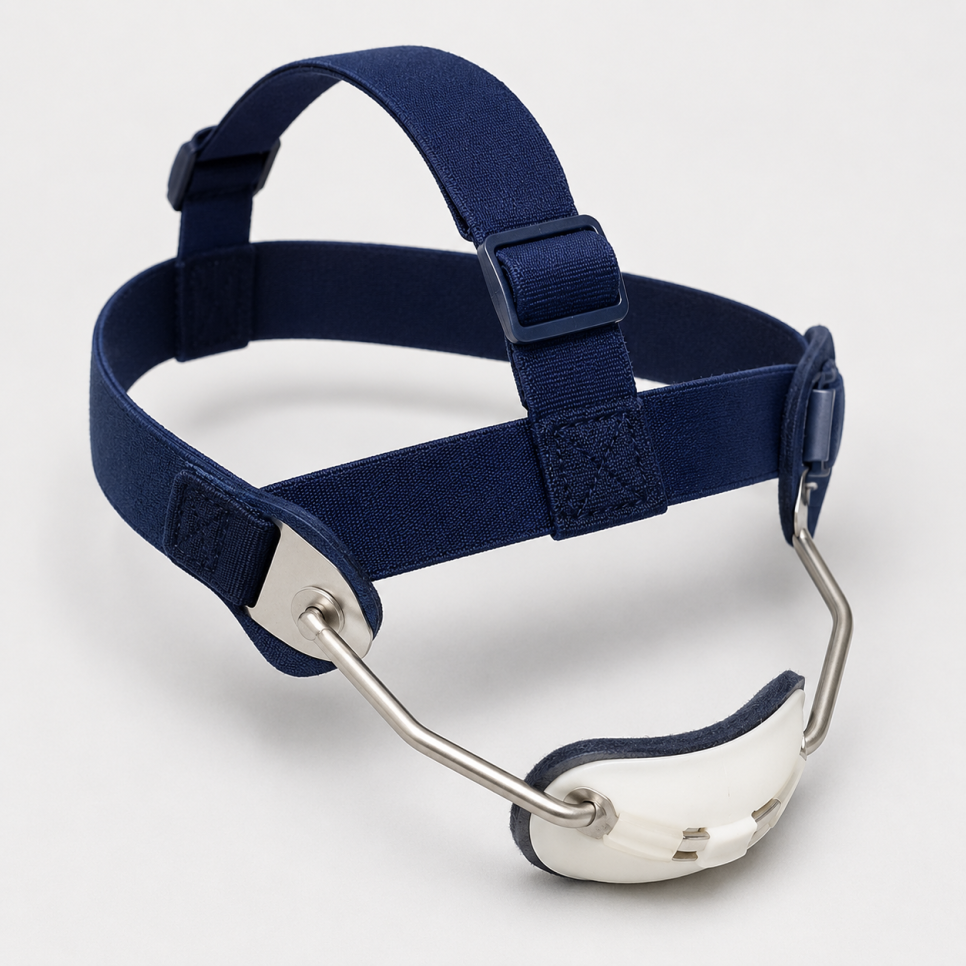
Today, soft functional appliances worn inside the mouth are available,
making them more comfortable to wear and less likely to cause reluctance.
They work by correcting the position of the tongue,
adjusting lower-jaw growth,
and guiding the bite into the proper relationship.
However, even though appliances have advanced,
the fundamental point has not changed:
every appliance works only while the bones are growing.
If orthodontic treatment moves the teeth,
these appliances regulate jawbone growth itself,
so they are different in nature.
For this reason, their use becomes difficult once the child is past the growth period.
An appliance is not a universal solution,
but when treatment is timed appropriately,
it may provide an opportunity to address the problem without surgery.
In Closing
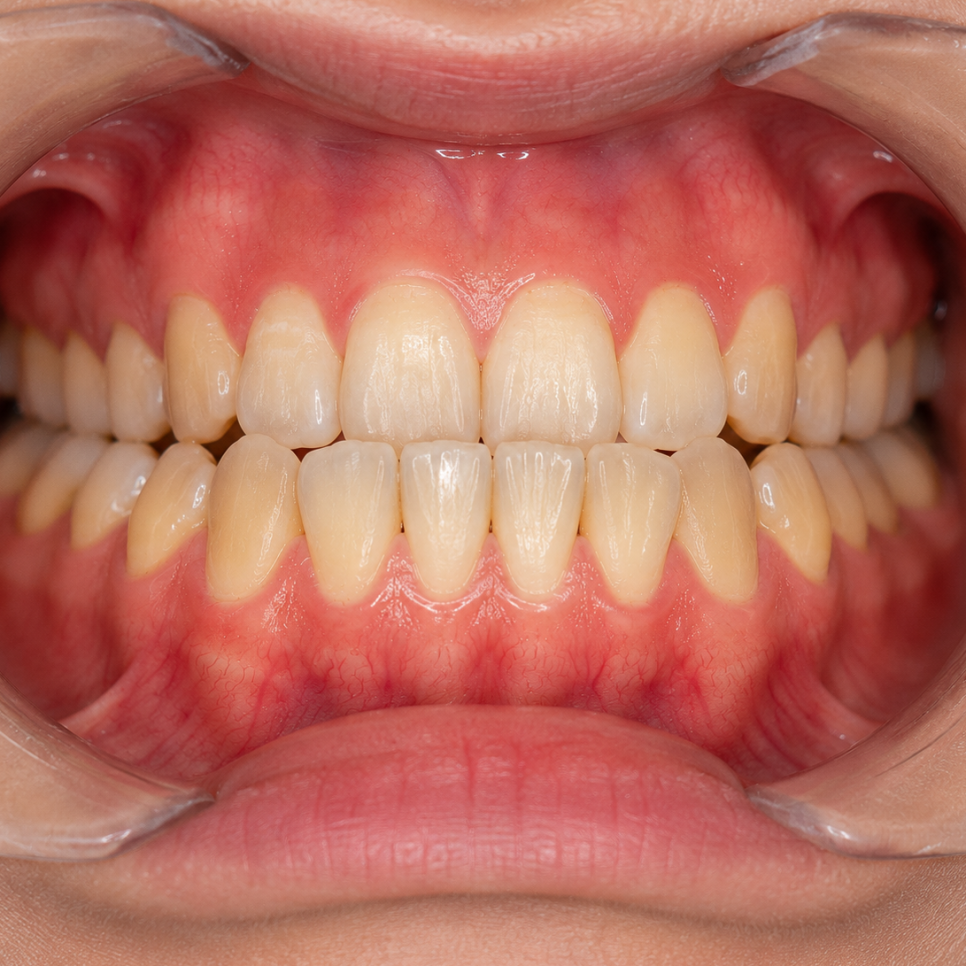
Example photograph
To summarize:
An underbite (crossbite) is not merely a cosmetic issue;
it is a functional problem that can affect chewing, pronunciation, and the jaw joint,
and it tends to worsen the longer it is left untreated.
During the growth period, it is possible to influence the direction of bone growth,
but once growth has ended, surgery may be required.
Therefore, it is especially important not to miss the golden window for treatment.
If your child’s lower jaw appears to project forward
or the front teeth bite in reverse,
we recommend first having skeletal maturity evaluated.
Simply confirming whether the current timing is suitable for treatment
can make a significant difference.
Thank you for reading this lengthy post.
[References]
Int J Oral Sci (2025) — Expert consensus on early orthodontic treatment of class III malocclusion
(Crossbite tends to worsen during growth; early treatment can make use of growth and reduce the likelihood of surgery; treatment timing is determined by bone age.)
PubMed (2012) — Timely management of developing class III malocclusion (Facial deformity may result if early intervention is not provided; treatment should begin as early as possible.)
PMC — Expert consensus on pediatric orthodontic therapies (Functional appliances can promote upper-jaw development and regulate lower-jaw growth.)