Hello!
I am the director of Seoul Bardi Dental Clinic.
▼ Check the dental clinic location ▼
| This post was written directly by Seoul Bardi Dental Clinic for the purpose of providing medical information, in compliance with Article 56, Paragraph 1 of the Medical Service Act. The information provided is intended for reference only. For an assessment of symptoms and accurate management methods, please visit a medical institution and receive guidance from a medical professional. All procedures / surgeries performed at a dental clinic may involve risks depending on the individual (such as inflammation, bleeding, and swelling). Please make your decision after having a thorough consultation with a medical professional in advance. All images were created using AI to aid understanding. |
People often say,
“Your jaw will settle into place as you grow.”
Sometimes, that is actually true.
However, an underbite is a representative case
in which this common belief
can instead do more harm than good.
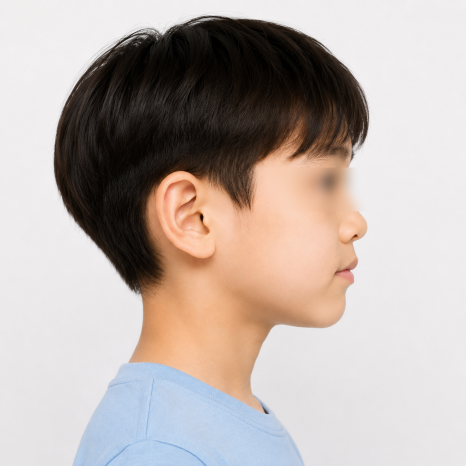
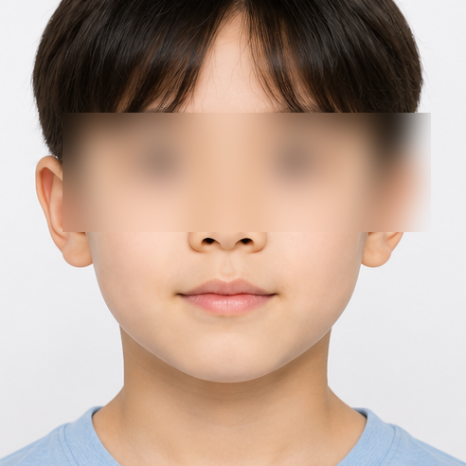
An underbite does not
improve with growth.
It tends to become more severe,
and once the growth period has passed,
appliances may no longer be able to correct it,
potentially making surgery necessary.
< ※ The golden window for treating childhood underbite ↓↓>
Today, I will explain why an underbite is different
and why timing is important,
along with the supporting evidence.
| Chapter 1. First, let’s clear up the misconception that an underbite is merely a “cosmetic issue” |
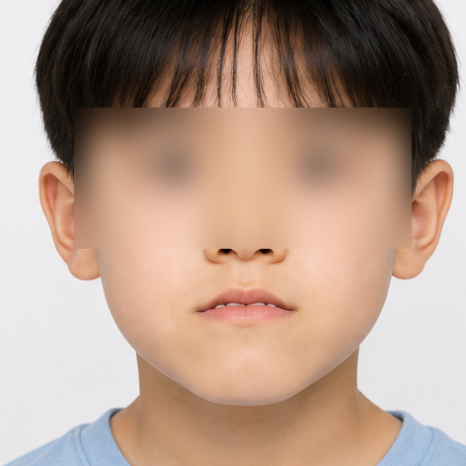
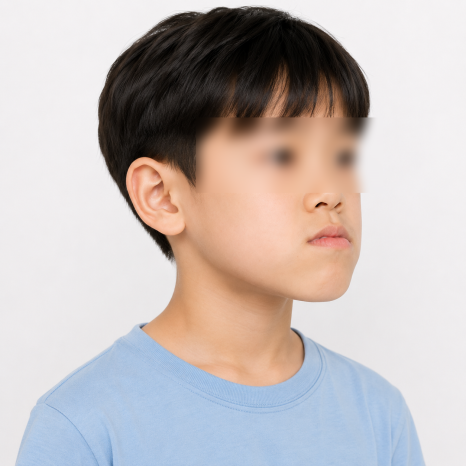
An underbite is a condition
in which the lower jaw protrudes
farther forward than the upper jaw.
Because the upper and lower teeth meet in the opposite of the normal relationship,
it is called an “underbite” or “Class III malocclusion.”
Many people view this only as a cosmetic concern.
However, it can significantly affect function.
It may be difficult to bite through food with the front teeth,
and speech may become unclear.
Because the bite is unstable, growth may also place stress
on the temporomandibular joints.
The cause is usually genetic.
If one parent has an underbite,
there is a higher likelihood that the child will show the same skeletal characteristics.
In fact, an underbite (Class III malocclusion)
is considered a developmental abnormality
that arises from the combined effects of genetic and environmental factors during growth.
(Int J Oral Sci, 2025)
| Chapter 2. Why do parents keep choosing to “wait and see”? |
An underbite does not cause pain.
Because the child smiles and eats well,
it is easy to dismiss visible signs by thinking,
“It’ll get better as they grow.”
The problem is that an underbite
does not tend to improve simply by being observed.
An underbite tends to worsen with growth.
If it is not addressed early,
treatment may become more difficult later
and may take longer.
(Int J Oral Sci, 2025)
In other words, waiting is not a neutral choice.
The passage of time itself
can reduce the available options.
| Chapter 3. This important period is available only during “growth” |
“Success in treating an underbite
depends greatly on when treatment is started.
While the bones are still growing,
it is possible to guide the direction of growth to some extent.
For a child with insufficient upper-jaw development,
treatment may support upper-jaw growth,
while excessive lower-jaw growth may be controlled,
using the power of growth as part of the treatment.
(Int J Oral Sci, pediatric orthodontic consensus)
Once jawbone growth is complete, however,
this approach no longer works.
Because hardened bone cannot have its direction changed with an appliance,
severe cases may require double-jaw surgery,
in which the bones are cut and repositioned.
(Int J Oral Sci, 2025)
This is where the value of early “evaluation” comes in.
If the condition is one that can be treated through timely intervention,
using growth may reduce the possibility of eventually needing surgery.
Even with the same type of underbite,
the range of options can differ
depending on when it is identified.
| Chapter 4. If you miss it, you cannot turn back: the value of “now” |
That is why this treatment
comes with the strict condition of time.
Because the rate of bone growth varies from child to child,
the clinical condition and bone age are assessed together.
(Int J Oral Sci, 2025)
This is why a hand X-ray is used
to determine how much bone growth remains.
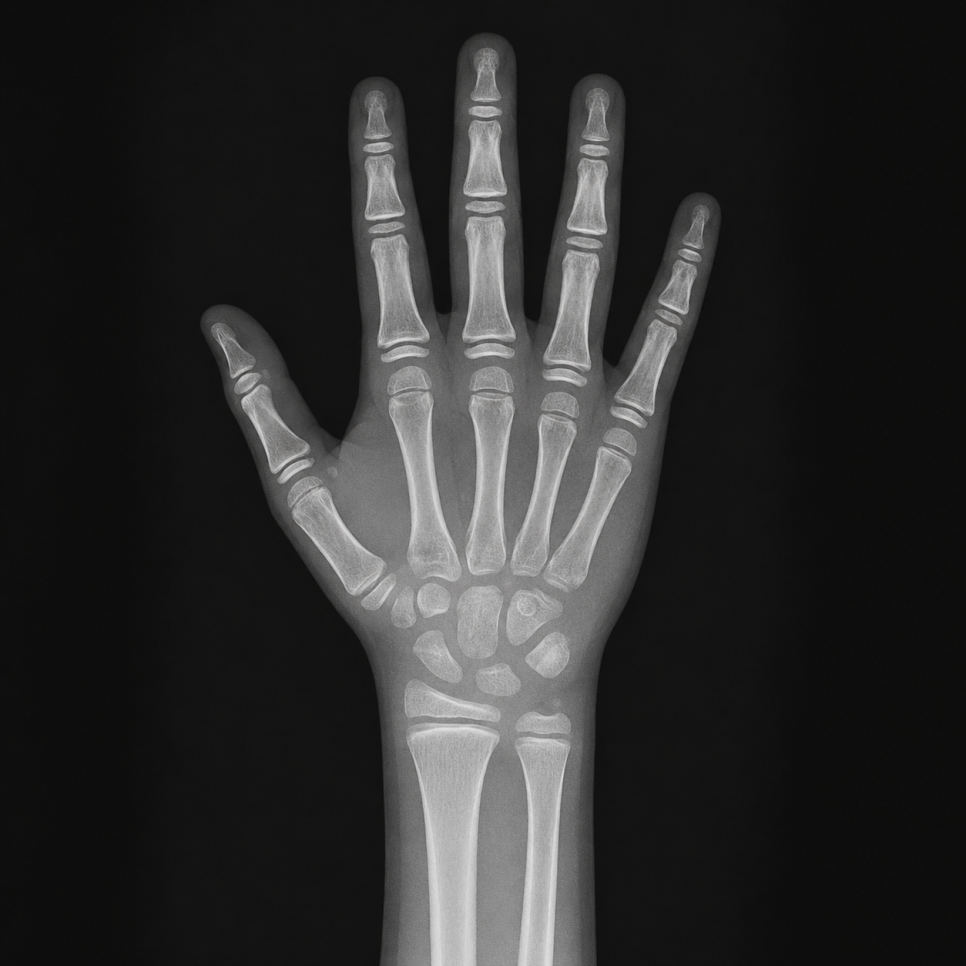
The important point is that once the window of growth closes,
it does not open again.
Once growth is complete, it is no longer possible
to control bone growth with an appliance.
This is why “let’s wait and see” can be risky.
If the child’s growth period passes while you are waiting,
one of the options that was previously available may disappear.
Today, I explained
why treatment for a child’s underbite should not be delayed.

An underbite (Class III malocclusion)
is not merely a cosmetic issue.
It is a functional issue connected to speech and the temporomandibular joints,
and the available options tend to decrease the longer it is left under observation.
Because there is no pain, it is easy to think,
“It’s probably fine,” and move on.
However, once the growth period passes,
the treatment approach itself changes,
which is why evaluating this period
is especially important.
That does not mean every child should automatically
start wearing an appliance early.
The first step is to determine
whether the child is the type who would benefit from early treatment
or the type who should be monitored during growth.
That decision begins with an assessment of skeletal maturity.
If your child’s jaw appears to protrude
or the front teeth bite in the opposite direction,
start with an evaluation.
It is not too late to decide to monitor the condition after the examination.
Thank you for taking the time to read this lengthy post.