Hello!
I am the director of Seoul Vardi Dental Clinic.
▼ Check the Dental Clinic Location ▼
| This post was written directly by Seoul Vardi Dental Clinic for the purpose of providing medical information, in compliance with Article 56, Paragraph 1 of the Medical Advertising Act. We recommend using the information provided for reference only. For an assessment of your symptoms and accurate guidance on care methods, please visit a medical institution and consult with a medical professional. All procedures and surgeries performed at dental clinics may involve individual risks, such as inflammation, bleeding, and swelling. Please make your decision after having a sufficient consultation with a medical professional in advance. To help with understanding, all images were created using AI. |
| Directions |
Bleeding when brushing your teeth
or swollen gums
are the most common reasons people visit the dentist.

The most reliable
solution in these cases is scaling.
However, many people say,
“I kept putting it off because I was afraid of the sharp, sensitive feeling during scaling.”
There is one misunderstanding here.
Some people regard sensitivity after scaling
as a sign that “their teeth have been damaged,”
but in fact, this sensitivity is not damage;
it is rather a sign of recovery.
Today, I will explain
why scaling is essential,
why sensitivity occurs, and how it can be reduced,
along with the supporting evidence.
< Do gum medications alone heal gum disease? ↓↓>
| Chapter 1. Scaling Is Not Merely “Basic”—It Is Essential |
Scaling is the most basic
dental treatment,
but being basic does not mean it is insignificant.
The main cause of gum disease is tartar.
Tartar is not simply a foreign substance;
it is a hardened mass formed when bacteria clump together.
It releases toxins that cause inflammation in the gums,
and if left untreated, it can even damage the jawbone supporting the teeth.
Because tartar is difficult to remove
with brushing alone,
it must be removed physically.
At first, it can be removed relatively easily,
but as time passes,
it hardens like a stone
and must be removed
using an ultrasonic scaler.
| Chapter 2. Why Do Teeth Become Sensitive After Scaling? Is It Really Damage? |
Now we come to the key point.
Understanding the cause of sensitivity after scaling
can reduce your fear of the procedure.
Tooth sensitivity does not occur
because the teeth have been shaved down or damaged.
It occurs because tooth surfaces
that had been covered by tartar
are exposed to the outside for the first time.
Surfaces that had not been exposed for a long time
to the tongue, cold water, or a toothbrush
because they were covered by tartar
become exposed, making them temporarily feel sensitive.
(Salisbury Dentist, 2026)
This is similar to feeling cold
when a blanket is suddenly pulled away
while you are sleeping under it in winter.
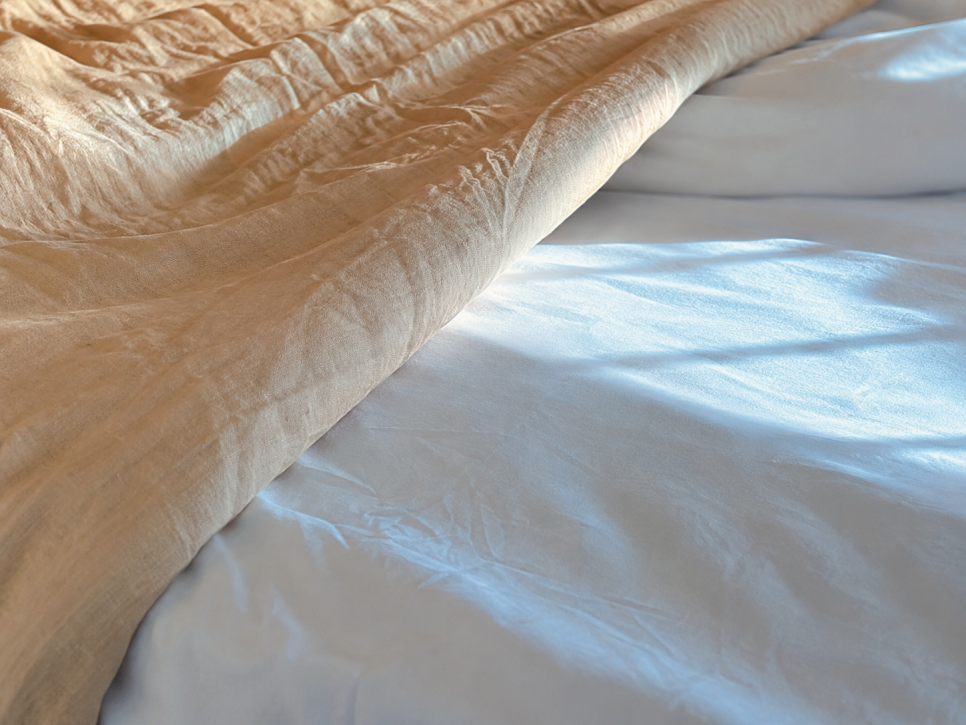
Your body has not been harmed;
what was covered has simply been exposed,
making your senses more sensitive.
Therefore, this sensitivity is usually temporary.
It generally subsides within a few days,
and even when the gums are in poor condition
and the area has required deeper cleaning,
it usually improves within about a week.
The ADA also considers this degree of temporary sensitivity to be within the normal range.
(ADA / Colgate, 2026)
| Chapter 3. “Then wouldn’t it be better not to get scaling if it causes sensitivity?” |
This is where many people fall into a trap:
the thought that “I would rather not get scaling if it will make my teeth sensitive.”
However, tartar is a mass of bacteria,
and if it is left in place, it continues to harm the gums.
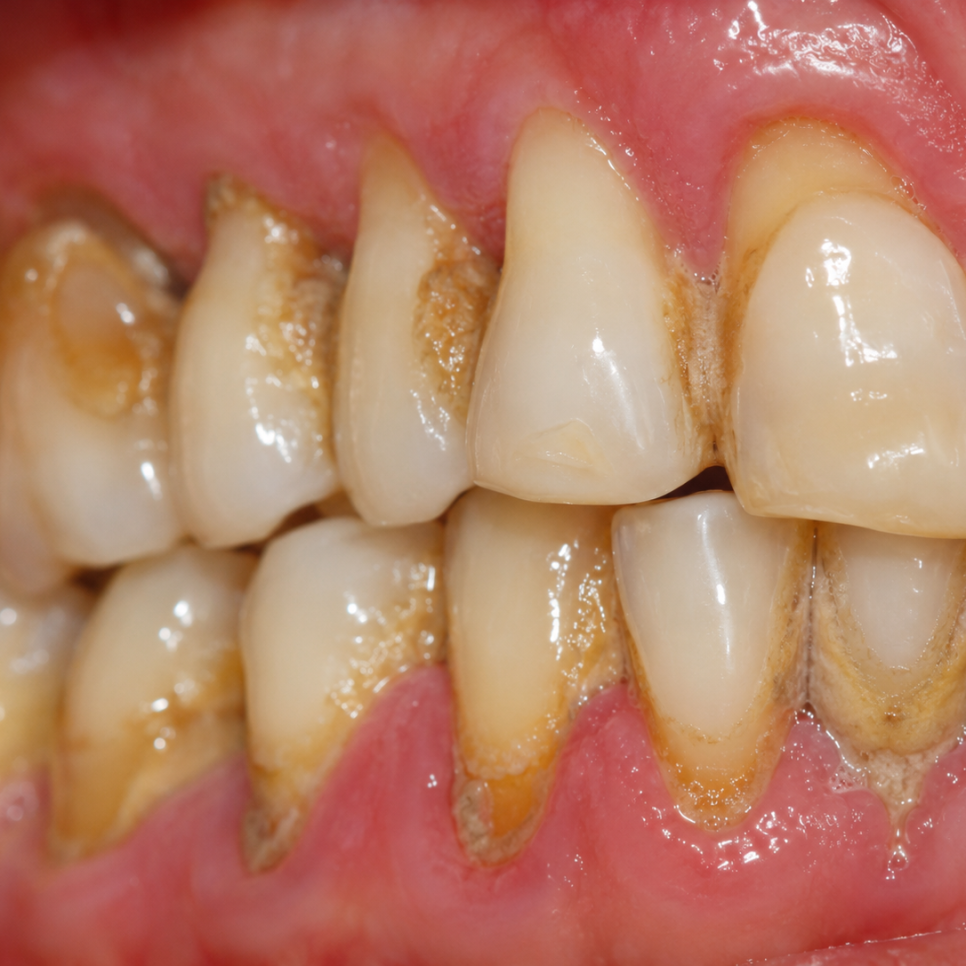
If you postpone scaling because you are afraid of temporary sensitivity,
gum disease can quietly progress in the meantime.
On the other hand, if you manage your oral health regularly
and less tartar accumulates,
there will be less to remove at your next scaling appointment,
which can also reduce sensitivity.
The point is that skipping scaling
because of sensitivity
is not a solution.
(Sunridge Dental)
In other words,
trying to avoid brief sensitivity
could instead allow hard-to-reverse loss of the jawbone supporting the teeth
to worsen.
| Chapter 4. There Are Definitely Ways to Reduce Sensitivity During Scaling |
If you are concerned about sensitivity,
you can reduce it in the following ways.
First, topical anesthesia.
Rather than an injection,
a gargle-type anesthetic can be used to numb the mouth,
making the procedure much less sensitive.
Second, fluoride application after scaling.
Fluoride strengthens the teeth
and helps relieve dentin hypersensitivity.

When sensitivity is severe,
dental clinics may apply fluoride varnish or a desensitizing agent
to soothe the exposed dentin.
(ADA / Salisbury, 2026)
Even adding these two measures
can significantly reduce sensitivity during scaling.
At home, using a sensitivity toothpaste
(containing potassium nitrate or stannous fluoride)
may also help.
Today, I discussed scaling and tooth sensitivity.
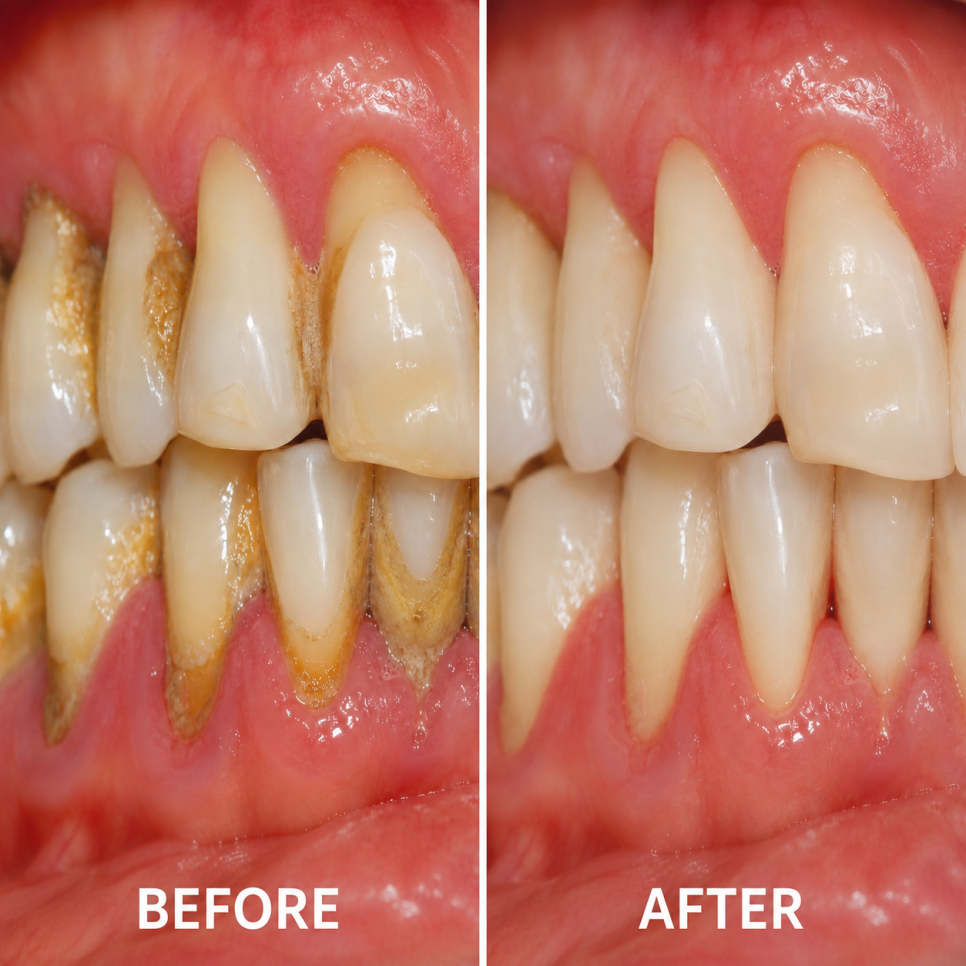
To summarize,
sensitivity after scaling is not a sign that the teeth have been damaged.
It is a normal recovery response that occurs
when surfaces previously covered by tartar become exposed,
and it generally subsides within a few days to a week.
If you postpone scaling because you are afraid of sensitivity,
gum disease may progress instead.
Therefore, it is much more beneficial to undergo scaling comfortably
with topical anesthesia and fluoride application.
If you have been postponing scaling
because you were worried about sensitivity,
you can let go of that concern now.
Because there are ways to manage it.
If your gums are swollen
or bleeding,
do not put it off.
We recommend receiving care in a way that minimizes discomfort.
If you have any questions,
please feel free to contact us at any time.
We will help you receive treatment
with less sensitivity
and greater comfort.
Thank you for reading this long post today.

[References]
American Dental Association (ADA) — Pain for a day or two and sensitivity for up to one week after scaling or deep cleaning are within the normal range; fluoride application and other measures may help relieve dentin hypersensitivity.
Colgate Oral Health (2026) — Sensitivity after scaling is a temporary response caused by exposed dentin and usually improves within several days.
Salisbury Dentist (2026) — Sensitivity is a normal sensation that occurs when tooth surfaces covered by tartar become exposed; it can be relieved with fluoride varnish.
Sunridge Dental Care — Avoiding scaling because of sensitivity is not a solution; regular care can reduce the intensity of sensitivity.