Hello!
I am the director of Seoul Bardi Dental Clinic.
▼ Check the Dental Clinic Location ▼
| This post was written directly by Seoul Bardi Dental Clinic for the purpose of providing medical information, in compliance with Article 56, Paragraph 1 of the Medical Service Act regarding medical advertising. We recommend using the information provided for reference only. For an assessment of your symptoms and accurate care instructions, please visit a medical institution and consult with a medical professional. All procedures and surgeries performed at a dental clinic may involve risks depending on the individual, such as inflammation, bleeding, and swelling. Please make your decision after having a thorough consultation with a medical professional in advance. To aid understanding, all images were created using AI. |
Transparent aligners are popular because they are not very noticeable and can be removed and put back in, making them convenient.
However, that very convenience of being able to remove and replace them can also become a pitfall when it comes to care.
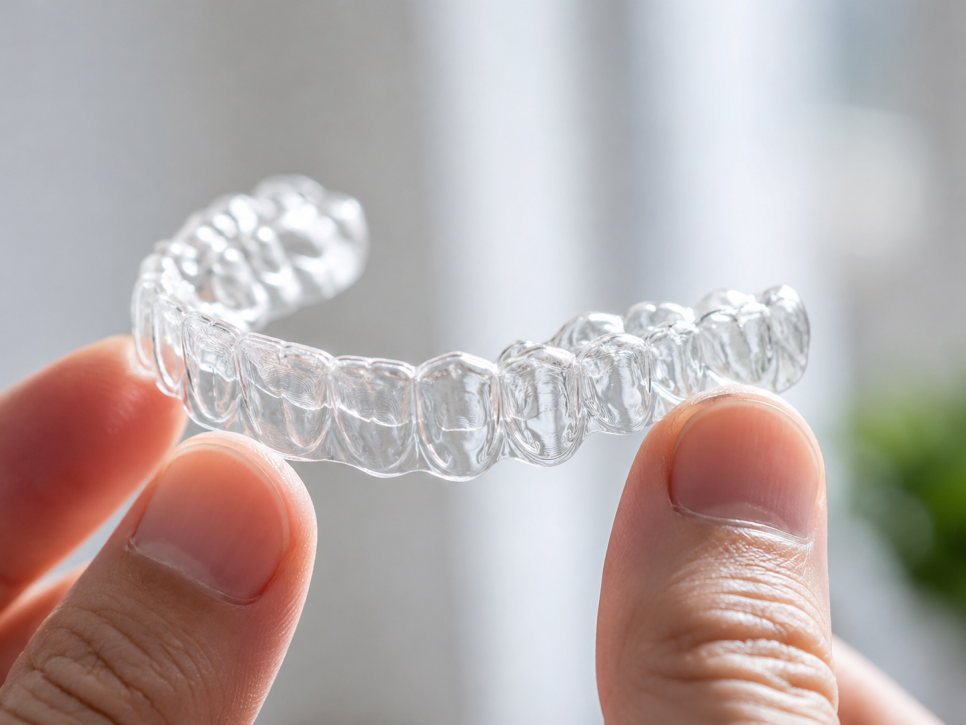
With wire braces, the appliance is attached and the dentist controls the force through the appliance, but with transparent aligners, a considerable part of wearing, removing, and caring for them depends on the patient.
That is why the outcome of transparent aligner treatment depends not only on the performance of the appliance, but also on how I manage it.
Today, I will organize the management points that are commonly overlooked during transparent aligner treatment and explain, with supporting reasons, why it is important to follow them.
| Chapter 1. If you cannot wear them for 20–22 hours a day, everything else is meaningless |
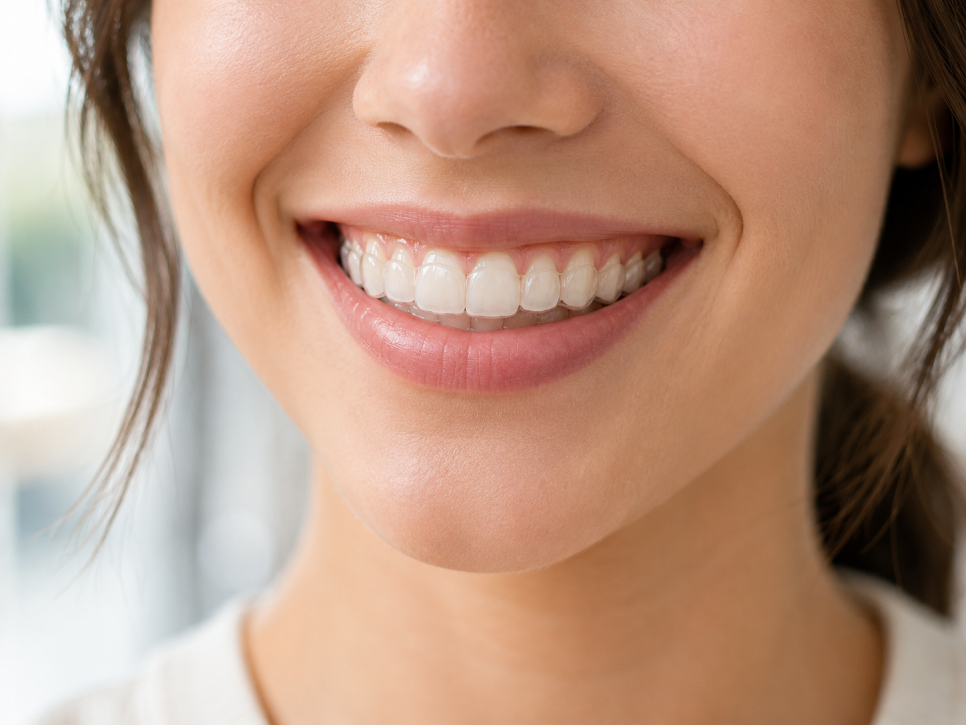
If I had to choose the single most important factor in transparent aligner treatment, it would be wearing time.
The recommended wearing time is 20–22 hours per day.
This means wearing them almost all day, except when eating and brushing your teeth.
If you do not follow this, tooth movement may be delayed or the teeth may return to their original positions, potentially extending the overall treatment period by several months.
The appliances only work when they are in your mouth.
The convenience that makes you think, “They are comfortable, so I keep taking them out,” turns into the disadvantage that “they do not work if I do not wear them.”
This is a treatment in which convenience and responsibility go hand in hand.
| Chapter 2. Discoloration and deformation of the appliances |
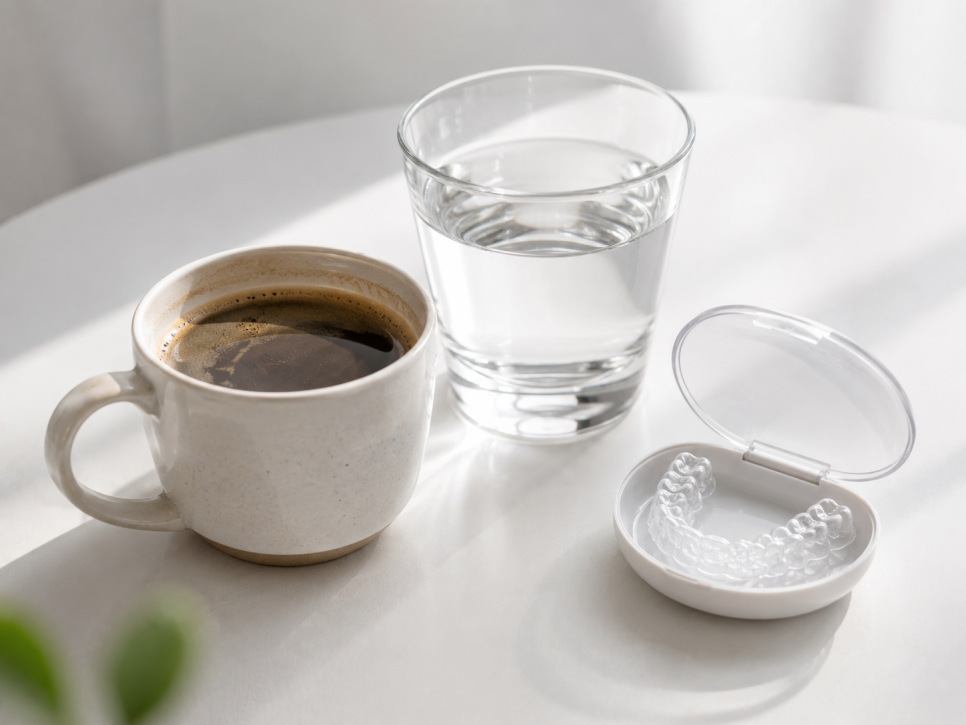
The only thing you can essentially drink while wearing the appliances is water.
If you drink beverages containing pigments, such as coffee, tea, wine, or cola, while wearing the appliances, they may become stained.
The bigger concern is hot beverages.
Heat can deform the plastic, causing the appliances to no longer fit your teeth properly.
Therefore, as a general rule, remove the appliances when drinking anything other than water.
| Chapter 3. Remove them when eating and brush your teeth before putting them back in |
You must remove the appliances when eating.
Chewing while wearing them can break the appliances, and food can become trapped between the teeth and the appliances, increasing the risk of cavities and staining.
Therefore, it is recommended that you brush and floss after eating before putting them back in.
Because transparent aligners cover the teeth, they can also trap food particles and bacteria inside.
| Chapter 4. Do not lose them—replacement means lost time |
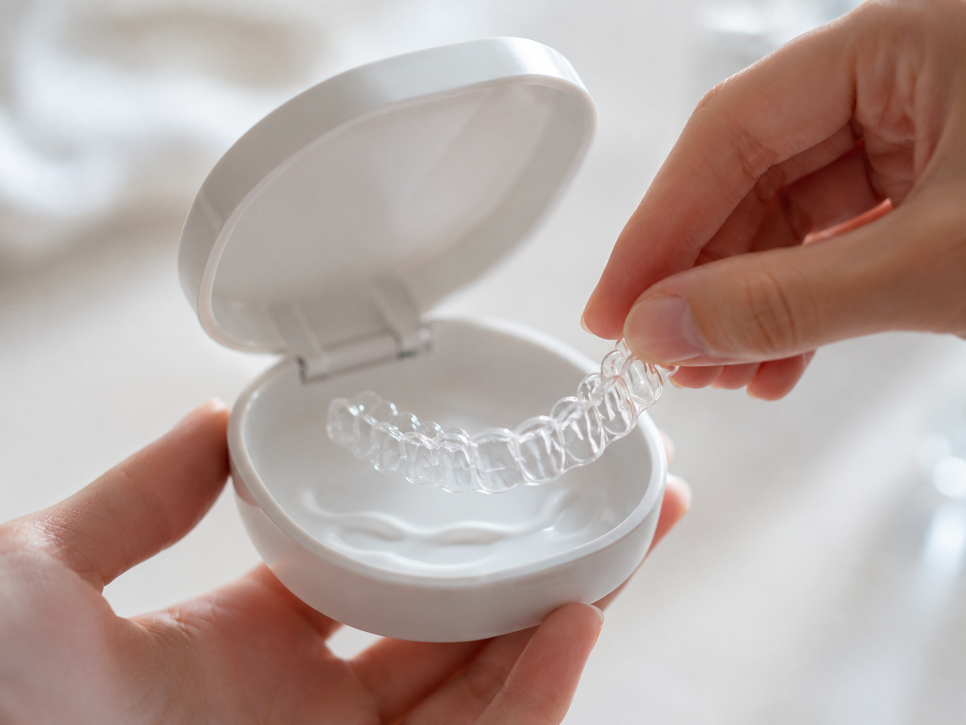
It may seem like a minor issue, but it occurs frequently in practice.
Many people remove their appliances, wrap them in a napkin or tissue, and accidentally throw them away.
If you lose an appliance, it must be remade, which delays treatment accordingly.
When you remove them, make it a habit to place them in their dedicated case.
Also, if you have a habit of unconsciously clenching your molars tightly, the appliances may become damaged or the molars may tilt inward.
In such cases, auxiliary appliances may be used.
| Chapter 5. Why are interim checkups important? |
All of these care points ultimately come down to one thing: whether the teeth are moving according to plan.
If you are careless about wearing the appliances, tooth movement may slow down and the next appliance may not fit properly.
If one or two stages do not fit, the issue can usually be resolved easily. However, if the discrepancy accumulates, it may be necessary to scan again from the beginning and produce the entire set of appliances again.
That increases both the treatment period and the cost.
Therefore, it is important to visit the dental clinic regularly to check whether treatment is progressing according to plan.
Even if computers reduce discrepancies, the plan and the actual results do not always match perfectly.
If something seems unusual during treatment, visiting the clinic right away is the best way to address the issue before the discrepancy becomes larger.
Today, I reviewed the key care points for transparent aligners.
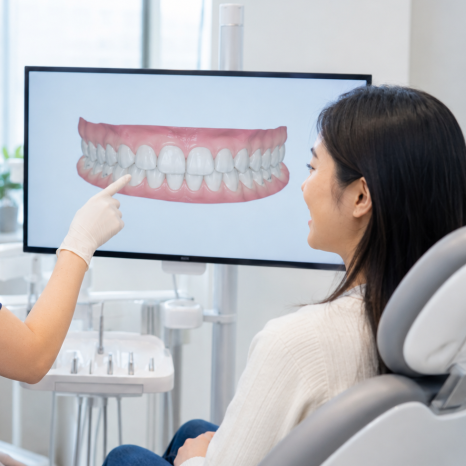
In summary, the success or failure of transparent aligner treatment depends less on the appliances themselves than on habits such as wearing them for 20–22 hours a day, avoiding beverages other than water, removing them and brushing your teeth when eating, taking care not to lose them, and attending regular checkups.
If care is neglected, discrepancies can accumulate, leading to replacement appliances and an extended treatment period.
Transparent aligner treatment offers convenience, but it also requires responsibility.
The proper order is to first determine through a diagnosis whether you can manage this care and whether your teeth are suitable for transparent aligner treatment.
If you are interested, we recommend starting with an examination and consultation.
If you have any questions, please feel free to contact us at any time.
Thank you for taking the time to read this long post.
[References]
Art of Smile / Life Orthodontics (2025–2026) — Wearing for 20–22 hours a day; failure to comply may delay treatment and extend the treatment period; hot and pigmented beverages may cause deformation and staining
Spark Aligners — Do not use toothpaste when cleaning the appliances, as abrasives can cause scratches; lukewarm water and a soft toothbrush are recommended
Renew Dental / Eon Aligner — Remove the appliances when eating and brush your teeth before putting them back in; store them in a case to avoid losing them in a napkin