Hello!
I am the director of Seoul Bardi Dental Clinic.
▼ Check the Dental Clinic Location ▼
| This post was written directly by Seoul Bardi Dental Clinic for the purpose of providing medical information, in compliance with Article 56, Paragraph 1 of the Medical Advertisement Act. We recommend using the information provided for reference only. Please visit a medical institution and receive guidance from a medical professional for symptom assessment and accurate care methods. All procedures and surgeries performed at a dental clinic may involve individual risks, such as inflammation, bleeding, and swelling. Please make your decision after thorough consultation with a medical professional in advance. To aid understanding, all images were created using AI. |
A molar crown suddenly coming loose
while eating is more common than you might think.
Most people visit the dentist the next day
with the dislodged crown simply put back in place,
and think:
“Can’t it just be cemented back on?”
They are half right.
If the issue is simply reduced retention,
reattaching it may be all that is needed.
The problem is the other half of the cases.
You need to recognize the signs of
what may be happening beneath the crown after it comes off.
Today, we will organize together
what to check when a crown comes off
and why the issue may not be resolved
with simple reattachment alone.
| Chapter 1. There are two main reasons why crowns come off. |
A crown is fixed with dental cement,
so it can sometimes come loose over time.
This itself is not necessarily unusual.
However, the causes can be divided into two categories.
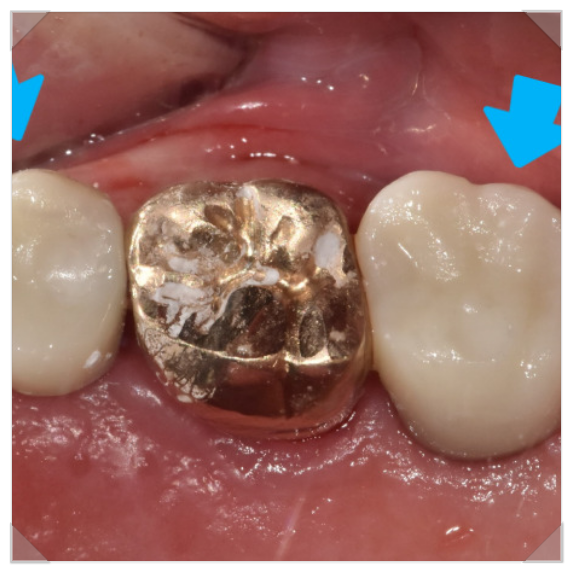
If it is simply reduced bonding strength,
→ after checking its condition,
it can be finished with reattachment.
If a factor that damages the tooth itself,
such as gum inflammation or recurrent decay, has developed →
the cause must be diagnosed,
and a new treatment plan is needed.
There is one common misconception here:
people assume, “It didn’t hurt, so it must just be a bonding problem,”
and move on.
However, problems developing beneath a crown
often progress quietly without pain.
A slight feeling that the gums are occasionally swollen,
or a sense that food is getting caught unusually often,
may be the only clues.
| Chapter 2. The inside of a crown cannot be seen through |
This is the key point.
A crown completely covers the tooth,
so the condition inside is not visible from the outside.
It cannot be assessed with the naked eye,
which is why detailed radiographic examination is essential.
One condition that requires particular attention
is inflammation at the root tip.
If the tooth underwent root canal treatment in the past,
reinfection may be progressing inside,
and the surrounding bone may be breaking down.
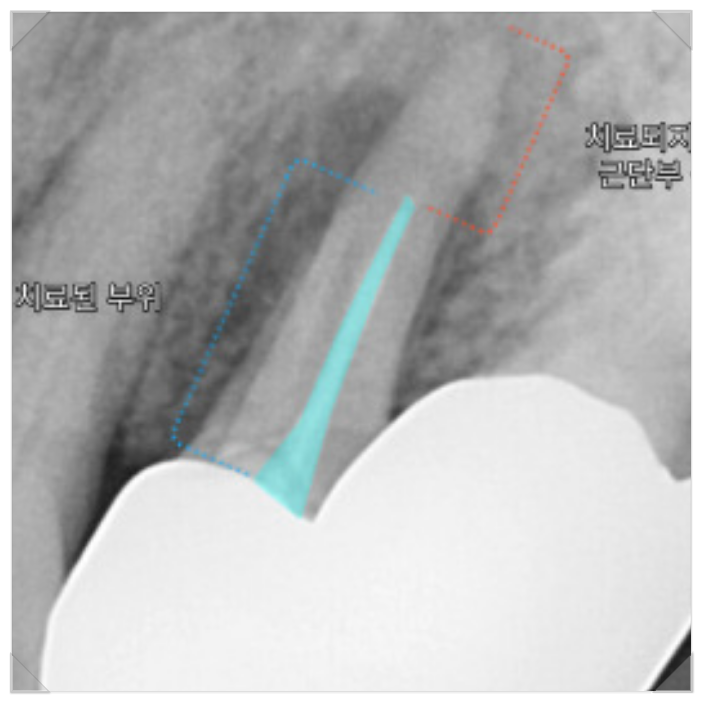
This is not rare.
According to research, teeth with a history of root canal treatment
had risks of extraction due to decay, root canal-related problems,
and fracture that were 3.6, 3.9, and 2.5 times higher,
respectively, than teeth without such a history.
This means that a crowned tooth can be a blind spot.
| Chapter 3. The criteria for saving or extracting a tooth are the “size of the lesion” and the “remaining tooth structure” |
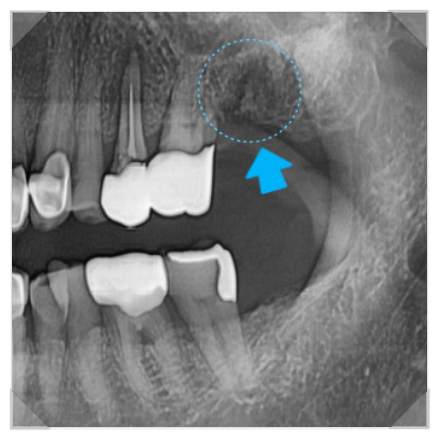
When inflammation at the root tip is confirmed on a radiograph,
a decision must be made about whether to save the tooth
with retreatment of the root canal or extract it.
There are clear criteria for this decision.
When root canal retreatment is favorable
— Prognosis is consistently reported to be better
when there is no lesion or the lesion is small,
and when the existing filling and coronal seal are adequate.
When extraction and an implant are favorable
— If there is insufficient remaining tooth structure,
the risk of root fracture increases.
In such cases, it has been concluded that
replacing the tooth with an implant may be justified,
as the success rate is higher than that of root canal retreatment.
Clinical signs should also be considered.
If the lesion is large and a significant amount of surrounding bone has been lost,
or pus comes out when the gums are pressed,
the case is more likely to be difficult to treat while preserving the natural tooth.
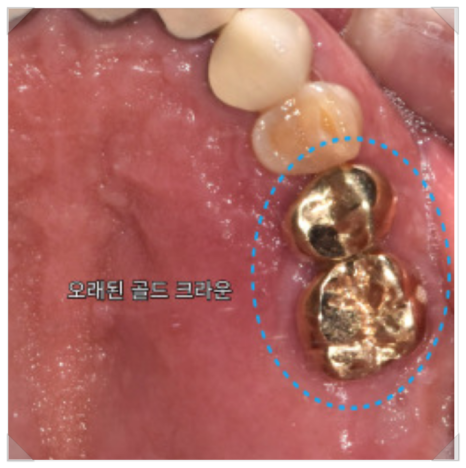
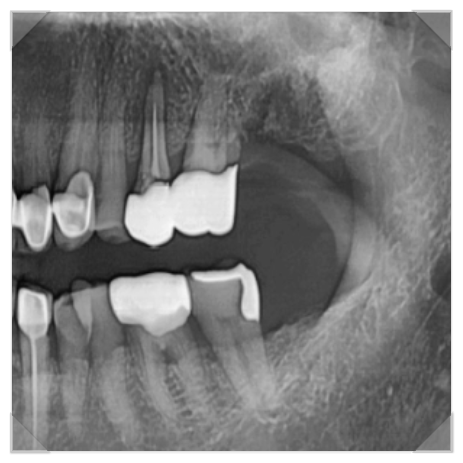
It is generally best to save a tooth whenever possible.
However, you should also understand that trying to preserve it at all costs
is not always the right answer.
| Chapter 4. For an upper molar, consider the “maxillary sinus” |
When planning an implant after extraction,
the upper jaw is more complicated than the lower jaw.
There is an empty space called the maxillary sinus near the roof of the mouth,
and it is covered below by a very thin membrane.
Therefore, after examining the anatomical structures three-dimensionally
with a 3D CT scan and an intraoral scan,
insufficient bone is reinforced with graft material,
and the membrane is carefully lifted through a sinus lift procedure.
This membrane requires particular care.
Perforation of the maxillary sinus membrane is the most common complication of this surgery,
and rates of 7–56% have been reported depending on the technique.
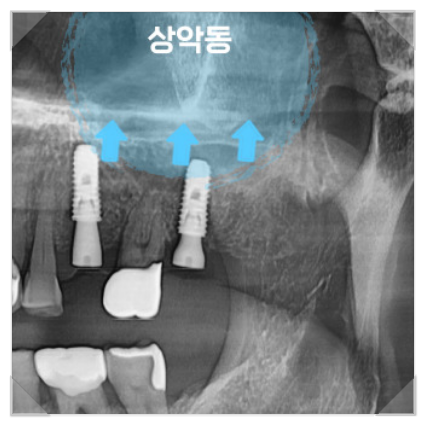
A small perforation in a favorable location
may heal on its own.
However, if it is large or located unfavorably,
it increases the risk of postoperative infection
and failure of the graft material or implant.
There is also an encouraging fact.
Even when a perforation occurs,
research has found that if it is detected in time and treated properly,
there was no negative effect on long-term graft-material stability
or implant survival rate
(survival rate: 98.9%).
Ultimately, preoperative analysis and surgical skill determine the outcome.
| Chapter 5. What if you have a systemic condition? |
This is the question most frequently asked
by people taking medication for high blood pressure:
“Should I stop taking my medication before I go?”
No.
Blood pressure medication should not be stopped arbitrarily
for dental treatment.
Rather, it is safer for your blood pressure to remain well controlled
by continuing to take the medication.
This is because high blood pressure may cause more bleeding during surgery.
In fact, standard recommendations state that restorative treatment
does not require discontinuation of anticoagulants or antihypertensive medications.
The reason for consultation with an internal medicine physician
is not to stop the medication,
but to check whether your blood pressure is well controlled
and whether your current condition allows the procedure to be performed.
Whether any adjustment to your medications is needed
is a decision to be made in consultation with your treating physician.
Patients must not decide on their own to stop taking them.
Having a systemic condition does not mean that implants are impossible.
After confirming your condition through preoperative consultation,
treatment can proceed safely by monitoring bleeding control and recovery
following implant placement.
| Chapter 6. Implant treatment is not finished once the implant is placed |
An implant is not complete the moment it is placed.
It usually takes 3–4 months for osseointegration,
when the implant becomes firmly attached to the bone.
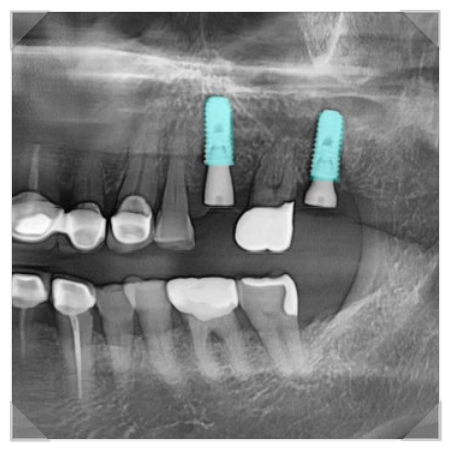
During this period, checkups are performed
at one month, two months, and so on
to confirm that there is no mobility
and that the bone is settling properly.
When healing progresses well, the previously porous jawbone around the implant
gradually becomes firm and white,
and the graft material that was placed
also settles into position like the original alveolar bone.
After sufficient healing, the crown is made.
In the past, impressions were taken by having patients bite on rubber impression material,
but today, digital scanning is used
to reduce errors and make the process more comfortable.
Even people with severe gag reflexes or sensitive gums experience less irritation,
and because impression-material distortion and shipping time are reduced,
the crown can be fitted sooner.
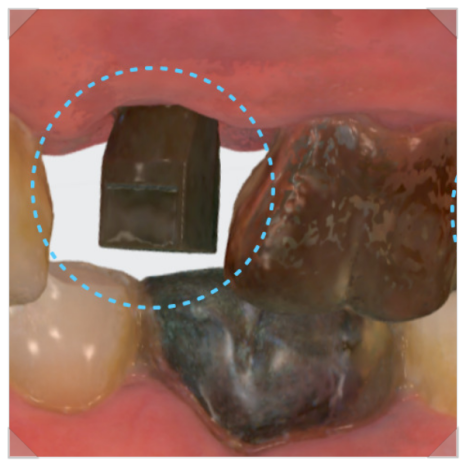
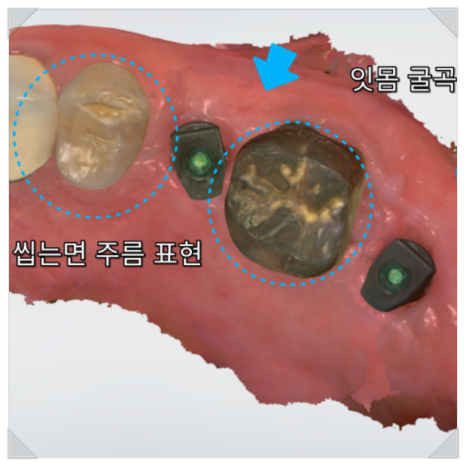
At the final stage, two additional points are considered.
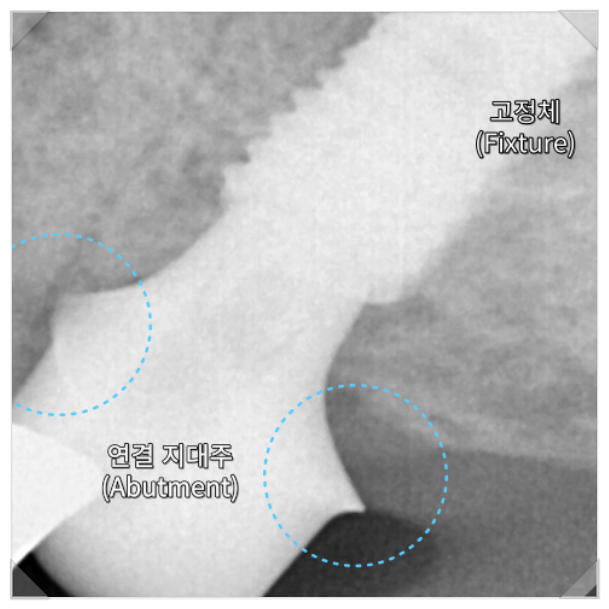
One is a customized abutment.
If the gum line is scanned precisely and the abutment is custom-made,
food impaction can be reduced,
which may help extend the life of the implant.
The other is material selection.
For molars that bear strong chewing forces,
zirconia is advantageous because it is less likely to fracture
while providing a natural color.
Once all procedures are complete,
a panoramic radiograph is used to check whether the occlusal line fits properly
and whether the crown feels too high when biting,
and the treatment is completed.
Today, we organized the points to check
when a crown comes off.
The key point is this:
A crown coming off is not necessarily the problem itself;
it is a signal that tells you
what may have been happening underneath.
If it is simply a bonding problem,
the crown can be reattached.
But if inflammation has progressed underneath
and the bone has been lost,
the situation is completely different.
Because the inside of a crown cannot be seen through,
it must be checked through a detailed examination.
And even if you have a systemic condition such as high blood pressure,
treatment is not necessarily impossible.
However, do not stop your medication on your own.
Proceed after your condition has been confirmed through consultation with your physician.
If your crown has come off,
or you occasionally feel that your gums are swollen,
we recommend having it checked even if it does not hurt.
If you have it checked while there is no pain,
treatment may end with simple reattachment.
If you delay, however, it may progress to extraction.
Please feel free to contact us at any time if you have questions.
Thank you. ^^

↑ Insufficient remaining coronal tooth structure increases the risk of root fracture; replacing the tooth with an implant has a higher success rate than root canal retreatment.
Root canal treatment has a favorable prognosis when the lesion is small and the filling and coronal seal are adequate.
Extraction risk for teeth with a history of root canal treatment: 3.61 times higher for decay, 3.86 times higher for root canal-related problems, and 2.52 times higher for fracture.
Perforation of the maxillary sinus membrane is the most common complication, occurring in 7–56% of cases.
J Korean Assoc Oral Maxillofac Surg (PMC 7469962) — Perforation increases the risk of postoperative infection and graft-material/implant failure. Proper treatment of the perforation has no negative effect on long-term survival (98.9%).
Antihypertensive medications should not be discontinued for dental treatment; high blood pressure is a factor that increases the risk of bleeding during surgery.