Hello!
I am the director of Seoul Vardi Dental Clinic.
▼ Check the dental clinic location ▼
| This post was written directly by Seoul Vardi Dental Clinic for the purpose of providing medical information in compliance with Article 56, Paragraph 1 of the Medical Advertising Act. We recommend using the information provided for reference only. For an assessment of your symptoms and accurate care instructions, please visit a medical institution and consult with a medical professional. All procedures and surgeries performed at a dental clinic may involve individual risks, such as inflammation, bleeding, and swelling. Please make your decision after thorough consultation with a medical professional in advance. All images were created using AI to aid understanding. |
If you are about to begin orthodontic treatment,
you may sometimes be told,
“Please have this tooth extracted at a university hospital and then come back.”
But when you actually call a university hospital,
you may be told that you have to wait
two months.
Time passes without your orthodontic treatment even beginning.
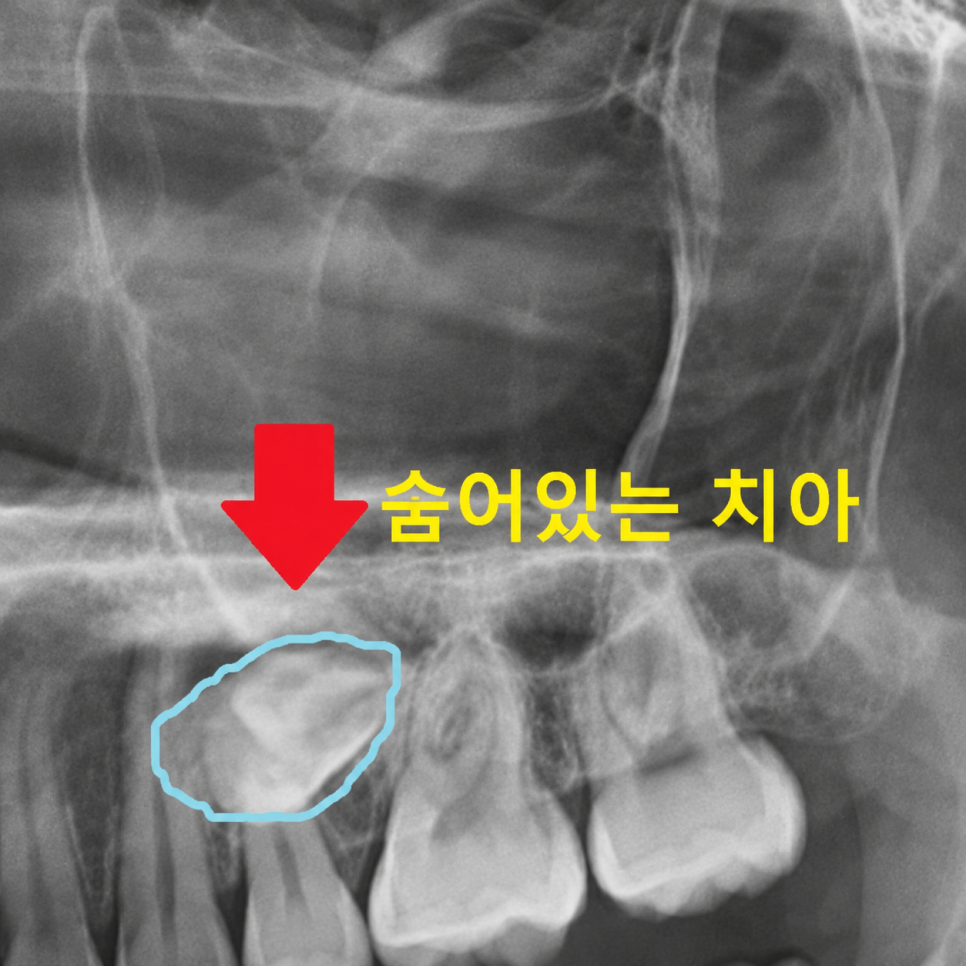
Why do some teeth
lead to this kind of recommendation?
In most cases, it is because the tooth is impacted—
that is, buried beneath the gums.
Today, I will explain why impacted teeth can be difficult,
what determines the outcome of the surgery,
and how to decide where to have the procedure performed.
| Chapter 1. Why Is Extraction Necessary for Orthodontic Treatment? |
Let us start with the basics.
Orthodontic treatment arranges teeth into proper alignment,
and for this, the teeth need
space to move.
When there is not enough room for the teeth,
extraction may be performed
to create space.
This does not mean sacrificing a tooth.
It is a process of creating a path
so that the remaining teeth can find their proper positions.
The problem arises when the tooth that needs to be extracted
has not erupted outside the gums.
| Chapter 2. What Is an Impacted Tooth? — A Tooth Buried Beneath the Gums |
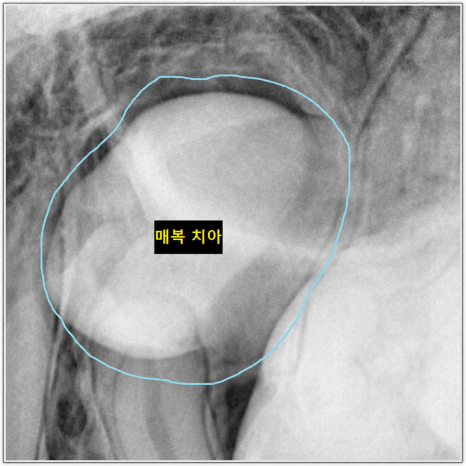
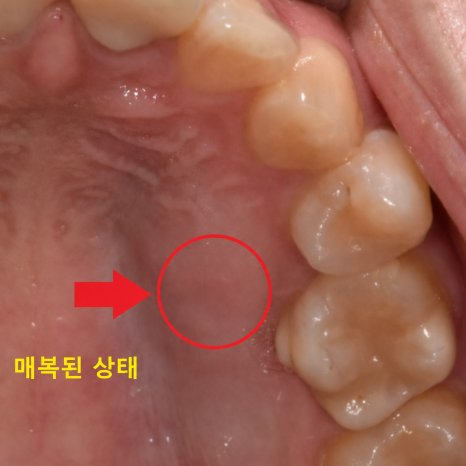
A permanent tooth that should erupt but cannot emerge outside the gums
and remains buried in the bone or gum tissue
is called an impacted tooth.
In particular, when it is completely buried
and cannot be seen at all,
it is called a completely impacted tooth.
With a routine extraction, the visible tooth
can simply be grasped and removed,
but an impacted tooth is different.
The gum must be opened, and the bone covering the tooth
must be removed to expose it
before it can be accessed.
In practical terms, this is a procedure comparable to surgery,
so its difficulty is entirely different
from that of a “simple extraction.”
This is why an orthodontic clinic may say,
“Please have it extracted at a larger hospital.”
It is true that the procedure can be difficult.
| Chapter 3. What Determines the Outcome? First, Locating the Tooth (CBCT) |
This is where things become important.
The outcome of an impacted tooth extraction depends not only on
“technique,”
but also on how accurately the situation was assessed beforehand.
Impacted teeth cannot be seen directly.
Before the procedure, it is necessary to determine
which direction the tooth is lying in,
where its roots are pointing,
and how close it is to the nerves or the roots of adjacent teeth
in order to approach it safely.
That is why CBCT (3D CT) is performed
when a panoramic X-ray alone is insufficient.
CBCT shows the impacted tooth and surrounding structures
in detail and in three dimensions,
allowing for precise surgical planning
and reducing the risk of complications.
| Chapter 4. What Determines the Outcome? |
The second key factor is how the tooth is removed.
Removing an impacted tooth in one piece
requires considerable force,
and that force is transmitted directly
to the surrounding bone and adjacent teeth.
For this reason, the tooth may be divided
into several pieces and removed sequentially.
This is called sectioned extraction.
The benefits of this method are also supported by evidence.
Sectioning the tooth releases resistance from adjacent teeth
and uses the tooth structure itself as a support
to create space,
thereby effectively avoiding repeated tapping and levering
against the bone or adjacent teeth.
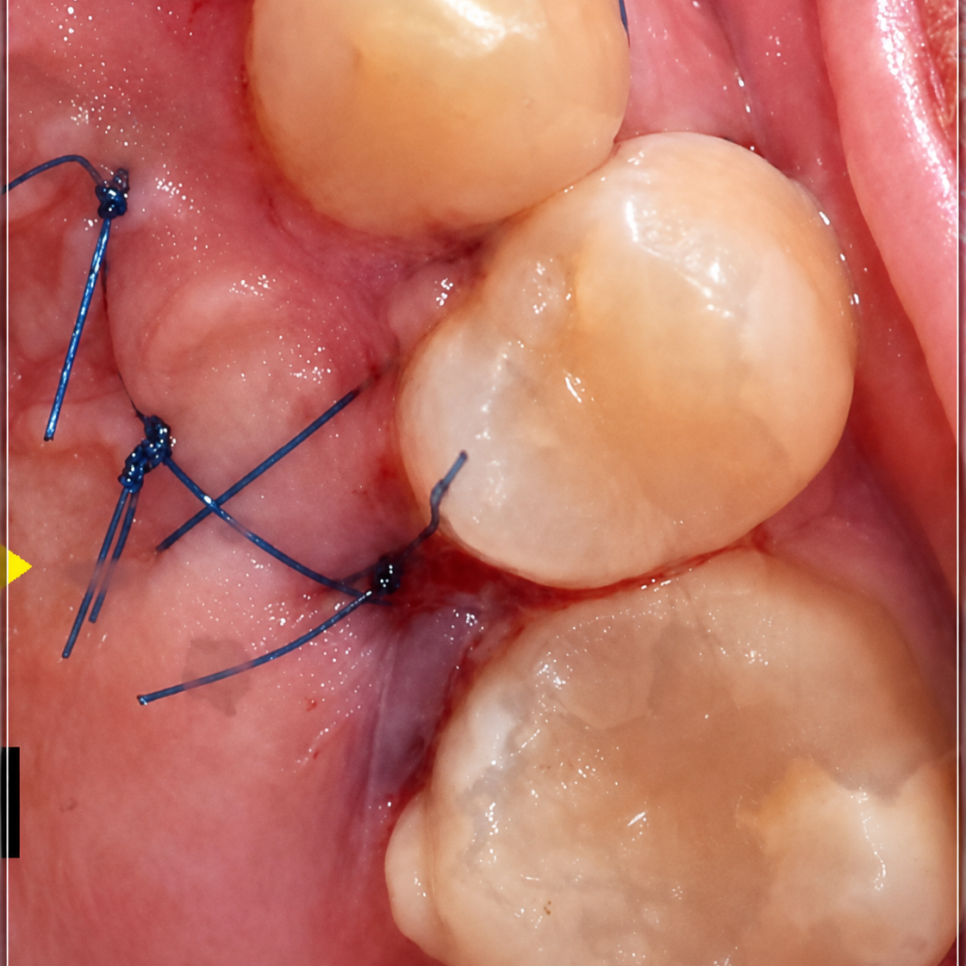
However, to be honest,
sectioning is not a universal solution.
Excessive force during sectioning can instead lead to
injury to the inferior alveolar nerve or a fracture,
so the principle is to use it as an adjunct
after securing sufficient access.
In other words, the key is how accurately the procedure is planned
and how carefully controlled the force used to divide the tooth is.
When this process is performed well,
surgery takes less time,
less bone is disturbed,
and recovery is easier.
| Chapter 5. Do You Really Have to Go to a University Hospital? Criteria for Deciding |
This is probably the point you are most curious about.
To answer honestly, it depends on the circumstances.
Cases requiring referral to a university hospital or oral surgery department
— If the impacted tooth is extremely close to the inferior alveolar nerve
or the maxillary sinus,
if systemic disease requires careful management,
or if general anesthesia or sedation is needed,
a higher-level medical institution may be safer.
Cases that may be treated at a general dental clinic
— If the tooth’s position can be precisely assessed with CBCT
and the clinic has experience and equipment for surgical extractions,
it is often possible to avoid waiting two months.
There is one more thing to keep in mind.
Not every impacted tooth necessarily
needs to be extracted.
If disease is present or the risk of developing disease is high,
surgical management may be performed,
but if there is no disease or significant risk,
observation may be recommended.
However, the situation is different
when the space is needed for orthodontic treatment.
Ultimately, rather than asking whether it is a university hospital,
the standard should be whether the facility can provide
an appropriate diagnosis and treatment plan
based on the position and condition of your impacted tooth.
Today, I discussed impacted tooth extraction
for orthodontic treatment.
In summary,
an impacted tooth is buried beneath the gums,
so the procedure is comparable to surgery,
requiring the gums to be opened and the bone to be removed.
There are two factors that determine the outcome.
First, accurately locating the tooth with CBCT,
and second, removing it in sections
with carefully controlled force rather than extracting it whole.
When both are done properly,
the adjacent teeth and nerves can be protected,
while the burden of recovery can also be reduced.
If you are waiting for an extraction before beginning orthodontic treatment,
I recommend first confirming the condition of your impacted tooth.
There are cases in which a higher-level medical institution is necessary,
but there are also many cases in which it is not.
That decision begins with a precise diagnosis.
If you have any questions,
please feel free to contact us at any time.

[References]
PMC (12091584) — Minimally invasive sectioned extraction: using the tooth structure as a support to avoid repeated force on the bone and adjacent teeth; CBCT contributes to precise planning and complication reduction
Sci Rep (Nature, 39126) — Tooth sectioning helps reduce resistance from adjacent teeth; however, inappropriate sectioning force carries a risk of inferior alveolar nerve injury and fracture, so it should be used as an adjunct after sufficient bone removal
Int J Oral Sci (2026, expert consensus) — Digital technology improves the precision of extracting complex, high-risk impacted teeth and helps protect the inferior alveolar nerve, maxillary sinus, and adjacent tooth roots
AAOMS position — Surgical management is recommended when disease is present or the risk is high; otherwise, active observation is recommended