Hello!
I am the director of Seoul Bardi Dental Clinic.
▼ Check the clinic location ▼
| This post was written directly by Seoul Bardi Dental Clinic for the purpose of providing medical information, in compliance with Article 56, Paragraph 1 of the Medical Service Act regarding medical advertising. We recommend using the information provided for reference only. For an assessment of your symptoms and accurate care instructions, please visit a medical institution and consult with a medical professional. All procedures and surgeries performed at a dental clinic may involve individual risks, such as inflammation, bleeding, and swelling. Please make your decision after sufficient consultation with a medical professional. All images were created using AI to aid understanding. |
“ I came to get an implant, so why do I have to wear a denture?”
After a tooth extraction, you may hear about a temporary denture.
You came in thinking only about an implant, but when you suddenly hear the word “denture,” it may not be easy to understand.
Hello!
I am the director of Seoul Bardi Dental Clinic.
To give you the conclusion first, it is not necessary for everyone.
However, when it is necessary, there is a clear reason.
Today, I will explain why.
| Chapter 1. What Is a Temporary Denture, or Flipper? |
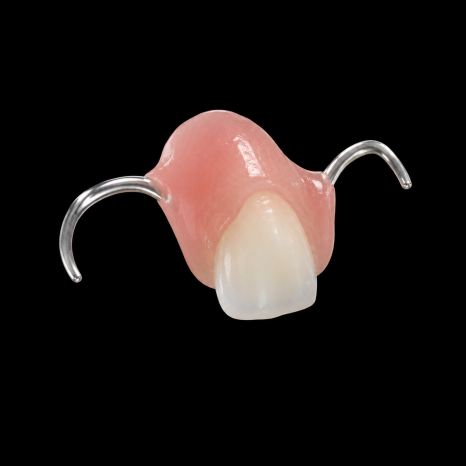
In dentistry, it is called a flipper.
As the name suggests, it is a denture that can be put in and removed and is used temporarily.
It consists of a body made of resin and thin wires that wrap around and secure it to the adjacent teeth.
It is not the final prosthesis. It is a device that temporarily fills the gap until the tooth is completed.
| Chapter 2. What Happens If You Leave the Gap Empty? |
An implant is sometimes placed immediately after extraction.
However, in some cases, the inflammation is severe, so the tooth is extracted, bone grafting is performed first, and you have to wait. In other cases, treatment is postponed for several months because of time or other circumstances.
Let us look at what happens during that period in numbers.
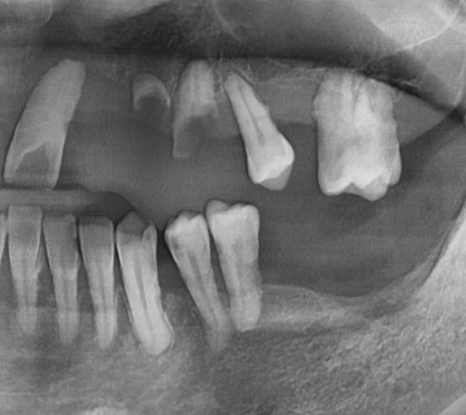
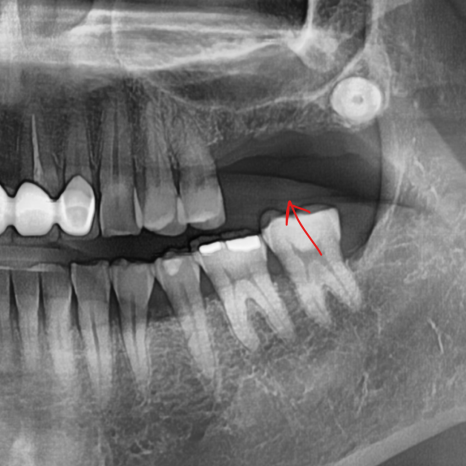
The alveolar bone in the area where the tooth was extracted decreases.
Within three months after extraction, its height and width decrease by 40–60%.
Some reports also indicate that, after one year, the width of the alveolar bone can decrease by up to half.
Moreover, most of the change occurs during the first month.
The outer bone wall subsides by an average of 2.5 mm more than the inner wall.
This means that the outer side collapses more. This is one reason why more bone grafting may be needed when placing an implant later.
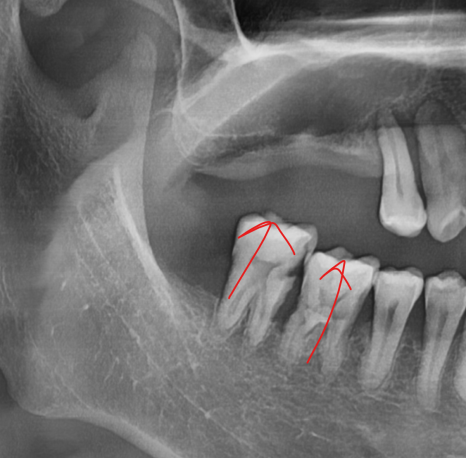
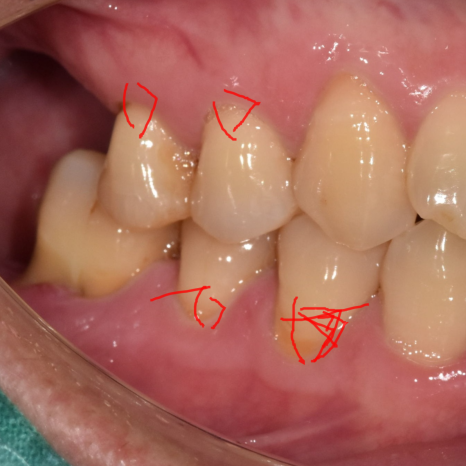
The teeth also move.
When a tooth that was part of the bite is missing on one side, the adjacent teeth tilt toward the empty space, while the opposing teeth that used to meet above and below move down or up into the space.
When this happens, even if you later want an implant, there may not be enough vertical space for the prosthesis, or the shifted teeth may need to be trimmed to adjust the height.
| Chapter 3. So When Is It Made? |
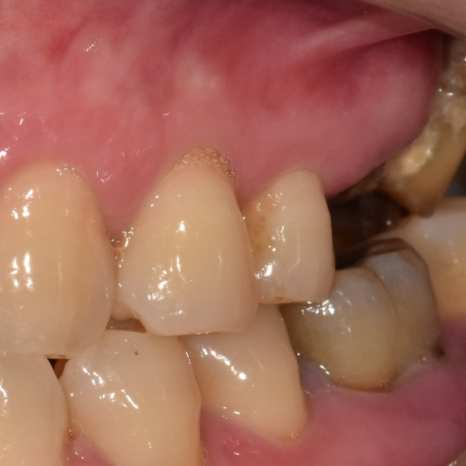
It is used to maintain the space after extraction, prevent the adjacent teeth from tilting or the opposing teeth from moving down, restore esthetics and the bite relationship, condition the gum tissue,
and serve as a temporary restoration during treatment and training for adapting to the prosthesis.
(Interim Removable Partial Dentures)
| Chapter 4. In the Dental Office, There Are Three Main Situations. |
First,
when the space needs to be maintained.
The longer the waiting period, the more time the adjacent and opposing teeth have to move.
Filling the empty space can prevent that movement.
Second,
when a front tooth is missing.
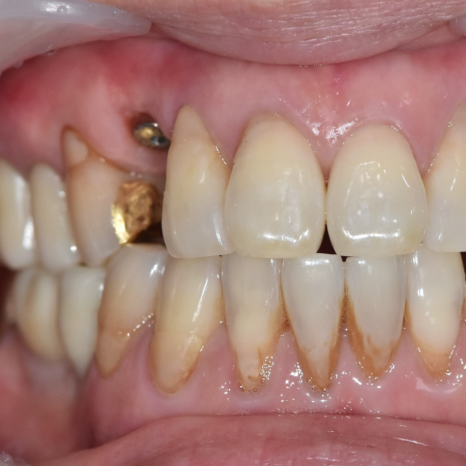
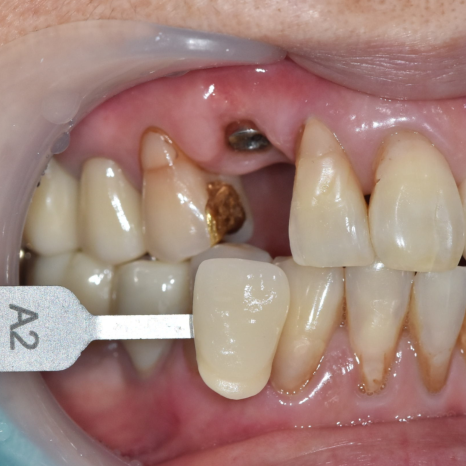
Front teeth are immediately visible when you smile or speak.
Even if they are covered by a mask, they are exposed while eating.
A flipper placed between natural teeth is noticeable.
Still, it is better than leaving the space empty.
Third,
when chewing is difficult.
If one or two teeth are missing, it is usually not very uncomfortable.
However, if several teeth need to be treated at once, eating can be difficult during that period.
An implant takes several months to complete, so you cannot simply spend that entire period without a tooth.
We do not recommend it for everyone.
I want to make this point clear.
If an implant is placed immediately after extraction and the waiting period is short, we do not make one separately.
We also do not recommend it when one or two teeth are missing, the teeth on both sides are strong, and there is no immediate concern that they will move.
When we recommend it, there is a reason.
It may be because the gum condition is poor and treatment is expected to take a long time, or because other teeth may be affected during that period.
| Chapter 5. Limitations of Temporary Dentures |
They are not a universal solution.
You should know this in advance.
Because they are made of resin and wire, their strength is limited.
You should avoid hard foods.
They are also not as attractive as the final prosthesis.
They are designed for temporary use.
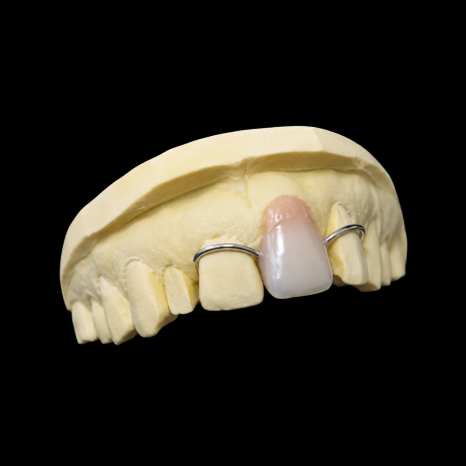
If you put it away in a drawer because it feels uncomfortable, it defeats the purpose of having it made.
It is a device made to maintain the space.
Instead, remove it when sleeping, clean it thoroughly, and keep it in water.
Sleeping with it in place can make gum inflammation more likely.
Also, because the gums change if the treatment period becomes prolonged, we may adjust the inner surface again during treatment.
Today, I discussed temporary dentures used during implant treatment.
The alveolar bone in the area where a tooth was extracted decreases by 40–60% within three months, and the adjacent and opposing teeth also move.
The longer the waiting period, the more these changes accumulate.
A temporary denture maintains the empty space during this period, covers the visible gap, and allows you to chew.
Of course, it is not necessary for everyone.
Whether you need one in your current situation can be determined after an examination.
If you have any questions, please feel free to contact us.
< Repairs for implants placed at other dental clinics are available ▼>
Thank you for reading this long post today.
I look forward to seeing you in the dental office!
[References]
Literature on changes in the alveolar ridge after extraction: a 40–60% vertical and horizontal reduction within three months after extraction; a report by Schropp et al. indicating up to a 50% reduction in alveolar ridge width within one year;
most changes occur during the first month; the buccal bone wall decreases by an average of 2.5 mm more than the lingual wall; Interim Removable Partial Dentures
Six indications for interim removable partial dentures (esthetics; space maintenance and prevention of adjacent-tooth movement and extrusion of opposing teeth; restoration of the bite relationship;
conditioning of the teeth and residual alveolar ridge; temporary restoration during treatment; and training for adaptation to the prosthesis) and their limitations
(limited strength of the resin-and-wire structure; the need for relining; and the possibility that prolonged wear without maintenance of support may impair the health of adjacent teeth and supporting tissues)

| Directions to the Clinic |