▼ Check the Dental Clinic Location ▼
| This post was written directly by Seoul Bardi Dental Clinic for the purpose of providing medical information, in compliance with Article 56, Paragraph 1 of the Medical Service Act. The information provided is for reference only, and we recommend visiting a medical institution to receive guidance from a medical professional for identifying symptoms and determining the proper management method. All procedures and surgeries performed at a dental clinic may involve individual risks, such as inflammation, bleeding, and swelling. Please make a decision after sufficient consultation with a medical professional. All images were created using AI to aid understanding. |
“\nThey said I developed a cavity during orthodontic treatment.\n
What if I leave it alone and it gets bigger?”
You may be wondering whether
orthodontic treatment should be stopped
or cavity treatment should be postponed.
Hello! I am the director of Seoul Bardi Dental Clinic.
First, to get straight to the point,
it is best not to postpone treatment.
Cavities during orthodontic treatment are more common—and develop faster—than you might expect.
Today, I will explain the reasons behind this and organize the details for you.
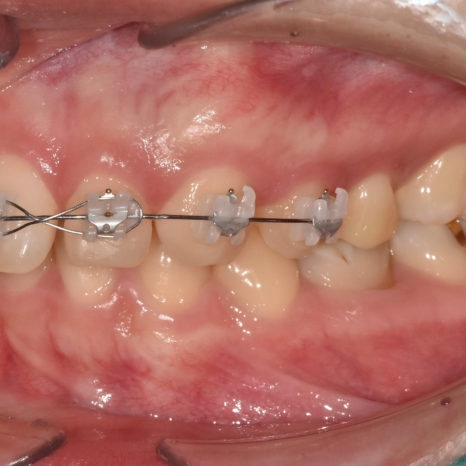
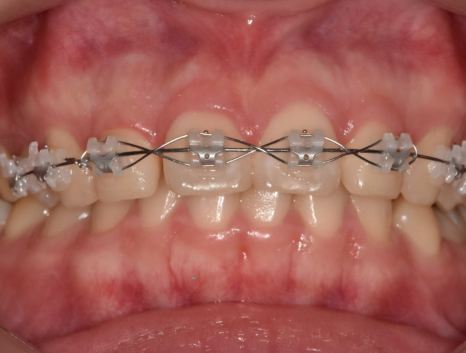
During orthodontic treatment with fixed appliances,
initial cavities can develop on the tooth surface.
They may appear as white spots or streaks.
Based on pooled estimates,
the incidence is 45.8% and the prevalence is 68.4%.
Depending on the study, the incidence ranges from 23.4% to 75.6%,
and the prevalence ranges from 33.8% to 97%.
Oral hygiene and treatment duration account for these differences.
This means that
cavities develop in nearly half of patients.
But what is more important is how quickly they develop.
They can appear
just four weeks after brackets are attached.
One clinical study found that they increased rapidly during the first six months after treatment began,
then continued to increase gradually through 12 months.
(Management of White Spot Lesions)
This means they can begin
within just one month.
The areas where they commonly develop are also predictable.
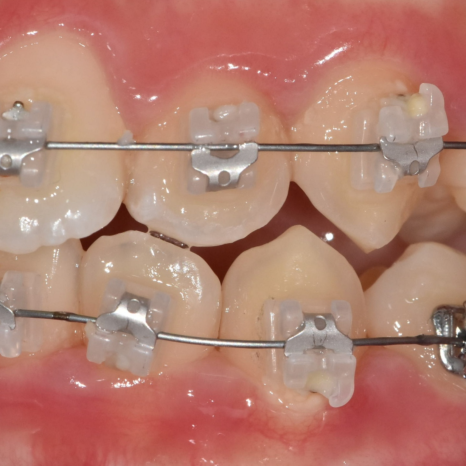
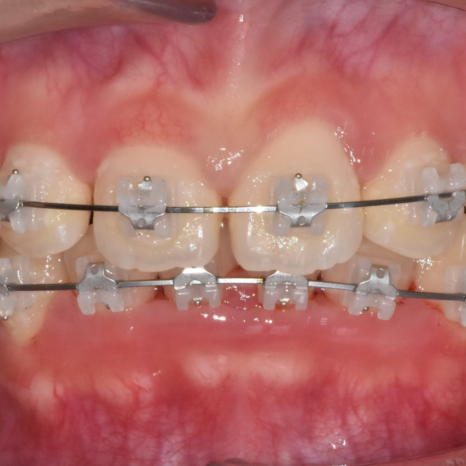
The upper jaw is more vulnerable than the lower jaw,
and cavities commonly develop on the upper lateral incisors and canines,
as well as the lower canines
and first molars.
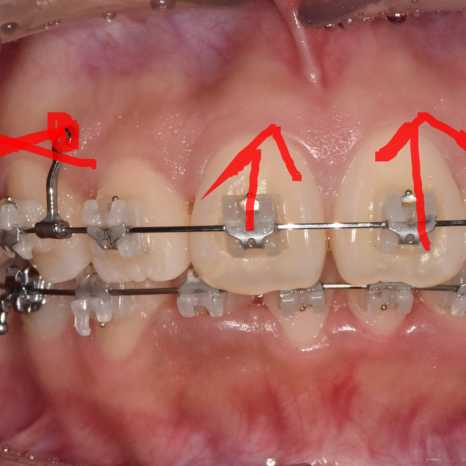
They are usually found directly below the bracket,
in the one-third of the tooth closest to the gums.
This is where the toothbrush bristles are most likely to catch on the bracket
and least likely to reach.
| Chapter 1. Do I need to remove the appliance? |
This depends on the situation.
It varies according to the location and size of the cavity.
If a small cavity develops on a chewing surface
where no appliance is attached,
it can be treated without removing the appliance.
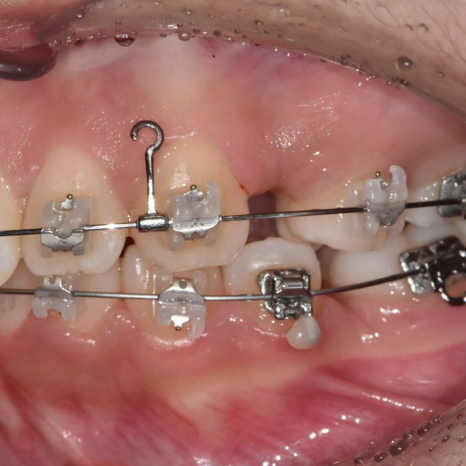
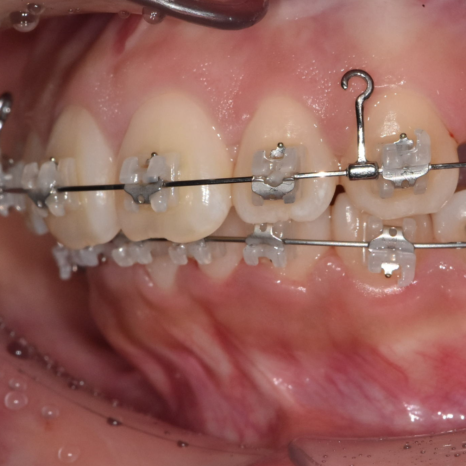
Because the bracket is attached to the outer surface of the tooth,
the chewing surface is accessible.
On the other hand, if a cavity develops around the bracket
or underneath the appliance,
the appliance may need to be temporarily removed.
If the area is covered, it is impossible to accurately determine the extent of the cavity,
and it is also difficult to check whether it has been properly filled after treatment.
If the cavity is large enough to require an inlay or prosthetic restoration,
removing the appliance is generally considered appropriate.
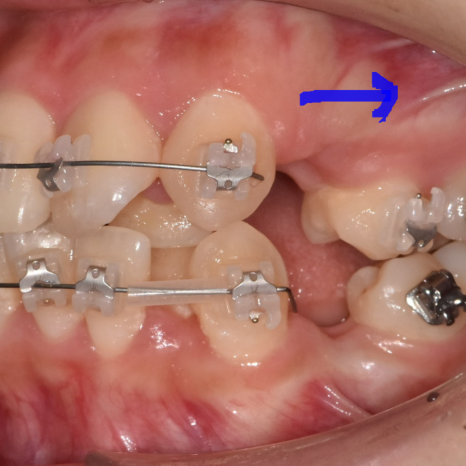
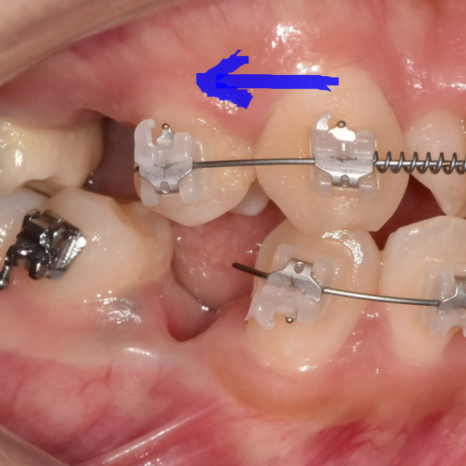
The criteria can be summarized as follows.
Does the appliance interfere with the treatment area,
and will leaving it untreated make the condition worse during the remaining orthodontic treatment?
Removing and reattaching the appliance may add a few days to treatment.
Even so, it is better than leaving the cavity untreated
for another year or two of orthodontic treatment.
Cavity treatment may require adjustments to the orthodontic plan
This is something you should know in advance.
If a cavity is filled or a prosthetic restoration is placed,
the shape of the tooth changes slightly.
Brackets must be attached to a precise location on the tooth surface
so that the force is transmitted properly.
If the surface changes, that position must also be determined again.
Therefore, after cavity treatment,
the bracket position is checked again
and the treatment plan is adjusted.
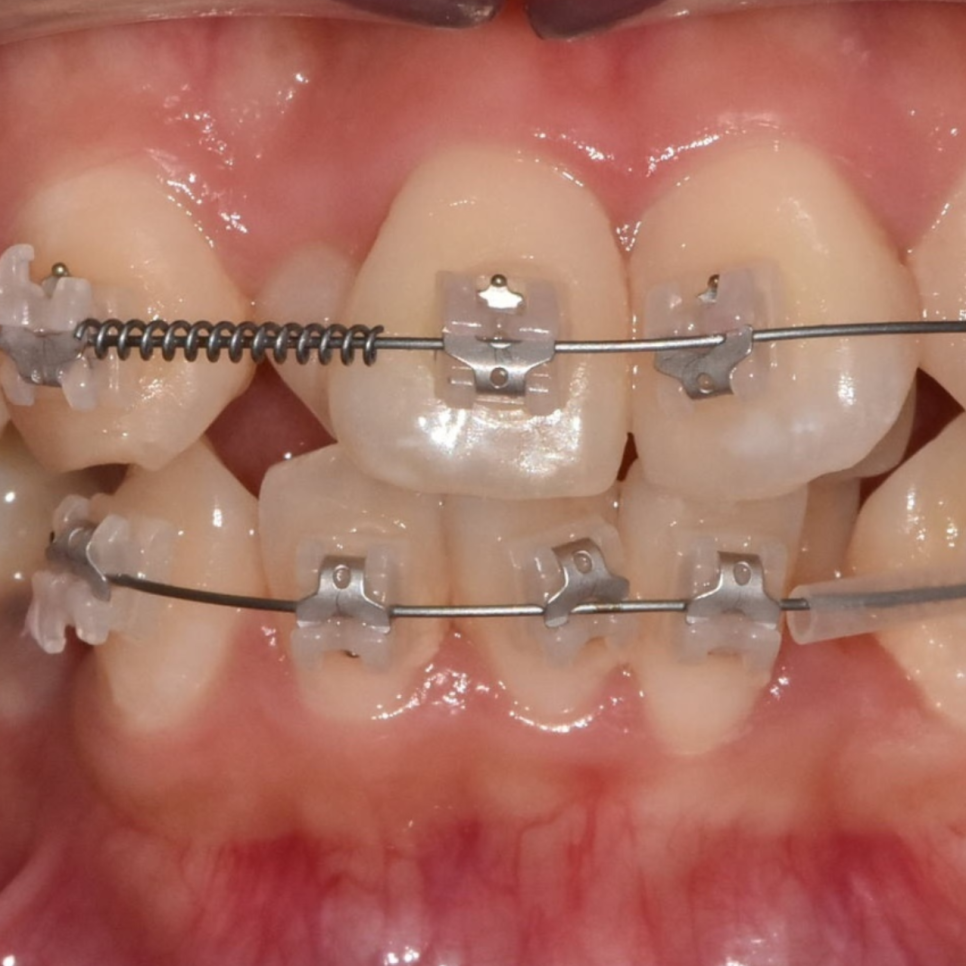
If root canal treatment is also necessary,
usually only the root canal treatment is performed first,
and the final prosthetic restoration is placed after orthodontic treatment is complete.
This is because the position of the tooth changes during orthodontic treatment,
so a restoration made beforehand may no longer fit properly.
Of course, this varies depending on the situation.
If the tooth is in a visible area, such as a front tooth,
a temporary restoration may be used in the meantime.
| Chapter 2. Will the marks disappear if the appliance is removed? |
This is the point most often misunderstood.
Many people think that the white spots will disappear when orthodontic treatment ends.
However,
that is not the case.
Once the appliance is removed and the toothbrush can reach the surface,
the surface may harden again
and the spots may become less noticeable.
However, lesions that have progressed deeply
are unlikely to improve through natural remineralization alone.
(Management of White Spot Lesions)
Orthodontic treatment changes the position of the teeth,
whereas a cavity is a disease that damages the tooth itself.
After the appliance is removed,
you may achieve straight teeth,
but white spots may remain on the front teeth.
This difference is why that can happen.
That is why I recommend not postponing treatment.
| Chapter 3. What should you do, and how far can prevention go? |
Let us look at the numbers.
When fluoride varnish was applied regularly during orthodontic treatment,
the risk of developing white spot lesions decreased by approximately 36%.
However, the certainty of this evidence
was rated as very low.
(European Journal of Orthodontics, 2023)
This means that the evidence points toward an effect,
but fluoride should not be relied on alone.
| Chapter 4. Ultimately, it comes back to the basics. |

A regular toothbrush cannot reach all the spaces between brackets.
You should also use an interdental brush.
In particular, pay attention to the area below the brackets near the gums—
the area mentioned earlier—and brush it carefully.
And make sure to attend your scheduled appointments.
During orthodontic treatment, your teeth are checked at every visit,
so problems can be found while they are still small.
If you skip several months,
lesions that can begin in just four weeks
will have time to grow during that period.
In fact, it is common for patients who have been unable to visit for a while
to return with cavities that have grown larger.
< Is it too late to get orthodontic treatment in your 30s? ↓↓>
Today, we discussed cavities during orthodontic treatment.
If your teeth become damaged by cavities after orthodontic treatment,
you may end up regretting it later.ㅠㅠ
So please be even more diligent
about brushing your teeth.
Thank you for reading this long post today.