| This post was written directly by Seoul Bardi Dental Clinic for the purpose of providing medical information in compliance with Article 56, Paragraph 1 of the Medical Advertising Act. We recommend using the information provided for reference only. Please visit a medical institution and consult with a medical professional for an assessment of your symptoms and accurate guidance on appropriate care. All procedures and surgeries performed at dental clinics may involve individual risks, such as inflammation, bleeding, and swelling. Please make your decision after having a thorough consultation with a medical professional in advance. All images were created using AI to aid understanding. |
Some people have missing teeth
and uneven tooth alignment.
In such cases, both treatments may be needed:
orthodontic treatment and dental implants.
Hello!
This is Seoul Bardi Dental Clinic.
The order in which these treatments are performed
can significantly affect the outcome.
Today, we will explain
why the treatment sequence is important.
| Chapter 1. Implants Do Not Move |
This one sentence
explains the reason for the entire sequence.
Natural teeth have a layer called the periodontal ligament
between the root and the bone.
When force is applied to this area,
bone is resorbed on one side and new bone fills in on the other,
allowing the tooth to gradually move.
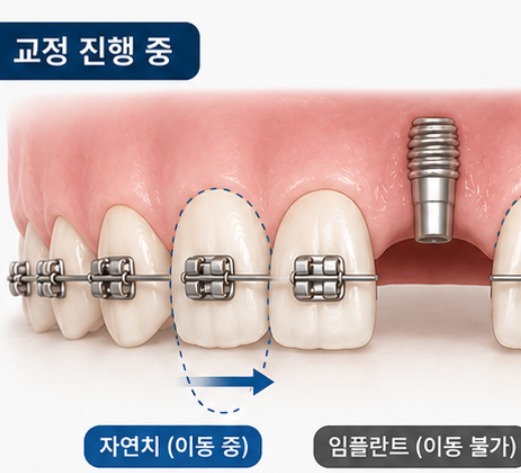
Implants are different.
They are directly fused to the bone,
with no ligament in between.
Therefore, they do not move
even when orthodontic force is applied.
The literature also states that implants placed in the alveolar bone
resist orthodontic forces.
(Inside Dentistry, Integrating Orthodontics and Implants)
This means that once an implant is placed,
it remains fixed in that position.
That is why orthodontic treatment usually comes first.
If an implant does not move,
the space must be created before it is placed.
What happens if the order is reversed?
Suppose an implant is placed
while the teeth are tilted
and the available space is narrow.
If the remaining teeth are then moved with orthodontic treatment,
only the implant remains in its original position.
It may end up out of alignment
with the newly organized teeth.
There are also specific
guidelines for this.
To place a single 4 mm-diameter implant,
the space from front to back
must be at least 7 mm wide.
This is because there must be 1.5 mm
of clearance from each adjacent tooth.
If two implants are placed,
they must be at least 3 mm apart.
The vertical space must also be considered.
If the opposing tooth has descended,
there may not be enough height for the prosthesis.
These spaces are created first through orthodontic treatment,
the natural teeth are positioned properly,
and the implant is placed once the bite relationship has been established.
▼ Check the dental clinic location ▼
| Chapter 2. Cases Where the Implant Is Placed First |
There are exceptions.
First, when a front tooth is missing.
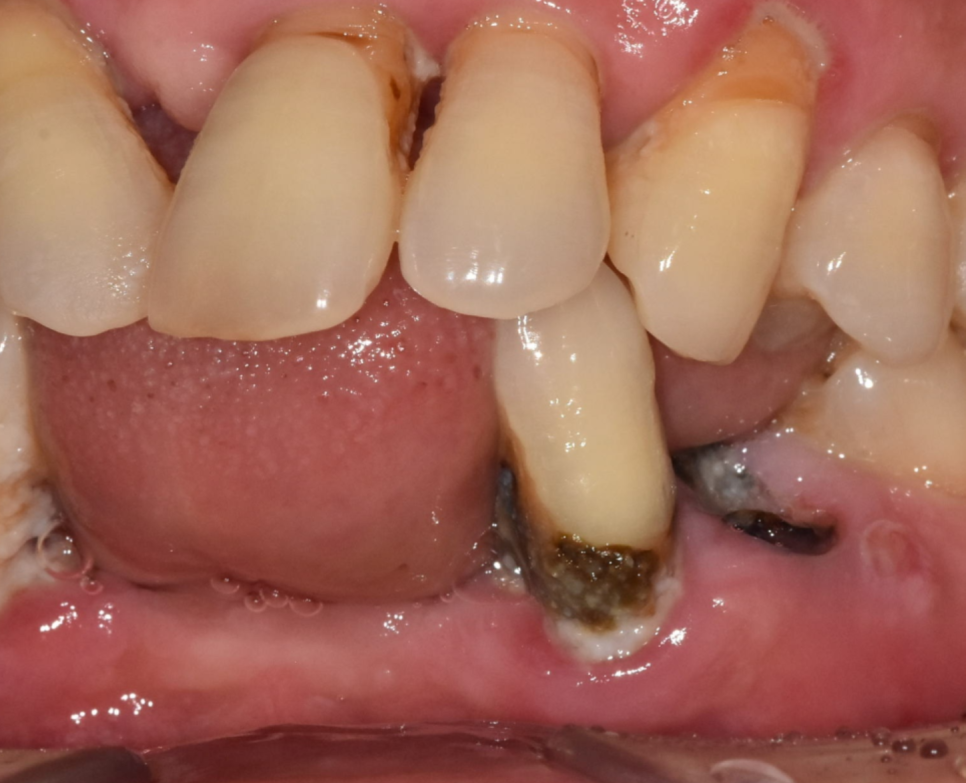
It is realistically difficult to live for more than a year
with a missing front tooth.
It can affect pronunciation
and may also affect social interactions.
In such cases, the front tooth may be addressed first,
followed by orthodontic treatment.
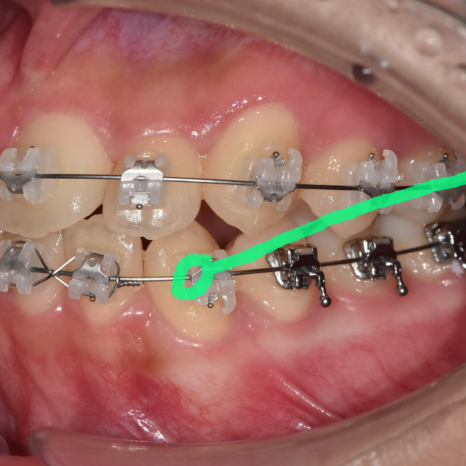
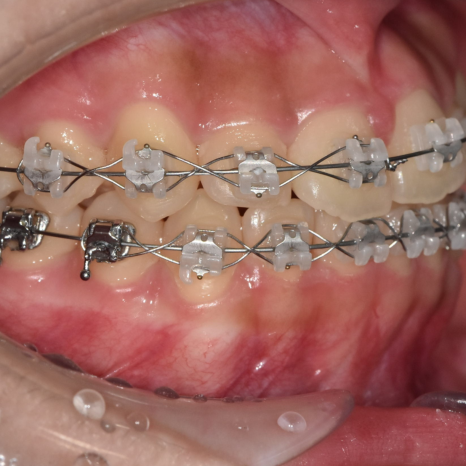
Second, when the implant is intended to be used as anchorage.
This is an interesting point.
The fact that implants do not move
is not necessarily a disadvantage.
When one tooth is pushed during orthodontic treatment,
the tooth on the opposite side is also pushed in reaction.
A stable reference point is needed to withstand this reaction,
and this is called anchorage.
Implants perform this role
very well.
The literature also states that
when an implant is planned for use as anchorage,
it may instead be placed first.
When anchorage is reliable,
it may be possible to position the teeth
without additional extractions or extensive bone grafting.
| Directions |
| Chapter 3. What If You Already Have an Implant? |
Some people have already received implants
before deciding to undergo orthodontic treatment.
To give you the conclusion first,
orthodontic treatment is possible.
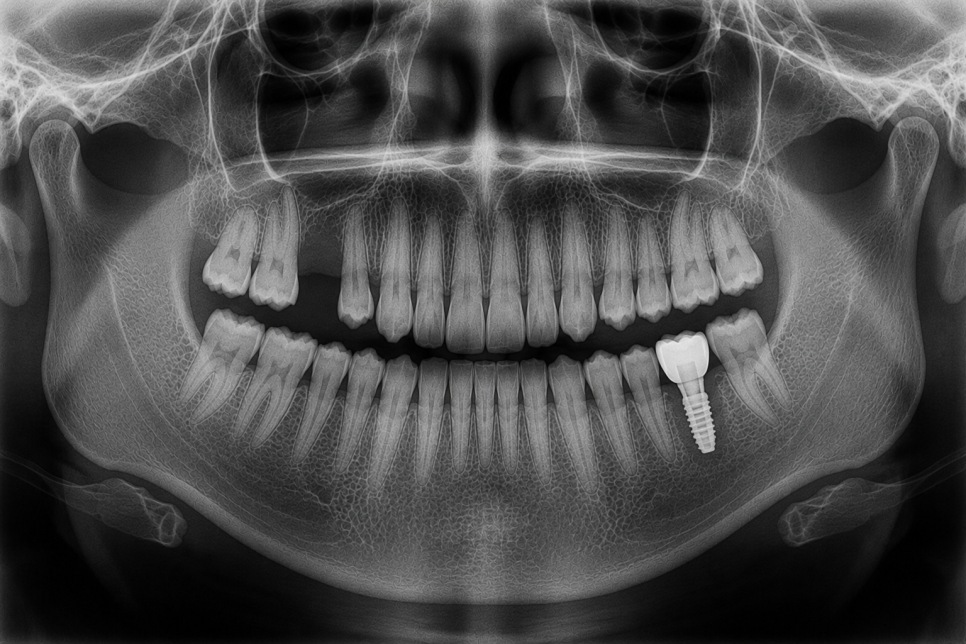
The implant is left in place,
while the remaining natural teeth are moved
to align the overall dentition.
If there is insufficient space,
the teeth may be very slightly reduced between them
to create room.
However, there are limitations.
The more implants there are,
the fewer teeth can be moved.
In addition, depending on the implant positions,
it may be necessary to adjust
the treatment objectives themselves.
Therefore, if you are considering orthodontic treatment in the future,
it is best to discuss this first
before having an implant placed.
Even if you have already had an implant placed,
that does not mean there are no options.
However, the available options may be more limited.
Today, we discussed the sequence of
orthodontic treatment and implant treatment.
There is one key point:
an implant does not move once it has been placed.
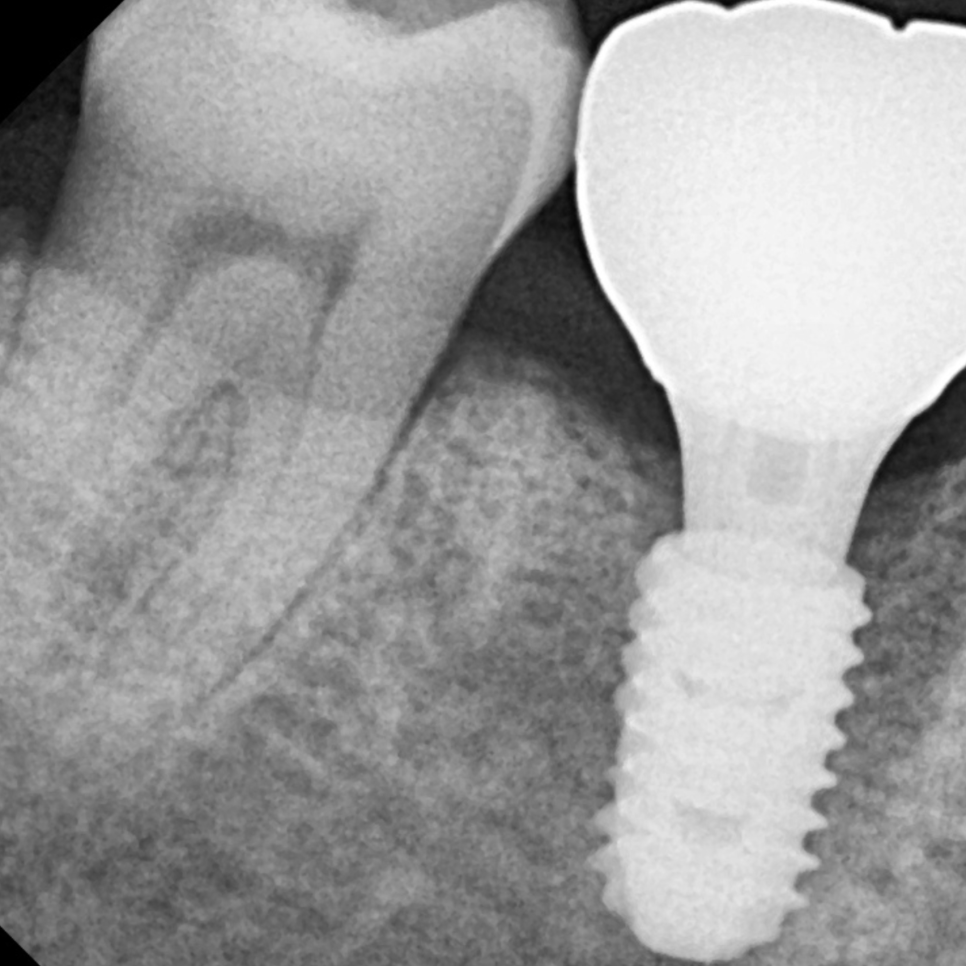
Therefore, in most cases,
space is created first through orthodontic treatment,
and the implant is placed afterward.
However, the sequence may be reversed
when the space cannot be left empty,
as with a front tooth,
or when the implant is planned for use as anchorage.
Orthodontic treatment is possible
even if you already have an implant.
The available options are simply more limited.
If both treatments are needed,
it is best to determine the overall sequence
before beginning treatment.
If you start by focusing on only one part,
it can be difficult to reverse course later.
Please feel free to leave a comment
if you have any questions!
Thank you.