| This post was written directly by Seoul Bardi Dental Clinic for the purpose of providing medical information, in compliance with Article 56, Paragraph 1 of the Medical Service Act concerning medical advertising. We recommend using the information provided for reference only. Please visit a medical institution and receive guidance from medical professionals for symptom assessment and accurate care methods. All procedures and surgeries performed at dental clinics may involve individual risks, such as inflammation, bleeding, and swelling. Please make your decision after having a thorough consultation with a medical professional in advance. To help with understanding, all images were created using AI. |
Hello!
This is Seoul Bardi Dental Clinic.
If a molar is extracted and left missing for a long time,
the teeth on either side tilt toward the space,
and the opposing tooth that used to bite against it descends.
This means that the empty space becomes narrower.
There is one more treatment option at this point:
straightening the tilted tooth with orthodontic treatment,
regaining the space, and then placing an implant.
Today, we will explain when this method is used
and what can reasonably be expected from it,
along with the supporting basis.
| Chapter 1. Why does the space become insufficient? |
Teeth lean against one another.
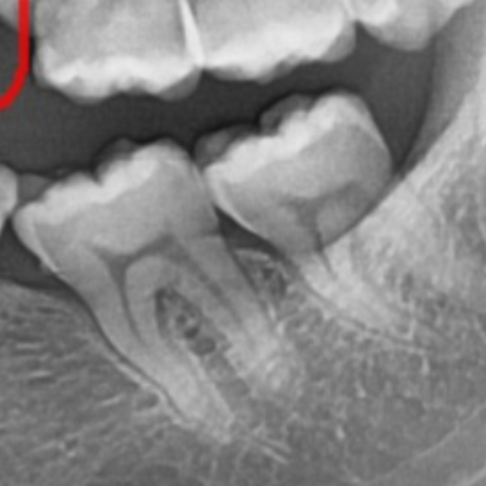
When one space becomes empty,
the teeth on either side gradually tilt toward it.
In particular, lower molars
often tilt as if they are falling forward.
The same applies to the teeth
that used to bite against each other above and below.
When the tooth that supported them disappears,
they descend toward the empty space.
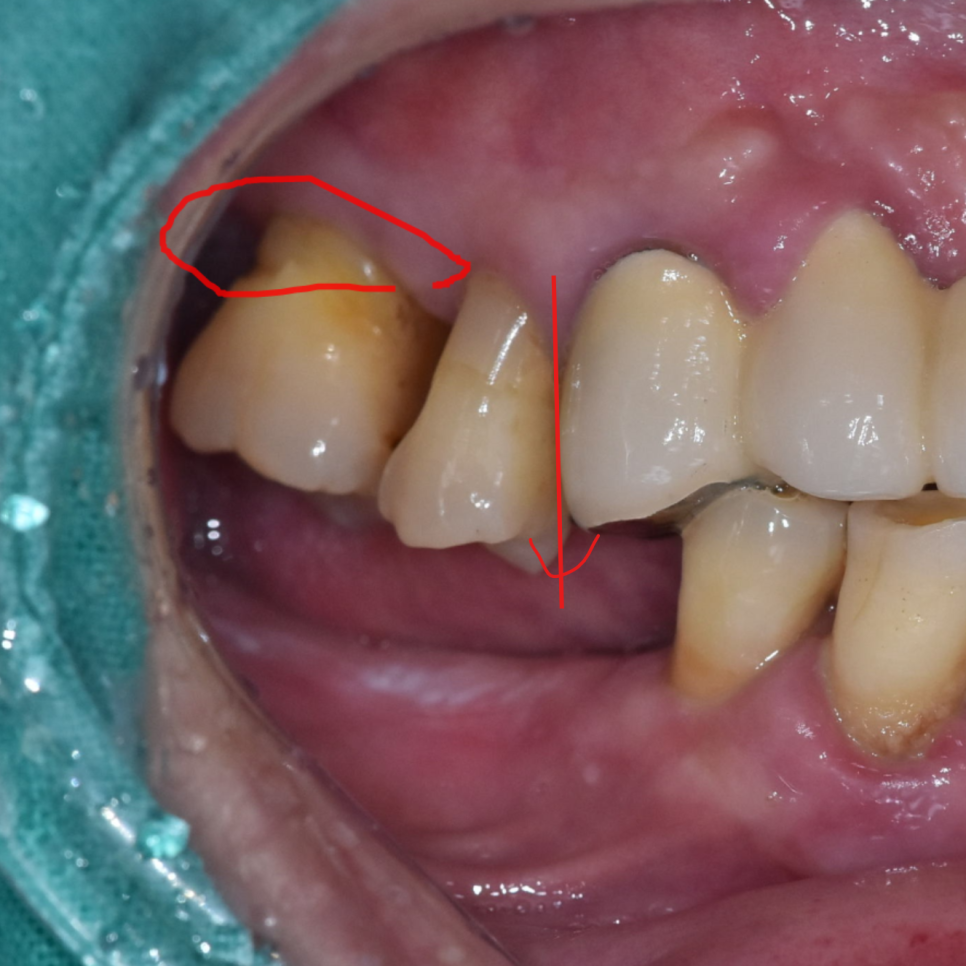
This change does not happen all at once.
It progresses gradually over several months or years.
Therefore,
it is difficult to notice on your own.
Since you can chew on the other side,
the discomfort is not severe,
and as time passes,
the space may become narrow before you realize it.
| Chapter 2. How much space is needed for an implant? |
There is a standard.
To place one implant with a diameter of 4 mm,
a minimum width of 7 mm from front to back is required.
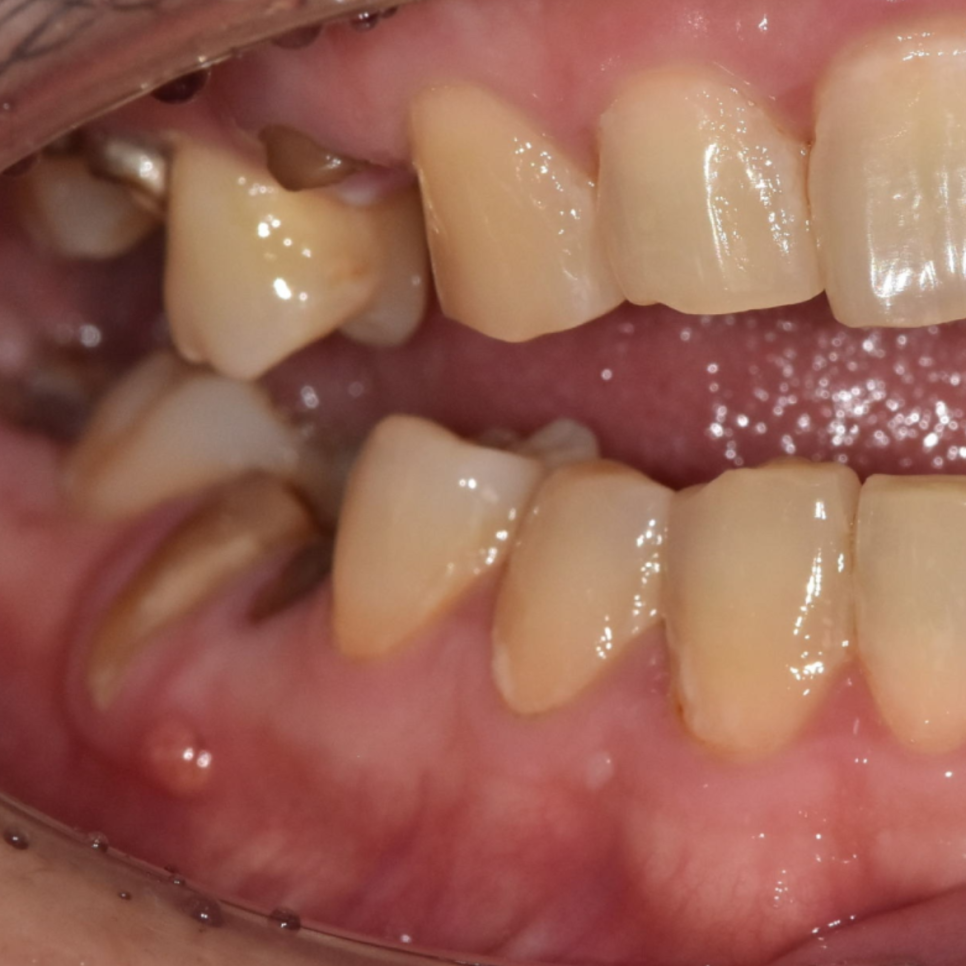
This is because a clearance of 1.5 mm
is needed between the implant
and each adjacent tooth.
The outer bone wall should be at least 2 mm thick,
and if two implants are placed,
they should be at least 3 mm apart.
(ADI implant space requirements)
If the space does not meet these standards,
the available options become more limited.
You may need to use a narrower implant,
make the prosthesis smaller,
or consider an entirely different approach.
A smaller prosthesis may leave a gap
between it and the adjacent tooth,
where food can frequently become trapped.
The tilted tooth itself can also cause problems.
The area on the tilted side is difficult for a toothbrush to reach,
and food can easily become lodged there.
Therefore, it is best to create the space accurately
and then restore the tooth.
| Chapter 3. How should it be treated? |
The method used in this situation
is partial orthodontic treatment.
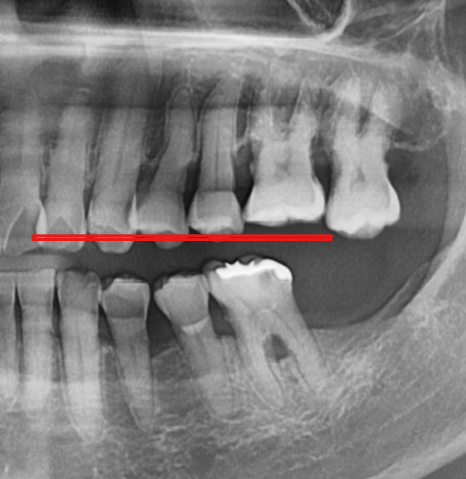
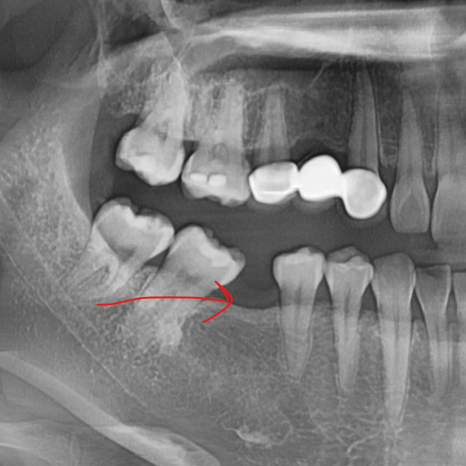
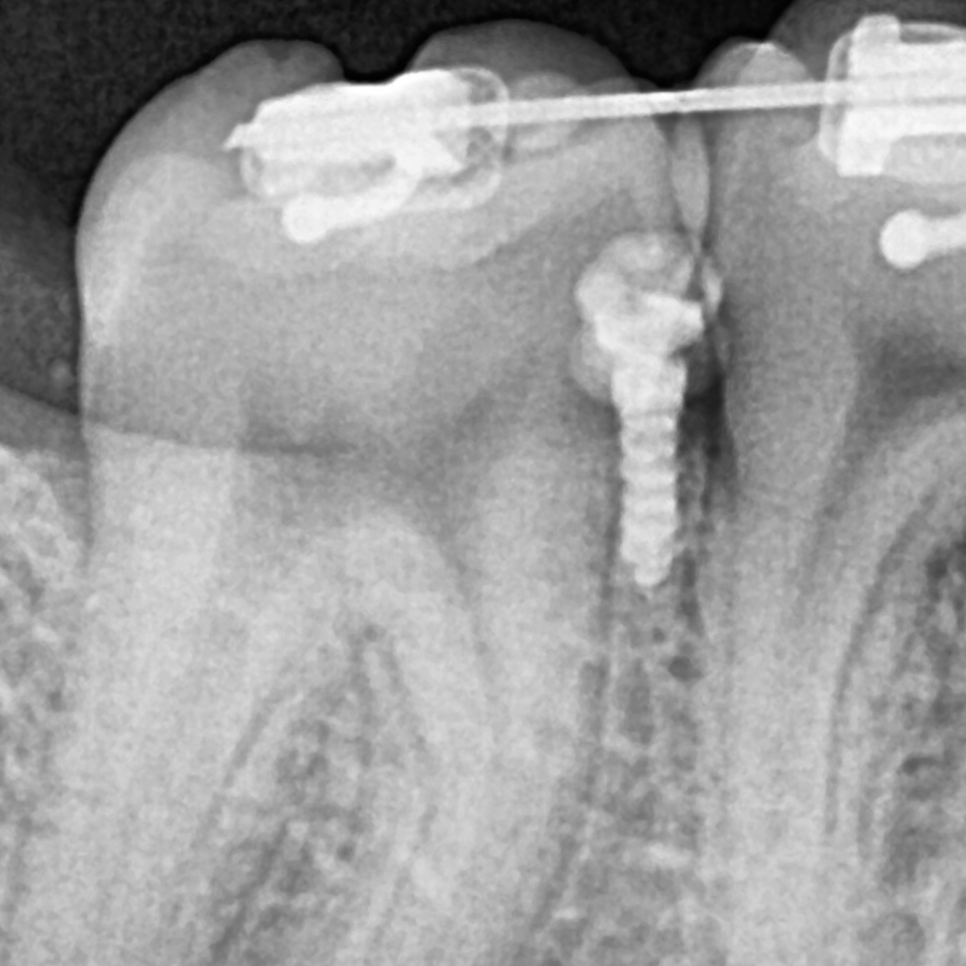
An orthodontic appliance is attached to the tilted tooth
to upright it to its original angle.
When the tooth is upright,
the empty space becomes wider by the same amount.
Rather than treating the entire dentition,
this method often focuses only on the area that needs it.
The reason for choosing this method
is that the tilted tooth does not need to be extracted;
it can be preserved as a natural tooth.
▼ Check the dental clinic location ▼
| Chapter 4. Disadvantages of partial orthodontic treatment to create space for the tooth |
There are also disadvantages.
There are two main ones.
First, the treatment period becomes longer.
Although placing an implant alone
could be a relatively simple treatment,
adding orthodontic treatment means
it takes several months
to upright the tooth.
Second, the cost is higher.
This is because orthodontic treatment and implant treatment
are carried out together.
Whether these disadvantages are worth accepting
depends on how much space is currently lacking,
the condition of the tilted tooth,
and the patient's individual circumstances.
This method is not recommended
in every case.
If only a small amount of space is missing,
it may be possible to resolve the issue in another way.
| Directions |
Today, we discussed treatment
for a narrowed molar space.
If a molar is extracted and left missing for a long time,
the teeth on either side tilt,
and the opposing tooth descends,
reducing the available space.
When there is not enough space,
one option is to upright the tilted tooth with orthodontic treatment
and regain the space.
Even if you were told elsewhere that treatment would be difficult,
measuring how much space is missing
can help determine whether an option is available.
Both orthodontic treatment
and general dental care are available at one location.
▼▼▼▼▼▼