
Hello.
This is Lime Tree Dental Hospital.
Do I really need to go to the dentist if nothing hurts?
If your teeth are not sensitive or throbbing
and you have no particular discomfort when chewing food,
it is easy to assume that your oral health is good.
However, problems with the teeth and gums often progress
without noticeable symptoms in the early stages.
A dental clinic is not only a place to visit when something hurts;
it is also a place to check your current condition and prevent problems in advance.
Today, together with Lime Tree Dental Hospital,
let us look at why regular oral checkups are necessary.
Some cavities begin quietly
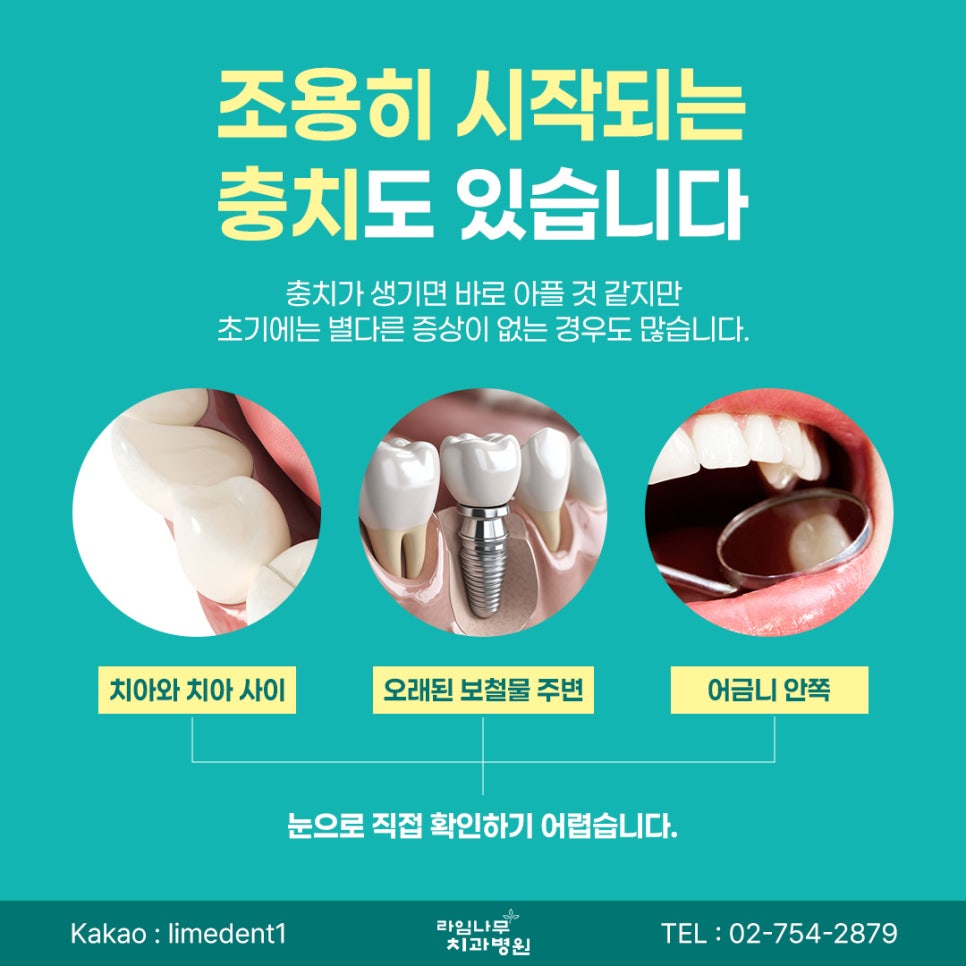
You may expect a tooth to hurt as soon as a cavity develops,
but in many cases there are no noticeable symptoms in the early stages.
This is especially true between the teeth,
around old dental restorations, and on the inner surfaces of the molars,
which are difficult to inspect directly with the eyes.
Once pain appears,
the cavity may have progressed into the inside of the tooth,
which can increase the extent of treatment needed.
Just as it is helpful to inspect a car before its warning light comes on,
it is important to check your teeth before they begin to hurt.
Regular oral checkups
help detect cavities early
and establish an appropriate care plan.
Gum disease can progress even without pain
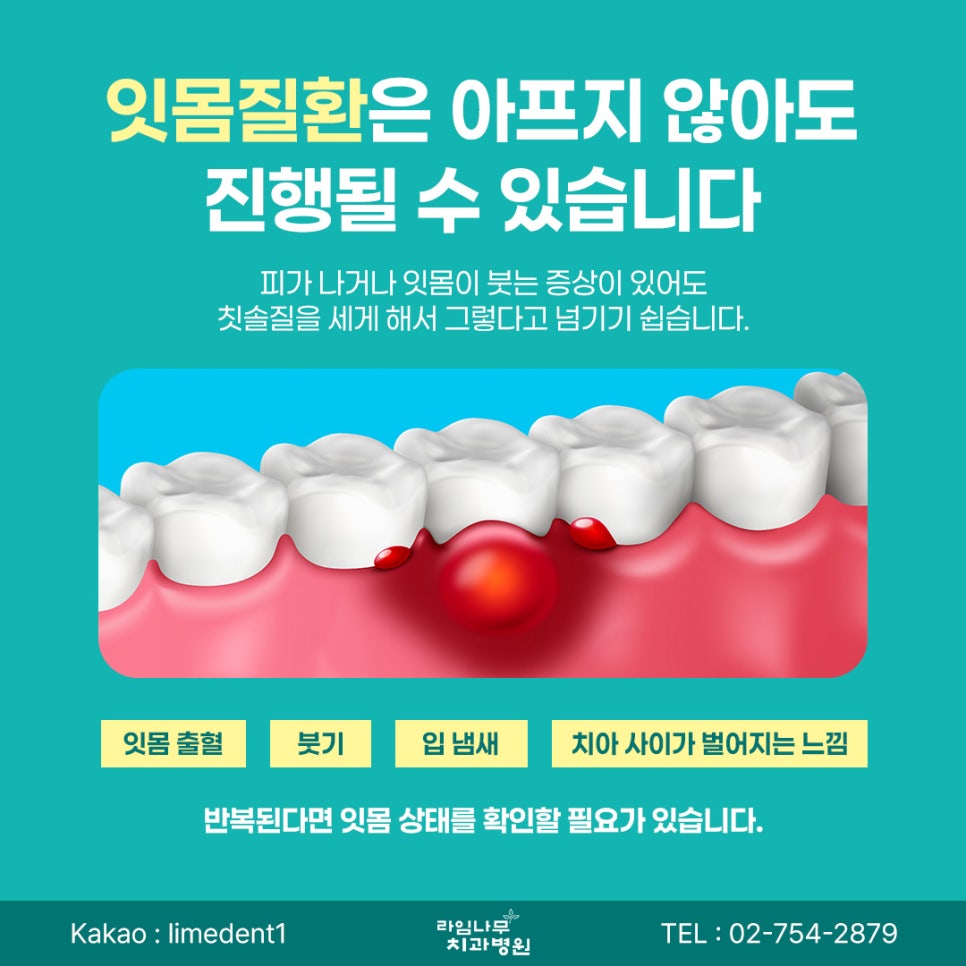
Even if your gums bleed when brushing
or you notice swelling,
it is easy to dismiss it as the result of brushing too hard.
However, if bleeding gums, swelling, bad breath,
or a recurring sensation that gaps are forming between your teeth
continue to occur,
you should have your gum condition checked.
Because gum disease does not usually cause severe pain in its early stages,
it can be difficult to notice on your own.
Checking tartar and gum health during regular checkups
allows you to establish a care plan before the condition progresses further.
Brushing alone may not be enough
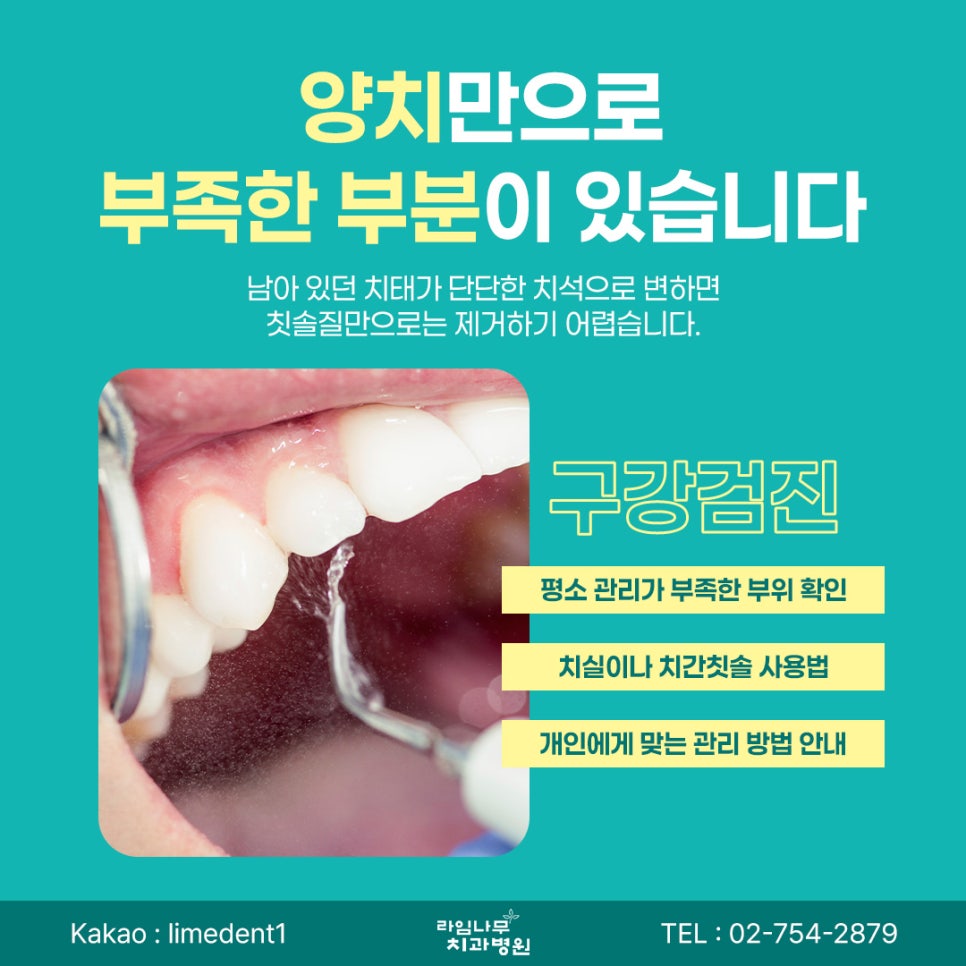
Even if you brush carefully every day,
there may be areas that a toothbrush does not reach well,
such as between the teeth, along the gumline, and on the inner surfaces of the molars.
When the plaque left behind hardens into tartar,
it is difficult to remove with brushing alone.
During an oral checkup, you can identify areas that have not been adequately cared for
and receive guidance on care methods suited to you,
including how to use dental floss or an interdental brush.
Brushing diligently is important,
but it is also necessary to check whether you are brushing effectively.
Previously treated areas also need continued monitoring
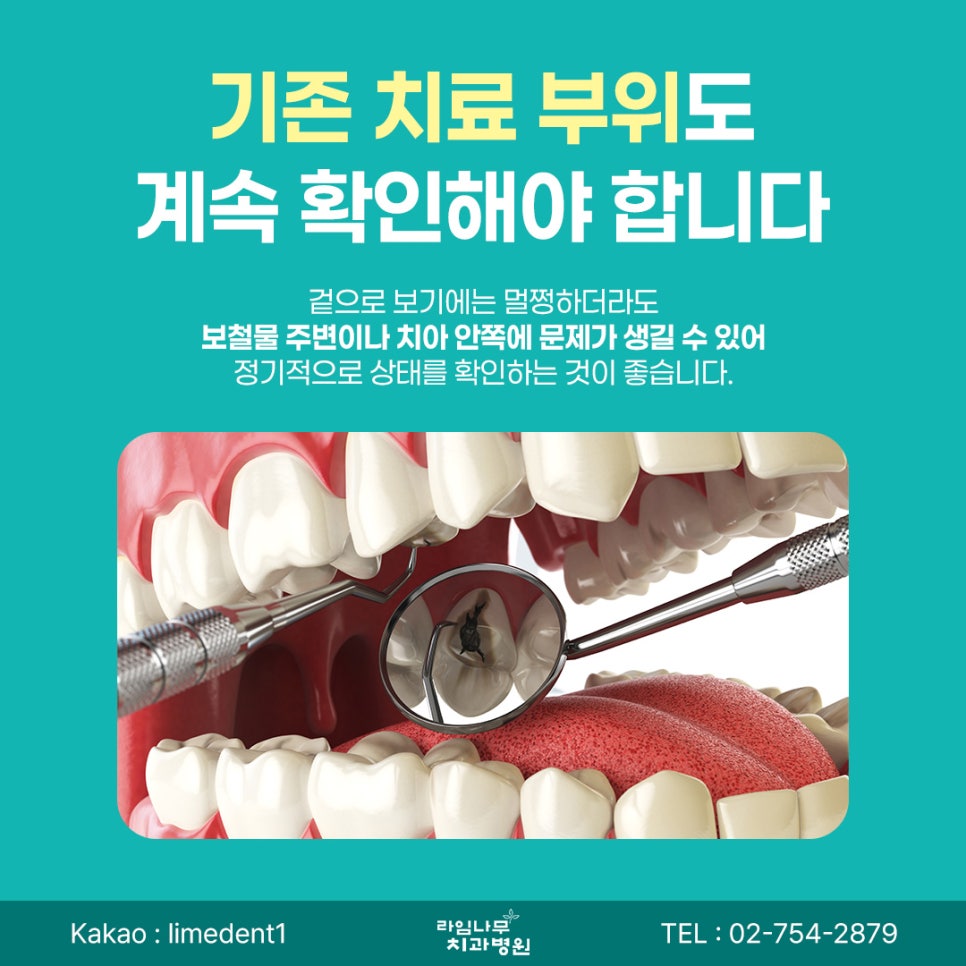
Receiving a filling, crown, or implant treatment
does not mean that oral care is complete.
Over time, food debris or plaque may accumulate
around dental restorations,
and your bite or gum condition may also change.
Even if everything looks fine from the outside,
problems can develop around restorations or on the inner surfaces of the teeth,
so it is advisable to have their condition checked regularly.
Treatment is not truly complete on the day it ends;
it is complete when the results are maintained in good health over the long term.
The interval between oral checkups varies from person to person
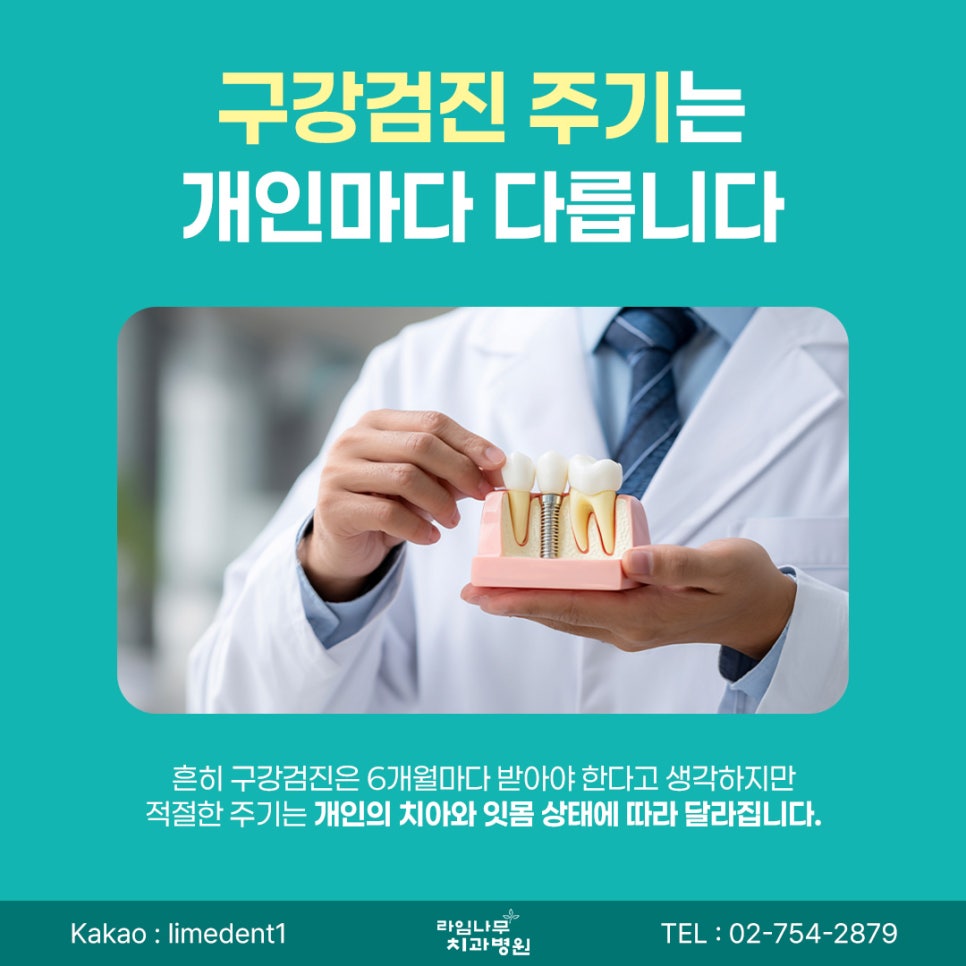
Many people think that oral checkups should be performed every six months,
but the appropriate interval depends on the condition of each person’s teeth and gums.
If you frequently develop cavities or have gum disease,
or if you have received orthodontic or implant treatment,
the intervals between checkups may be shorter.
Conversely, if your oral condition is stable,
the interval can be adjusted according to the healthcare provider’s assessment.
The important thing is not to follow a fixed number of visits unconditionally,
but to set a checkup schedule that suits your current oral condition.
When nothing hurts is a good time to get checked

Once a dental problem becomes more advanced,
the treatment process may become more complicated and burdensome.
In particular, gum disease can progress in periodontal pockets beneath the gums,
where it is difficult to see,
so it should be checked regularly even when there is no apparent discomfort.
In addition to tartar, biofilm—the bacterial plaque remaining around the teeth and gums—
can also contribute to oral disease.
Because some areas may be difficult to manage
with regular brushing or scaling alone,
preventive care suited to your current gum condition is necessary.
At Lime Tree Dental Hospital,
we carefully examine the condition of your teeth and gums
and provide guidance on the care plan you need.
The methods and intervals for scaling, gum care, and biofilm management
may vary depending on your oral condition and whether you have implants or orthodontic treatment.
If gum bleeding, bad breath, or food becoming stuck repeatedly occurs,
or if you do not remember when you had your last checkup,
it is advisable to have your oral condition checked.
Lime Tree Dental Hospital provides guidance on preventive care programs
based on each patient’s oral condition.
Please refer to the images below for details about the program contents and benefits.
Eligibility and care intervals may vary depending on the checkup results.



Myeongdong Lime Tree Dental Hospital Information
📍 7th floor, Shinhan Bank Building, 43 Myeongdong-gil, Jung-gu, Seoul
🚇 Exit 6 of Myeongdong Station / Euljiro 1-ga Station
🅿️ Parking is available at the Hotel Skypark Central Myeongdong parking lot
⏰ Office hours
-
Monday, Wednesday, Thursday: 09:30–18:30
-
Tuesday, Friday (evening hours): 09:30–20:30
-
Saturday: 09:30–14:30 (no lunch break)
-
Lunch break: 13:00–14:30
※ Closed on Sundays and public holidays
📞 Phone: 02-754-2879
💬 KakaoTalk consultation: http://pf.kakao.com/_UQQHZ/chat