
Hello.
This is Lime Tree Dental Hospital.
Even if one tooth is missing, it is easy to postpone treatment when there is no immediate pain and you can chew food on the opposite side.
Especially if it is a molar that is not easily visible, you may think, “It should be okay to wait a little longer.”
However, the space left by a missing tooth does not remain unchanged. Over time, changes may occur in the surrounding teeth, jawbone, and bite.
Today, together with Lime Tree Dental Hospital, we will look at the changes that may occur when a missing tooth is left untreated for a long time and what should be checked before implant treatment.
The teeth around the gap may tilt
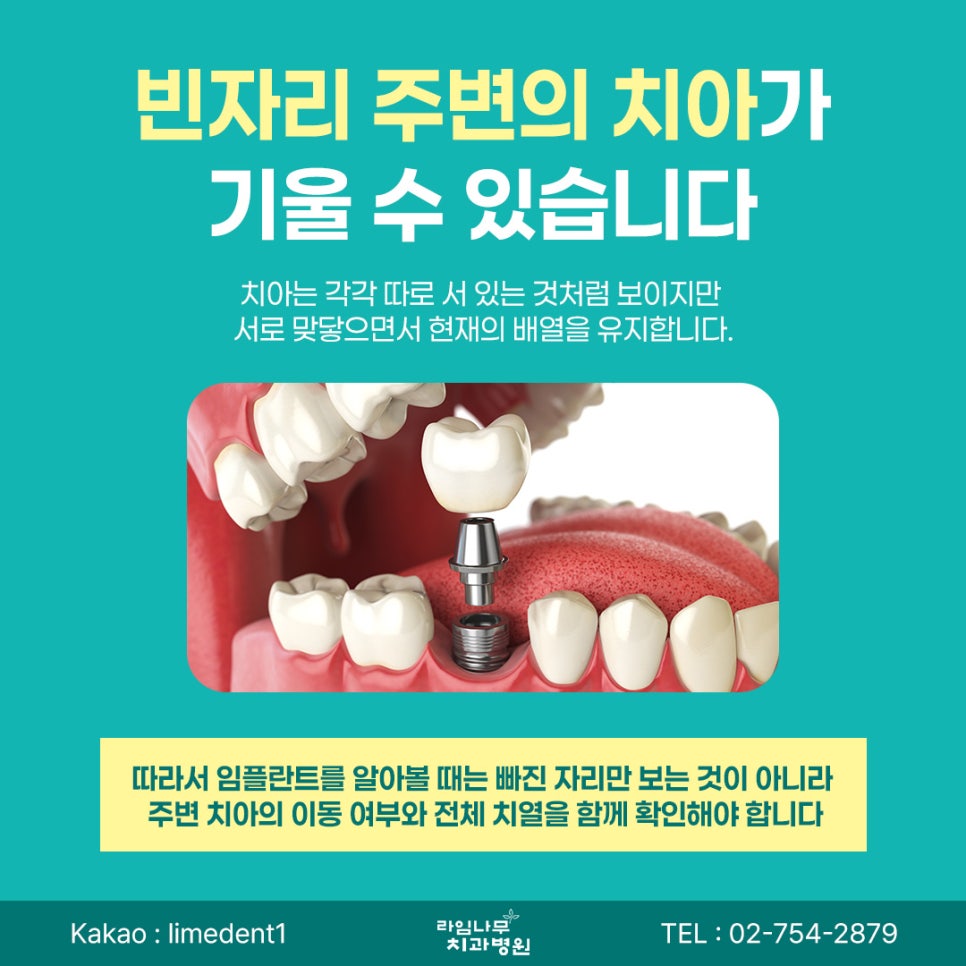
Although teeth may appear to stand separately, they maintain their current alignment by touching one another.
When one tooth is lost, the teeth on either side may gradually tilt or move toward the empty space.
The tooth on the opposite side that used to bite against the missing tooth may also move down or up toward the open space.
When the alignment of the teeth changes in this way, the bite—the way the upper and lower teeth come together—may also change.
Spaces where food becomes trapped or that are difficult for a toothbrush to reach may develop, making it more difficult to manage cavities and gum disease.
Therefore, when considering dental implants, it is important to check not only the missing-tooth site but also whether the surrounding teeth have moved and what the overall alignment of the teeth is like.
You may develop a habit of chewing on one side
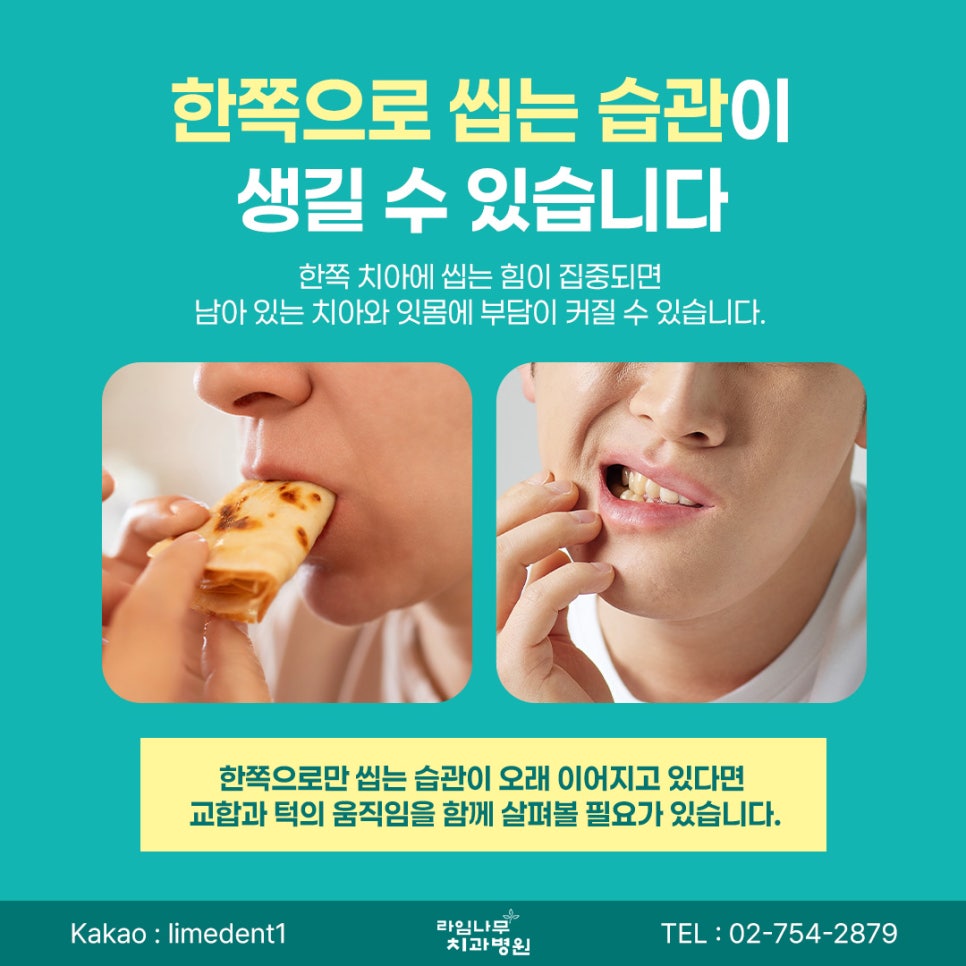
When a molar is missing, many people avoid the uncomfortable side and chew food only on the opposite side.
At first, this may not seem to cause a major problem.
However, if chewing forces become concentrated on one side, the remaining teeth and gums may be placed under greater strain.
The muscles around the jaw may also be used differently on the two sides, which can make the jaw feel tired or stiff after meals.
Of course, tooth loss does not necessarily lead to a temporomandibular joint problem.
However, if the habit of chewing only on one side continues for a long time, it is worth examining the bite and jaw movement together.
The jawbone may decrease
Tooth roots transmit the stimulation generated when chewing food to the jawbone.
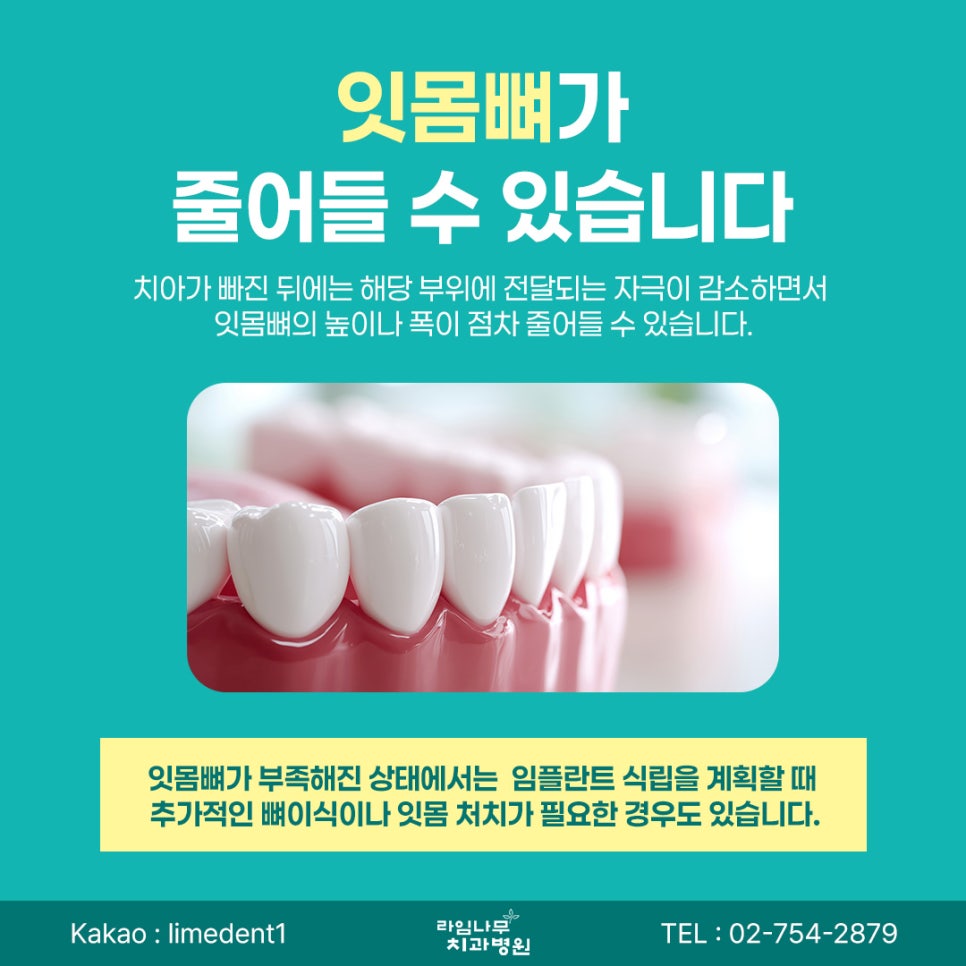
After a tooth is lost, the stimulation delivered to that area decreases, and the height or width of the jawbone may gradually decrease.
When there is insufficient jawbone, additional bone grafting or gum treatment may be necessary when planning implant placement.
However, the timing and location of tooth loss and the condition of the jawbone vary from person to person.
Leaving a tooth untreated for a long time does not necessarily mean that the same treatment will be required in every case, so the situation should be confirmed through an oral examination and radiographic imaging.
Food may become trapped, making oral care more difficult
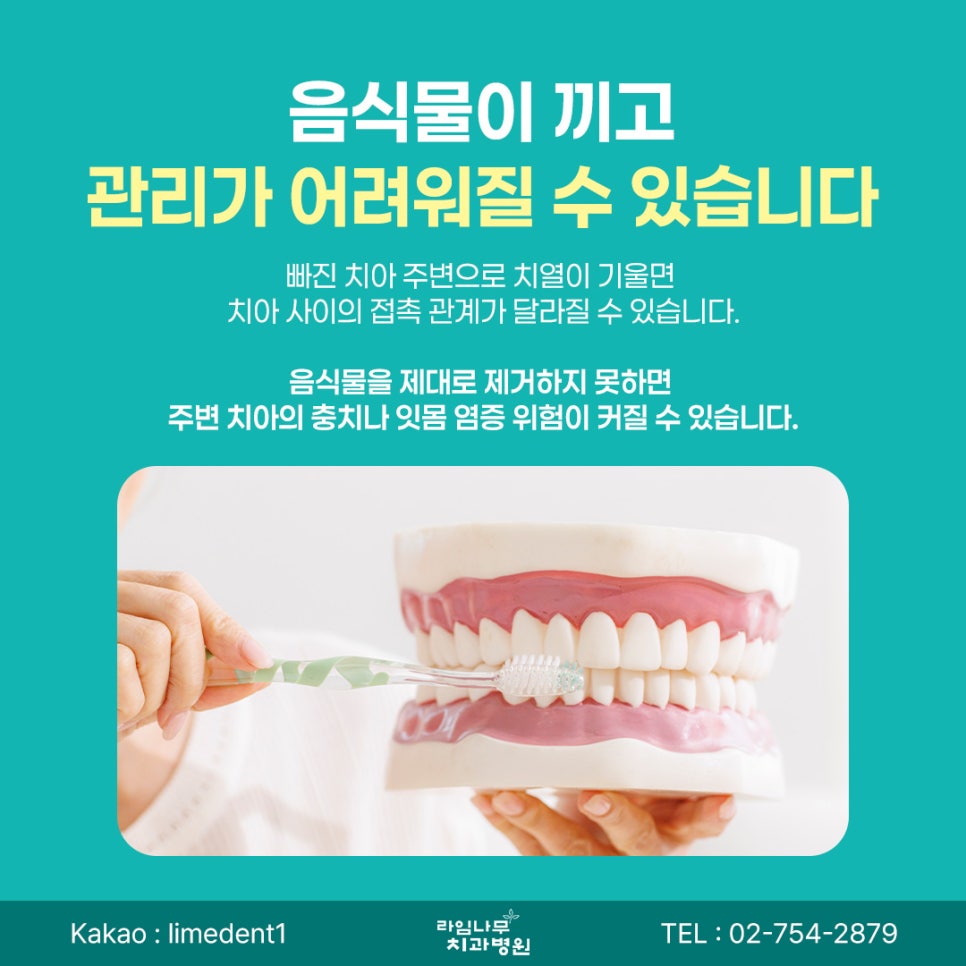
If the teeth shift toward the space left by a missing tooth, the contact between the teeth may change.
As a result, food may repeatedly become trapped in a particular area whenever you eat, or spaces may develop that are difficult to clean with a toothbrush and dental floss.
If the food cannot be removed properly, the risk of cavities or gum inflammation around the neighboring teeth may increase.
Even if there is no pain at the site of the missing tooth, if sensitivity, gum bleeding, or bad breath repeatedly occurs around the neighboring teeth, it is advisable to undergo an examination to identify the cause.
Does a missing tooth always require an implant?
In addition to implants, bridges and partial dentures are also options for restoring an area where a tooth has been lost.
An implant involves placing an artificial tooth root in the jawbone and then connecting a prosthetic restoration. One of its features is that it does not directly use the surrounding teeth as supports.
However, the same approach cannot be applied to everyone.
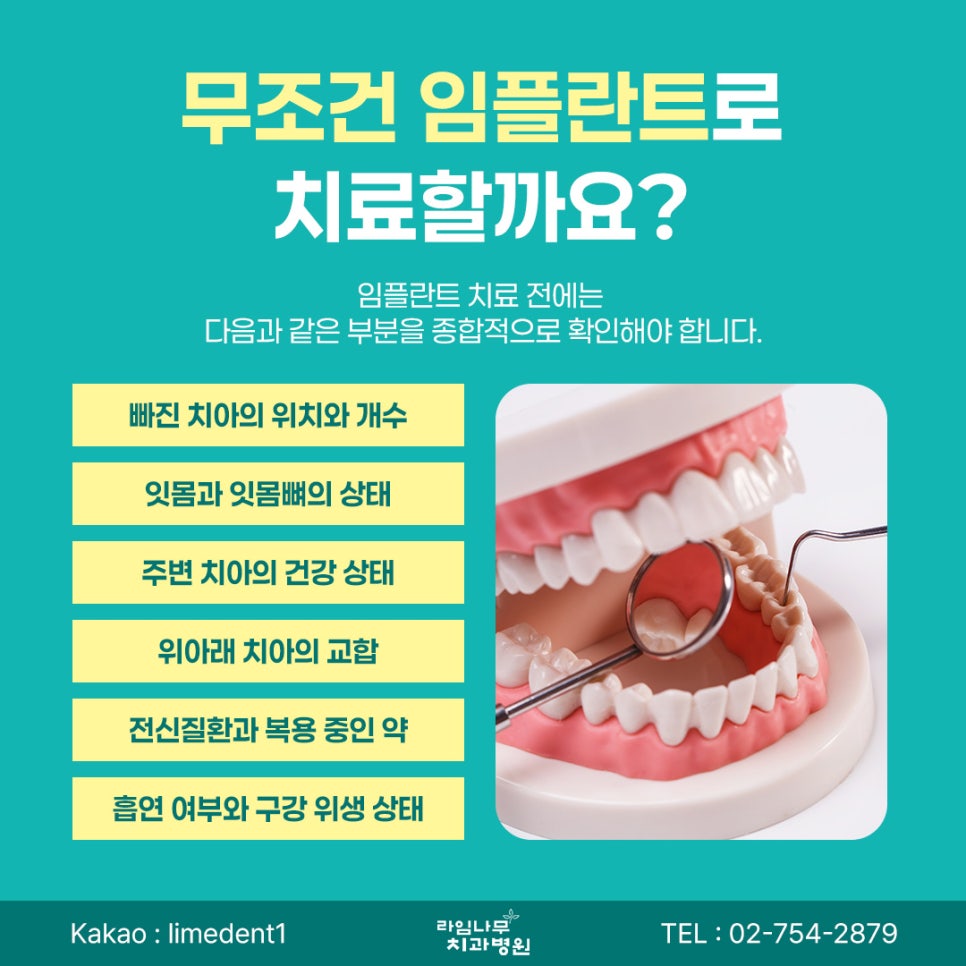
Before implant treatment, the following factors should be assessed comprehensively.
-
The location and number of missing teeth
-
The condition of the gums and jawbone
-
The health of the surrounding teeth
-
The bite of the upper and lower teeth
-
Medical conditions and medications currently being taken
-
Smoking status and oral hygiene
Depending on the examination results, the appropriate treatment approach may differ, and the treatment period and process also vary from person to person.
An examination should come first, even if the discomfort is minimal
The changes that occur when a missing tooth is left untreated for a long time vary from person to person.
The surrounding teeth may move even within a short period, while in other cases there may be little change even after a long time.
The important thing is not to judge your current condition based on pain alone.
Before changes occur in the surrounding teeth, jawbone, or bite, an examination can provide a more specific understanding of the available treatment options and the appropriate timing.
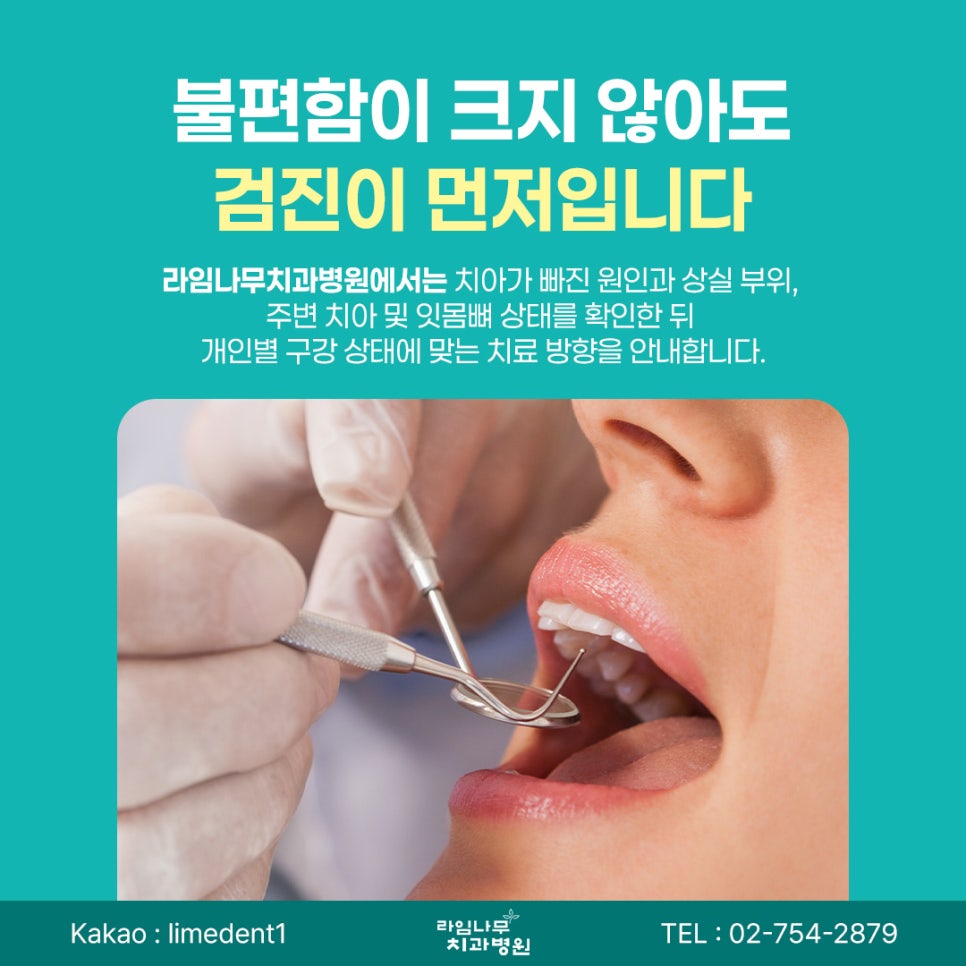
At Lime Tree Dental Hospital, we first assess the cause of tooth loss, the area of tooth loss, and the condition of the surrounding teeth and jawbone before explaining a treatment approach suited to each individual’s oral condition.
If you are considering an implant, please first undergo a detailed examination and discuss your current condition and possible treatment options thoroughly.

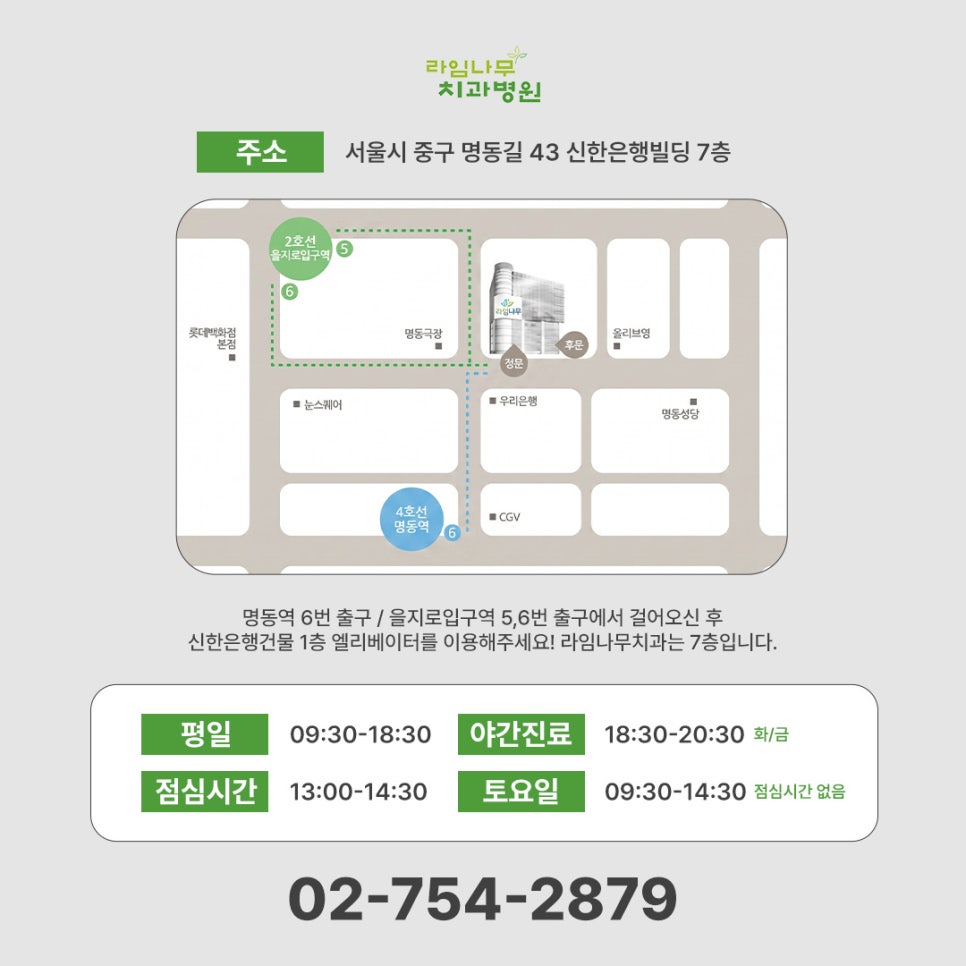
Lime Tree Dental Hospital in Myeongdong: Information
📍 7th floor, Shinhan Bank Building, 43 Myeongdong-gil, Jung-gu, Seoul
🚇 Exit 6 of Myeongdong Station / Euljiro 1-ga Station
🅿️ Parking is available at the Hotel Skypark Central Myeongdong parking lot
⏰ Clinic hours
-
Monday, Wednesday, Thursday: 09:30 ~ 18:30
-
Tuesday, Friday (evening hours): 09:30 ~ 20:30
-
Saturday: 09:30 ~ 14:30 (no lunch break)
-
Lunch break: 13:00 ~ 14:30
※ Closed on Sundays and public holidays
📞 Phone: 02-754-2879
💬 KakaoTalk consultation: http://pf.kakao.com/_UQQHZ/chat