
Hello.
This is Lime Tree Dental Hospital.
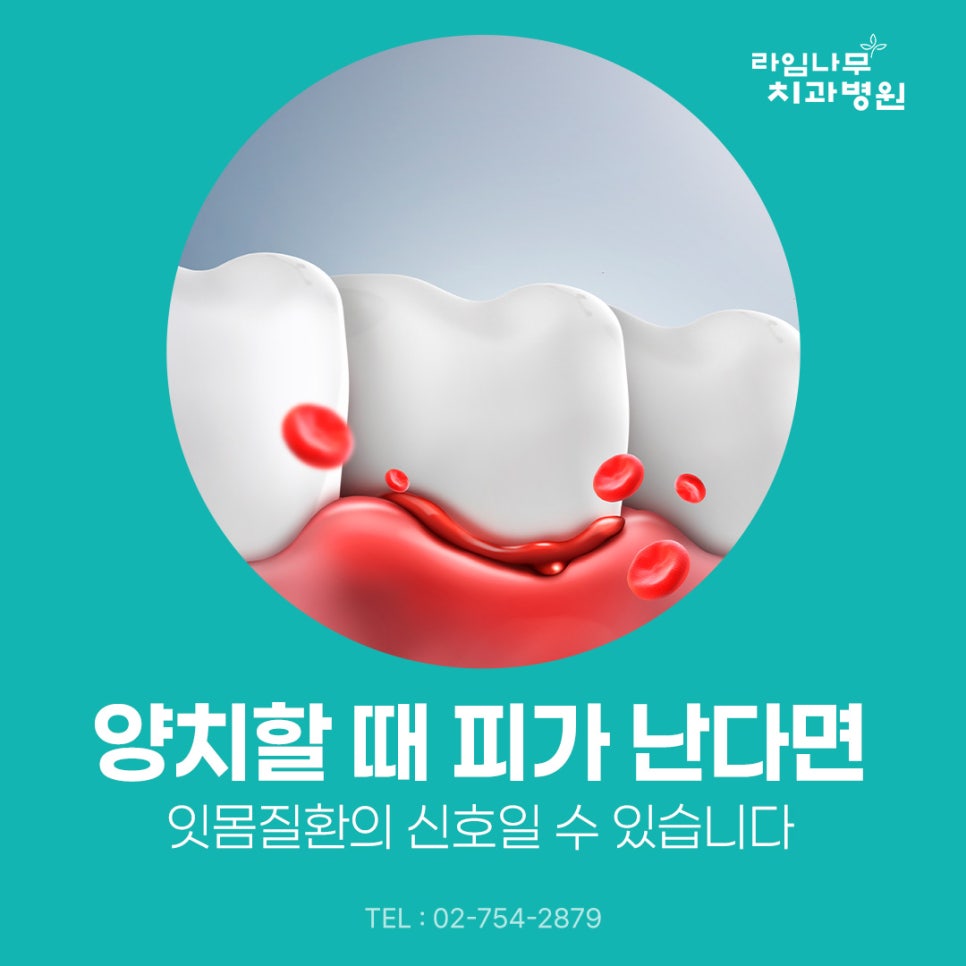
Some of you may have experienced seeing blood on your toothbrush while brushing your teeth or noticing blood mixed into the foam you spit out after brushing.
If the bleeding is light and occurs only once or twice, it may be caused by brushing too hard or by temporary irritation.
However, if your gums bleed every time you brush or if swelling and sensitivity repeatedly occur, this may be a sign that gum disease is beginning. It is a good idea to have your current gum condition checked.
Why Do Gums Bleed When Brushing?
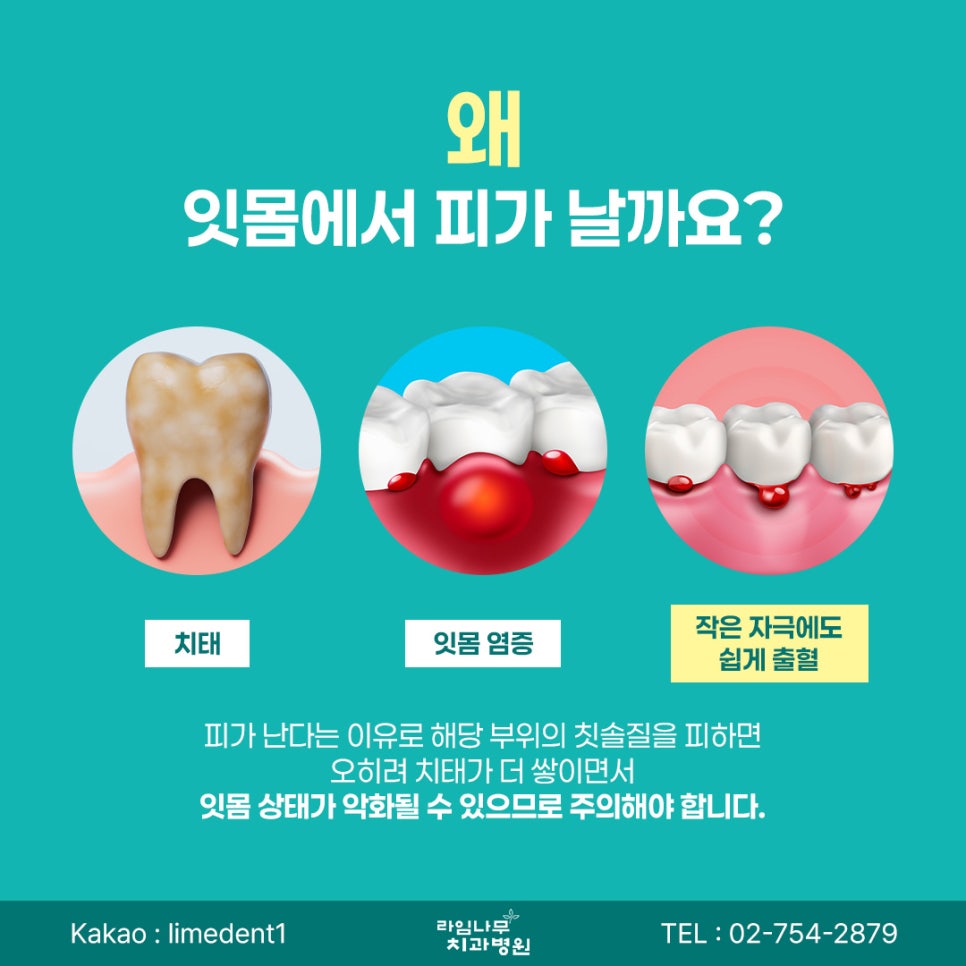
Plaque, a mixture of food debris and bacteria, can easily build up along the border between the teeth and gums.
If plaque is not adequately removed and remains in place, it can cause inflammation in the gums. Over time, it can harden into tartar, which is difficult to remove with regular brushing alone.
Inflamed gums are more swollen and sensitive than healthy gums, so even slight stimulation from a toothbrush or dental floss can easily cause bleeding.
In particular, if you avoid brushing the area because it is bleeding, even more plaque may accumulate and cause the gum condition to worsen, so caution is advised.
Gum Disease May Not Cause Pain at First
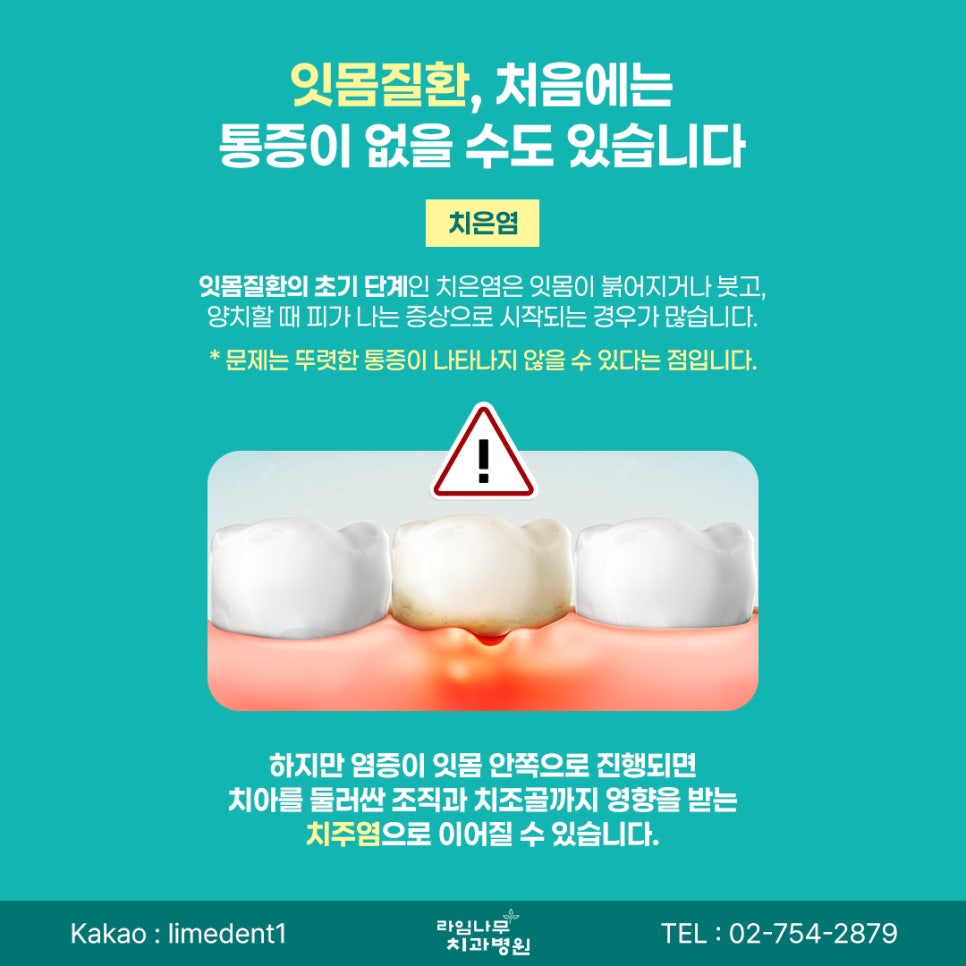
Gingivitis, the early stage of gum disease, often begins with symptoms such as red or swollen gums and bleeding during brushing.
The problem is that noticeable pain may not occur in the early stages.
As a result, some people overlook it for a long time, simply thinking, “Maybe I’m just tired,” or “I must have brushed too hard.”
However, if the inflammation progresses deeper into the gums, it can lead to periodontitis, which affects the tissues surrounding the teeth and the alveolar bone.
Check for These Symptoms as Well

If the following changes are recurring in addition to gum bleeding, it is worth having your gum condition checked.
-
The gums are red or swollen
-
The gums often bleed when brushing or flossing
-
Bad breath has become worse than before
-
Receding gums make the teeth look longer
-
The spaces between the teeth feel as though they have widened
-
The teeth feel sensitive to cold foods
-
There is discomfort when chewing food
-
The teeth feel loose
Because the severity and causes of symptoms vary from person to person, it is important to have your current condition checked through a dental examination rather than determining whether you have gum disease based on just one symptom.
Management of Gum Disease Varies Depending on Its Condition
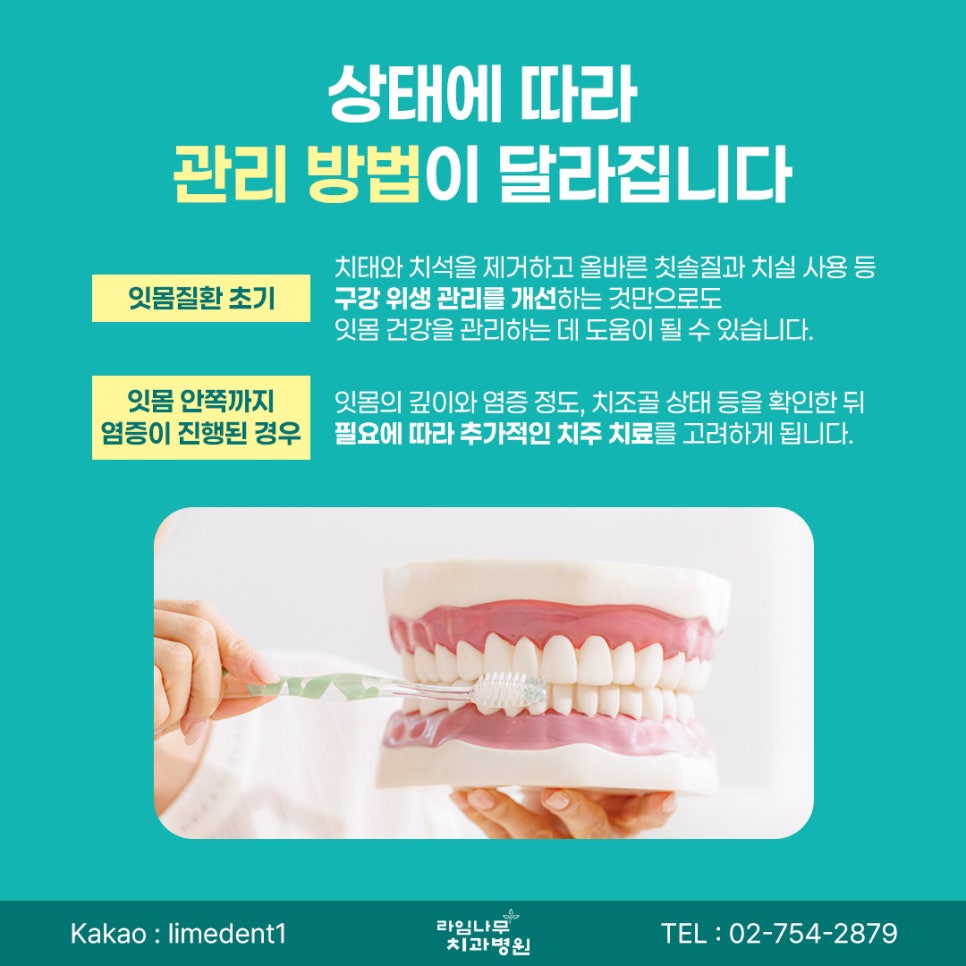
Gum treatment does not follow the same approach in every case.
In the early stages, removing plaque and tartar and improving oral hygiene through proper brushing and flossing may help manage gum health.
On the other hand, when inflammation has progressed deeper into the gums, the gum pocket depth, severity of inflammation, and condition of the alveolar bone are assessed before additional periodontal treatment is considered as needed.
Therefore, rather than deciding on a treatment method first, the priority should be to determine how far the gum disease has progressed.
How to Maintain Healthy Gums in Daily Life

Management after gum disease treatment is also important.
Brush your teeth thoroughly at least twice a day, and use dental floss or an interdental brush between the teeth, where a toothbrush does not reach well.
In addition, hardened tartar is difficult to remove through brushing alone, so regular dental checkups and scaling can help you monitor the condition of your teeth and gums.
There is one more aspect to consider.
It is the management of the biofilm that forms around the teeth and gums.
A biofilm is a layer formed by multiple types of bacteria. It can easily remain in areas that are difficult for a toothbrush to reach, such as between the teeth and along the gumline.
Therefore, areas that are difficult to manage with regular brushing alone can be professionally cleaned and maintained using Airflow scaling to remove biofilm, tartar, and other buildup, which may help prevent gum disease.
Prevention and Maintenance Are as Important as Gum Disease Treatment
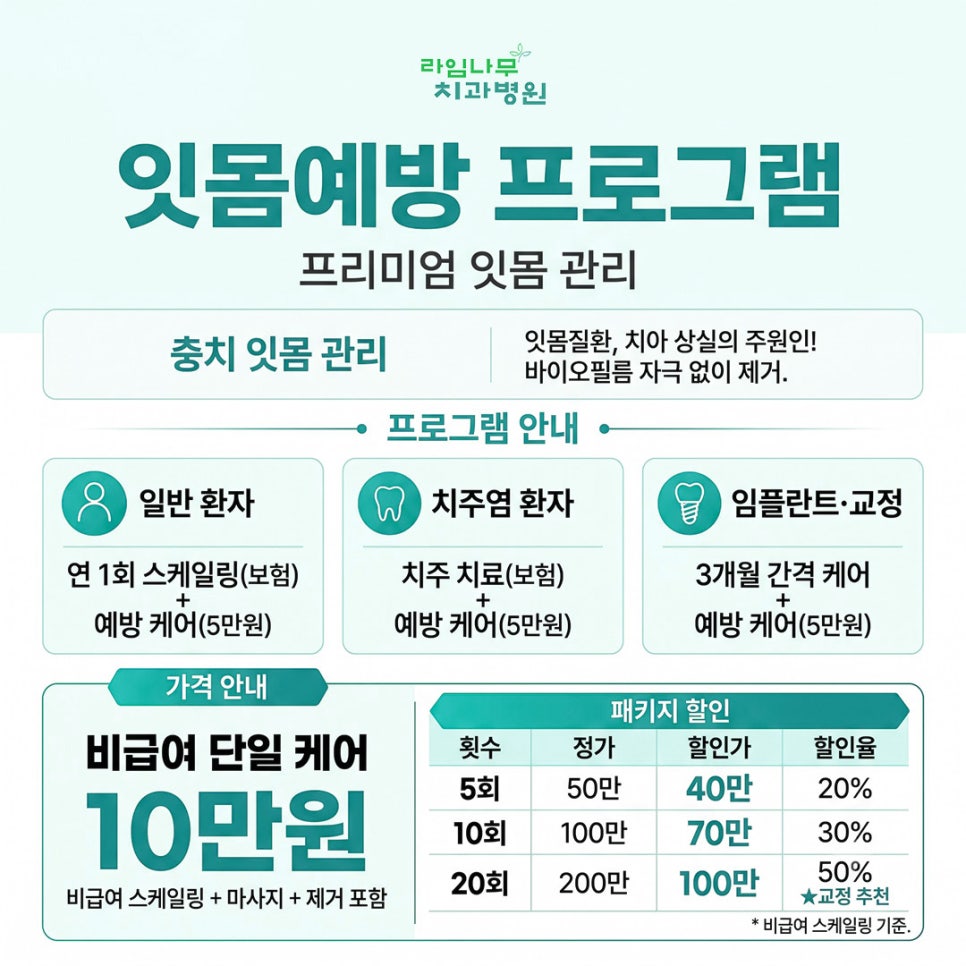
At Lime Tree Dental Hospital, we operate a gum prevention program to manage biofilm and plaque and to continuously monitor gum health.
Rather than using the same approach for every patient, the gum prevention program varies the management methods and intervals according to the current gum condition and whether treatment has been performed.
In general cases, regular scaling and preventive care are considered together. For patients who have received periodontal treatment, ongoing preventive care can continue with monitoring of the gum condition after treatment.
For patients with implants or undergoing orthodontic treatment, plaque and food debris are more likely to remain because of the structure involved. Depending on the oral condition, we recommend regular care at approximately three-month intervals.
※ Management methods and intervals may vary depending on each individual’s oral condition.
Do Not Overlook Even Small Changes in Your Gums

Gum disease is not a condition that should only be managed after the pain becomes severe.
When small changes from normal occur, such as repeated bleeding while brushing, having your gum condition checked can be the first step toward maintaining healthy teeth for a long time.
At Lime Tree Dental Hospital, we assess the current level of gum inflammation, the distribution of tartar, and the tissues around the gums. We provide guidance tailored to each patient’s oral condition, including areas requiring treatment and preventive care afterward.
If you experience repeated gum bleeding while brushing or notice changes such as swelling, sensitivity, or bad breath, do not put it off. Please have your current gum health checked through a dental examination.

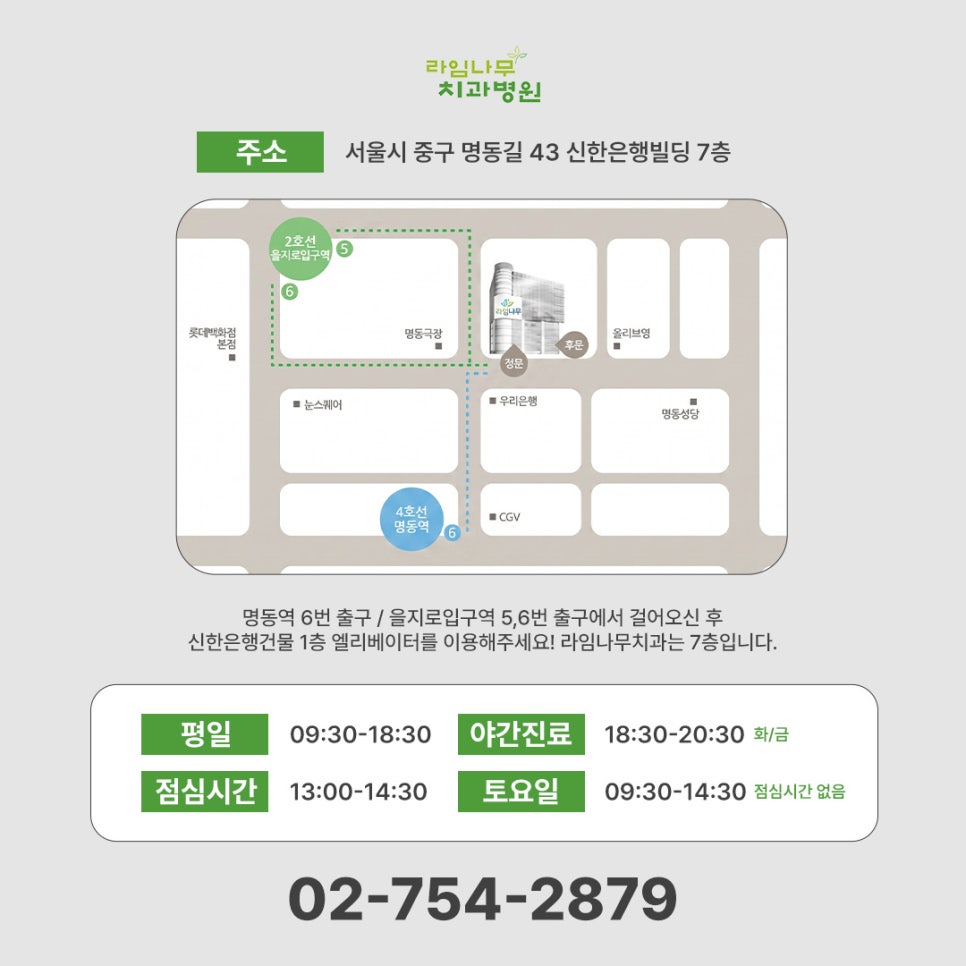
Information About Lime Tree Dental Hospital in Myeongdong
📍 7th floor, Shinhan Bank Building, 43 Myeongdong-gil, Jung-gu, Seoul
🚇 Exit 6 of Myeongdong Station / Euljiro 1-ga Station
🅿️ Parking is available at the Hotel Skypark Central Myeongdong parking lot
⏰ Office hours
-
Monday, Wednesday, Thursday: 09:30 ~ 18:30
-
Tuesday, Friday (evening hours): 09:30 ~ 20:30
-
Saturday: 09:30 ~ 14:30 (no lunch break)
-
Lunch break: 13:00 ~ 14:30
※ Closed on Sundays and public holidays
📞 Phone inquiries: 02-754-2879
💬 KakaoTalk inquiries: http://pf.kakao.com/_UQQHZ/chat