
Hello.
This is Lime Tree Dental Hospital.

Scaling is a treatment people receive regularly
for the health of their teeth and gums.
After removing tartar
that had built up on the tooth surfaces and around the gums,
your mouth may feel much fresher,
but some people become concerned
because of a sensitive feeling they did not have before.
When drinking cold water,
if you feel a brief sharp sensation,
or your teeth feel sensitive while brushing,
you may wonder:
“Could the scaling have been too intensive?”
“Have my teeth become weaker?”
There are several reasons for sensitivity after scaling,
and in most cases, it is related to changes
after tartar has been removed.
Today, we will look at
why your teeth may feel sensitive after scaling and how to care for them,
as well as how to continue caring for your gums
after scaling.
Why do your teeth feel sensitive after scaling?
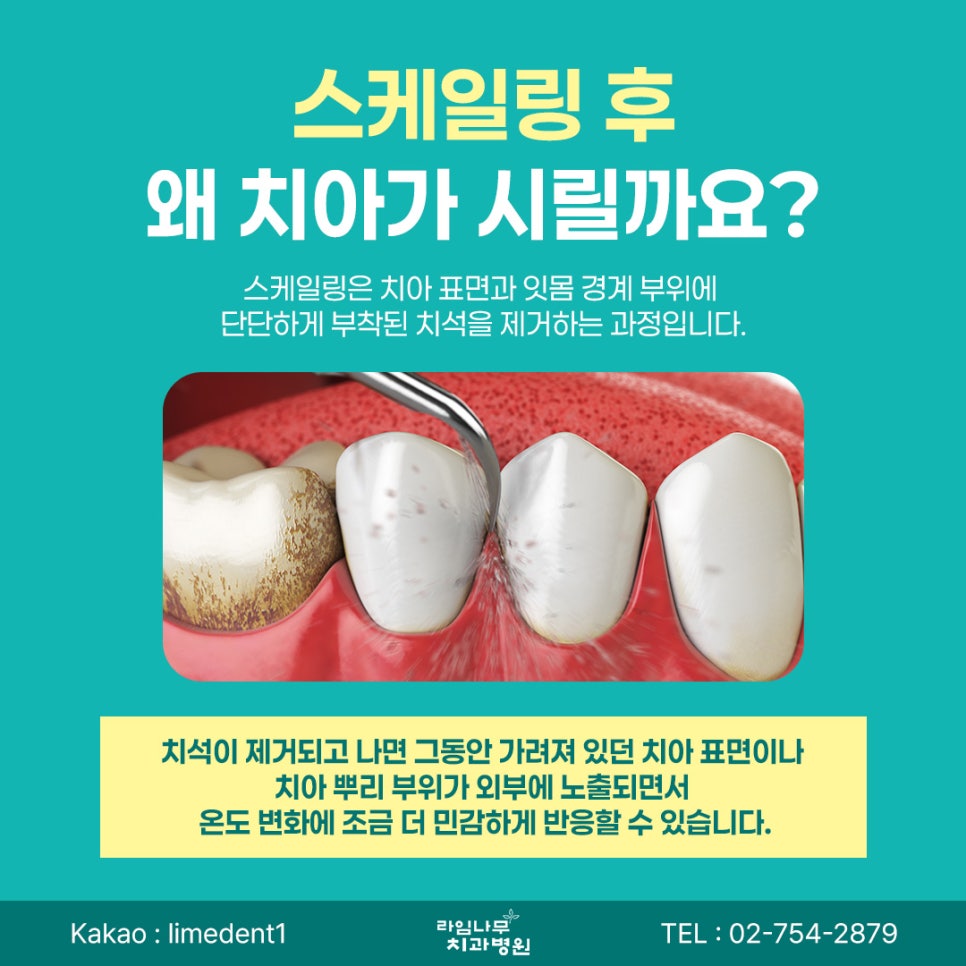
Scaling
is the process of removing tartar
firmly attached to the tooth surfaces and the area where the teeth and gums meet.
If tartar has accumulated for a long time,
it may cover not only the area where the teeth and gums meet
but also the areas around the tooth roots.
Once this tartar is removed,
the tooth surfaces or root areas
that had been covered may become exposed to the outside,
causing them to respond somewhat more sensitively to changes in temperature.
In particular, when you drink cold water or eat cold foods,
you may experience a brief aching or sharp sensation.
In other words, this does not necessarily mean that scaling has weakened your teeth.
Rather, as the tartar that had built up is removed,
you may temporarily feel stimuli
that you did not notice clearly before.
Sensitivity may also occur as gum swelling subsides
If tartar and plaque remain around the gums
for a long time,
the gums may become inflamed,
swollen, or red.
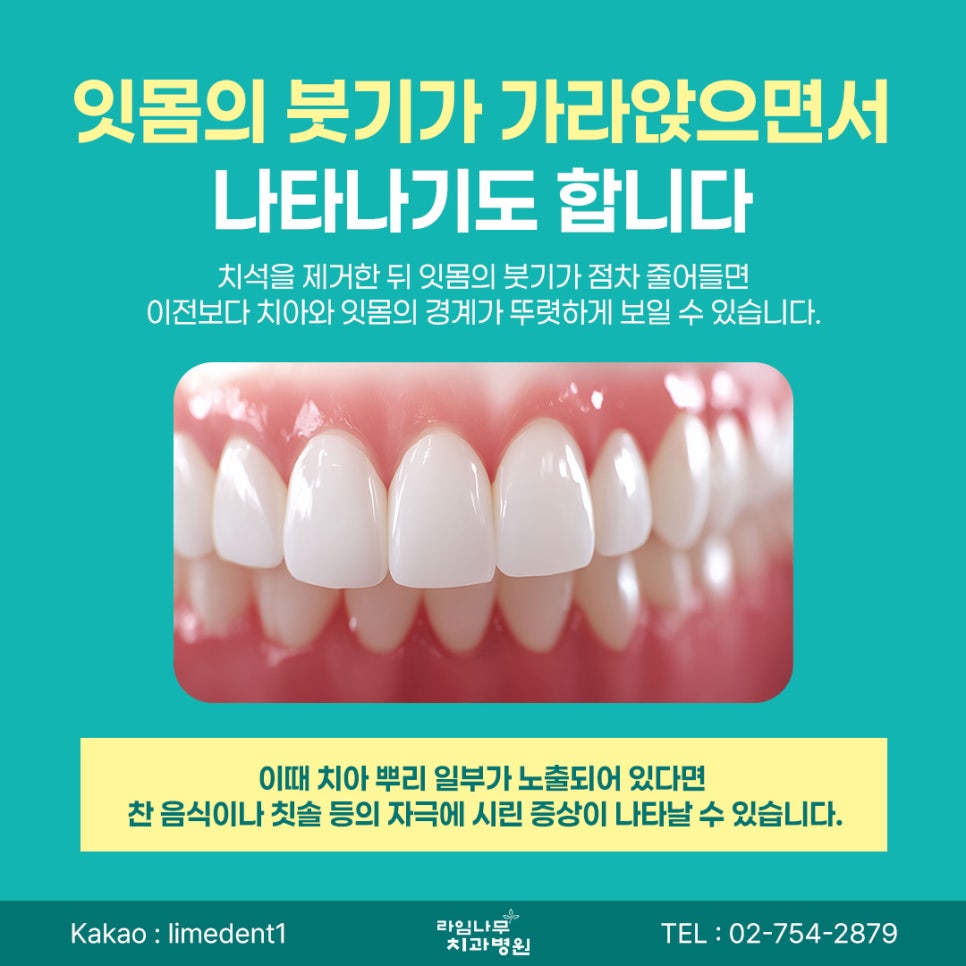
After the tartar around the teeth is removed through scaling,
as the gum swelling gradually decreases,
the boundary between the teeth and gums
may become more clearly visible than before.
If the gums were particularly swollen,
the spaces between the teeth may appear wider after scaling,
or your teeth may feel as though they have become longer.
If part of the tooth root is exposed at this time,
sensitivity may occur in response to cold foods or stimulation from a toothbrush.
Reduce stimulation for a while immediately after scaling

If your teeth and gums feel more sensitive than usual after scaling,
it is best to avoid strong stimulation for a few days.
Choose foods at a lukewarm temperature
rather than foods that are extremely hot or cold,
and avoid applying excessive force to the toothbrush
when brushing.
Although you may want to scrub strongly from side to side
to clean your teeth thoroughly,
this can instead place strain on the boundary between the gums and teeth,
so brush carefully using a soft toothbrush.
However, if the symptoms are severe or continue for a long time,
it is necessary to determine whether they are a temporary reaction after scaling
or whether another cause is involved.
Receiving scaling does not mean your care is finished
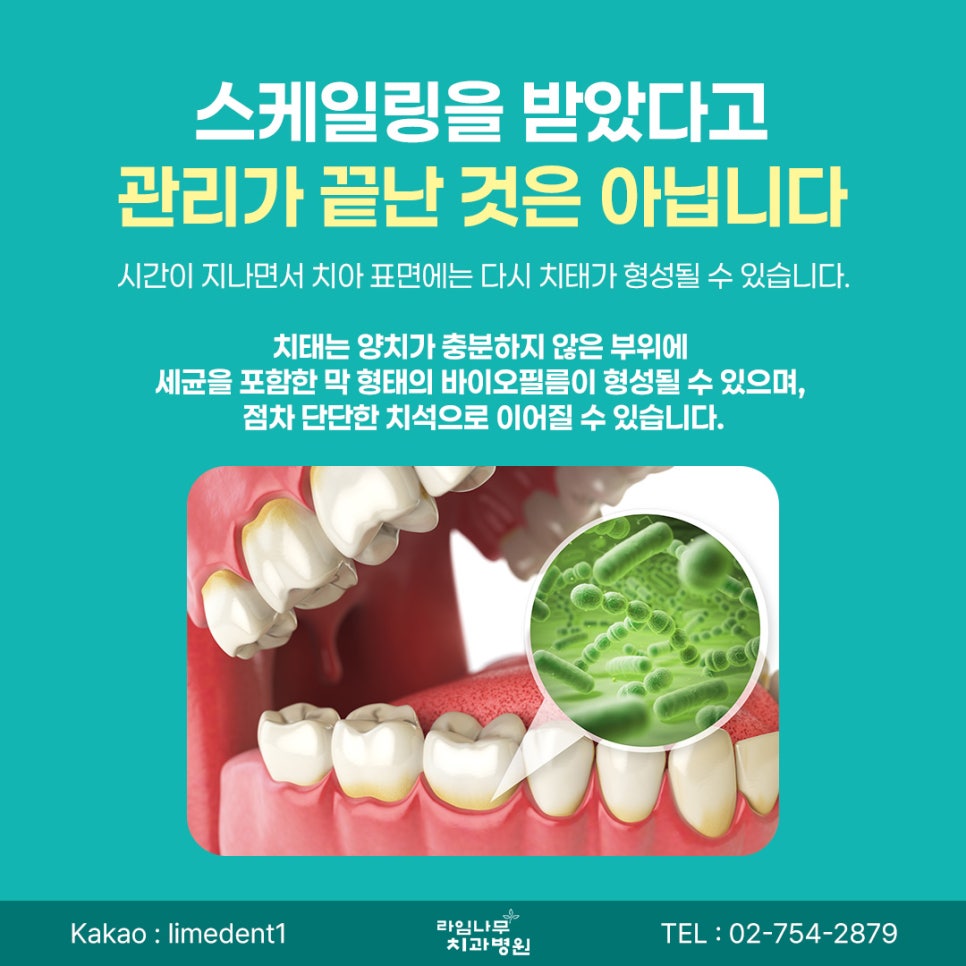
Immediately after scaling,
your teeth are clean because the tartar has been removed,
but over time, plaque may form again
on the tooth surfaces.
Plaque is slightly different from food debris.
In areas that are not brushed sufficiently,
a film-like biofilm containing bacteria
may form,
and if it is not properly managed and remains for a long time,
it may gradually develop into hard tartar.
Areas that are difficult for a toothbrush to reach sufficiently,
such as where the teeth and gums meet,
between the teeth, around orthodontic appliances, and around implants,
require especially careful care.
Therefore, rather than stopping after receiving scaling once,
it is important to brush correctly as part of your daily routine,
use dental floss and interdental brushes,
and receive regular care according to your oral condition.
Consistent care remains important after scaling
Removing tartar through scaling
does not mean that all subsequent care is complete.
Over time, plaque may build up again
on the tooth surfaces,
and biofilm formed by accumulated bacteria
may remain between teeth that are difficult for a toothbrush to reach
or along the gum line.
If this condition continues,
tartar may form again,
so it is advisable to continue regular scaling
along with thorough daily brushing.
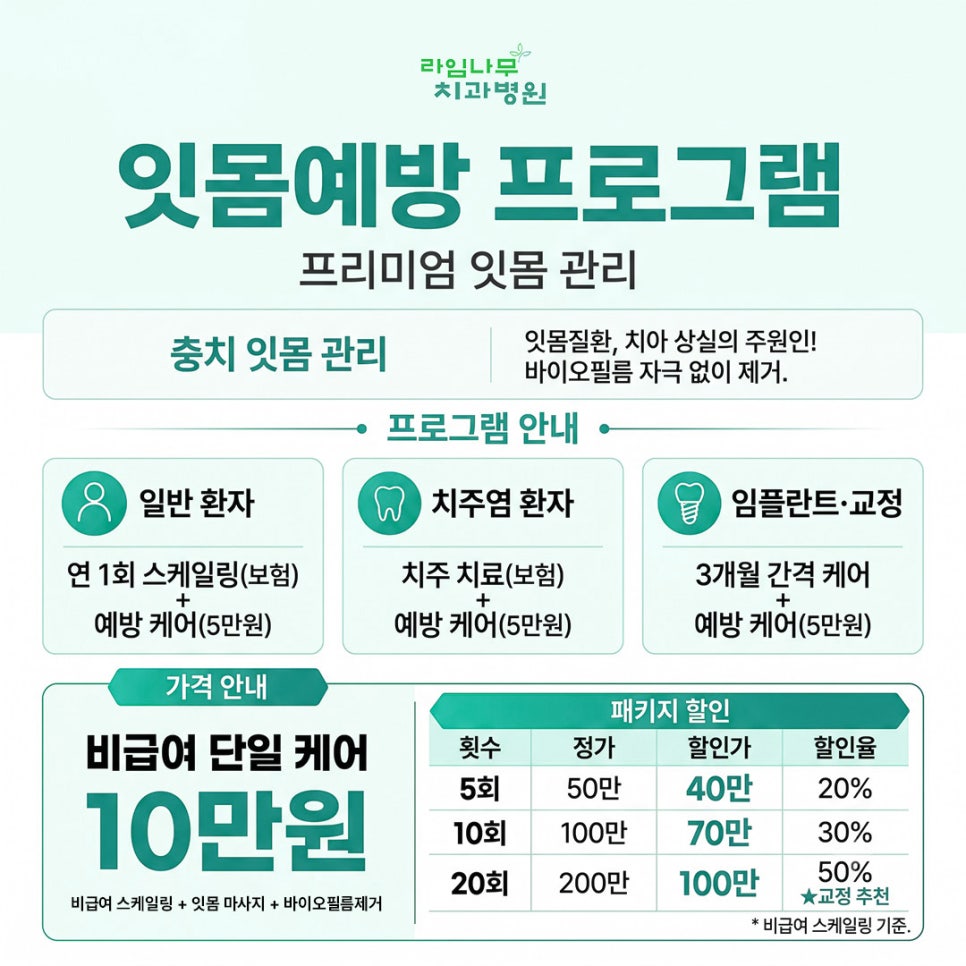
At Lime Tree Dental Hospital,
we operate a gum prevention program
so that patients can continue the care they need
according to their oral condition, including scaling.
For general patients, tartar and biofilm are managed
through regular scaling and preventive care,
while those who need gum treatment
can receive care together with treatment suited to their current condition.
In addition, brushing around implants or orthodontic appliances
can be more difficult than brushing natural teeth,
so regular care may be provided every three months when necessary.
Ultimately, what is important
is not to stop after a single scaling appointment,
but to maintain a care interval suited to your oral condition
so that tartar does not build up excessively again.
What if sensitivity continues for a long time after scaling?

Mild sensitivity after scaling
often gradually decreases over time.
However, if only one particular tooth is especially sensitive,
if you experience pain when chewing,
or if the discomfort continues,
it is best not to simply assume that scaling is the cause
and ignore it.
Similar symptoms may also be caused by
cavities, cracks in the teeth, gum recession, periodontal disease, or other conditions.
Since scaling is a process for removing tartar,
care after the procedure is also important.
At Lime Tree Dental Hospital,
we first check the current condition of your teeth and gums,
then provide guidance on the necessary care methods,
including scaling, and the appropriate intervals.
If sensitivity continues after scaling
or you have been concerned about your gum health,
please have the condition of your gums examined as well,
rather than having only your teeth checked.

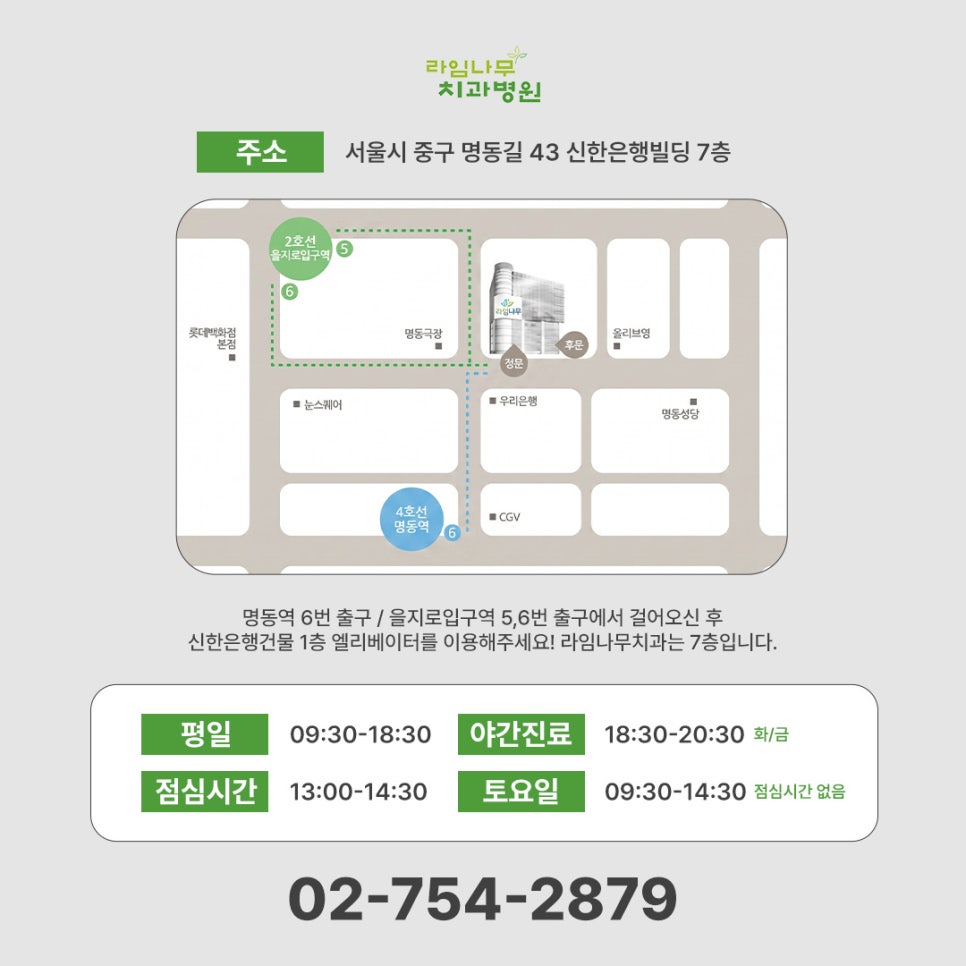
Myeongdong Lime Tree Dental Hospital Information
📍 7th Floor, Shinhan Bank Building, 43 Myeongdong-gil, Jung-gu, Seoul
🚇 Myeongdong Station / Euljiro 1-ga Station, Exit 6
🅿️ Use the parking lot at Hotel Skypark Central Myeongdong
⏰ Clinic Hours
-
Monday, Wednesday, Thursday: 09:30–18:30
-
Tuesday, Friday (evening hours): 09:30–20:30
-
Saturday: 09:30–14:30 (no lunch break)
-
Lunch break: 13:00–14:30
※ Closed on Sundays and public holidays
📞 Phone inquiries: 02-754-2879
💬 KakaoTalk consultation: http://pf.kakao.com/_UQQHZ/chat