Hello, everyone.
This is Dia Dental Clinic in Magok-dong, always cheering on your healthy smile.
�
Looking at how the sunlight has gotten noticeably longer, it seems June has already begun.
2025 has already reached its halfway point.
The seasons are moving toward summer, but Dia Dental Clinic is still focused only on ‘gum health.’^^
In June as well, we will keep working hard for your oral health.
Now, let’s get into today’s dental story!^^
�
In the last post, we explained the [causes of periodontal disease] in detail.
If there are any of you who haven’t seen it yet,
we recommend checking it out first through the link below.
Then, in today’s post,
“My gums seem inflamed, but what exactly do they check at the clinic?”
We’ll take a look at the [periodontal disease diagnostic tests] for those who have been wondering.
�
As periodontal disease progresses, treatment becomes more difficult,
and recovery takes longer, so accurate diagnosis and early response are the most important things.
Whether treatment can end with simple scaling or needs gum surgery is determined right at this ‘diagnostic test’ stage.
If your gums are swollen, bleeding, or your teeth feel loose...
and you’ve been wondering, “Should I go to the clinic about this?” then let’s go through it one by one with Dia Dental Clinic!
What kinds of tests are there for periodontal disease diagnosis?
- 'Visual examination' by looking with the eyes
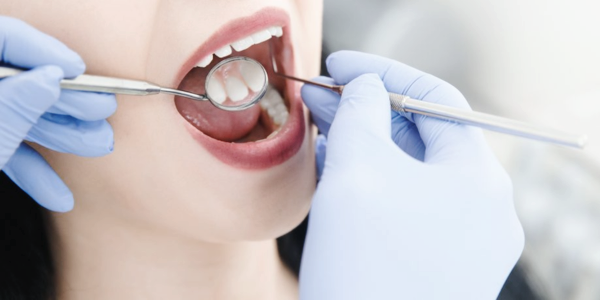
Magok-dong Dental Clinic_Visual Examination
The first thing the dentist does!
They directly check with their eyes whether the gums are swollen, whether there is bleeding, and whether the teeth are loose.
But what can be seen on the outside is really just 'the tip of the iceberg.'
That’s why the following tests are essential.
�
- 'Periodontal pocket probing test' that looks inside the gums
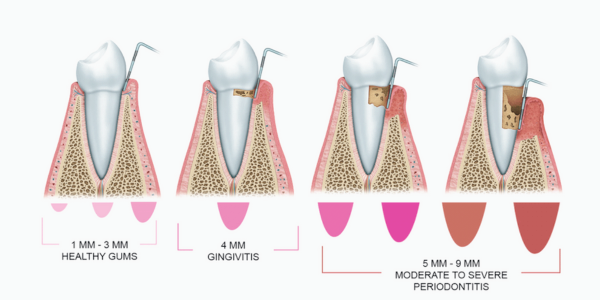
Magok-dong Dental Clinic_Periodontal Probing Test
A periodontal pocket is literally a 'pocket-like gap' formed between the gums and the teeth,
and the deeper this gap is, the stronger the signal that inflammation is progressing.
�
So at the dental clinic, a thin, stick-like tool called a ‘periodontal probe’ is used
to carefully press around each tooth and measure the depth.
The numbers here are quite important.
�
-
1–3 mm: healthy gums! A moist, healthy condition.
-
Around 4 mm: gingivitis, where inflammation appears to have progressed only to the gums, is suspected.
-
If it deepens to 5–9 mm? Ah, this is not just simple inflammation.
There is a high possibility of full-blown periodontitis, and it is time to establish a treatment plan immediately.
- 9 mm or more... to be honest, this may be an advanced stage of periodontitis.
It may become difficult to fully preserve the tooth.
�
- 'Tooth mobility test' for wobbling teeth
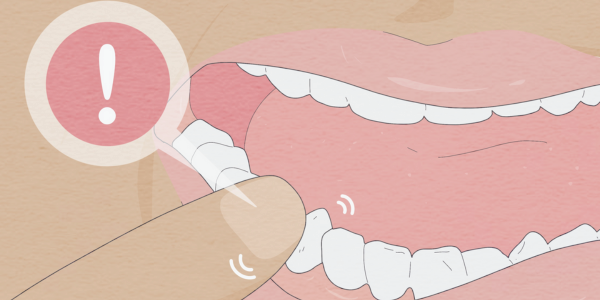
Magok-dong Dental Clinic_Tooth Mobility Test
If a tooth wobbles even when lightly pushed by hand?
It may be a sign that the alveolar bone supporting the gums has weakened significantly.
Like a tree whose roots have become weak.
Through this test, you can see how much support the gums still have.
�
- 'Dental X-ray imaging' to see what cannot be seen
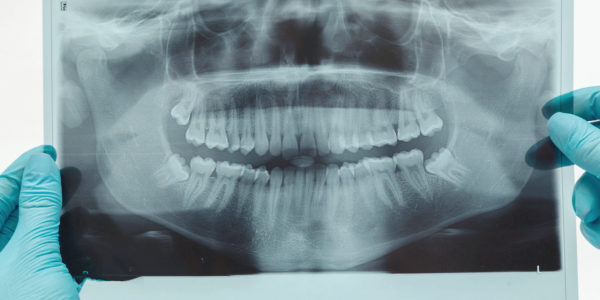
Magok-dong Dental Clinic_X-ray
The problem with early periodontitis is that it is not visible to the eye.
That’s why X-rays are essential.
They accurately show how much the alveolar bone has been lost and how far the inflammation has spread.
Like a map of what’s happening inside the gums, they play a very important role in planning treatment.
�
These four tests are not difficult at all, but they provide very powerful information.
After all, not every case of swollen gums receives the same treatment.
At Dia Dental Clinic near Magok Station, we combine all of these tests to recommend personalized gum treatment that fits you best.
Today’s gum-health summary!
"The key to diagnosing gum health! It’s the depth of the periodontal pocket, tooth mobility, and the condition of the bone seen on X-ray."
-
Periodontal pocket depth of 1–3 mm: healthy gums!
-
4 mm or more: gingivitis or periodontitis suspected; scaling or additional treatment needed!
-
If the tooth is loose: there is a high possibility of gum bone damage!
-
If bone resorption is seen on radiographs: it may already be moderate or more advanced periodontitis.
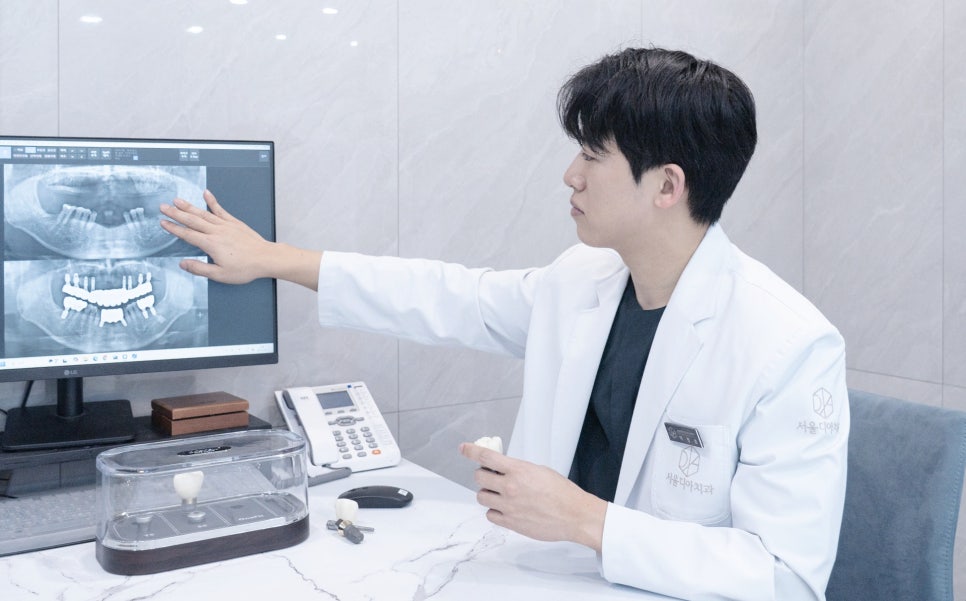
Magok-dong Dental Clinic_Dia Dental Clinic
Dia Dental Clinic near Magok Station provides
a comprehensive diagnosis that includes precise periodontal pocket examination, tooth mobility testing, and radiographic diagnosis,
as well as systematic gum care that helps you use your teeth for a long time.
�
In the next installment, we’ll give you a more in-depth explanation of [periodontal disease treatment methods].
We hope you have a pleasant day today as well, together with healthy gums.
�
[This post was written in accordance with the Medical Service Act for the purpose of providing accurate information about dental surgery and procedures. Infection and side effects may occur after surgery, so surgery (procedure) should be decided after sufficient consultation with a skilled medical professional.]
[ Magok-dong Dia Dental Clinic Periodontal Disease Series ]
-
What is periodontal disease?
-
Causes of periodontal disease
-
Self-diagnosis of periodontal disease
-
Periodontal disease diagnostic tests
-
Periodontal disease treatment
-
Care after periodontal disease treatment
-
Prevention of periodontal disease