Hello.
We are Seoul Dia Dental Clinic,
here to take care of your healthy smile near Magok Station.
Last time, we covered the topic, “What material should a crown be made of?” and walked through everything from zirconia to gold, ceramic, and PFZ.
We explained the characteristics of these premium-sounding prosthetic materials, as well as which type is suitable for which patient.
If you missed it, you can review it at the link below.
But then...
Even after choosing the material well,
didn’t you ever find yourself wondering:
“By the way... how does it get placed?”
“Is it just stuck on somehow? How long does it take?”
“I heard the tooth gets shaved down... won’t it hurt?”
Yes, these are exactly the questions people have about the crown prosthetic treatment process!
We may have a vague idea of it,
but when it is actually our turn, it is natural to get nervous.
So today, Seoul Dia Dental Clinic will explain the entire crown treatment process in an easy, rhythmic way from the patient’s perspective—from the initial diagnosis to the final cementation and finishing bite adjustment.
A small crown placed on a tooth,
shall we follow the delicate process hidden within it?
Crown prosthetic treatment is carried out like this
Step 1. Diagnosis and treatment plan
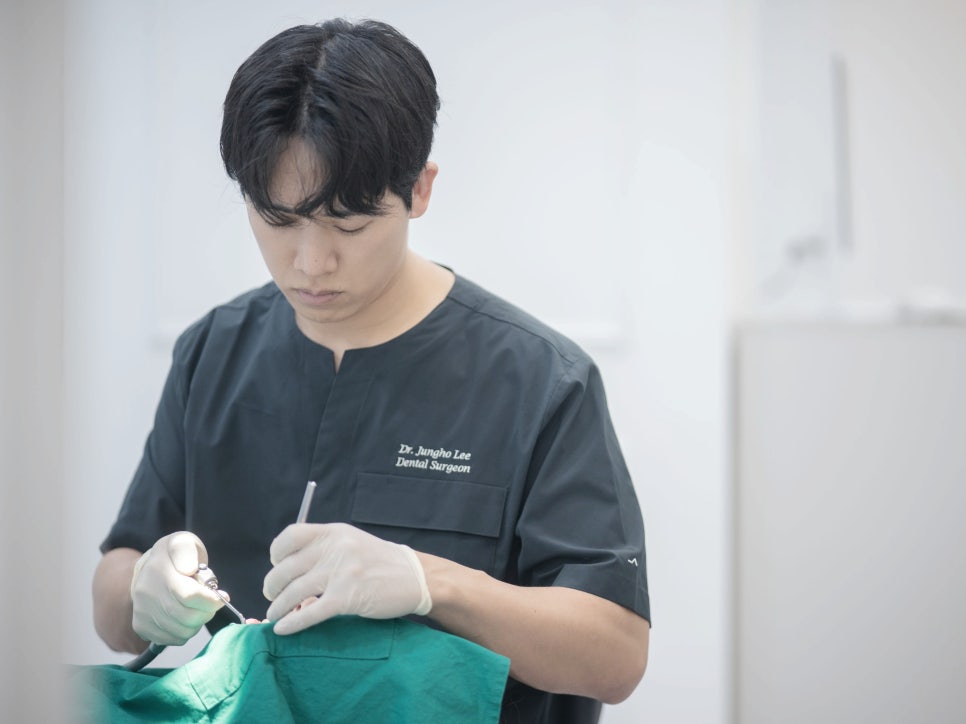
Maggok Station Dental Clinic_Oral examination
Treatment is already half done once you get off to a good start.
First, the condition of the tooth must be checked accurately.
Not only do we examine it visually,
but if necessary, we also use X-rays to carefully check the root condition, how much tooth structure remains, the direction of biting, and whether root canal treatment has been done.
Based on this information, we decide which material is best and establish a treatment plan, including how much tooth structure needs to be removed.
In other words, this is the stage where we draw up the blueprint for crown treatment.
Step 2. Local anesthesia
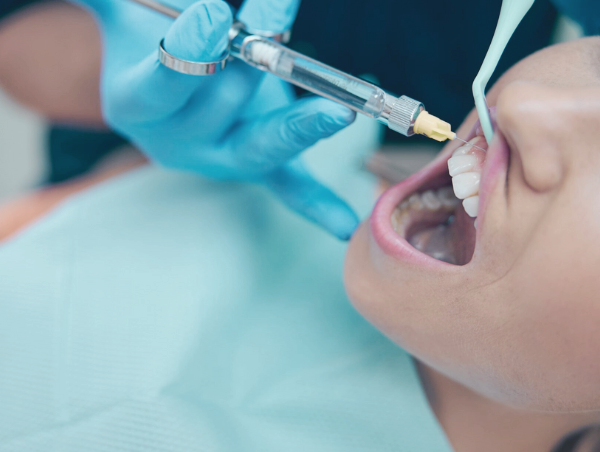
Maggok Station Dental Clinic_Local anesthesia
Now the real work begins.
Because the tooth needs to be reshaped,
we first make the area comfortable with local anesthesia.
The anesthesia works quickly,
and after a certain amount of time, it naturally wears off,
so there is no need to worry too much.
Step 3. Tooth reduction and shaping
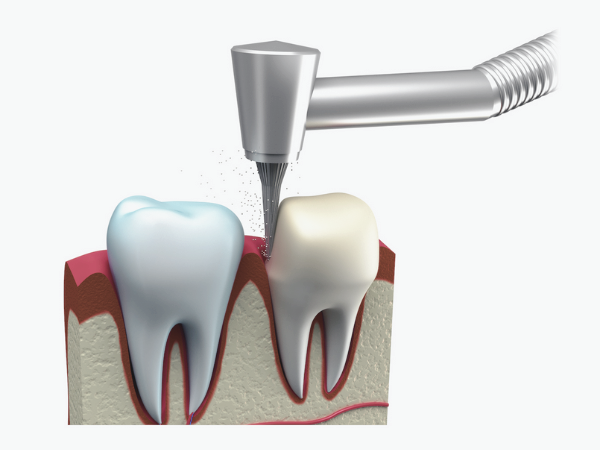
Maggok Station Dental Clinic_Tooth reduction
Now we begin in earnest: any broken or decayed areas are thoroughly removed,
and the tooth surface is prepared so the prosthetic can sit securely.
At this point, the process differs depending on whether root canal treatment has been performed.
If root canal treatment was not done, we move straight to shaping and taking impressions.
If root canal treatment was done, the inner structure is reinforced,
a post called a “core” is placed, and then the tooth is shaped.
This stage is, quite literally,
the key point that determines whether the crown fits well and lasts a long time.
Step 4. Impression taking & temporary crown placement
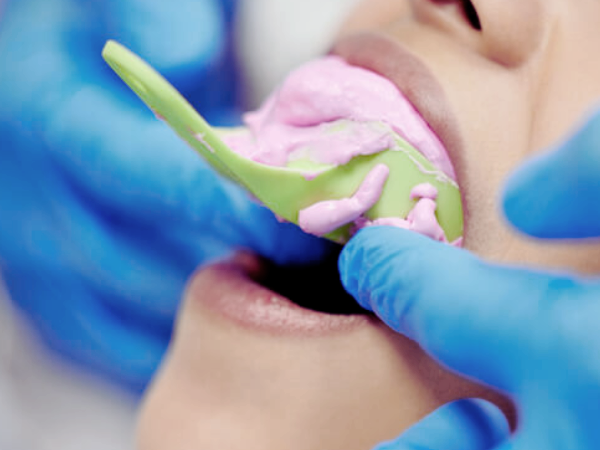
Maggok Station Dental Clinic_Impression taking
Once the tooth has been shaped, we need to take an impression.
This is called impression taking.
It is a very important process for creating a prosthetic that fits precisely, because it captures the exact shape of the remaining tooth.
The fabrication period is about one week.
During that time, we place a customized temporary crown so the tooth is not left exposed.
It is not just for appearance!
It also protects the tooth, helps maintain the gums, and prevents awkwardness when speaking.
A small temporary crown, but one with many important roles.
However, if the temporary crown comes off, you should not leave it off thinking, “Well, it’s only a few days, so it should be fine~”
If you do, the final prosthetic may not fit properly, so it must be reattached.
Step 5. Prosthesis trial fit & final cementation
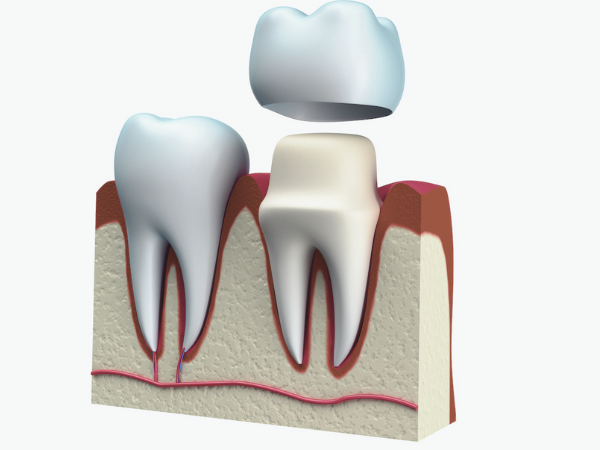
Maggok Station Dental Clinic_Prosthesis placement
At last, your custom-made crown has arrived.
At first, it is lightly attached with temporary cement and used for a few days,
and we check whether it feels uncomfortable or whether biting feels awkward.
“It seems a little high.”
“It feels slightly bothersome when I chew.”
This kind of feedback is very important!
Once the bite adjustment is finished and everything is completely OK, we firmly cement the crown in place with a strong permanent adhesive.
Now it truly functions like your own tooth.
Step 6. Bite adjustment & finishing
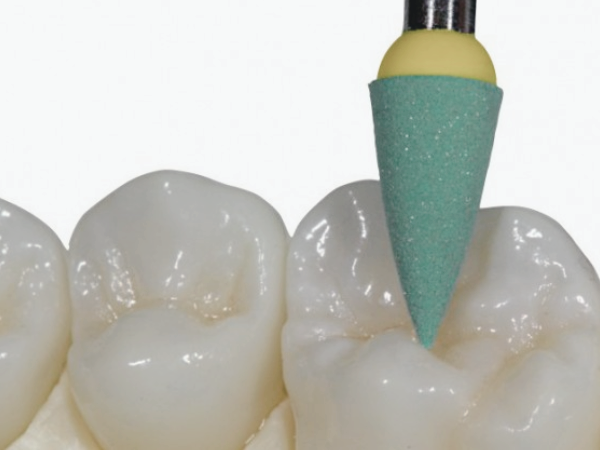
Maggok-dong Dental Clinic_Bite adjustment
The upper and lower teeth need to fit together properly so you can chew well and keep the jaw joint comfortable.
If one side is touching too much,
or if it feels uncomfortable when chewing, we carefully adjust the bite by grinding it down precisely.
Through this process, we balance the force placed on the teeth
and help prevent unnecessary wear or re-damage.
Here is a quick summary of the key points in the crown prosthetic treatment process.
-
Diagnosis and treatment plan
-
Local anesthesia for the treatment area
-
Tooth reduction and shaping
-
Impression taking and temporary crown placement
-
Final prosthesis cementation
-
Bite adjustment and finishing
Crown treatment is not simply something that is “quickly” placed on a tooth.
From pre-treatment diagnosis to material selection, impression taking, cementation, and bite adjustment,
it is a complex treatment that requires precise planning and careful hands at every step.

Maggok-dong Dental Clinic_Dia Dental Clinic
As a clinic that understands the difference made by details, Seoul Dia Dental Clinic promises treatment that takes responsibility from start to finish once treatment begins.
With accurate diagnosis, precise prosthetic fabrication and cementation,
and follow-up care after treatment,
Seoul Dia Dental Clinic provides more than just a simple treatment from beginning to end—it provides care you can trust.
If you are considering crown treatment near Magok Station,
start calmly and confidently with Seoul Dia Dental Clinic.
[ This post has been written in accordance with the Medical Service Act for the purpose of providing accurate information about dental surgery and procedures. Infection and side effects may occur after surgery, so you should decide on the surgery (procedure) only after sufficient consultation with skilled medical professionals. ]
[ Magok-dong Dia Dental Clinic Crown Prosthetic Series ]
-
Crown prosthetic indications
-
Crown prosthetic materials and costs
-
Crown prosthetic treatment process
-
Pain after crown treatment
-
Crown prosthesis dislodgement
-
Precautions after crown prosthetic treatment