Hello!
We are Seoul Dia Dental Clinic, practicing precise and honest prosthetic treatment in Magok, Seoul.
Crown treatment is often commonly called “putting on a cap.”
Even after the treatment is completed successfully...
“Hmm... but why does it still feel sensitive?”
“It’s fine when I chew, but why does it throb when I drink cold water?”
Surprisingly, many people feel uneasy about this.
If you were previously wondering,
“What is the process of crown treatment?”
you may want to quickly review the post below first.
Now, let’s move on to the next story in earnest!
This is a story about why discomfort can still remain even after treatment is over.
It’s not simply because “a crown was placed.”
There can be various reasons hidden beneath the surface.
So today, Seoul Dia Dental Clinic near Magok Station will
explain the 8 causes of pain after crown treatment in an easy and accurate way.
Now, follow along slowly from here.
8 reasons pain occurs after crown treatment
- Temporary irritation caused by tooth reduction
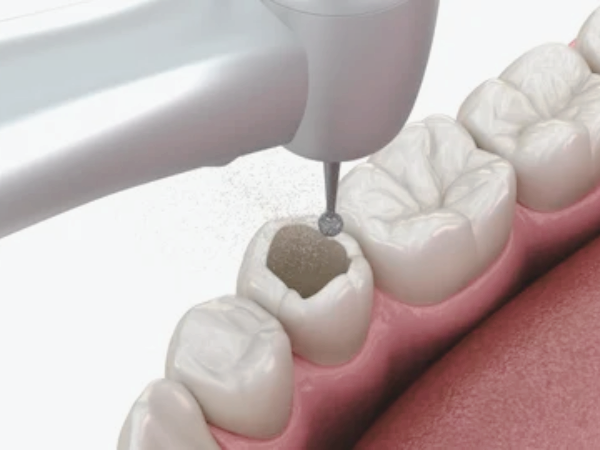
Magok Station Dental Clinic_Tooth reduction
To place a crown, the tooth must be slightly reshaped.
At this time, physical stimulation occurs,
which can leave the tooth in a sensitive state.
“Don’t touch me~ I’m still sensitive~”
That is simply the signal the tooth is sending.
If it feels sensitive when chewing, or hurts when exposed to cold water,
in most cases it will recover naturally within 1–2 weeks, so please observe the progress.
- Reaction to the adhesive ingredients
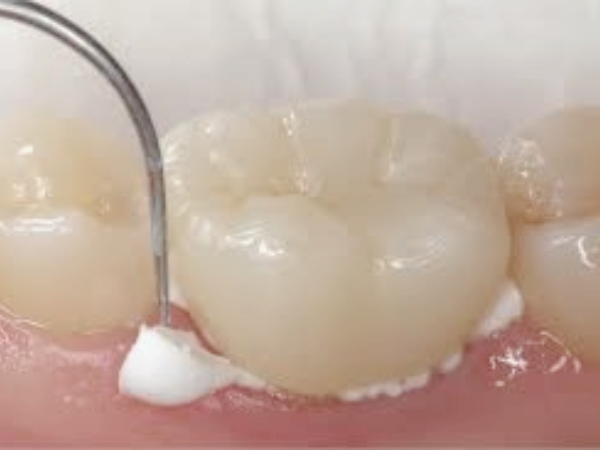
Magok Station Dental Clinic_Crown adhesive
The special adhesive used to bond a crown
is a valuable material that helps it stick firmly to the tooth.
But in some cases, the tooth or gums may react sensitively to the chemical ingredients.
You may feel a slight tingle or sensitivity,
but this is usually a reaction that goes away as the body adjusts,
so there is no need to worry too much.
- Thermal conductivity of metal materials
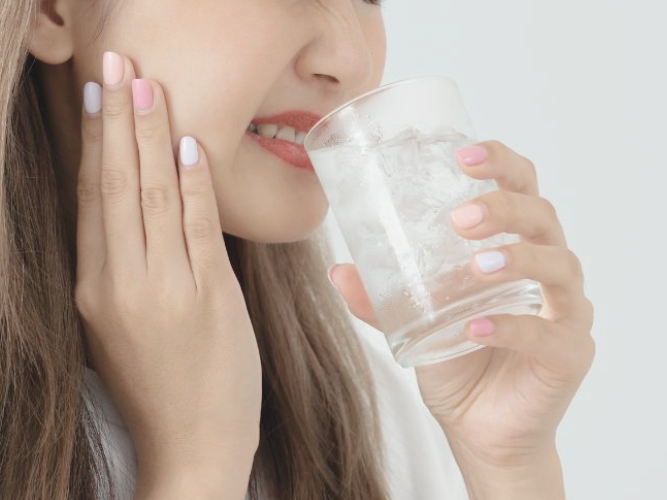
Magok Station Dental Clinic_Sensitive teeth
Gold or metal crowns have the ability(?) to make hot things feel hotter
and cold things feel colder.
In other words, because they conduct heat well, even a glass of cold water can suddenly make your tooth feel sensitive.
This is not a problem in itself, but you should definitely know about this characteristic before choosing the material.
- Proximity to the pulp tissue (nerve)
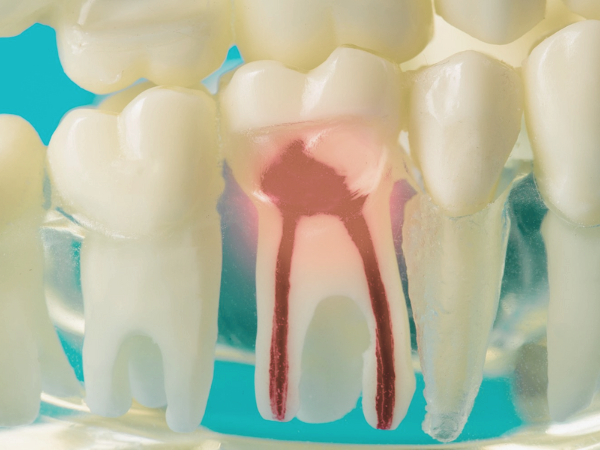
Magok Station Dental Clinic_Pulp irritation
Even if the nerve was not directly touched,
if treatment is performed very close to it,
the pulp tissue may react sensitively.
In such cases, discomfort may occur when chewing,
or you may feel a sensitivity-like sensation.
Usually, the tooth is monitored over time and the goal is to preserve the nerve,
but if the pain continues, root canal treatment may be necessary.
- When root canal treatment was not completely successful
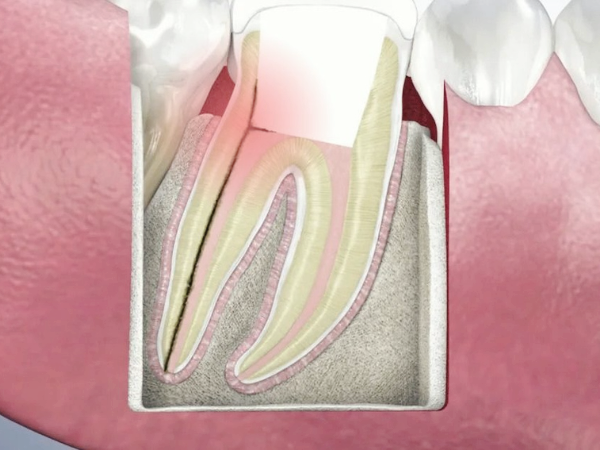
Magok Station Dental Clinic_Recurrence of inflammation after root canal treatment
“I already had root canal treatment... so why does it hurt again?”
In such cases, there may have been remaining inflammation inside the root canal
or missed tiny hidden pathways (accessory canals).
In that case, retreatment is needed,
and unfortunately, the existing crown may have to be removed again.
- Invisible microscopic cracks
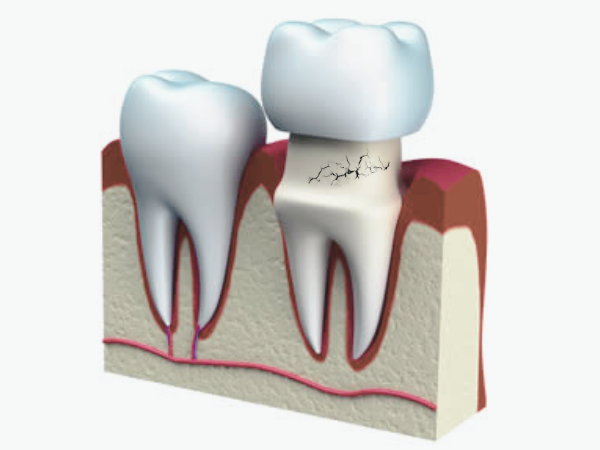
Magok Station Dental Clinic_Cracks inside the tooth
If there is a very small crack in the tooth,
it may look fine on the outside but still hurt when chewing.
If the crack spreads further inward while the crown is being placed...
then the problem can become more serious.
In severe cases, if the crack extends down to the root,
extraction and conversion to an implant may be necessary.
- A gap between the crown and the tooth
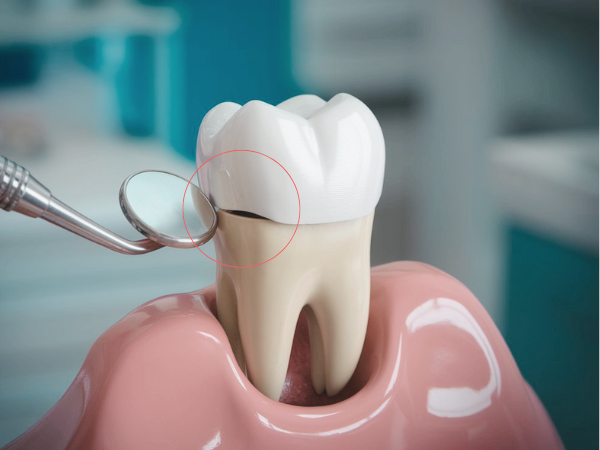
Magok Station Dental Clinic_Gap between restoration and tooth
Even if it seems perfectly bonded, a very small gap can form
between the crown and the tooth.
Food debris and bacteria can slip into that gap,
leading to secondary decay and pain.
In particular, older restorations may have weakened adhesion,
which can widen these gaps, so regular checkups for early detection are the most sensible approach.
- When the bite height does not match
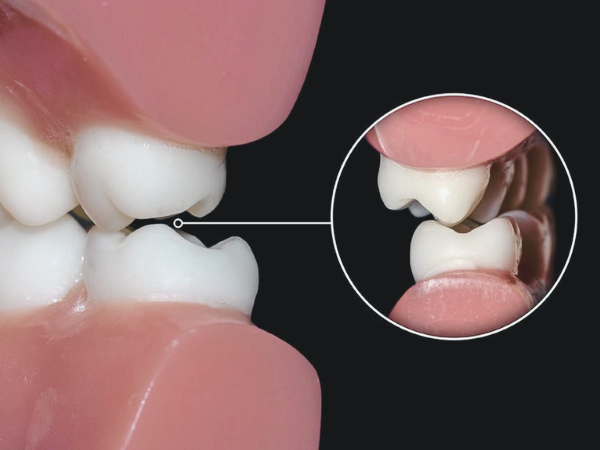
Magok Station Dental Clinic_Misaligned bite
The upper and lower teeth need to fit together properly
for chewing to be comfortable and for the jaw to avoid strain.
But if one side touches too high or is misaligned, even if the tooth itself is fine,
it can cause muscle tension around the jaw and even headaches.
If something feels awkward or chewing keeps feeling off,
this can often be resolved with bite adjustment!
Let’s summarize the 8 causes of pain after crown treatment.
-
Irritation caused during tooth reduction
-
Hypersensitivity reaction to adhesive ingredients
-
Thermal conductivity of metal restorations
-
Excessive proximity to nerve tissue
-
Incomplete root canal treatment or recurrence of inflammation
-
Microscopic cracks in the tooth
-
Secondary infection through a gap at the restoration margin
-
Bite imbalance
Fortunately, most crown pain is a temporary adjustment response that occurs while the tooth is getting used to the new restoration.
So in many cases, it passes within 1–2 weeks with thoughts like, “Oh, it’s fine.”
However,
- If the sensitivity lasts more than 2 weeks
- If discomfort when chewing and sensitivity gradually worsen
- If the gums swell or it feels like there is pus
- If sharp pain occurs frequently enough to interfere with daily life
If you notice these signs, please do not ignore them
and make sure to visit the dental clinic right away for a checkup.
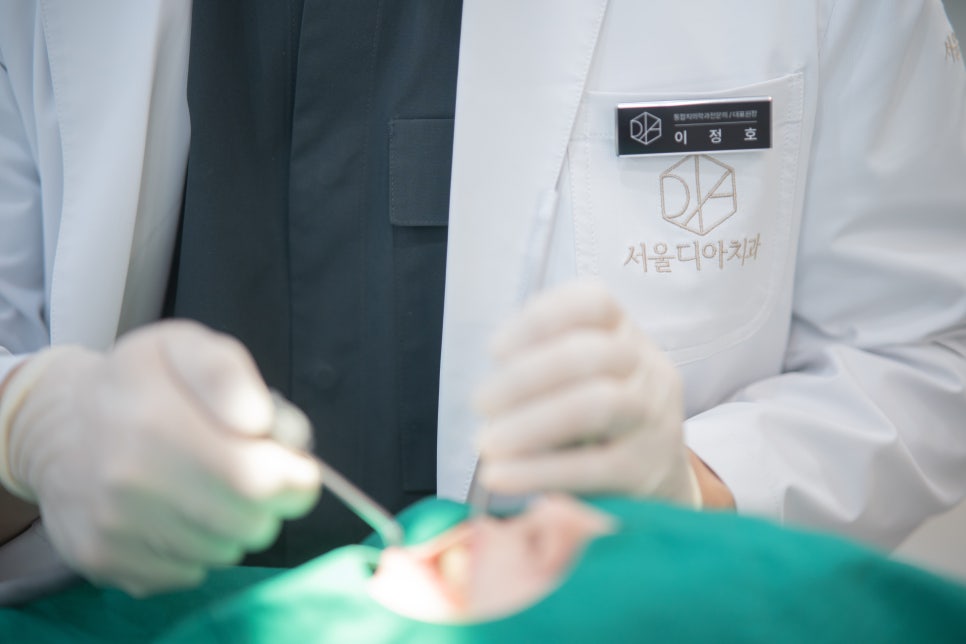
Magok Station Dental Clinic_Dia Dental Clinic
At Seoul Dia Dental Clinic near Magok Station, we analyze the condition and adaptability of the tooth before treatment and explain in advance the possible reactions of each material.
In addition, we carefully carry out every step according to established standards, from precise root canal treatment and adhesive management to prosthetic placement with bite adjustment completed!!
Seoul Dia Dental Clinic near Magok Station will always be with you, from the “beginning” of the restoration to its “maintenance,” with the same consistent care.
[ This post was written in accordance with the Medical Service Act for the purpose of providing accurate information about dental surgery and procedures. Because infection and side effects may occur after surgery, you should decide on surgery (or a procedure) only after sufficient consultation with a skilled medical team. ]
[ Magok-dong Dia Dental Clinic Crown Restoration Series ]
-
Crown restoration indications
-
Crown restoration materials and cost
-
Crown restoration treatment process
-
Pain after crown treatment
-
Crown restoration detachment
-
Precautions after crown restoration treatment