Hello,
We are Seoul Dia Dental Clinic in Magok-dong, building a strong foundation from the basics!!
Last time, we explained why bone grafting is needed and in which cases it should be done.
If you haven’t seen it yet, please check the link below for [cases where bone grafting is needed during implant treatment].
Implants are, quite literally, a treatment that places an artificial tooth into the area where a tooth has been lost.
But if the ground where it is placed — that is, the jawbone — is weak or insufficient,
it will be difficult for the implant to settle firmly.
That is why the treatment that strengthens that area is
“bone grafting,” and the material used at this time is called a “bone graft material.”
To put it more simply,
just as you cannot build a house on land where a solid foundation has collapsed,
implants are also unstable when the jawbone is weak!
So you need a material that supplements the missing bone.
However, not all bone graft materials are the same.
There are several types, and depending on the material,
the appearance, role, and absorption speed are all different.
Broadly speaking, they can be divided into four types: your own bone, someone else’s bone, animal bone, and lab-made bone (!).
The choice of bone graft material is made by taking into comprehensive consideration the patient’s jawbone condition,
health status, and the scope of surgery.
So today, we’ll introduce the [4 representative types of implant bone graft materials] actually used in dentistry,
explaining what features each one has in a way that isn’t confusing! not difficult! and above all, trustworthy!
Let’s take a look at them one by one with Seoul Dia Dental Clinic.
The 4 Types of Implant Bone Graft Materials
- Autograft (Autograft)
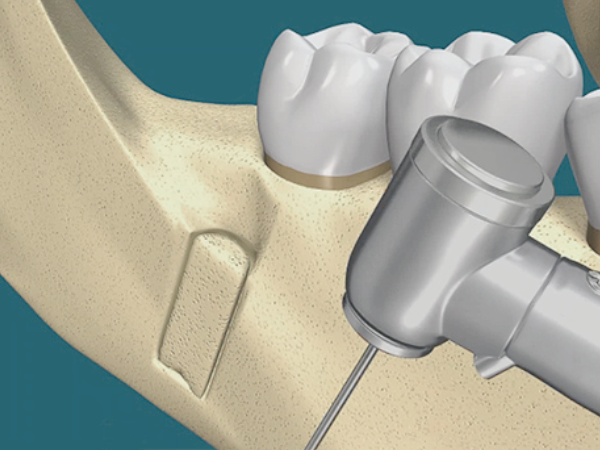
Magok-dong Dental Clinic_Autograft
The most ideal and safest bone graft material.
This method uses bone harvested from the patient’s own jawbone or pelvic bone, and because the material comes from one’s own body,
it has the advantage of no immune rejection reaction and a faster bone regeneration speed.
However, because an additional harvest site is needed,
the surgical scope becomes wider and pain may increase somewhat.
- Allograft (Allograft)
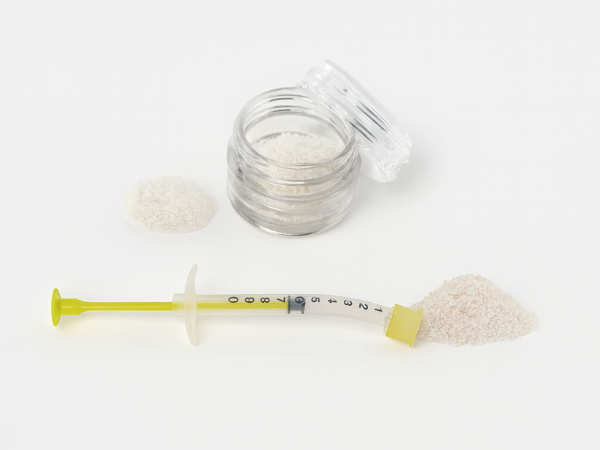
Magok-dong Dental Clinic_Allograft
This is a method in which human bone from a donor, either domestically or overseas,
is sterilized and processed for use as a graft material.
Since there is no need to expand the surgical site,
it clearly reduces the burden on the patient.
However, there is a rare possibility of an immune reaction.
- Xenograft (Xenograft)
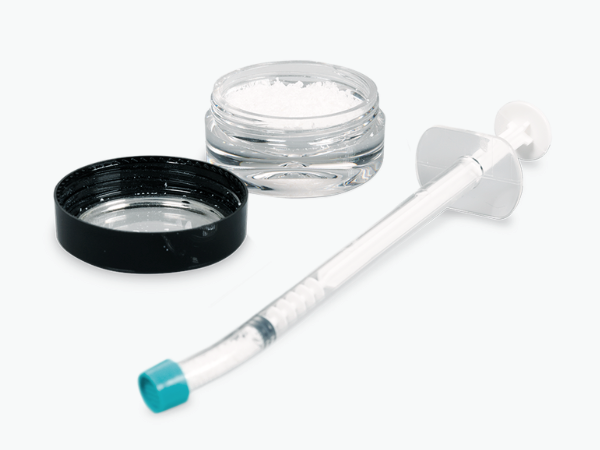
Magok-dong Dental Clinic_Xenograft
A graft material extracted from “animal bone.”
It is mainly made by removing proteins, etc. from bones of cows, pigs, and similar sources,
and then sterilizing them.
It has excellent biocompatibility and is structurally
similar to human bone, creating a favorable environment for bone formation.
However, you should keep in mind that it takes a long time for it to be completely replaced by your own bone.
- Synthetic Bone (Synthetic Bone)
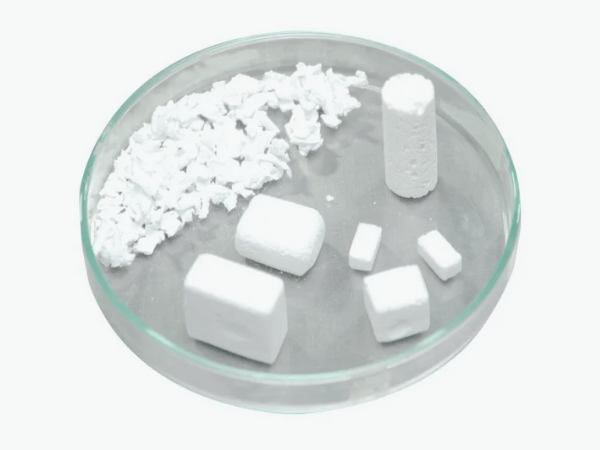
Magok-dong Dental Clinic_Synthetic Bone
As the name suggests, this is a synthetically manufactured graft material.
It uses ingredients such as hydroxyapatite and β-TCP (tricalcium phosphate)
to create a bone structure similar to that of the human body.
Because it has the advantages of a low risk of infection and mass production,
it is used in many dental clinics.
However, since it does not engraft as quickly as autograft,
the choice varies depending on the patient’s condition.
So which bone graft material is the best?
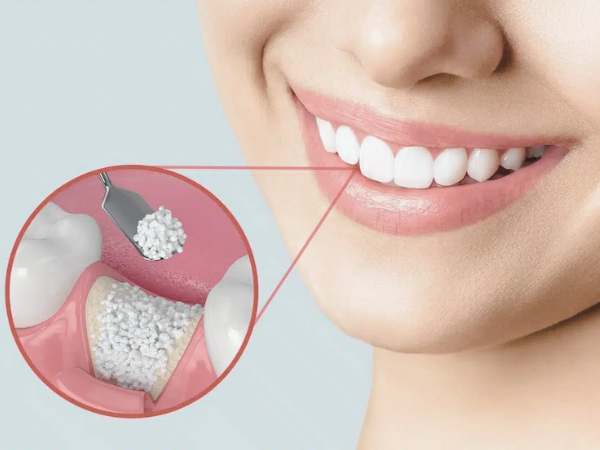
Magok-dong Dental Clinic_Choosing Bone Graft Material
The answer is... “It depends on the situation!”
If bone loss is not severe, synthetic bone or xenograft may be sufficient,
and if rapid recovery is important or the amount of bone grafting is large, autograft may be advantageous.
In older patients or those with underlying medical conditions, allograft, which can reduce the surgical scope, may also be suitable.
In other words, depending on the patient’s oral condition, overall health,
and implant plan, the dental clinic will combine and use the appropriate graft material.
What is most important when choosing a bone graft material?
Above all, it is an accurate diagnosis and the judgment of experienced medical staff.
At Seoul Dia Dental Clinic, we carefully check the current jawbone condition through CT scans and bone density analysis,
and then select the safest and most effective bone graft material customized for you.
To briefly summarize the bone graft materials we learned about today!
-
Autograft: Uses my own bone, so it is safe and has a fast regeneration speed
-
Allograft: Human bone from a donor is sterilized and processed for use as a graft material
-
Xenograft: Material extracted from cow or pig bone
-
Synthetic bone: Artificial bone made in a laboratory
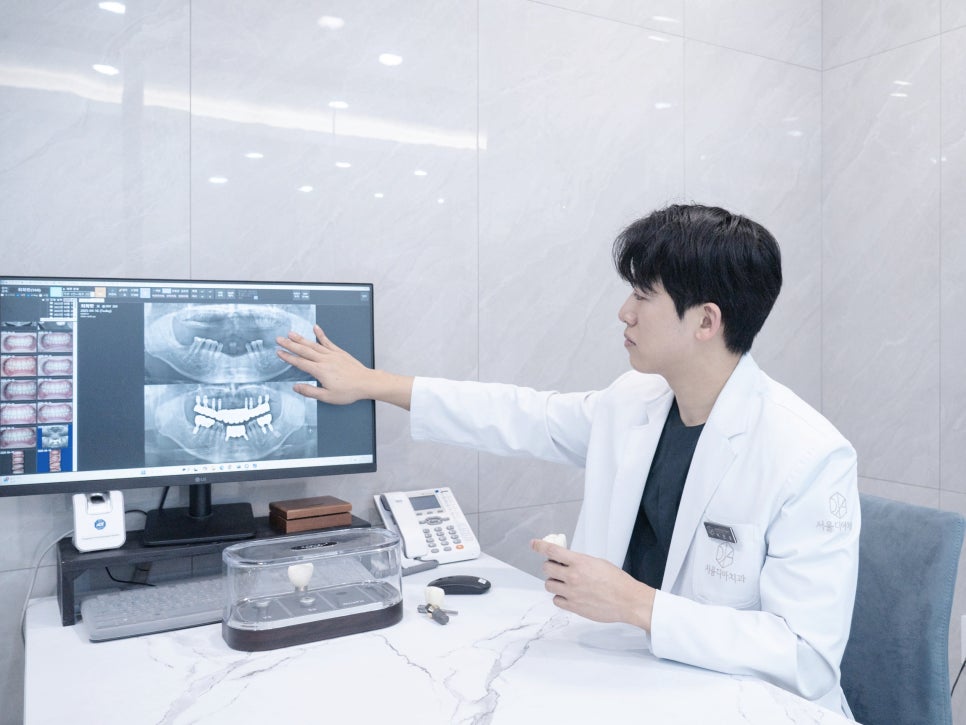
Magok-dong Dia Dental Clinic
The key to implant success is bone!
And the “right choice” of the material used to make that bone is also important.
If you are wondering which bone graft material is right for you,
please get an accurate diagnosis and consultation at Seoul Dia Dental Clinic near Magok Station!
We’ll help you build from the bone up, and support you through to a solid result.
Next time, we’ll prepare another post on “the process of bone grafting during implant treatment”
with only the most useful information, so if you’re curious, please visit Dia Dental Clinic’s blog again tomorrow!
[ This post was written in accordance with the Medical Service Act for the purpose of providing correct information about dental surgery and procedures. Infection and side effects may occur after surgery, so you should decide on surgery (procedure) after consulting sufficiently with skilled medical staff. ]
[ Magok-dong Dia Dental Clinic Implant Bone Grafting Series ]
-
Indications for implant bone grafting
-
Types of bone graft materials
-
Bone grafting process
-
Bone graft cost
-
Precautions after bone grafting