Hello,
Built on a solid foundation! This is Seoul Dia Dental Clinic in Magok-dong.
It’s vacation season, but looking at the weather forecast, it seems like rain is popping up here and there.
That may be a little disappointing for those who were hoping for clear skies and a cool breeze,
but rainy days have their own atmosphere, too.
We hope you have a fulfilling vacation—enjoy something delicious, rest well, and quietly take care of any health matters you’ve been putting off.
Today, Seoul Dia Dental Clinic has prepared another easy-to-understand story for your oral health.
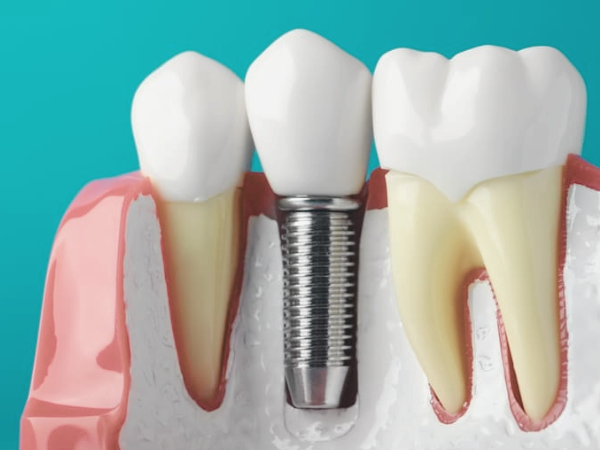
Magok-dong Dental Clinic_ Implant-type artificial tooth implant
Implants need to be placed on strong jawbone to last a long time.
But if a missing tooth is left untreated for too long…
just like a potted plant whose roots are exposed because there isn’t enough soil,
the jawbone gradually melts away (is resorbed) and becomes thinner.
If an implant is placed as-is in this condition, it cannot be inserted deeply,
which reduces stability and can make it easily shake when chewing.
That is why the process of supplementing the 부족한 bone, that is, ‘bone grafting,’ is needed.
So what exactly does this bone grafting process involve?
From here, we’ll explain it one step at a time, simply and clearly.
Bone graft implants are performed like this!
Step 1 – Detailed check of the jawbone condition
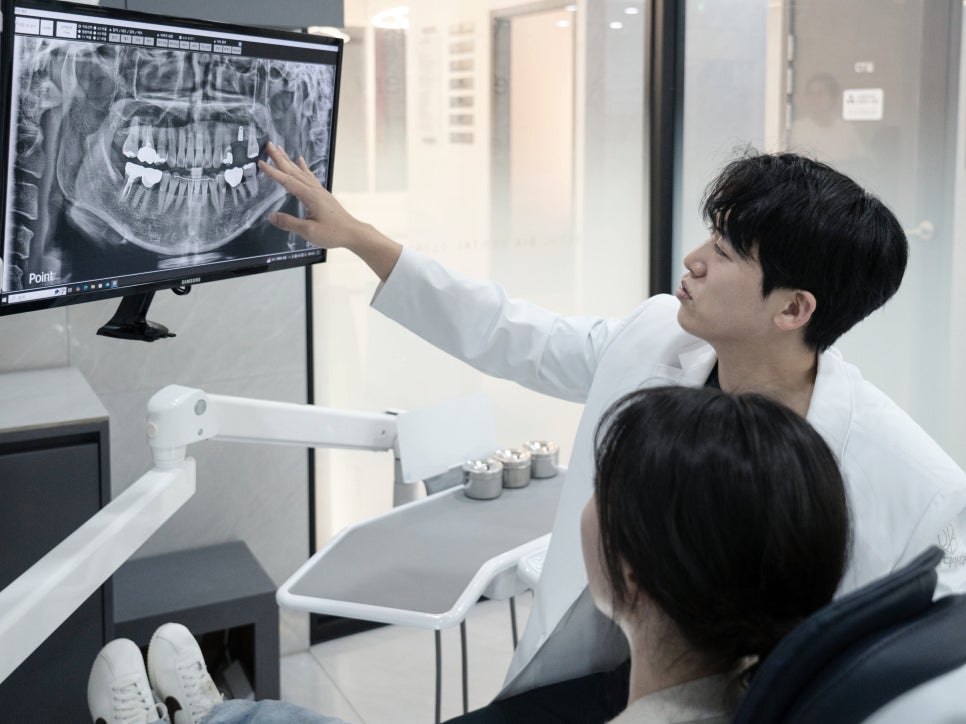
Magok-dong Dental Clinic_Diagnosis after examination
First, an X-ray, CT scan, and bone density test are performed.
These tests allow us to accurately check the height, width, and density of the bone.
In general, if the width is 8–10 mm or more,
and the height is 12–15 mm or more, the procedure can be performed without grafting.
If it is below that, bone grafting is needed.
What matters here is not only the amount, but also the quality.
Even bone that is not very strong may need reinforcement even if it has sufficient height.
Step 2 – Graft slightly more than the deficient area
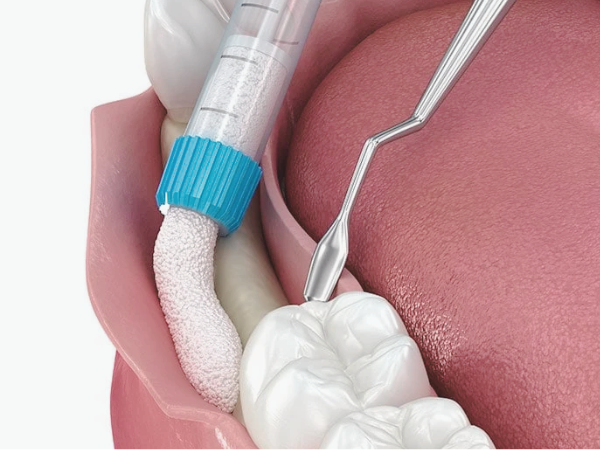
Magok-dong Dental Clinic_Bone grafting
Bone graft materials are partially resorbed over time.
If only the exact amount needed is placed, it may become insufficient again after absorption.
That is why, for stable results, about 10–20% extra is grafted.
Putting in more is not always better.
Excessive grafting can place a burden on the surrounding tissues,
so the key is to have the procedure performed by experienced medical staff who can calculate the appropriate amount.
Step 3 – Decide when to place the implant
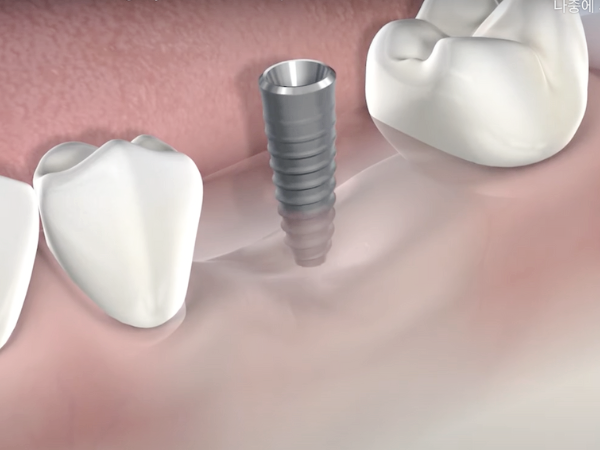
Magok-dong Dental Clinic_Implant placement after bone grafting
Bone graft implants are not done the same way for everyone.
If the bone loss is not severe, the bone graft and implant can be performed at the same time,
so the surgery is completed in one session and recovery is faster.
However, if the gum condition is poor, the chance of failure increases.
So when there is a significant lack of bone, it is safer to divide the process into stages.
First, bone grafting is performed, and after waiting about 4–6 months
for the bone to become firmly established, the implant is placed afterward.
Depending on the case, this period may take about a year.
Also, for those with chronic conditions such as diabetes or high blood pressure,
the choice of graft material and the surgical plan must be examined even more carefully.
Step 4 – Choose the bone graft material
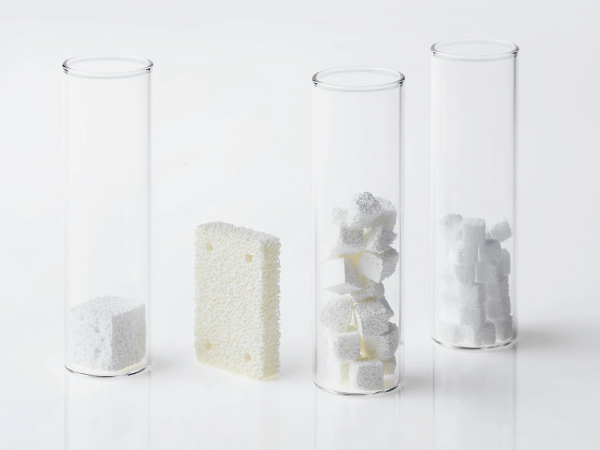
Bongcheon Station Dental Clinic_Choosing bone graft material
At Seoul Dia Dental Clinic in Magok-dong, we select graft materials by considering the patient’s overall health,
the degree of bone loss, and the speed of recovery.
The types of bone graft materials are as follows,
and depending on the need, two or more types may be mixed.
Autograft – Uses the patient’s own bone, no rejection reaction, fast regeneration
Allograft – Sterilized donor bone, minimizes surgical extent
Xenograft – Derived from cow or pig bone, excellent structural stability
Alloplast – Artificially synthesized, low infection risk and capable of mass supply
Step 5 – Prosthetic attachment
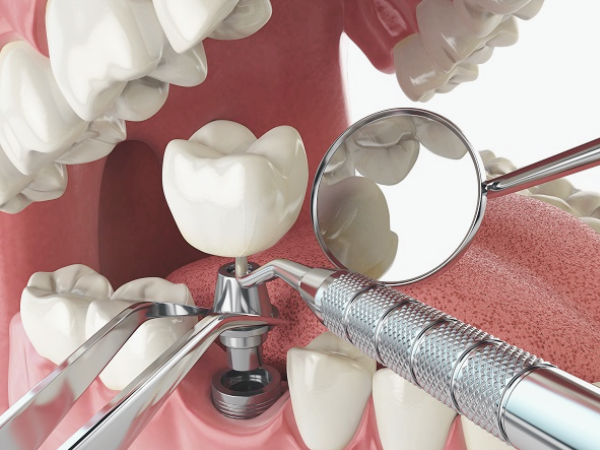
Bongcheon Station Dental Clinic_Prosthetic attachment
Once the bone graft has settled and the implant has osseointegrated,
the final step is attaching the prosthesis (artificial tooth).
At this stage, occlusal adjustment is essential.
If chewing force is concentrated on one side, it can place strain on the prosthesis and the bone.
Seoul Dia Dental Clinic provides custom-made prostheses through 3D scanners and digital occlusion analysis,
so you can enjoy stable chewing force.
Let’s summarize the bone graft implant process
-
Detailed check of the jawbone condition
-
Graft slightly more than the deficient area
-
Decide when to place the implant
-
Choose the bone graft material
-
Prosthetic attachment
Three things are absolutely necessary to do bone graft implants well.
First, accurately check the condition with CT and a bone density test.
Second, graft the bone at exactly the right amount—not too little and not too much.
Third, make a plan that suits the patient’s situation.
Magok-dong Dental Clinic_Dia Dental Clinic
At Seoul Dia Dental Clinic in Magok-dong,
we make accurate diagnoses through precise examinations,
and select the bone material that best suits each patient from a variety of options.
With extensive procedural experience, we promise safe and sturdy results.
A lack of jawbone does not mean you cannot get an implant.
With proper diagnosis and step-by-step preparation, it is fully possible.
In the next post, we’ll tell you about the ‘cost of bone grafting.’
With Seoul Dia Dental Clinic in Magok-dong,
you can complete your implant treatment with a solid foundation and a reassuring result.
We hope you prepare for a healthy smile today, and please feel free to contact us anytime to book your regular checkup.
[ This post was written in accordance with the Medical Service Act to provide accurate information about dental surgeries and procedures. Infection and side effects may occur after surgery, so you should decide on surgery (or treatment) after sufficient consultation with skilled medical staff. ]
[ Magok-dong Dia Dental Clinic Implant Bone Graft Series ]
-
Indications for implant bone grafting
-
Types of bone graft materials
-
Bone graft procedure
-
Cost of bone grafting
-
Precautions after bone grafting