Hello!
At Magok Station Seoul DiA Dental Clinic, we hope your smile shines as brightly as the higher autumn sky.
The weather has really turned pleasantly cool these days, hasn’t it?
Thanks to the breeze that blows in the mornings and evenings, it’s so heartwarming to see children gathering in parks and playgrounds to play together.
When I see scenes like that,
I feel warm inside, thinking, “Ah~ the seasons are changing.”
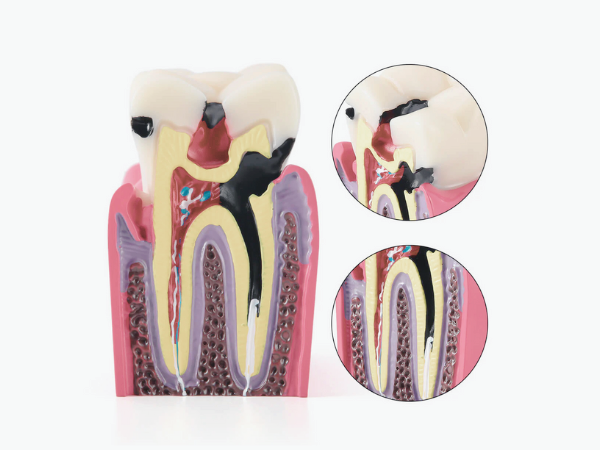
Maggok Station Dental Clinic_Cavities
Our dental health, like the seasons, is always going through changes.
But cavities do not care whether it is spring, summer, fall, or winter,
and they quietly show up to cause us trouble.
Especially with early cavities, many people think,
“Hmm, it feels a little sensitive?
What’s the big deal~” and leave it alone,
only to regret it later.
So today, let’s take a look at the filling material often used for early cavity treatment:
Glass Ionomer, or GI.
What are its features, and what are its pros and cons?
Let’s go through it step by step.
What is Glass Ionomer (GI)?
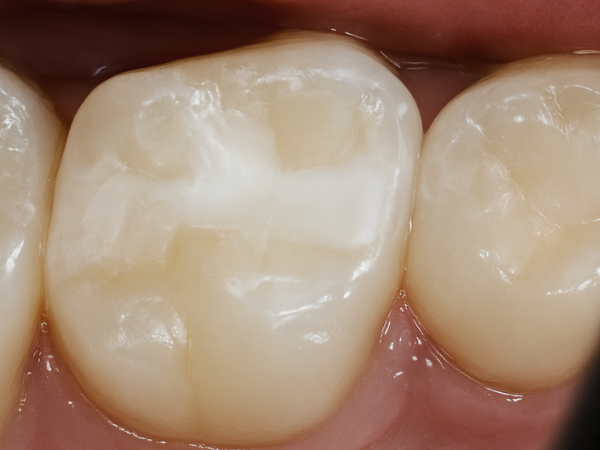
Maggok Station Dental Clinic_GI restoration.
“Glass Ionomer?
That sounds like a long English term already giving me a headache..."
Some of you may feel that way. haha
In short, you can just call it GI.
Glass = glass component
Ionomer = ionic bonding material
In other words, it is a material that hardens when glass powder and ions come together.
Its color is a milky ivory to white shade, and it is mainly used for early cavity treatment.
Advantages of Glass Ionomer
The reason GI is still loved by many dental clinics
is that it has clear advantages.
- Covered by national health insurance

Maggok Station Dental Clinic_National health insurance coverage
Its biggest advantage is that it can be covered by national health insurance.
Other materials, such as resin, have limits on insurance coverage,
but GI is covered by Korea’s National Health Insurance, which greatly reduces the cost burden.
Simply put, you could say it is a “kind material that considers your wallet.” haha
- Cavity prevention effect
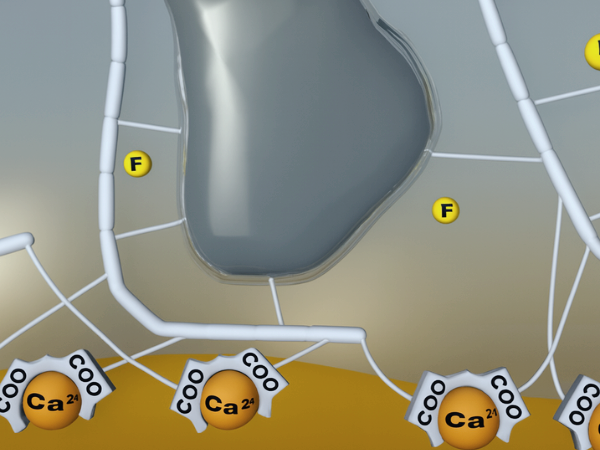
Maggok Station Dental Clinic_Fluoride release
GI contains fluoride, so it has a cavity-preventive effect.
Fluoride strengthens the tooth surface and helps suppress bacterial activity.
In other words, it does more than just fill the cavity;
it also provides a bonus function that helps reduce the recurrence of cavities.
That’s like killing two birds with one stone, isn’t it~^^
- Chemical bonding strength
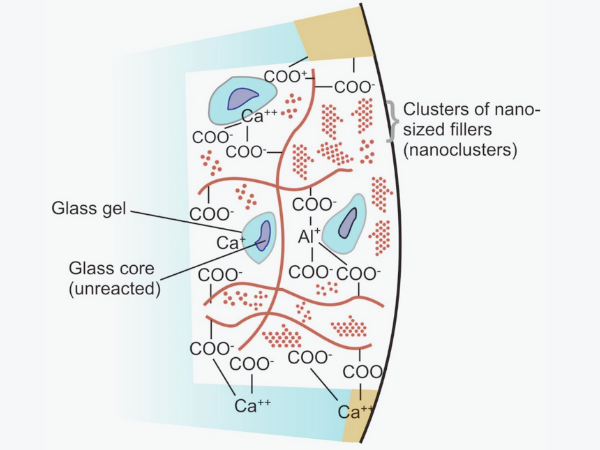
Maggok Station Dental Clinic_Chemical bonding
Resin attaches to the tooth mechanically,
but GI has the characteristic of chemically bonding with the tooth.
Simply put, it forms a “best-friend-like bond,” which helps it settle in place more stably.
- Versatility
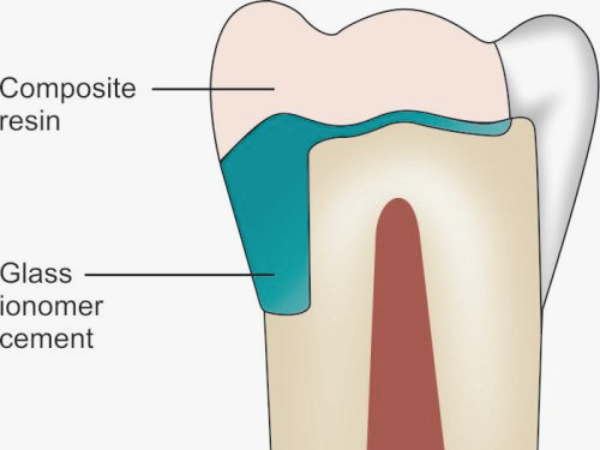
Maggok Station Dental Clinic_Cervical GI
In addition to cavity treatment, it can also be used in various situations,
such as cervical abrasion, core buildup after root canal treatment, and temporary fillings.
Disadvantages of Glass Ionomer
It would be nice if there were only advantages, but there is no perfect material in this world.
GI also has a few disadvantages.
- Less favorable for very fine spaces
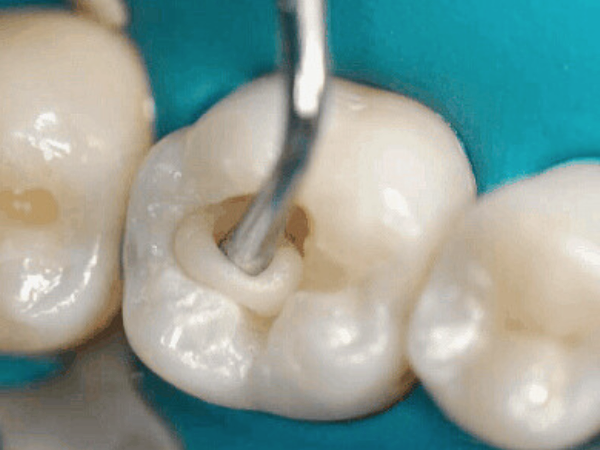
Maggok Station Dental Clinic_Glass ionomer filling
This material has a property of chemically sticking to the remaining tooth structure.
In simple terms, it is not glued on with adhesive,
but is a smart material that “reacts on its own and sticks tightly.”
However, because its viscosity is somewhat high,
it can feel a bit like thick homemade cheese. haha
So it is a little difficult for it to flow neatly into very narrow gaps or deep corners.
In other words, it is great for larger areas or early cavities,
but it has limitations when it comes to perfectly filling very fine spaces.
- Color limitations
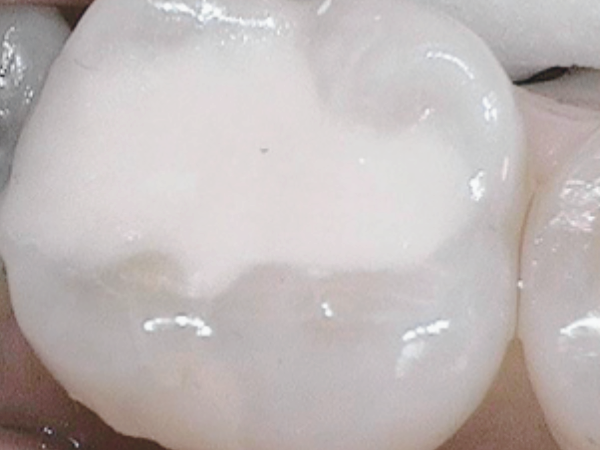
Maggok Station Dental Clinic_Opaque color
It does not have the transparent, attractive color appearance of resin.
Because it is ivory or dull white, it may be less satisfying for front-tooth treatments where aesthetics matter.
If you want something “pretty and natural-looking,” resin is the better option.
- Durability limits and rough surface
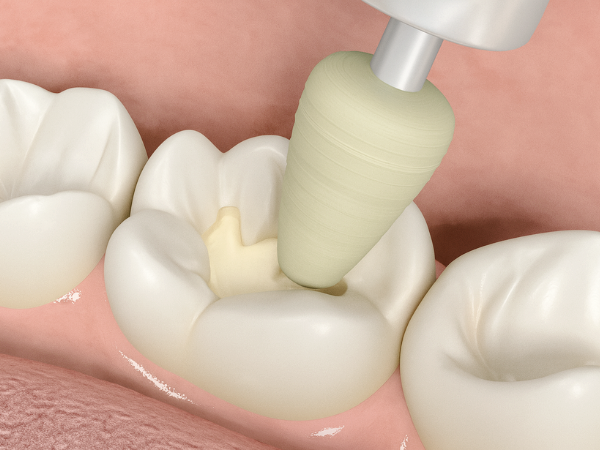
Maggok Station Dental Clinic_Surface polishing
Compared with amalgam or resin, it is somewhat weaker, so it is less favorable for large-area treatments.
Simply put, in molar areas that receive a lot of force, there is a slightly higher risk of fracture.
Also, because its strength is lower,
it tends to wear down a little faster than the surrounding teeth.
So over time, there may be subtle differences in height.
In addition, it is not easy to polish the surface smoothly, so it tends to leave a slightly rough feel.
If we summarize today’s key points:
-
Glass Ionomer (GI) is a filling material made from glass and ionic bonding
-
It can be covered by national health insurance → lower cost burden
-
It contains fluoride → has a cavity-preventive effect
-
It bonds stably to teeth through chemical bonding
-
However, its strength and aesthetics are lower than resin
-
GI and resin should be chosen according to the situation
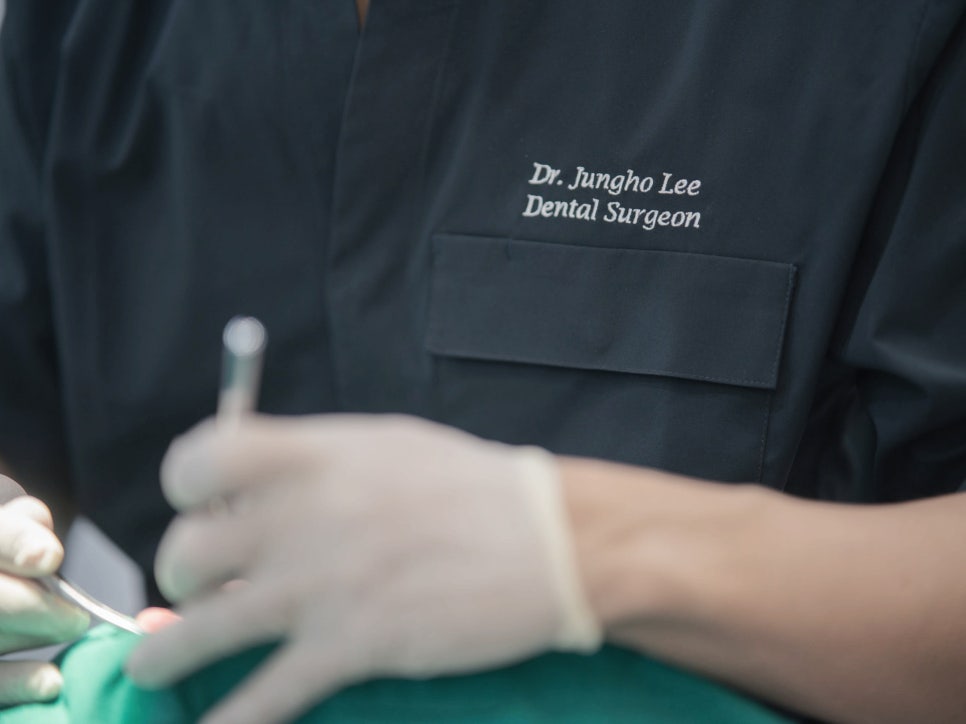
Maggok Station Seoul DiA Dental Clinic
At Maggok Station Seoul DiA Dental Clinic,
we carefully consider the location of the cavity, your chewing habits, and even your budget
before recommending the most suitable filling material.
Rather than asking the search engine,
ask an expert directly.
For teeth, “confirmation” is more important than “guesswork.”
Accurate diagnosis, safe treatment, lasting results.
Your reliable partner, Maggok Station Seoul DiA Dental Clinic, will be with you.
[ This post has been written in accordance with the Medical Service Act for the purpose of providing correct information about dental surgery and procedures. Infection and side effects may occur after surgery, so you should decide on surgery (procedure) after sufficient consultation with skilled medical professionals. ]
[ Maggok Station Seoul DiA Dental Clinic Glass Ionomer Series ]
-
Features, pros, and cons
-
Indications
-
Cost (national health insurance coverage)
-
Treatment process
-
Precautions after treatment