Hello.
We are Seoul Dia Dental Clinic at Magok Station, hoping that your smile shines as brightly as the higher autumn sky.
These days, many people go to the hospital for health checkups, right?
In fact, hospitals get crowded toward the end of the year, so this time of year is the most relaxed and sensible time to go.
There is another thing that should not be left out of a health checkup.
That is the oral examination!
When you get an oral exam, more often than you might expect, you may hear, “You have a very small cavity~”
When that happens, don’t be unnecessarily scared.
The earlier an initial cavity is treated, the simpler and less burdensome the treatment is.
Today, we’ll talk about the filling material used in situations like this:
Glass ionomer (GI).
In the last post, we looked at [the features and pros and cons of glass ionomer].
If you missed it, please check it through the link below±^^
Now, let’s go one step further today and ask,
“So when is this material best used?”
Let’s take a look together at the indications for glass ionomer (GI)!
When is glass ionomer (GI) best used?
- Early cavities
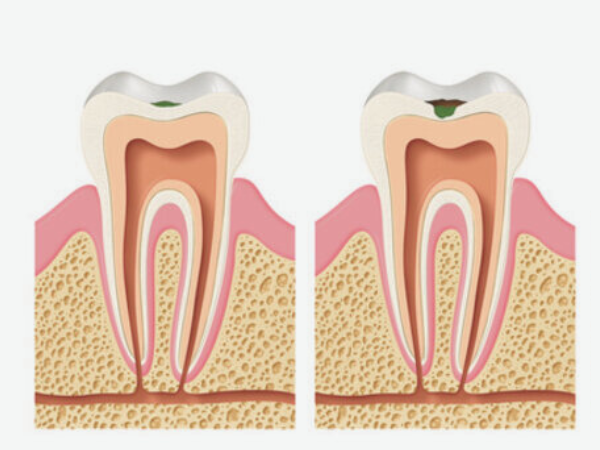
Magon Station Dental Clinic_ Early cavity
The most representative use of GI is the treatment of early cavities.
When the cavity is not yet deep and has not spread to the nerve,
it can be treated gently, quickly, and economically rather than with a stronger material.
In particular, fluoride released from the glass component helps make the tooth harder,
which also helps prevent recurrent decay (secondary cavities).
- Decay treatment in primary teeth
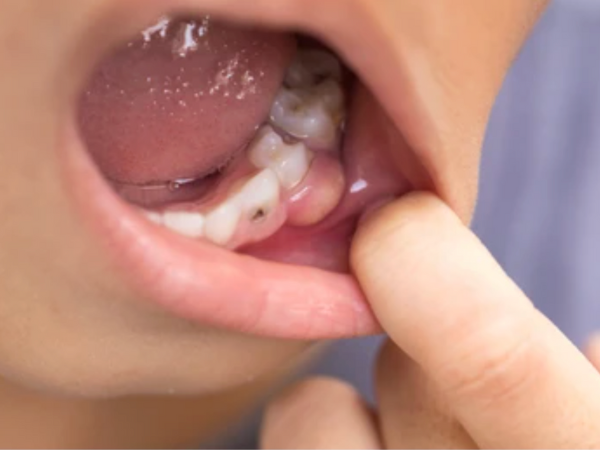
Magon Station Dental Clinic_ Primary tooth decay
Children have not yet fully developed good brushing habits.
So even if cavities occur,
it is important to treat them quickly before they become too deep.
In such cases, GI places less burden on treatment,
is safe, and can provide protection through fluoride as well,
so it is used very often for filling primary teeth (baby teeth).
Also, if the cavity has not progressed close to the nerve,
there are many cases where treatment can be done without anesthesia,
which makes it a material that children are less afraid of.
- Cervical wear (near the gum line)
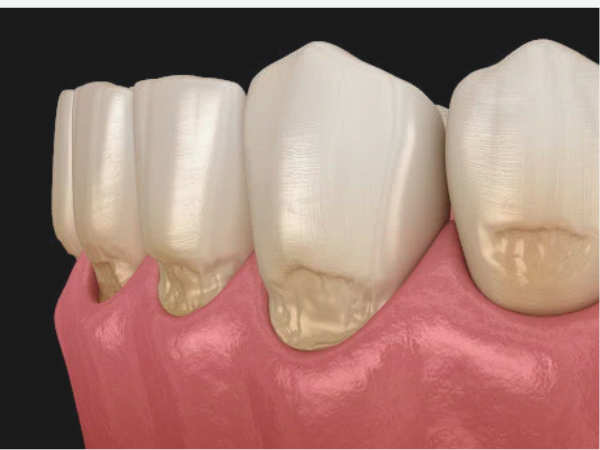
Magon Station Dental Clinic_ Cervical wear
When the gums recede and the root portion of the tooth becomes exposed,
that area may wear down, become hollowed out, or cause sensitivity.
For cervical wear areas (or cervical caries),
a material that flexibly absorbs impact is better than a hard material.
Resin is mainly used, but GI also adheres well to this area,
and because it is relatively stable against heat and mechanical stimulation,
it is often used in cervical treatment.
- Used as a core material after root canal treatment
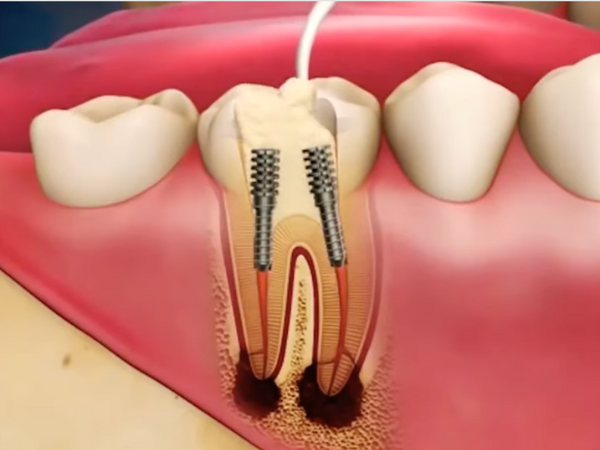
Magon Station Dental Clinic_ Core after root canal treatment
After root canal treatment,
the internal structure of the tooth becomes weaker and reinforcement is needed.
At that time, GI may be used as a “core material.”
GI forms a strong chemical bond
and also works well with other materials,
so it is stable even during the process of placing a crown (prosthetic restoration) over the core.
- Used as a temporary filling material
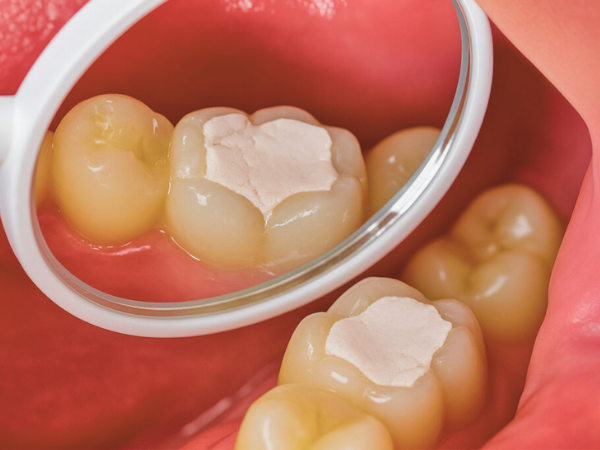
Magon Station Dental Clinic_ Temporary filling
During an intermediate stage of treatment,
for example, when the nerve condition needs to be observed after removing decay,
a temporary filling material is needed.
In such cases, GI is a material that is “reasonably firm yet easy to remove,”
so it is perfect as a temporary filling material.
“Temporary, but dependable.”
It is enough to last for about one or two weeks.
- For patients who are afraid of dental treatment or have difficulty with anesthesia

Magon Yak Dental Clinic_ When you are afraid of dental treatment
Another advantage of GI is that treatment is short and almost painless.
So for people with dental phobia, older adults, or those with systemic conditions,
it is often recommended as a quick and low-burden treatment.
Also, in the case of mild cavities,
there are many cases where treatment can be done without anesthesia.
If we summarize today’s content at a glance!
| Application area | Reason / advantage |
|---|
| Early cavities | Fast and simple, fluoride helps prevent recurrent decay |
| Primary teeth (children) | Low treatment burden, fluoride protection |
| Cervical wear | Flexible and adheres well |
| Core after root canal treatment | Excellent bonding, high prosthetic stability |
| Temporary filling | Firm yet easy to remove |
| Patients who have difficulty with anesthesia | Quick and low-burden treatment possible |
Glass ionomer (GI) is somewhat weaker in strength,
but because of that, it is a gentle material that places less burden on the tooth.
So when the cavity is not severe,
or when you want treatment to be quick and safe,
it can be the most suitable choice.
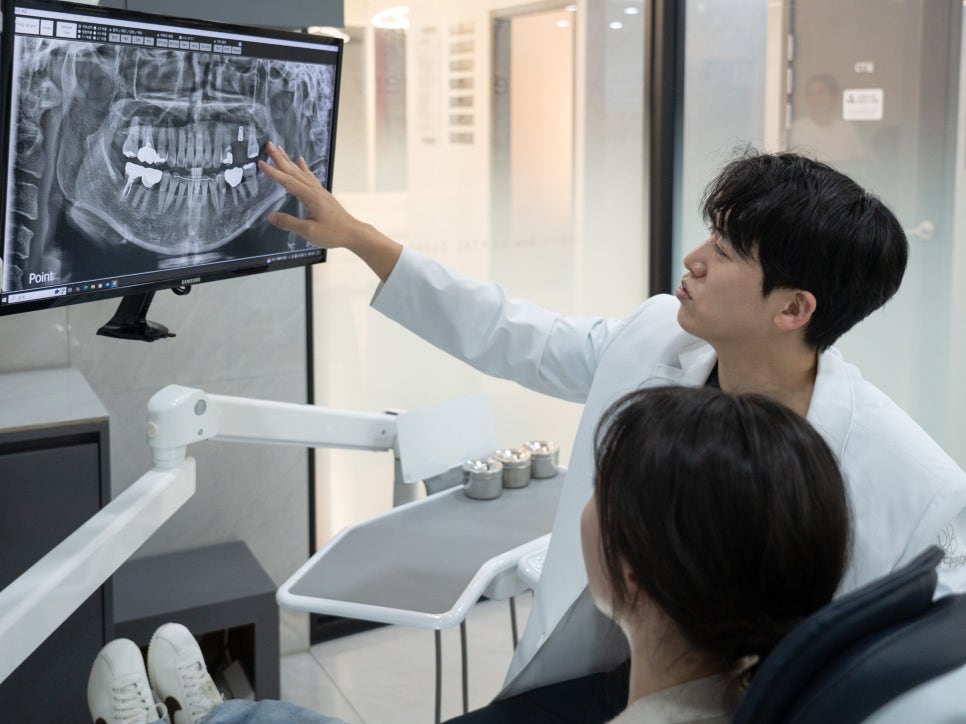
Seoul Dia Dental Clinic in Magok-dong
At Seoul Dia Dental Clinic at Magok Station,
we carefully consider the location and depth of the cavity, the bite condition, and even the patient’s lifestyle habits
to select the most appropriate filling material.
Accurate diagnosis, safe treatment, long-lasting results.
We will protect your smile and healthy teeth together with Seoul Dia Dental Clinic.
[ Magok Station Seoul Dia Dental Clinic Glass Ionomer Series ]
-
Features and pros and cons
-
Indications
-
Cost (covered by health insurance)
-
Treatment process
-
Precautions after treatment