Hello.
We are Magok Station Seoul Dia Dental Clinic, where we reduce the burden on patients and improve dental health.
These days, when you turn on the news, the first thing you hear about is prices.
Many people are worried that even a cup of coffee or hospital bills have gone up.
Perhaps that is why?
Recently, more and more people have been looking for treatment that is truly necessary,
while keeping costs reasonable.
The same goes for cavity treatment.
If you catch it while it is still small, treatment is simple,
and using a material covered by health insurance (GI) can help reduce the burden.
In the end, the key is making a smart choice that fits your situation.
In the last post, [Part 3: Glass Ionomer (GI) Costs and Health Insurance Coverage Criteria],
we explained the treatment cost and insurance coverage in detail.
If you have not seen it yet, please check the link below first.
[Part 3: Glass Ionomer (GI) Cost]↓↓↓↓↓↓↓↓↓
Now, here is the next story.
“How does GI cavity treatment actually proceed?”
From here on, we will explain it step by step.
Glass Ionomer cavity treatment, here is how it proceeds!
- Checking the cavity location
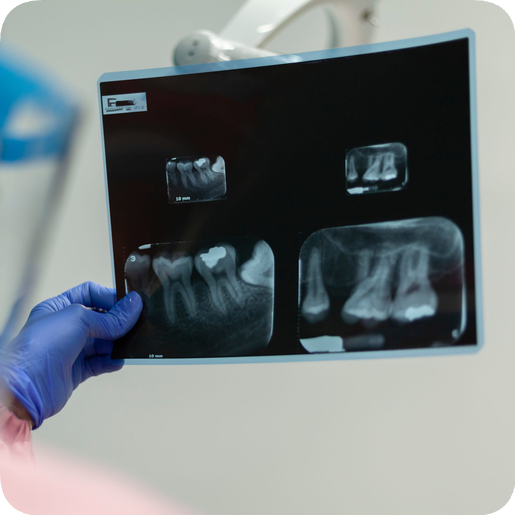
Maggok Station Dental Clinic_ Cavity diagnosis
The first step in treatment is checking how far the cavity has progressed.
We look with the eye, gently press with a probe, and take X-rays if needed.
If the cavity is shallow, it can be filled simply; if it is deep, root canal treatment may be needed.
At this diagnosis stage, the treatment scope and material are determined.
-
If the cavity is small, Glass Ionomer (GI)
-
If the cavity is large or aesthetics are important, resin
This is how the choice is made.
- Removing the decayed area
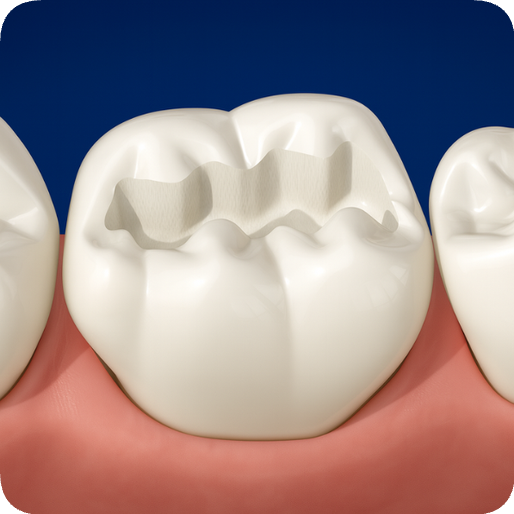
Maggok Station Dental Clinic_ Removal of the decayed area
If bacteria remain in the decayed area, the tooth can decay again,
so only the damaged part must be cleanedly removed.
If too much is shaved away, healthy tooth structure can be damaged,
so precise control is important.
At Seoul Dia Dental Clinic, we use precision equipment
to minimize pain and remove only what is necessary.
- Cleaning and drying
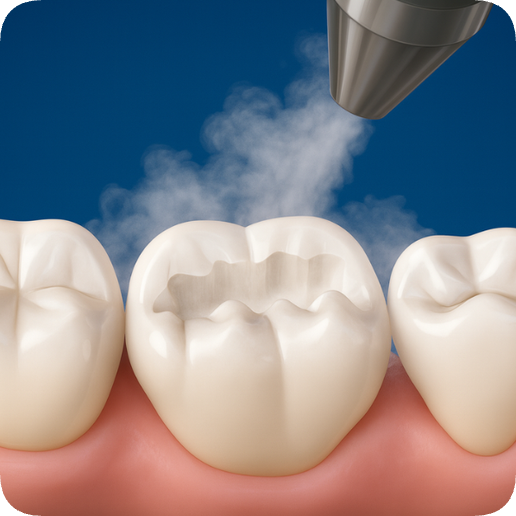
Maggok Station Dental Clinic_ Drying after cleaning
After removing the decay, any remaining powder or
bacteria is thoroughly washed away and the area is gently dried.
This process is similar to cleaning a wall before painting it.
It has to be clean for the material to adhere well.^^
- Filling with glass ionomer
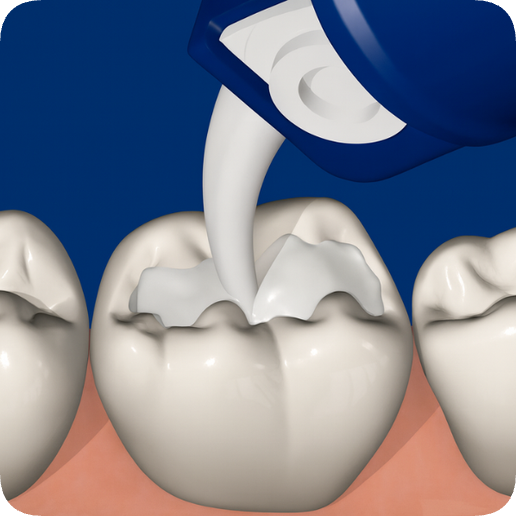
Maggok Station Dental Clinic_ Filling with glass ionomer
Now we begin the actual filling process.
GI is used by mixing powder and liquid in a set ratio.
These days, automatic mixers are used
to blend it smoothly without letting air in.
The mixed material is quickly placed into the cavity,
then shaped to match the tooth.
At this stage, timing is everything.
Since GI hardens quickly, if the hand is too slow,
the material may clump or lose its shape.
- Hardening and adjusting the bite
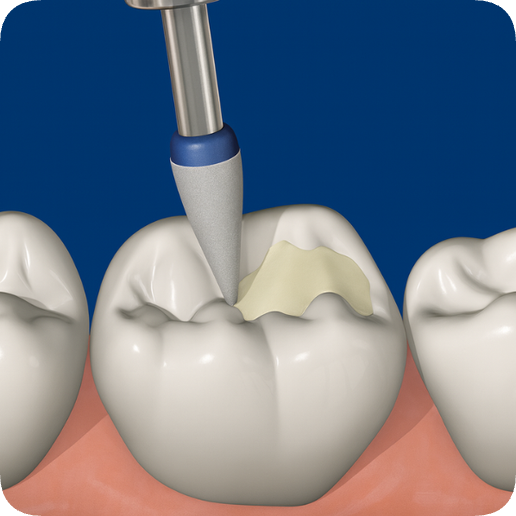
Maggok Station Dental Clinic_ Finishing after bite adjustment
After the material has been filled, the hardening process begins.
-
Self-cure type: a type that hardens on its own (insurance-covered)
-
Light-cure type: a type that hardens with light (non-insurance, excellent aesthetics)
Once the material has hardened sufficiently,
we carefully adjust the bite so that when you close your teeth,
it does not feel awkward or too high.
If it feels rough or uncomfortable, we will adjust it right away on the spot.
Shall we summarize today’s post?
- Glass Ionomer (GI) is
a filling material that is covered by insurance
and is suitable for early cavities or simple treatments.
- Diagnosis → decay removal → cleaning and drying
→ filling → hardening → bite adjustment
The process has a total of 5 steps, and although it is short, each step is handled carefully.
- Choosing a filling material is not simply about “cost”
but should depend on the condition of the tooth and the purpose of treatment.
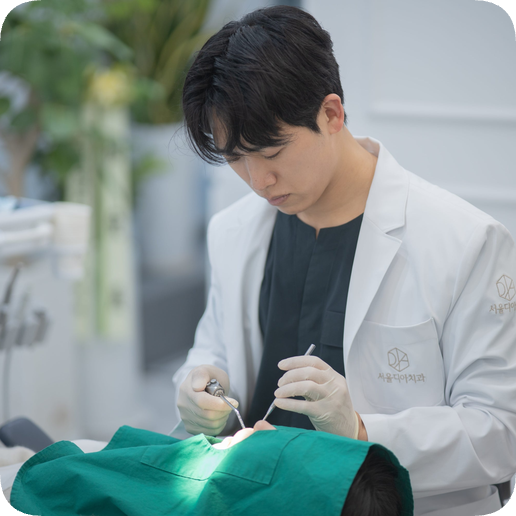
Seoul Dia Dental Clinic, Magok Station
Glass ionomer treatment
is completed in a short time, but it is a surprisingly delicate process.
How much to remove, how to mix it, and when to let it harden
small differences can determine the treatment outcome.
At Seoul Dia Dental Clinic,
we consider the location and depth of the cavity, the bite, and daily habits
to provide treatment in the way that best suits the tooth.
“Even small cavities should be treated carefully!”
For fast and meticulous cavity treatment, come to Seoul Dia Dental Clinic.
[ This post was written in accordance with medical law for the purpose of providing accurate information about dental surgery and procedures. Infection and side effects may occur after surgery, so you should decide on surgery (procedure) after sufficient consultation with a skilled medical professional. ]
[ Magok Station Seoul Dia Dental Clinic Glass Ionomer Series ]
1, Features and pros and cons
-
Indications
-
Cost (Health insurance coverage)
-
Treatment process
-
Precautions after treatment