Hello.
We are Seoul Dia Dental Clinic near Magok Station, here to share only the 이야기가 that are truly necessary for understanding the condition inside your mouth.
So you don’t end up leaving after searching and only feeling more worried,
let’s talk calmly again today.
(We won’t scare you. Not today, either.^^)
Shall we do a quick review of the last story?
In Part 3,
we organized the step-by-step process of bridge treatment
from start to finish.
If you haven’t seen Part 3 yet,
you may want to read the post below first.
Today’s content will feel much easier.
Now, then,
let’s move on to this question.
"But...
are there any disadvantages to a bridge?"
"How long can it be used?"
So today is Part 4 of the bridge series,
[The disadvantages and lifespan of bridge treatment].
At Seoul Dia Dental Clinic near Magok Station,
we’ll talk about it realistically, without dodging it.
Bridge treatment,
there can’t be no disadvantages
No treatment has only advantages and no disadvantages.
Bridges are no different.
What matters, though,
is whether this disadvantage is something
I can realistically manage in my current condition.
- It can place stress on the teeth on both sides
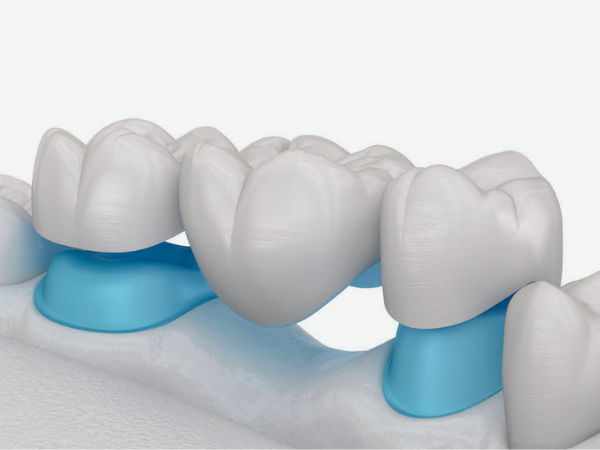
Magok Station Dental Clinic_side teeth
A bridge
is not a structure that stands on its own.
The teeth on both sides share the load together.
That means
that instead of replacing one missing tooth,
the teeth on both sides have to work harder.
If the teeth on both sides are already weak,
have a lot of previous treatment,
or the gum condition is not good,
this burden can become greater.
That is why, when considering a bridge,
we look more carefully at the teeth on both sides
than at the missing area itself.
- Problems can develop easily if care is neglected
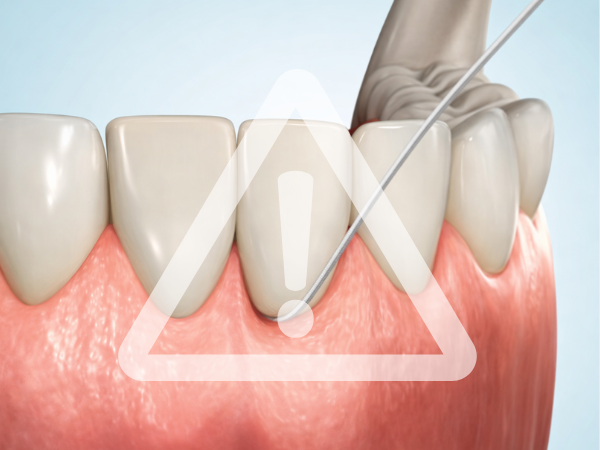
Magok Station Dental Clinic_no floss use
A bridge
may look like a tooth from the outside,
but in fact it is a structure connected as one unit.
So food tends to get stuck
between the teeth more easily.
(There are still gaps in a bridge, after all.)
"It doesn’t hurt, so it must be fine."
If you let it go like that,
sometimes the gums send a signal
before the teeth do.
This is less about the bridge being bad
and more about differences in how it is maintained.
Toothbrushing, floss, interdental brushes.
If you keep up with just these three well,
the results can be quite different from what you expect.
- Changes in the jawbone in the area without a tooth also need to be considered
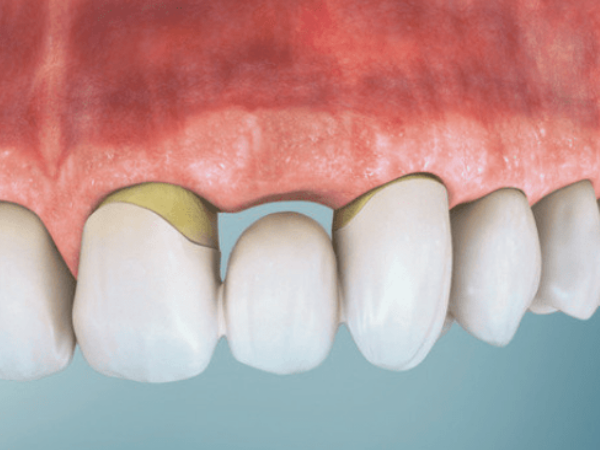
Magok Station Dental Clinic_bone resorption in the area without a tooth
A bridge
fills the missing tooth area by connecting it
to the teeth on both sides while leaving it suspended.
So the jawbone beneath the missing area
does not receive direct chewing stimulation,
and over time
that area of bone can gradually become thinner.
In technical terms, this is called "bone resorption,"
and in simple terms,
it is closer to the body slowly adjusting
to reduced use.
However, this does not happen severely in every case,
and there are large differences depending on the location,
length of use, and maintenance condition.
So we also consider this part
when deciding whether a bridge is the right choice.
How long does a bridge last?
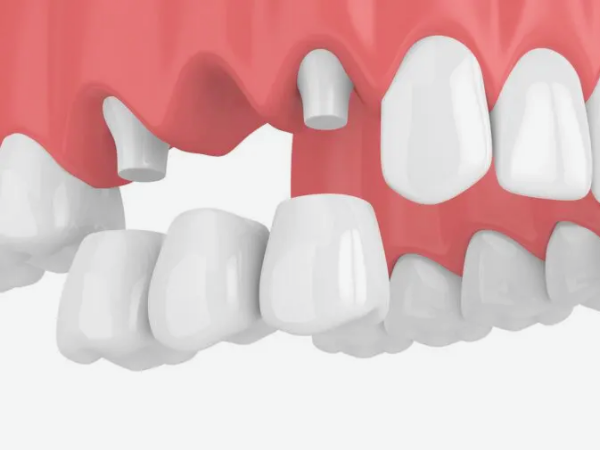
Magok Station Dental Clinic_bridge
To be honest,
a bridge does not have a fixed lifespan.
That said,
about 10 years is often mentioned as a general guideline.
But that is only an average,
and the difference can be quite large depending on
maintenance, chewing force, and gum health.
In practice, some people use bridges for a long time
because they take good care of them,
while in other cases problems arise sooner than expected
because maintenance is lacking.
So in the clinic,
rather than saying “it lasts for X years,”
we tend to say “how you use it matters.”
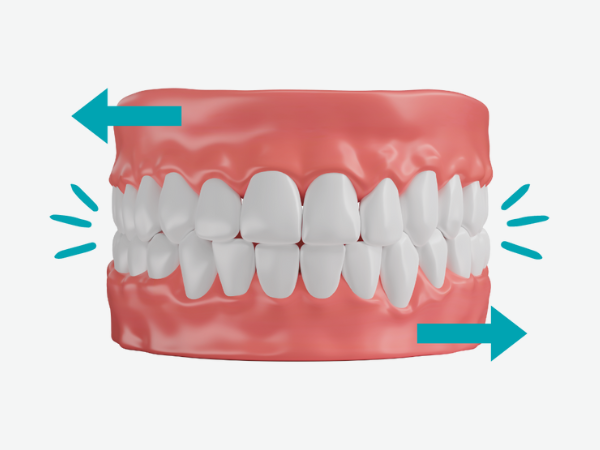
Magok Station Dental Clinic_no teeth grinding, no clenching
However, in these cases,
the lifespan may be shorter
-
If you have a habit of clenching your teeth tightly
-
If you have a habit of grinding your teeth
-
If you do not get regular checkups for a long time
-
If gum care is not being managed well
When these situations overlap,
the force placed on the bridge increases,
and the chance of problems developing sooner also rises.
Let’s summarize today’s discussion like this
Bridge treatment
can place stress on the teeth on both sides,
requires proper maintenance,
and varies greatly from person to person in how long it lasts.
But if the condition is right and you manage it well,
it can also be a treatment that you can use for a long time.
So a bridge is not something you “must” do,
and it is not something you should “never” do either.
It is closer to a treatment where we judge together
whether it is the right choice for your current mouth condition.
Seoul Dia Dental Clinic near Magok Station
At Seoul Dia Dental Clinic near Magok Station,
as much as the treatment result,
we value the process of helping you understand
why this treatment was chosen.
In Part 5,
after bridge treatment,
we’ll talk in more detail about
how to take care of it,
and the parts of daily life that are especially important to keep in mind.
When it comes to dental care,
you don’t have to take it all in at once.
We’ll continue slowly in the next post.
[ Magok-dong Seoul Dia Dental Clinic Bridge Series]
-
Basic concept of dental bridges
-
Who is a candidate for bridge treatment
-
Bridge treatment process
-
Disadvantages and lifespan of bridge treatment
-
Care after bridge treatment