Even a small change felt in your mouth
when you understand the cause,
you see a direction for care rather than worry.
Hello.
We are Seoul Dia Dental Clinic,
explaining your current oral condition
in an easy and practical way.
In the previous post,
we organized when interdental brushes are needed
and in which cases they can be helpful.
The key points were
when the spaces between teeth become wider,
after gum treatment, and after implant treatment.
Haven't read it yet?
Then before reading this post,
you may want to take a look first.
It will make today’s content much easier to understand.^^
You brushed your teeth and even used dental floss,
so do you really need an oral irrigator too?
If you’ve been wondering about this, you came to the right place today.^^
Today, following dental floss and interdental brushes,
we’ll explain the [oral irrigator], also commonly called a water flosser,
in the Seoul Dia Dental Clinic style—simple and easy to understand.
What exactly is an oral irrigator (water flosser)?
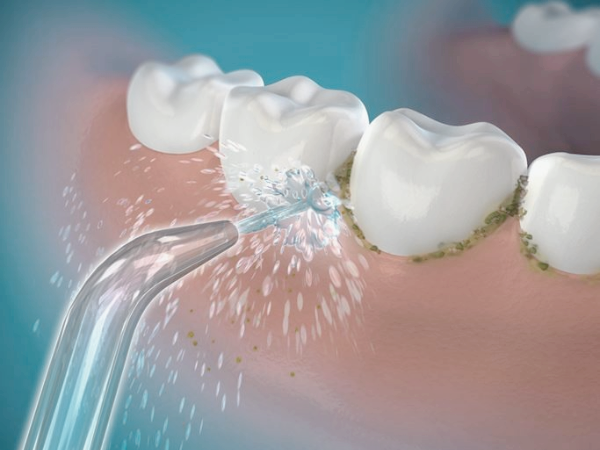
Maggok Station Dental Clinic_Managing the spaces between teeth
An oral irrigator
uses water pressure to clean
between teeth and along the gums.
In Korea,
it is often referred to by a specific brand name.
(Brand promotion? No, no! I’m not going to name it.^^)
Just like people call all adhesive bandages “Daeil Band,”
think of it as a product category name.
Why use an oral irrigator?
- Helps clean between teeth
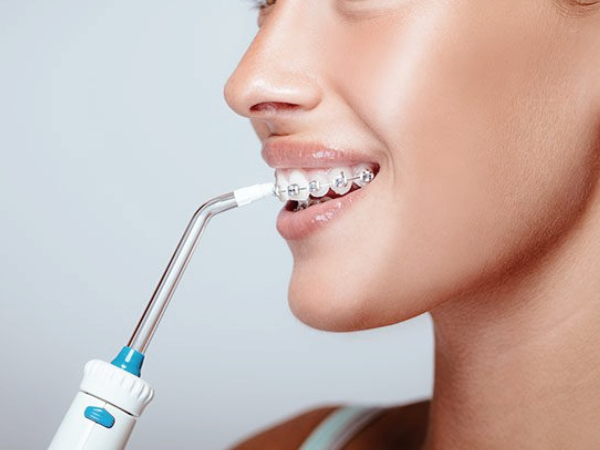
Maggok Station Dental Clinic_Managing the spaces between teeth during orthodontic treatment
Toothbrush → outer surfaces
Dental floss → contact surfaces
Interdental brush → space management
Oral irrigator → rinsing assistance with water
This is the easiest way to understand it.
It is especially useful when teeth are not well aligned,
when undergoing orthodontic treatment,
or when you have prosthetics or implants.
- Low difficulty of use

Maggok Station Dental Clinic_Convenient oral irrigator
It works just by pressing a button,
and the usage is simple.
So for people who find dental floss difficult to use at first,
a water flosser can sometimes be a comfortable starting point.
- Helps reduce gum irritation
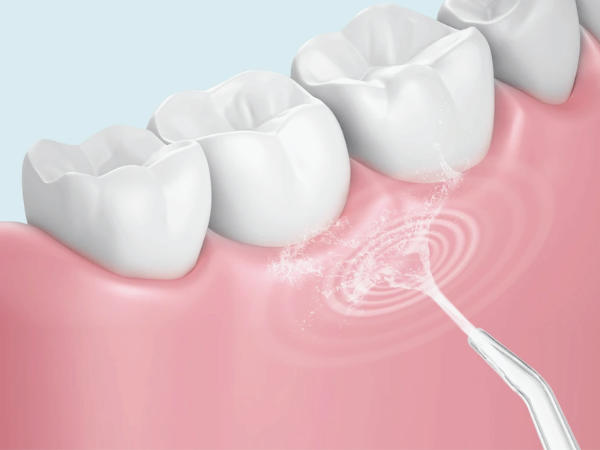
Maggok Station Dental Clinic_Gum massage
When used with low water pressure,
it can also provide a gum massage effect.
However, if you start with strong pressure,
it may actually cause irritation.
How to use an oral irrigator properly
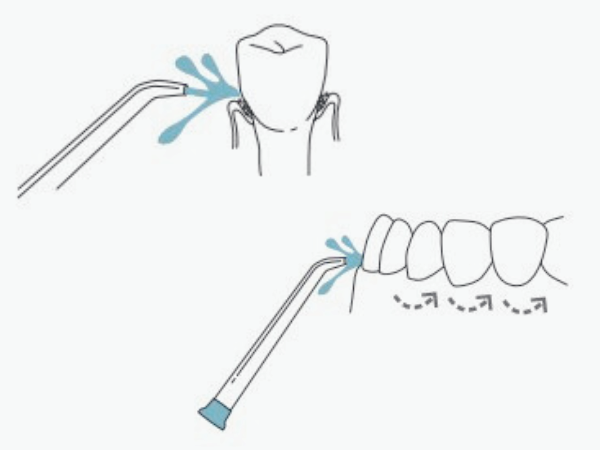
Maggok Station Dental Clinic_Oral irrigator
- Usage time
At first, 2–3 minutes,
once or twice a day is enough.
If you use it for too long from the beginning,
your gums may be startled.
Swelling or sensitivity may occur.
Especially for the first 1–2 weeks,
it is easier to think of it as an adjustment period.
- Water pressure adjustment
Start with “low.”
Once you get used to it, increase it little by little.
If you use strong pressure from the beginning,
it may feel like it cleans better,
but it can place a burden on the gums.
For the first week, use a low setting,
then increase one level at a time after you adapt.
- Nozzle position
Move slowly along the gumline,
and pause for about 1 second between teeth.
However, do not press it too close to the teeth.
If it is too close, water may splash,
and gum irritation can increase.
- Care after use (this is more important than you might think)
Be sure to empty the water from the tank and let it dry.
If water is left inside,
it can become an environment where bacteria grow.
And
replace the nozzle every 3–6 months,
similar to the toothbrush replacement cycle.
Can you use only an oral irrigator?
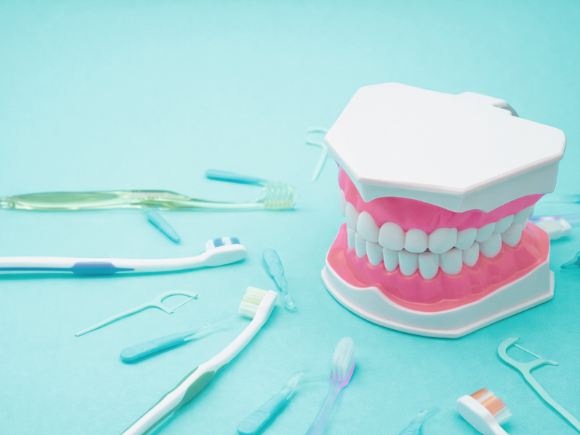
Maggok Station Dental Clinic_Toothbrush, dental floss, interdental brush
An oral irrigator
is not a device that replaces brushing,
and it does not completely replace dental floss either.
It does a very good job of rinsing with water.
But plaque that is firmly attached to the teeth
still needs to be removed through direct cleaning.
So in practical terms,
brushing + dental floss or interdental brush + oral irrigator
is the most stable care combination.
Do you now have a clearer sense of what an oral irrigator is?
Let’s summarize once more.
An oral irrigator is
But
An oral irrigator is
not a tool that replaces brushing,
but rather a care tool you use
after brushing,
to provide one more layer of care.
For oral care,
it is often more important to do it in a way that fits your current mouth condition
than to simply do it “diligently.”
Maggok Station Seoul Dia Dental Clinic
If you have ever thought,
“Am I really taking good care of things?”
that may not be an unnecessary thought.
The probability is actually quite high.
Teeth send a lot of signals in subtle ways.
In the next post,
we’ll also organize mouth rinse care
in practical terms,
which many people are curious about.
I hope this post helped you organize your direction for oral care,
even if just a little.
That wraps up today’s story from Seoul Dia Dental Clinic.
I hope you have a happy smile kind of day,
with one more reason to smile today.
[ This post was written in accordance with the Medical Service Act, for the purpose of providing accurate information about dental treatment. Because infection and side effects may occur after treatment, the decision to proceed should be made after sufficient consultation. ]
[ Magok-dong Seoul Dia Dental Clinic Oral Care Product Series ]
-
Why does oral care not seem effective even though I work hard at it?
-
What is the correct way to brush?
-
Do I really need to use dental floss?
-
When do I need an interdental brush?
-
Do I really need an oral irrigator?
-
Do I need to use disinfecting mouthwash every day?
-
Do I really need a tongue cleaner?