Hello.
A 3-minute walk from Exit 3 of Magok Station,
This is Seoul Dia Dental Clinic, which promises honest and thorough care.
In the previous post,
[Oral Changes and Care Points in the Early Stage of Middle Age (30s to 40s)]
were summarized.
If you have not seen it yet,
or if you read it but do not remember it well,
you can first read it through the link below.^^
Now, this is the sixth story.
When you enter your 50s and 60s,
you begin to gradually feel changes in your body.
No matter how much you sleep, you still feel tired...
When you get your health checkup results,
you look at the numbers once, then again,
and may think, “Wait... is this really me?” haha.
Your joints and muscles,
don’t recover as quickly as they used to.
You say you did light exercise...
but your body does not feel light at all. That unpleasant feeling.
So naturally,
this becomes a time when you deeply realize,
“Ah, taking care of my health is not optional, it’s essential.”
But this change does not appear only in the body.
In the mouth as well,
changes that are hard to ignore
begin quietly to progress.
So today,
the sixth story in the oral care series by life stage,
[Key Oral Changes and Care in Middle and Older Adulthood (50s to 60s)]
will be organized by Seoul Dia Dental Clinic at Magok Station.
Time to focus!!
It won’t take long.
Let’s look at it together for just 3 minutes!!^^
50s to 60s: Why do oral changes appear?
At this stage,
the teeth and gums do not suddenly get worse.
It is the time when the results of long-term use begin to show.
Teeth wear down,
gum support weakens,
and saliva production decreases.
As medication use increases
and the impact of overall health becomes greater,
management becomes one step more difficult.
This is the stage when the “environment” around the teeth begins to change.
On the surface, it looks the same,
but the basic strength is gradually changing...
That is exactly it. TT
- Progression of gum disease & increased tooth mobility
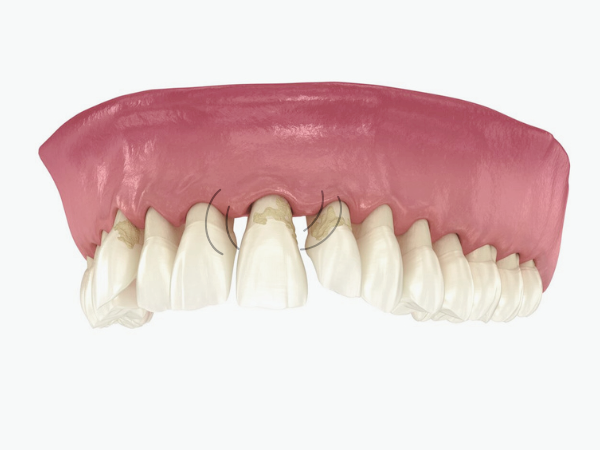
Magok Station Dentistry_Several loose teeth
When you enter your 50s and 60s,
gum health becomes even more important.
In many cases, cavities decrease,
but problems start as the gums weaken.
Bleeding while brushing,
a slight feeling that a tooth is loose,
and gums receding with the spaces between teeth
becoming wider may appear.
Just as a tree has a hard time standing when its roots weaken,
at this stage the problem is not the teeth themselves,
but the foundation that supports the teeth
beginning to weaken.
2. Increased spaces between teeth & food trapping
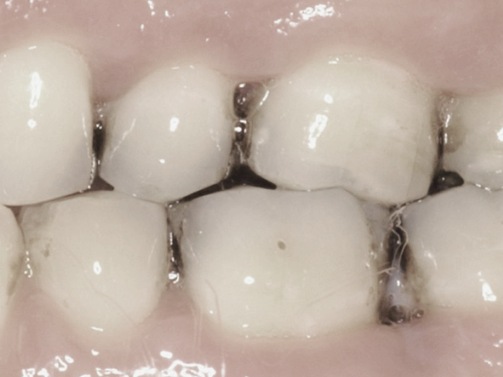
Magok Station Dentistry_Food getting trapped
Changes that did not exist before
start to be noticed one by one.
The gaps between teeth widen,
food gets stuck more easily in those spaces,
and black triangular spaces may appear between the gums.
(Black space = black triangle)
At first, it may only feel slightly uncomfortable,
but over time the risk of gum inflammation or cavities
can gradually increase.
That is why, at this stage,
care between the teeth and gum health management
become even more important.
3. Increased tooth wear & microcracks
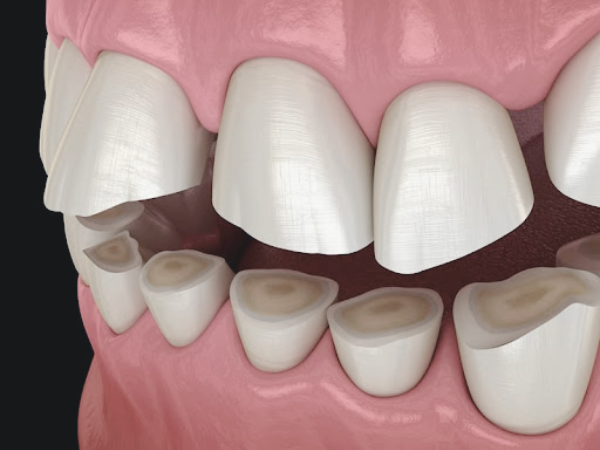
Magok Station Dentistry_Tooth wear
Chewing tough foods,
the pressure of years of accumulated bite force,
and even the habit of clenching your teeth when stressed..
Over time, the chewing surfaces of the molars wear down,
small invisible cracks increase,
and there may be moments when your teeth feel sensitive to a sip of cold water.
4. Time when existing restorations may develop problems again
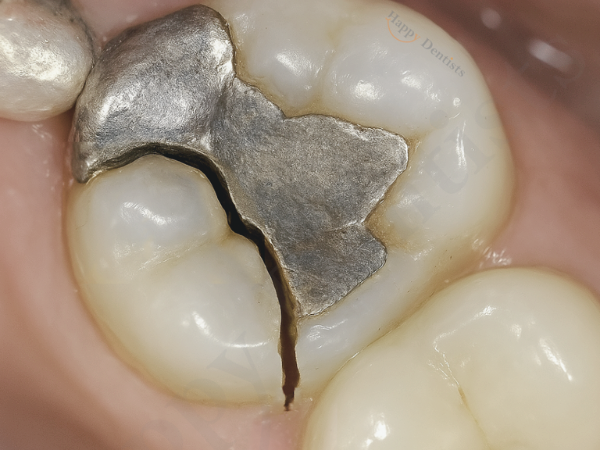
Magok Station Dentistry_Fracture of teeth around amalgam
Amalgam, resin, inlay, crown, bridge, implant.
Finishing treatment does not mean everything is over.
As time passes,
new cavities may develop at the margins,
restorations may loosen,
surrounding teeth may chip or break,
or discomfort while chewing
and changes in bite may appear.
5. Dry mouth & increased bad breath

Magok Station Dentistry_Bad breath
At this stage,
medications, systemic diseases, hormonal changes,
and stress can easily reduce saliva production.
Saliva is not just water.
It is a natural protective barrier and an automatic cleaning system
that washes away bacteria and protects the mouth.
But when the mouth starts to become very dry,
stale and unpleasant breath increases,
and the risk of cavities and gum disease also rises.
Middle and older adulthood (50s to 60s)
is a stage where preventing tooth loss is key.
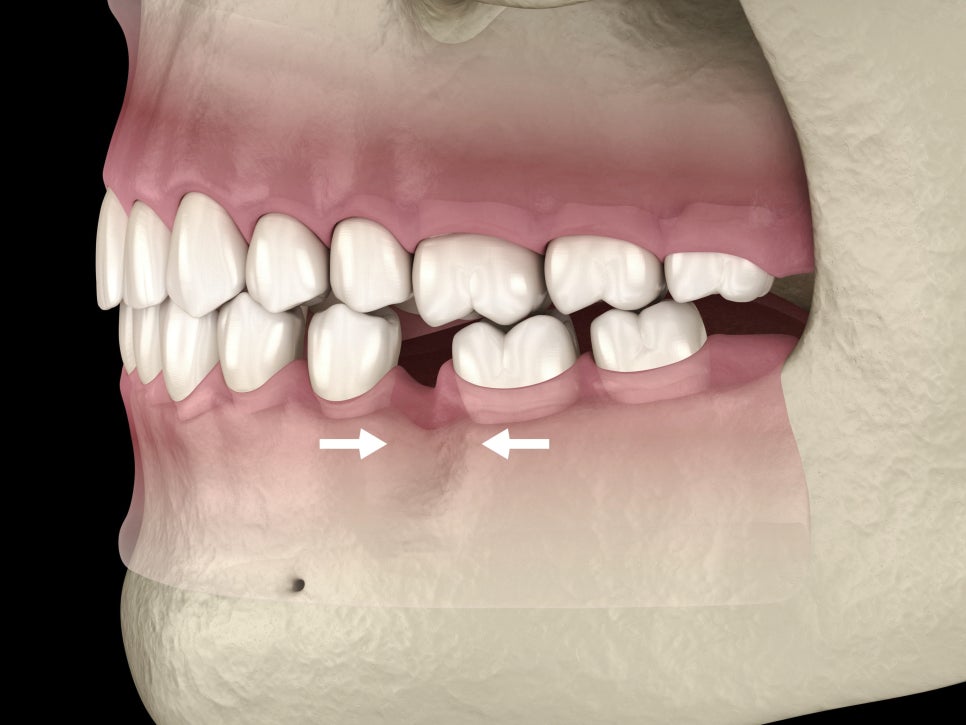
Magok Station Dentistry_Tooth loss
From the 50s to 60s,
there is something more important than “treatment.”
Not losing teeth.
It may seem like losing one tooth is not a big deal.
But from there, a chain reaction begins.
The neighboring teeth tilt into the empty space,
the chewing force decreases,
digestion is not as good as before,
and even the shape of the face may subtly change.
Let’s use an easy analogy.
When books are packed tightly on a bookshelf,
if you remove one book, the books next to it tilt.
That is because the supporting force disappears.
Teeth are the same.
That is why one tooth is not simply “just one tooth,”
but a structure that supports the balance of the entire mouth.
Key oral care habits in the 50s to 60s
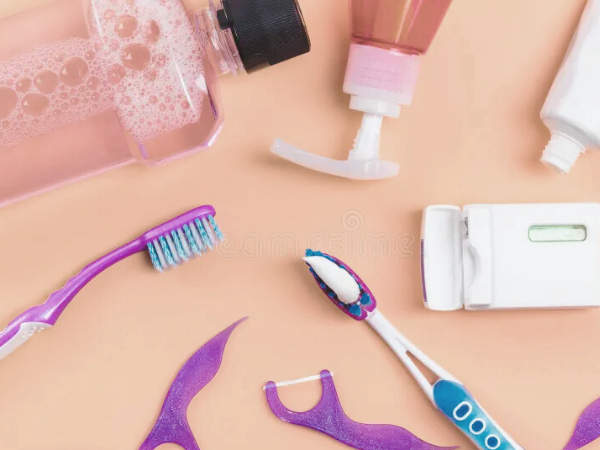
Magok Station Dentistry_Oral care
What is the key to care at this stage?
No great secret...
There isn’t one.
Consistency with the basics is the answer.
If the toothbrush cleans the main road,
dental floss and interdental brushes clean the alleys.
Problems always start in the alleys.
Tartar is not dust;
if enough time passes, it becomes stone.
That is why scaling is not optional, but essential.
Restorations and implants
can also quietly cause trouble, so
they need to be checked regularly at the dental clinic.
And if your mouth often feels dry,
a sip of water, a piece of sugar-free gum.
The oral environment becomes much more comfortable.
Now, let’s neatly summarize the key points here.
-
Gum health determines tooth longevity
-
Care between teeth becomes even more important
-
Wear, cracks, and restorations need to be checked
-
Reduced saliva production has a major impact on oral health
-
Regular care helps prevent tooth loss
Magok Station Seoul Dia Dental Clinic
“Are they still usable?”
This is a phrase we hear very often.
That’s right.
They are still perfectly usable.
But if you check now, the work to be done is small,
while if you delay it until later, the work becomes bigger.
Caring for your precious teeth and gums,
we hope you have more peace of mind than worry
and more comfort than burden.
Next time,
the final installment of the oral care series by life stage!
About [Oral Care in Old Age (70s and Older)],
we will come back after preparing sincerely. haha
Have a comfortable day today as well,
this has been Seoul Dia Dental Clinic.
[ This post was written in accordance with the Medical Service Act for the purpose of providing correct information about dental surgery and procedures. Infection and side effects may occur after surgery, so surgery (procedure) should be decided after sufficient consultation with a skilled medical team. ]
[ Seoul Dia Dental Clinic Oral Care Series by Life Stage]
-
Infants and toddlers (0–3 years)
-
Primary teeth stage children (4–7 years)
-
School-age children & adolescents (8–18 years)
-
Early adulthood (20s to 30s)
-
Early middle age (30s to 40s)
-
Middle and older adulthood (50s to 60s)
-
Old age (70s and older)