Hello.
A 3-minute walk from Exit 3 of Magok Station,
This is Seoul Dia Dental Clinic, promising honest and meticulous care.
This is the final story in our oral care series by life stage.
In the previous post,
we summarized [oral changes in middle and older adulthood (50s–60s) and preventive care methods for tooth loss].
If you haven’t read it yet,
or if you’re thinking, “I kind of remember it…”
feel free to read that one first.
Understanding the changes in your 50s and 60s
makes the direction of care after your 70s much clearer.
Let’s continue.
When you reach your 70s,
you pause for a moment when going up stairs,
and heavy objects naturally become your children’s job.
You calmly say, “I’m fine,”
but those of us watching from the side
start paying a little more attention.
But this change does not appear only in the body.
The mouth is the same.
It does not suddenly fall apart;
rather, this is the stage when the condition of the teeth and gums used for decades
quietly begins to show its results.
Old age is not just about age,
but about the stage when the record of how they have been used becomes visible.
So today,
Seoul Dia Dental Clinic will realistically summarize
[oral care methods for old age (70s and older)].
Changes that appear in the mouth in old age (70s and older)
- Gum bone loss & loose teeth
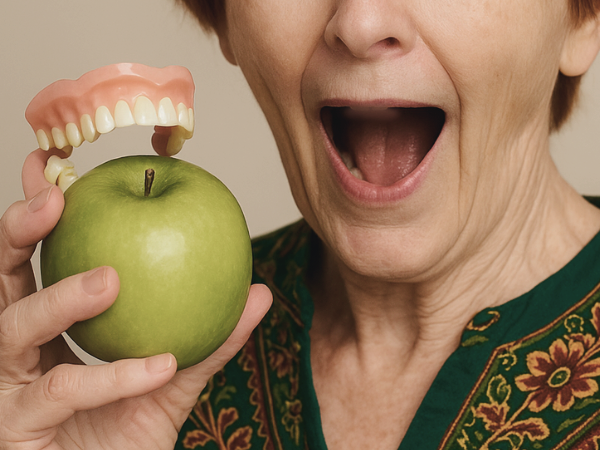
Magok Station Dental Clinic_loose dentures that often fall out due to looseness
In old age,
teeth may become slightly loose,
gums recede,
food gets stuck more often,
and dentures become loose.
You may think, “Have my teeth become weak?”
but in fact, the roots are often the part that has weakened.
If teeth are like a tree,
gums and gum bone are the roots underground.
When the roots weaken,
the tree has a hard time standing for a long time.
The key point is this.
Do not look only at the teeth; protect the supporting structure.
- Reduced saliva production & dry mouth
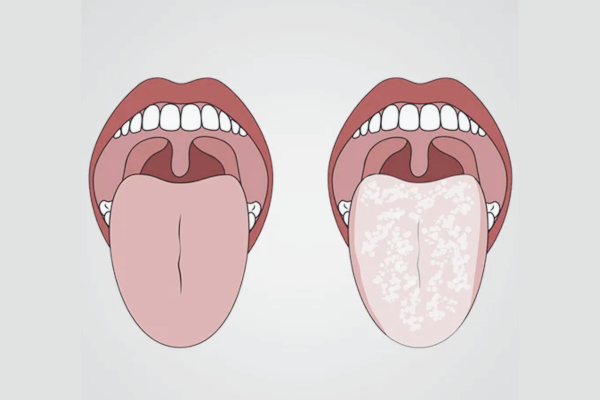
Magok Station Dental Clinic_dry mouth
After the age of 70,
even if you drink water, you feel dry again quickly,
if you speak for a long time, your mouth feels sticky,
and even while sleeping at night, your mouth may feel unpleasantly dry.
Why does this happen?
Because medication use increases and changes in the body overlap,
saliva does not come out as abundantly as before.
Saliva is responsible for cleaning the mouth.
It also clears away leftover food
and helps keep bacteria from freely running wild.
But when this cleaning helper decreases,
decay increases a little,
gums become more sensitive,
and bad breath also starts making its presence known.
A moist mouth is more comfortable.
Quite literally, moisture is what brings peace.
- Reduced chewing strength & nutritional issues

Magok Station Dental Clinic_reduced meal intake
When chewing strength decreases,
the first thing that changes is meals.
Tough meat?
“Well, maybe next time,” you say.
Hard fruit? You end up cutting it into smaller pieces.
Then, naturally,
the amount you eat decreases,
and your menu shifts toward softer foods.
But the problem does not end there.
When chewing strength weakens, nutrient intake is also affected.
In the end,
being able to chew well is more important than you might think.
- Maintenance of existing treatments
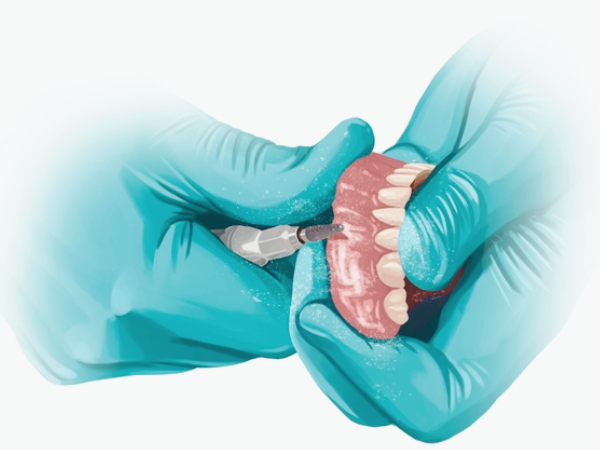
Magok Station Dental Clinic_denture repair
In old age,
rather than doing something new,
it becomes more important to properly maintain what has already been done.
Once an implant is placed, is that the end?
No.
You need to check whether the surrounding gums are healthy.
For crowns and bridges as well,
you should check whether decay has quietly developed at the margins.
What about dentures?
If there are pressure points,
they should be adjusted right away for comfort.
Just keeping up with these checks
can prevent them from turning into major work.
Maintenance is more powerful than you might think.
Key habits for oral care in old age
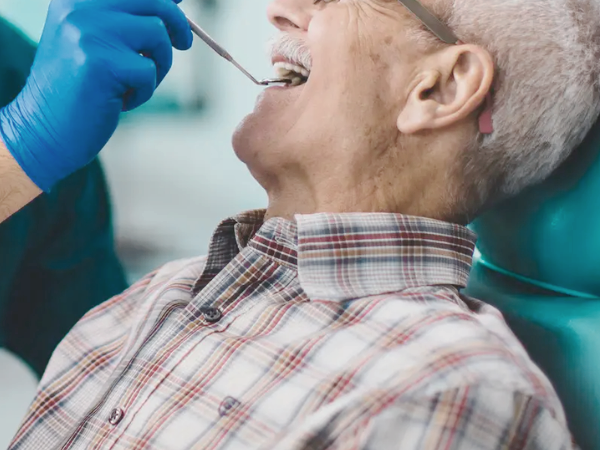
Magok Station Dental Clinic_older adult oral examination.
Oral care in old age
You do not need any grand secret.
Use a toothbrush a little more gently,
and clean without scraping the gums.
It’s also good to use dental floss or interdental brushes
as much as you can.
Problems usually start between the teeth. Haha.
Bacterial tartar
does not disappear with time.
In fact, it becomes as hard as stone.
It cannot be removed by brushing.
You need regular scaling at the dental clinic
to get rid of it.
Implants are not the end either.
You need to check whether the surrounding gums are swollen
and whether the maintenance condition is okay.
Dentures should also be checked to see whether they are loose
and whether there are any pressure points.
Drink water often,
and if your mouth is dry, take care of moisturizing as well.
And the 6-month regular checkup—
this is extremely important!!
Small checks prevent big treatments.
Summary of key points for oral care in old age
-
Gum and root care becomes even more important
-
When saliva decreases, the risk of decay and gum disease rises together
-
Reduced chewing strength affects nutrition and overall health
-
Regular checks are essential for implants, prosthetics, and dentures
-
In the end, the answer is a 6-month regular checkup
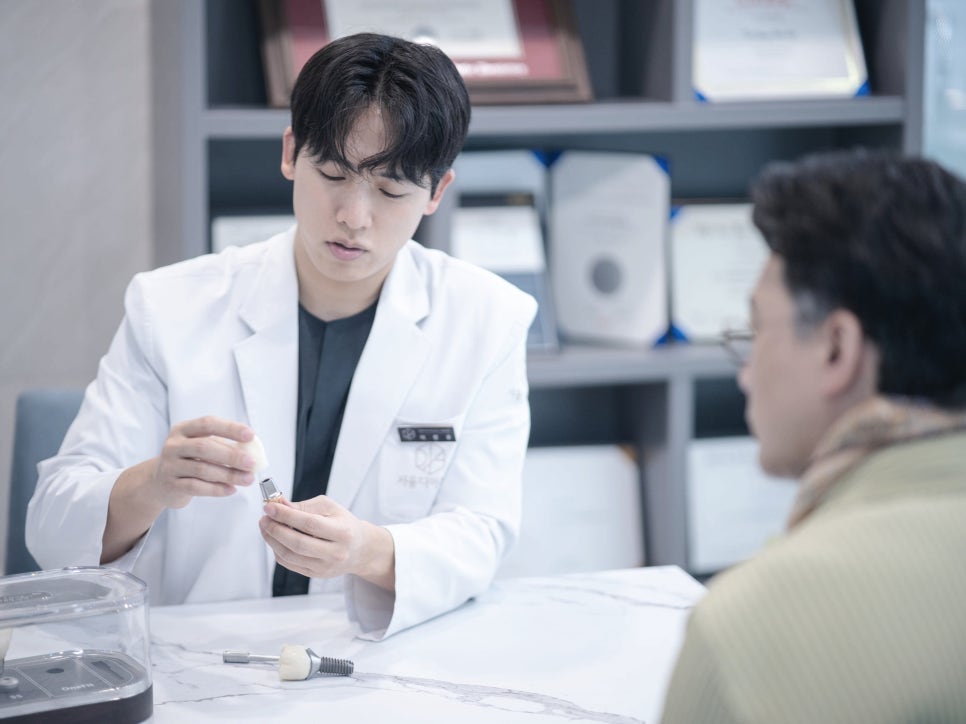
Seoul Dia Dental Clinic, Magok-dong
The goal of oral care in old age is not perfect teeth,
but being able to eat well, stay pain-free,
and use the teeth you have now for a long time.
“It still works okay.”
That means it is still something you can protect.
Oral care should not begin when you are in pain,
but when it is still possible to protect what you have.
Please do not forget this and keep it in mind!^^
Seoul Dia Dental Clinic will think together with you
about a direction that is not excessive,
uses only what is necessary,
and allows you to use it comfortably for a long time.
With this,
the oral care series by life stage
comes to an end here.
From infants and toddlers to old age,
thank you for joining us.
In the next post,
we will return with information that helps with your oral health.
We hope you have another peaceful day with your teeth today.
This has been Seoul Dia Dental Clinic.
[ This post was written in accordance with the Medical Services Act for the purpose of providing accurate information about dental surgery and procedures. Infection and side effects may occur after surgery, so surgery (procedure) should be decided after sufficient consultation with a skilled medical team. ]
[ Seoul Dia Dental Clinic Oral Care Series by Life Stage]
-
Infants and toddlers (0–3 years old)
-
Primary teeth stage children (4–7 years old)
-
School-age children & adolescents (8–18 years old)
-
Early adulthood (20s–30s)
-
Early middle age (30s–40s)
-
Middle and older adulthood (50s–60s)
-
Old age (70s and older)