Hello.
We are Seoul Dia Dental Clinic,
carefully and thoroughly checking tooth condition
in Magok.
In Part 1,
we organized the reasons why tooth pain occurs when chewing,
focusing on the causes.
-
Tooth cracks
-
Progression of cavities
-
Gum inflammation
Even if the symptoms feel similar,
the causes can be quite varied.
Now, let’s move on to the next question.
“My tooth hurts when I chew...”
“How is this treated?”
To give the conclusion first,
the treatment method is not fixed as just one option.
That’s because
tooth pain when chewing
depends entirely on
“what the problem is.”
Now then,
[Treatment methods according to the cause of tooth pain when chewing]
“Why does it hurt → So how is it treated?”
We’ll explain it simply, one by one,
in the Seoul Dia Dental Clinic style.
How is tooth pain when chewing treated?
- When there is a tooth crack
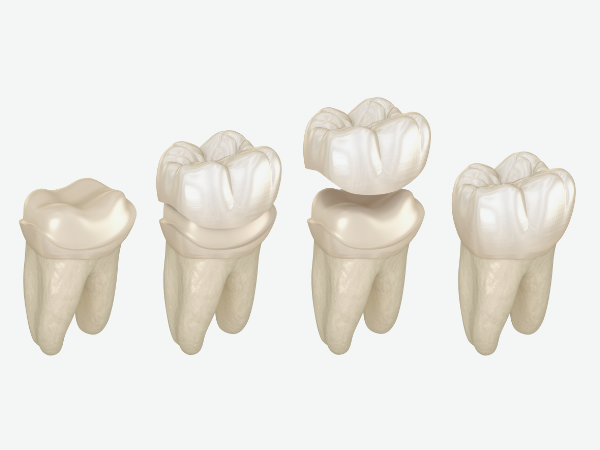
Maggok Dental Clinic_Crown
Every time you chew food,
the force can be transmitted through the crack,
causing pain.
So the key to treatment is
properly protecting the cracked area.
In such cases,
crown treatment may be needed to cover the tooth
and distribute the chewing force.
To put it simply, it’s like this.
What happens if you keep using
a cup with a small crack as it is?
Every time force is applied,
the crack will keep widening.
So if the outside is firmly reinforced,
it can be used longer.
Teeth are similar.
If the crack is left as it is,
every time you chew,
the gap keeps being stimulated.
That’s why in some cases,
crown treatment is performed to cover the tooth
and protect it by distributing the force.
- When the cause is a cavity
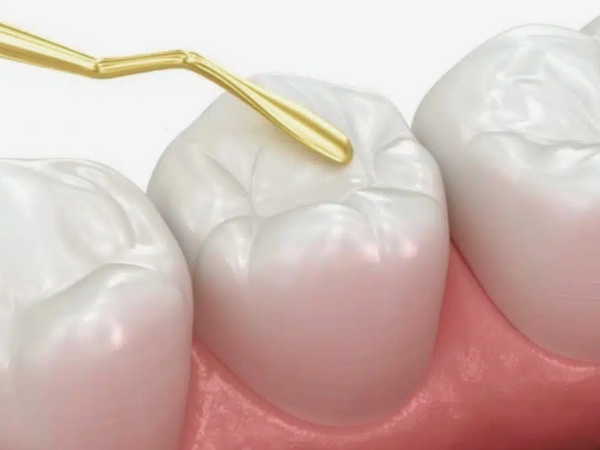
Maggok Dental Clinic_Resin
In particular, if the cavity has deepened
and progressed close to the nerve tissue inside the tooth,
the pressure from chewing can be transmitted
and pain may appear.
At this time, the treatment method
depends on the depth of the cavity.
If it is at an early stage,
it may be resolved with resin treatment.
However, if the cavity is deeper
and has affected the nerve,
there are situations where root canal treatment
followed by a crown may be necessary.
So the important thing is not
“whether there is a cavity or not,”
but how far the cavity has progressed.
- When the cause is gum inflammation
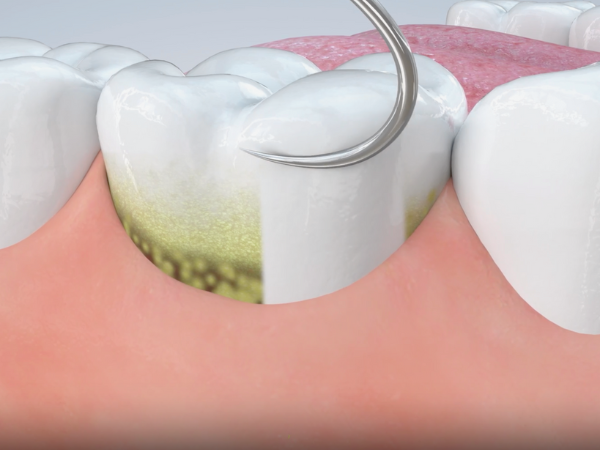
Maggok Dental Clinic_Scaling
Just because a tooth hurts
does not always mean the tooth itself is the problem;
it may also be due to inflammation of the gum tissue.
When inflammation occurs in the gums,
the alveolar bone and surrounding tissues
that support the tooth can weaken.
When you chew in this condition,
the chewing force is transmitted directly,
and pain may occur, making you think, “Huh?”
In this case, the direction of treatment is
not to work on the tooth,
but to first calm the gum inflammation.
Usually,
-
Scaling
-
Gum treatment
-
Inflammation management
are used to stabilize the gum condition.
As the inflammation decreases,
the pain felt when chewing often improves as well.
Key summary of today’s discussion
Treatment for tooth pain when chewing is
determined based on the cause.
-
Tooth crack → Crown treatment
-
Cavities progressing → Resin or root canal treatment
-
Gum inflammation → Gum treatment
That is why
accurately identifying the cause of the pain
is the most important thing.
When tooth pain occurs while chewing,
many people think like this.
“Is it a cavity?”
“Is it cracked?”
But in reality,
the cause is often completely different.
Maggok Dental Clinic_Seoul Dia Dental Clinic
That is why at Seoul Dia Dental Clinic,
we diagnose by checking the tooth condition,
whether there is a crack,
and the gum condition together.
Because
even if the pain is the same,
the treatment method changes completely depending on the cause.^^
In the next post,
we’ll cover a question many people are curious about:
"Tooth pain when chewing,
what happens if I just put up with it?"
We’ll explain this
in a simple and practical way,
based on Seoul Dia Dental Clinic’s approach.
The next post will also be prepared with a story that makes you think,
"Ah, I’m glad I knew this in advance."
So far, this has been Seoul Dia Dental Clinic,
carefully and thoroughly checking the condition inside the mouth in Magok.
[ This post was written for the purpose of providing correct information about dental surgery and procedures in accordance with the Medical Service Act. Since infection and side effects may occur after surgery, the procedure should be decided after sufficient consultation with a skilled medical professional. ]
[ Magok Seoul Dia Dental Clinic Tooth Pain When Chewing Series ]
-
Causes of tooth pain when chewing
-
Treatment methods for tooth pain when chewing
-
A tooth that hurts when chewing: problems that occur if left untreated