Hello.
A 3-minute walk from Exit 3 of Magaok Station,
Seoul Dia Dental Clinic, where even small changes in the mouth are never overlooked.
In the previous post,
we organized the pain of acute and chronic pulpitis,
such as cold-water pain and throbbing toothaches.
If you haven’t seen it yet,
you may want to read the post below first.^^
It will be a little easier to understand
how pulpitis pain appears.
But toothache has one characteristic.
It feels fine during the day,
but starts to hurt only at night.
After finishing the day and coming home, you wash up,
and lie down on the bed thinking you can finally rest a little.
You look at your phone for a bit,
and then the moment you think, “I should go to sleep now,”
suddenly,
the tooth starts throbbing... throbbing...
The tooth that seemed fine just a moment ago
suddenly makes its presence known.
So you end up thinking,
“Why does it have to hurt now?”
“It was fine during the day?”
In fact, this kind of toothache that gets worse at night
is a very familiar pattern in dentistry.
It often appears, especially when there is pulpitis.
So today is Part 3 of the pulpitis series.
Let’s look at why toothache gets worse at night.
What happens inside the tooth
when pulpitis develops?
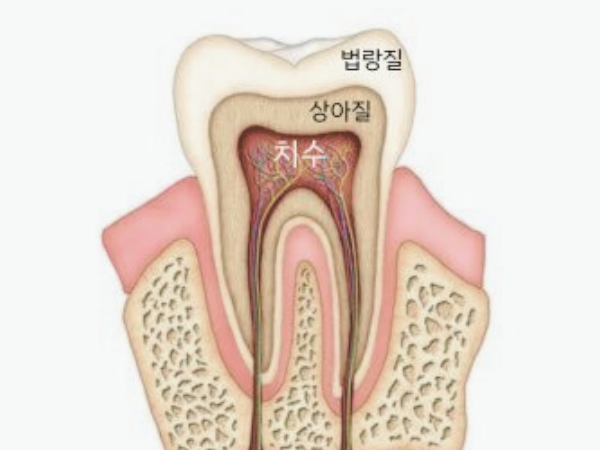
When you think of a tooth,
it is easy to picture something as hard as a rock.
But it has a layered structure,
with enamel on the outside,
dentin beneath that,
and pulp at the very center.
The pulp is tissue that contains nerves and blood vessels,
and it is also called the pulp chamber.
Simply put, you can think of it as a small room inside the tooth
where the nerves gather.
But the problem is...
when inflammation develops here.
If decay gets deep or a crack forms,
stimulation can pass through the enamel and dentin
and reach the pulp.
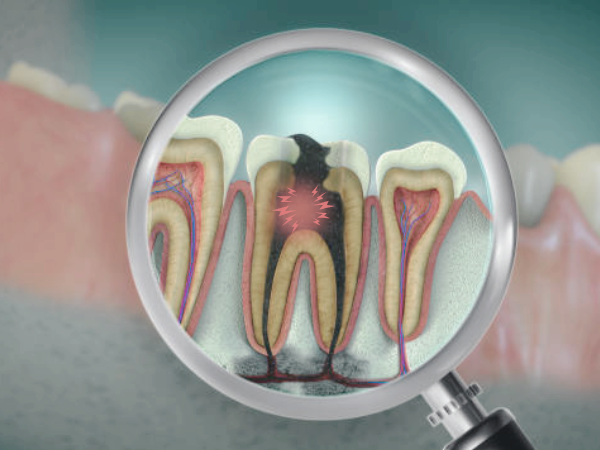
Magaok Station Dental Clinic_ Pressure inside the pulp chamber
Then the tissue around the nerves
inside this small room starts to swell.
But the tooth is surrounded by hard walls,
so there is no space for it to expand outward.
Eventually, as the pressure inside the tooth rises,
and the nerves become irritated,
throbbing toothache can appear.
And here is one characteristic
many people experience!
The pain gets worse at night.
“It was fine during the day,
so why does it suddenly hurt at night?”
Several changes that occur in the nighttime situation
can affect this together.
Why does the pain become stronger at night?
- When you lie down, blood collects more toward the head

Magaok Station Dental Clinic_sleep
The reason toothache gets worse at night
is actually related to body posture.
During the day, most people are standing or sitting.
But what happens at night?
You lie down in bed.
At that time, a small change occurs in the body.
More blood flow gathers toward the head.
Usually, you do not notice it much.
But if there is already inflammation
around the nerves inside the tooth, the story changes a bit.
As blood flow increases,
pressure inside the tooth rises slightly,
and that pressure can irritate the nerves.
So toothache that was tolerable during the day
can suddenly start throbbing
when you lie down at night to sleep.
- It is quiet around you at night
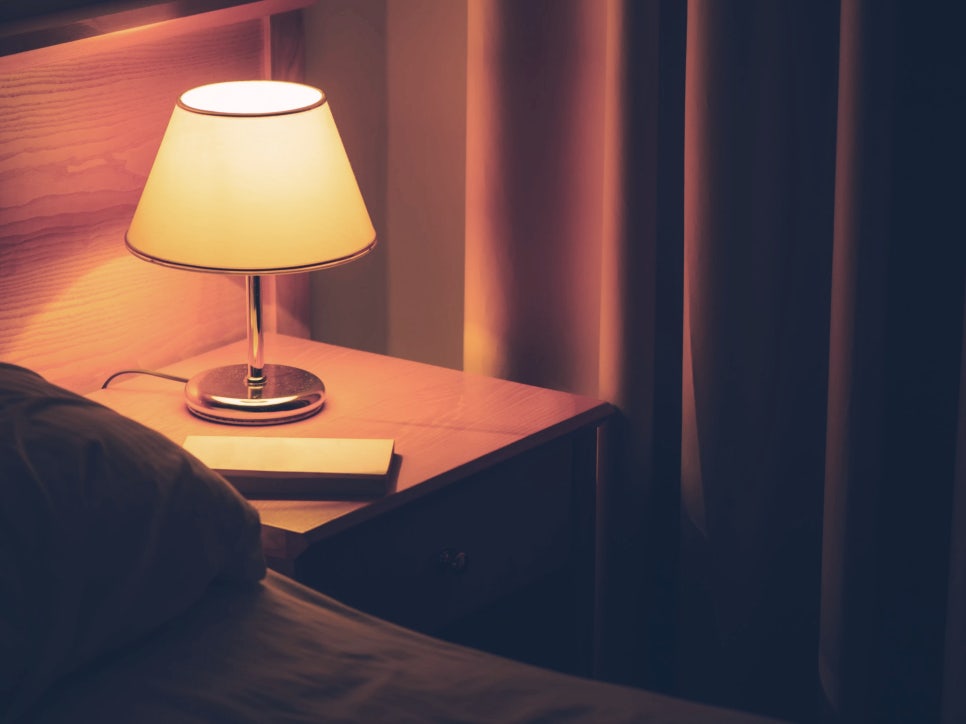
Quiet surrounding environment
Another reason toothache feels stronger at night
is the difference in the environment.
How do you spend the day?
You talk, work,
and move around throughout the day.
Because of that,
even if the tooth feels a little uncomfortable,
it is easier for your attention to be diverted elsewhere.
But the situation changes a bit at night.
The surroundings become quiet,
and the body starts to rest too.
Then what happens?
Pain that seemed like nothing during the day
suddenly starts to make its presence known.
As things get quieter, your focus on the pain increases,
so toothache that was tolerable during the day
can feel much stronger at night.
This is the kind of toothache that can appear

Magaok Station Dental Clinic_Toothache that gets worse at night
When there is pulpitis,
the following pain may appear at night.
-
Throbbing toothache at night
-
Tooth pain that gets worse when lying down
-
Toothache felt even while staying still
-
Toothache severe enough to wake you up
Of course, not all toothaches that hurt at night
are caused by pulpitis.
But if toothache gets worse when lying down,
or if there is repeated throbbing at night,
there may be changes in the nerves inside the tooth.
In cases like this, rather than thinking,
“It’ll probably go away in a bit...,”
it is better to check the condition of the tooth.
Let’s briefly summarize today’s post!
[Why toothache gets worse at night]
When pulpitis is present,
inflammation develops in the nerves inside the tooth,
and internal pressure rises.
In addition, when you lie down at night,
more blood flow gathers toward the head,
and because the environment is quiet,
your focus on the pain increases.
As these reasons overlap,
it is possible for toothache to feel
stronger at night than during the day.
Magaok Station Seoul Dia Dental Clinic
When talking about pulpitis,
this question always comes up next.
"If it is pulpitis, do I need root canal treatment?"
"When is root canal treatment necessary?"
So in the next post,
we will make it easier to understand
[the treatment of pulpitis and the situations in which root canal treatment is needed].
I hope you have a comfortable day,
chewing well and smiling well as always.^^
[ This post was written in accordance with the Medical Service Act for the purpose of providing correct information about dental surgery and procedures. Infection and side effects may occur after surgery, so you should make a decision about surgery (procedure) after sufficient consultation with skilled medical staff. ]
[Seoul Dia Dental Clinic at Magaok Station Pulpitis Series]
-
Causes of pulpitis
-
Symptoms of pulpitis
-
Why pain from pulpitis gets worse at night
-
Treatment for pulpitis (root canal treatment)
-
Problems that occur if pulpitis is left untreated
-
Prevention of pulpitis, early management