Hello.
A 3-minute walk from Magok Station Exit 3,
We are Seoul Dia Dental Clinic,
a clinic that never overlooks even the smallest changes in the mouth.
Last time,
we talked about
“Why does toothache always hurt more at night?”
If you haven’t seen it yet,
you can take a quick look starting from Part 3 below.
This time,
you’ll be able to follow it more easily and think,
“Oh, so this is the part that connects.”
Now then, today’s topic.
When it comes to pulpitis,
about 8 out of 10 people ask this question.
“If it’s pulpitis… do I have to get root canal treatment?”
“Can’t I just hold out a little longer?”
Yes, this one.
It’s a question we hear all the time.
So today,
we’ll clear up this confusing part once and for all.
When does pulpitis require root canal treatment?
What situations can be observed, and what situations cannot?
Without making it complicated,
we’ll explain it in a way that makes sense, in the Seoul Dia Dental Clinic style.
Alright, let’s go sort out the confusionㅎㅎ. ^^
If it’s pulpitis, is root canal treatment always necessary?
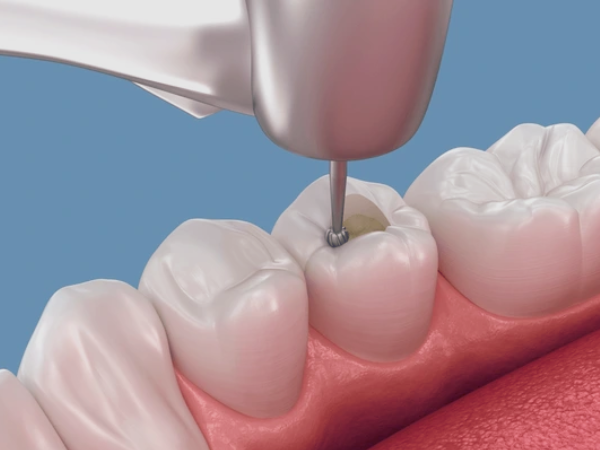
Magok Station Dental Clinic_Deep cleaning to remove decay
To get straight to the point,
even if it is pulpitis,
it does not always lead to root canal treatment.
Pulpitis also has stages.
If it is in the early stage,
it may settle down again
just by reducing stimulation.
For example,
if the cause is tooth decay, the decay is removed,
and the area causing irritation is
sealed with resin or an inlay,
or if the chewing force is concentrated on one side,
the bite is adjusted.
In this way,
if you block the path through which irritation enters,
the nerve can often stabilize again.
But there is one important point here.
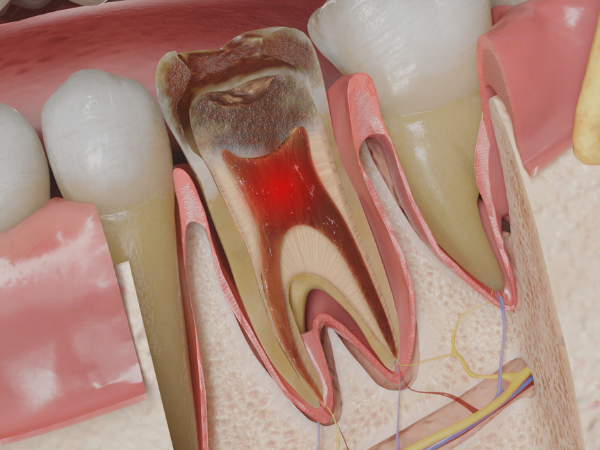
Magok Station Dental Clinic_Pulpitis with nerve damage starting
What if the nerve has already been damaged?
Then the story changes a bit.
At first, it may just feel like “a little sensitivity,”
but at some point it starts throbbing,
it bothers you even when you’re still,
and at night it becomes much more noticeable.
From this stage onward,
it is no longer just an issue of simple irritation;
it means the nerve itself is being affected.
To put it more simply,
it is the stage where discomfort that once passed by casually
starts to show up clearly.
By this point,
it is a sign that the nerve is already entering a state
where it can no longer hold out.
So at this stage,
rather than trying to endure it,
it should be seen as a stage where root canal treatment should be considered.
In other words, with pulpitis,
the treatment direction changes completely depending on whether it is
early stage or already advanced.
That’s the easiest way to understand it.
Wouldn’t it be okay if I just held out a little longer?
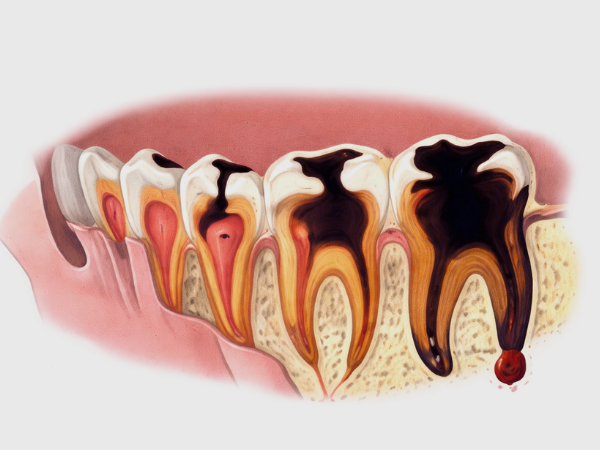
Magok Station Dental Clinic_Pulpitis that has progressed to the tooth root
This is something many people worry about.
“Should I just hold out a little longer?”
Everyone has thought this at least once.
If it is early stage,
there are cases where you can monitor the condition and watch it a little longer.
But if it has already progressed?
Then the situation is a bit different.
The longer you endure it,
the more the pain increases,
the more tired the nerve becomes,
and eventually it can affect the root area as well.
What started as,
“This should be fine~,”
can suddenly turn into,
“Why does it hurt this much?”
and the reason is exactly here.
So at this stage,
there is something more important than just enduring it.
Knowing exactly where your tooth condition stands right now.
This is the most important point in deciding the treatment direction.
Why is root canal treatment necessary?
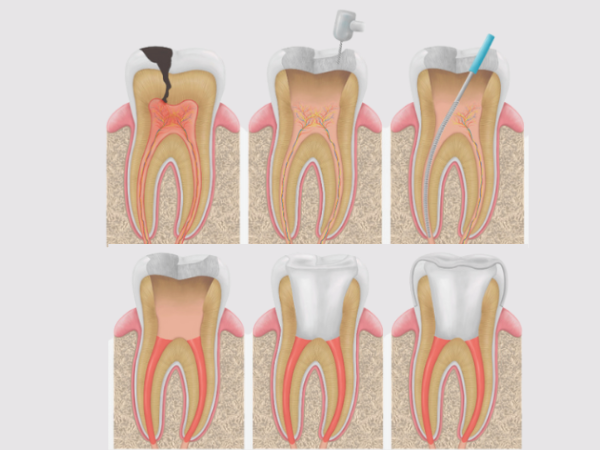
Magok Station Dental Clinic_Root canal treatment process
When people hear root canal treatment,
the first thing that comes to mind is
“removing the nerve.”
So some people end up thinking,
“Then is it over now...?”
But in reality, it is a little different.
Root canal treatment is not just a treatment that removes something;
it is a process of organizing the infected tissue that has become a problem
and keeping the tooth usable.
What happens if it is left as is?
The pain continues,
inflammation spreads further,
and eventually it can lead to a situation where the tooth is difficult to preserve.
So root canal treatment is not a treatment of giving up;
it is a choice that means,
“Let’s try to use this tooth one more time.”
That is the easiest way to understand it.
To wrap up simply
Early pulpitis can recover
But if it progresses, the nerve is damaged
In that state, root canal treatment is needed
Magok Station Seoul Dia Dental Clinic
Pulpitis does not appear all at once one day;
it progresses quietly, little by little.
So at first,
it is easy to think,
“This should be fine~,”
and let it pass.
But in the meantime,
the condition of the tooth
is gradually changing direction.
And at some point,
it turns into,
“Why does it hurt this much?”
Teeth do not give you as many chances as you might think.
So the important thing is one thing.
Rather than enduring it, check it now.
In the next post,
we’ll realistically talk about
[What happens if pulpitis is left untreated]
I hope you have a day where you chew well and smile well.
This has been Seoul Dia Dental Clinic.
[ This post was written for the purpose of providing accurate information about dental surgeries and procedures in accordance with the Medical Service Act. Infection and side effects may occur after surgery, so you should decide on surgery (procedure) after sufficient consultation with a skilled medical professional. ]
[Magok Station Seoul Dia Dental Clinic Pulpitis Series]
-
Causes of pulpitis
-
Symptoms of pulpitis
-
Why the pain gets worse at night with pulpitis
-
Pulpitis treatment (root canal treatment)
-
Problems that occur if pulpitis is left untreated
-
Prevention of pulpitis and early management