Hello.
We are Magok Seoul Dia Dental Clinic,
which does not overlook even the smallest changes in the mouth.
In the previous post,
we took some time to check
[when retreatment root canal treatment is needed]
and whether “I fall into that category.”
If you haven’t seen it yet,
you may want to read that one first.
Now, let’s get started on today’s topic in earnest.
When retreatment root canal treatment comes up,
a very similar question almost always follows.
“How is retreatment root canal treatment done?”
Your face may look calm,
but inside, the worry is already at 100%. TT
So today,
we’ll help ease your vague concerns about
[the retreatment root canal treatment process].^^
Without making it complicated,
we’ll explain it in an easy, realistic way
from the actual step-by-step process,
in the style of Seoul Dia Dental Clinic.
Root canal retreatment process: here’s how it goes
- Removal of the existing crown restoration
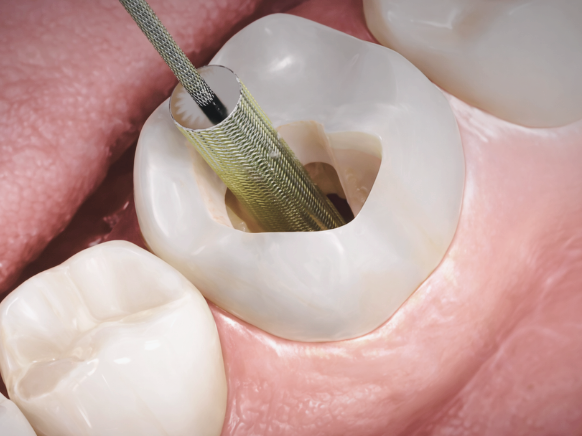
Maggok Dental Clinic_Removal of crown restoration
To perform retreatment root canal treatment,
the previously treated tooth has to be opened again.
To do that,
the existing crown (restoration) must first be removed.
“It looks fine on the outside... isn’t that a waste?”
Many people think this.
That’s true, it is a shame.
But crowns are attached much more firmly than you might think.
They are not structures that can just be pulled off;
they are fixed tightly with adhesive.
That is why it is difficult to remove a crown restoration
in one intact piece.
Because the crown changes shape during this process,
reusing it becomes difficult.
In the end, even if it feels wasteful,
removing the crown is a necessary step
in order to accurately check the inside and treat it properly.
- Reorganization of the existing root canal treatment (retreatment of the canals)
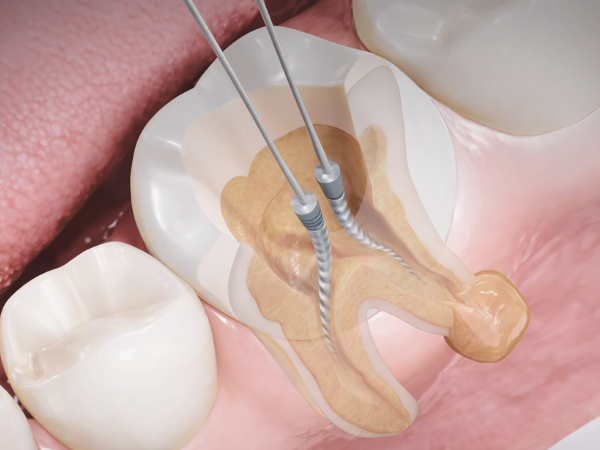
Maggok Dental Clinic_Reorganizing the filling material from previous root canal treatment
This is the most important moment in retreatment root canal treatment.
It is this step.
The previously treated root canals are reopened,
and any remaining inflamed tissue is carefully removed one by one.
“You’ve done it once already, so isn’t it easier?”
You may think that.
But it isn’t.
Because the structure has already been touched once, it becomes more complex,
and hidden spaces must also be found,
so it is actually a more difficult process than the first treatment.
That’s why this step
must be done thoroughly to the very end, not carelessly.
- Removal of inflammation and disinfection
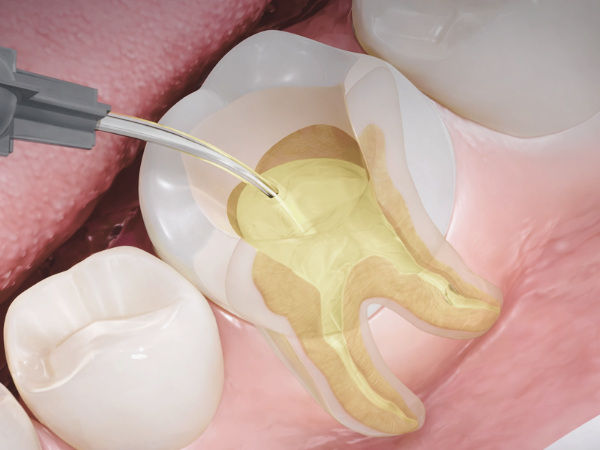
Maggok Dental Clinic_Disinfection after removing inflammation
“You just clean it once, and that’s it, right?”
That’s an easy assumption to make.
But retreatment root canal treatment
is not easy to finish in one session.
To reduce even the bacteria that may remain,
it has to be cleaned and disinfected repeatedly.
Sometimes it can be completed in one visit,
but in general it is often carried out over multiple visits.
- Root canal filling (sealing process)
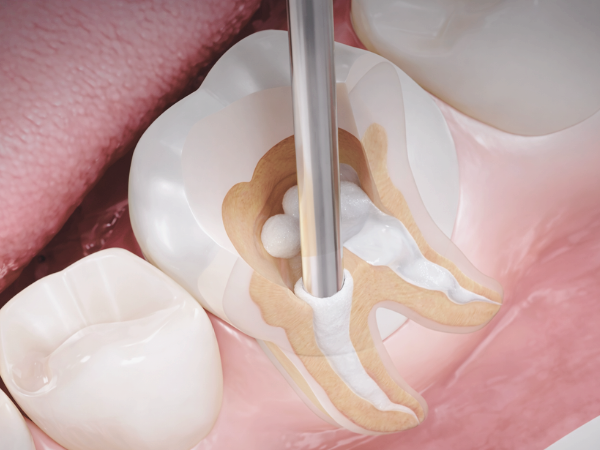
Maggok Dental Clinic_Root canal filling
Once the inside has been thoroughly cleaned,
that is not the end.
The root canals must be tightly filled and sealed
so that bacteria cannot enter again.
It’s like cleaning a room but leaving the door open.
Bacteria would come back in.
Only when the root canals are properly sealed
can the risk of inflammation recurring be reduced.
- Prosthetic treatment (remaking the crown)
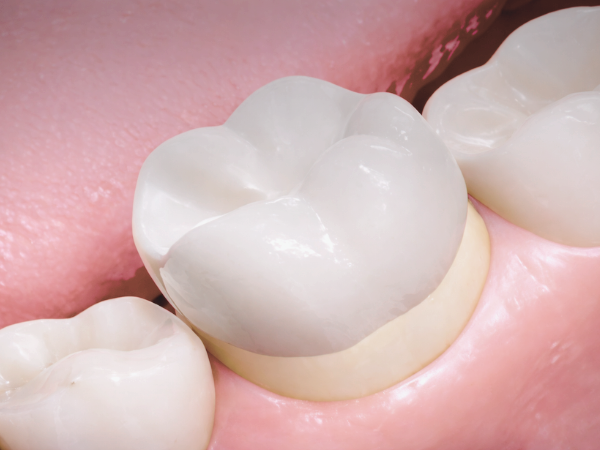
Maggok Dental Clinic_Placement after crown fabrication
This is the final step.
The treatment is finished by placing a crown
so you can chew again.
If only the inside is treated and not covered,
the weakened tooth can break easily.
So this step
helps make the tooth usable for chewing again
while also protecting it from fracture.
If you want to chew well and use it for a long time,
this finishing step is essential.
Alright, today’s topic,
[the retreatment root canal process],
shall we summarize it neatly?
Retreatment root canal treatment
is the process of reorganizing the inside of the root canals again,
disinfecting them, sealing them, and covering them with a crown.
In other words, it is a treatment
that carefully repeats a procedure that was done once before.
Maggok Seoul Dia Dental Clinic.
How is it?
Do you now have a better sense of it,
like, “Ah, so that’s how it goes”?
But here’s an important point!
Retreatment root canal treatment
is not a simple procedure;
it requires even greater precision.
So,
how thoroughly it is carried out
has a major impact on the outcome.
If your tooth hurts again after root canal treatment,
it is much wiser to have the condition checked once
rather than thinking,
“Should I just endure it a little longer...?”
“Ah, it’ll probably get better on its own~”
Please pause that thought for a moment.
A light checkup
is the way to keep the treatment from becoming more complicated.
At Magok Seoul Dia Dental Clinic,
we offer convenient consultations through
Naver TalkTalk / reservations.
Checking it without pressure,
that is the most realistic first step.
Next time,
we’ll cover [retreatment root canal treatment vs. extraction]
“Can this tooth be saved?”
“Or does it need to be extracted?”
We’ll come back with an easy-to-follow summary
of the most important decision criteria.
Have a delicious meal today,
and enjoy a day filled with cheerful smiles.
This has been Magok Seoul Dia Dental Clinic.
[ This post was written in accordance with the Medical Service Act for the purpose of providing accurate information about dental surgeries and procedures. Infection and side effects may occur after surgery, so you should decide on surgery (procedure) after sufficient consultation with a skilled medical professional. ]
[Magok Seoul Dia Dental Clinic Retreatment Root Canal Series]
-
Why Retreatment Root Canal Treatment Is Needed
-
Situations That Require Retreatment Root Canal Treatment
-
Retreatment Root Canal Treatment Process
-
Retreatment Root Canal Treatment vs. Extraction
-
Precautions After Retreatment Root Canal Treatment