Hello.
Near Exit 3 of Magok Station,
this is Seoul Dia Dental Clinic, where we help create smiling everyday lives.
In the previous post, we looked at the overall stages of cavity treatment.
Today, we’ll focus on the first stage: resin.
If you’ve ever been to a dental clinic,
or if you’ve received treatment for a cavity,
you’ve probably heard this word at least once—
resin.
"I got it filled with resin."
"I had resin treatment, and it was fine."
You’ve probably heard people say things like that before, right?
But when you’re the one
who gets diagnosed with a cavity,
you naturally start wondering.
Can my cavity be treated with resin too?
Is resin enough?
Today, I’ll answer those questions one by one.^^
What is resin?
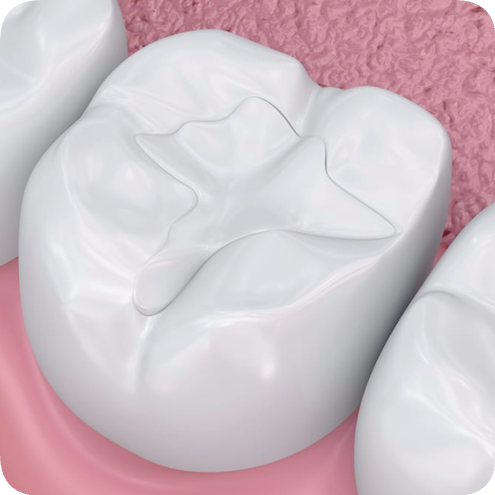
Magiok Station Dental_Resin
Resin is a synthetic resin material in a tooth-like color.
After removing the decayed area,
the material is directly filled in and hardened.
Because there is no need to make a separate prosthetic,
most treatments are completed on the same day.
Its biggest advantages are that it is fast, natural-looking,
and can preserve as much healthy tooth structure as possible.
Cases where resin is suitable
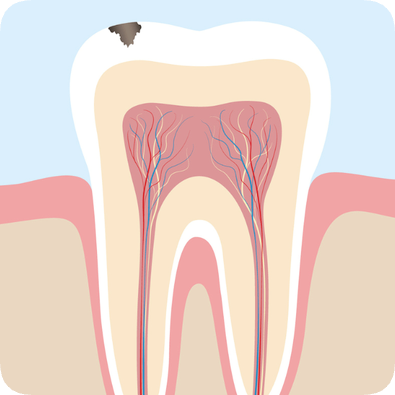
Magiok Station Dental_Enamel Cavity
- When the cavity remains only in the enamel
This is the early stage, when the cavity has formed only in the enamel,
the outermost layer of the tooth.
Because the area that needs to be removed is small,
resin can handle it sufficiently.
- When the cavity is small and not deep
This applies when the cavity appears only in a narrow groove on the chewing surface,
or on part of the tooth surface.
Simply filling it with resin can
restore function and shape sufficiently.
- Cavities in the front teeth or visible areas
Because the color can be matched almost exactly to the tooth,
it also looks natural aesthetically.
It is especially advantageous for cavities in the front teeth
or in areas that are easily visible.
The limitations of resin: in these cases, it is not enough.
Resin is not a cure-all.
If any of the cases below apply,
resin alone may not be enough.
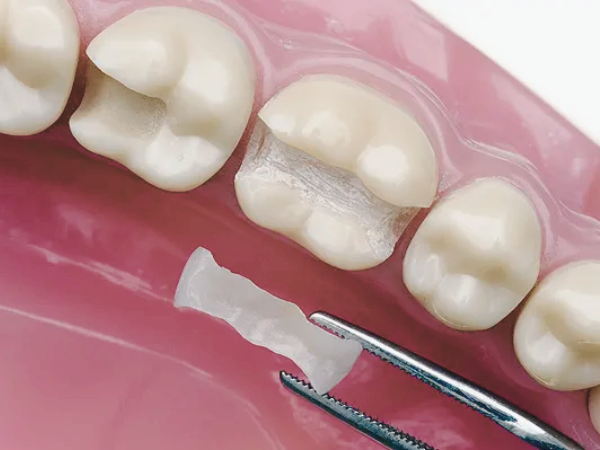
Magiok Station Dental_Inlay
-
When the cavity has progressed to the dentin
If the cavity has reached the dentin beneath the enamel,
both the extent and depth exceed the limits of resin.
In this case, inlay treatment should be considered.
-
When the cavity has spread across the entire chewing surface
When the chewing surface of a molar is widely damaged,
resin alone has difficulty withstanding chewing force.
Over time, the resin is likely to break or come off.
- When the cavity has spread between the teeth
If the cavity has spread between the teeth, that is, to the adjacent surfaces,
it is difficult to make resin fit tightly with precision.
In such cases, inlay is more appropriate.
- When resin has already fallen out repeatedly
If resin keeps falling off in the same area,
that is a sign that resin is no longer the right choice.
It is time for a fundamental solution.
Resin: the earlier, the better
The key to resin treatment is timing.
The earlier a cavity is found,
the easier it can be treated with resin,
and the less tooth structure needs to be removed.
On the other hand, if it is left untreated,
a cavity that could have been treated with resin can spread and require inlay or crown treatment.

Magiok Station Dental_Seoul Dia Dental Clinic
At Seoul Dia Dental Clinic,
after carefully checking the extent and depth of the cavity,
we will guide you step by step on whether resin is sufficient,
or whether the next stage of treatment is needed.^^
In the next post,
we’ll talk about "If resin isn’t enough, when is inlay needed?"
Please don’t miss it!
[ This post was written in accordance with the Medical Service Act for the purpose of providing accurate information about dental surgery and procedures. Infection and side effects may occur after surgery, so you should decide on surgery or procedures after sufficient consultation with a skilled medical professional. ]
[Magiok Station Dia Dental Step-by-Step Cavity Series]
-
What happens if a cavity is left untreated? A complete overview of treatment stages from resin to crown
-
If it’s an early cavity, is resin enough? Suitable cases and limitations
-
If resin isn’t enough, when is inlay needed? Timing and selection criteria
-
Cavity is too extensive for inlay—when is onlay chosen?
-
Resin vs inlay vs onlay vs crown: a side-by-side comparison of cost and lifespan
-
Why cavities return after treatment, and what to do to prevent recurrence