Hello.
We are Seoul Dia Dental Clinic, carefully looking after your oral health at Magok Station.
In the previous installment,
we talked about resin,
the first treatment option for early cavities.
Today, we’ll talk about the next step—when resin is not enough,
and when inlay becomes necessary.
Have you ever heard at a dental clinic,
"This can’t be treated with resin; you’ll need an inlay"?
You went in clearly to get a cavity treated,
but when the conversation turns to a bigger treatment than expected,
it can be quite surprising.
Today, I’ll explain step by step
why resin may not be enough,
and in which cases inlay is needed.^^
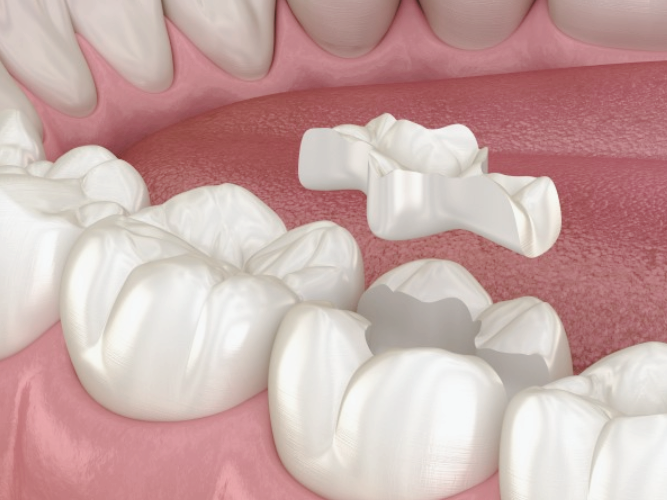
Magiok Station Dental Clinic_Inlay
What is an inlay?
The meaning of inlay is clear from the name itself.
'in(inside)' + 'lay(put)'
— placed precisely inside!
It is a method in which a prosthetic restoration is custom-made by taking a precise impression of the damaged area caused by decay,
and then fitted into place.
Unlike resin, which is filled directly on the spot,
the biggest difference is that it is custom-made with precision.
Like a puzzle piece fitting exactly into place,
it accurately restores the shape and function of the tooth.
When an inlay is needed
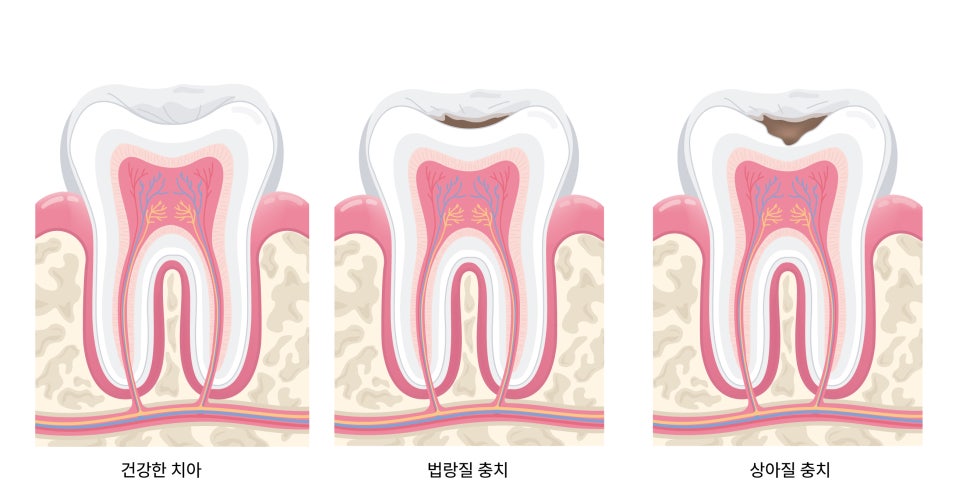
Magiok Station Dental Clinic_Caries Progression.jpg
- When the cavity has progressed to the dentin
This is when the cavity has gone beyond the enamel, the outer layer of the tooth,
and reached the dentin underneath.
From this stage on, it becomes difficult to manage with resin alone,
and a stronger, more precise restoration is needed.
- When the cavity has spread across the entire chewing surface
This is when the chewing surface of a molar is widely damaged.
On areas with strong chewing force, resin is more likely to crack or come off over time.
Because an inlay is a precisely made restoration,
its strength and fit are much better.
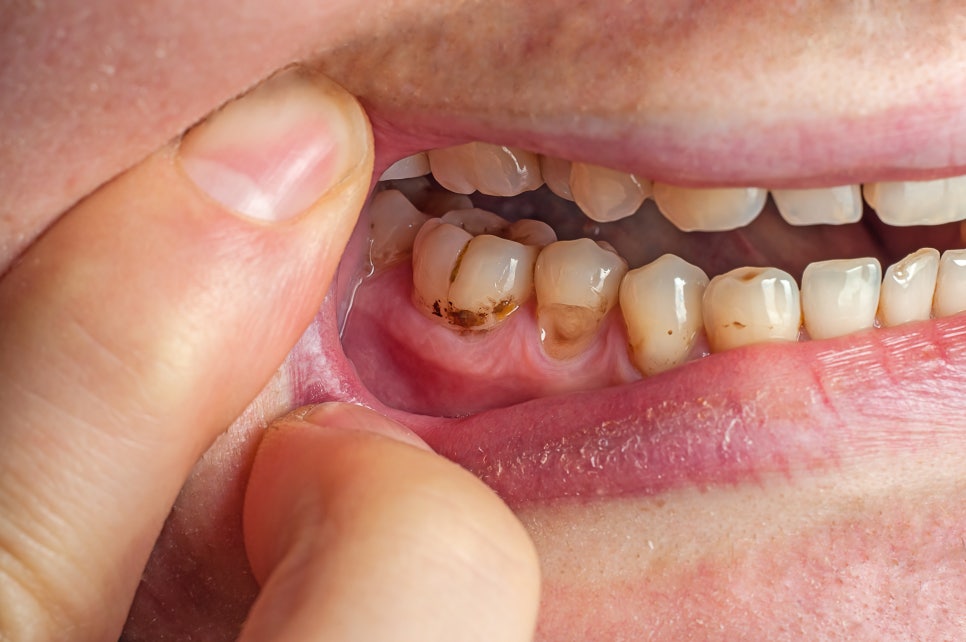
Magiok Station Dental Clinic_Cavity Between Teeth
- When the cavity has spread into the space between teeth
This is when the cavity has spread to the sides between neighboring teeth.
This area is difficult to seal precisely with resin,
and food can keep getting stuck there.
Because an inlay is custom-made,
its contact and fit on the adjacent surfaces are much better.
- When the existing filling keeps coming off
If resin keeps falling out repeatedly in the same area,
that area is already in a condition that resin can no longer handle well.
Continuing to patch it the same way is only a temporary fix.
It is time to resolve the problem fundamentally with an inlay.

Magiok Station Dental Clinic_Pain When Chewing
- When you feel pain while chewing
Even if the tooth looks fine on the outside, if you feel discomfort when chewing,
there may be an internal crack or infection.
In such cases, a detailed examination may show that inlay treatment is needed.
What is the difference between resin and inlay?
The biggest difference between the two treatments is the method of fabrication and strength.
Resin is quick because it is filled and hardened directly on the spot,
but it may lack strength in wider or deeper areas.
Inlay is made by taking an impression and custom-fabricating it before bonding it in place,
so it takes more visits, but the strength and fit are much better.
That is why inlay shows its true value the longer it is used.
If you delay an inlay, it can turn into a crown
If you miss the timing for an inlay, the cavity continues to spread.
When it reaches the nerve or damages the entire tooth,
what you need is no longer an inlay but a crown.
The treatment scope, cost, and time all become much greater.
An inlay is, in a sense, a proactive option to prevent the need for a crown.
Receiving treatment accurately at the right time is the wisest choice.

Magiok Station Dental Clinic_3D Oral Scan
At Seoul Dia Dental Clinic, we comprehensively analyze the extent and depth of the cavity, its location,
and the condition of the surrounding teeth before explaining whether inlay treatment is appropriate.
Because a same-day inlay is also possible,
you may be able to receive treatment conveniently with fewer visits.
We do not recommend unnecessary treatment.
We explain clearly and accurately only when it is needed.
Seoul Dia Dental Clinic at Magok Station
Today’s key summary!
✔ Inlay is a treatment in which a custom-made restoration is precisely fitted into the cavity area.
✔ It is needed when decay has spread to the dentin or when the chewing surface is widely damaged.
✔ It offers much better strength and fit than directly placed resin.
✔ If the timing for an inlay is missed, treatment may progress to a crown.
✔ Seoul Dia Dental Clinic offers same-day inlay treatment with just one visit!
Thank you for reading to the end today as well. ^-^
In the next installment,
what if the cavity has spread to the cusp?
I’ll talk about when an onlay is needed.
[ This post was written in accordance with the Medical Service Act for the purpose of providing proper information about dental surgeries and procedures. Since infections and side effects may occur after surgery, the surgery/procedure should be decided after sufficient consultation with skilled medical staff. ]
[ Magok Station Dia Dental Clinic Step-by-Step Cavity Series ]
-
What happens if you leave a cavity untreated? A complete summary of treatment stages from resin to crown
-
If it’s an early cavity, is resin enough? Summary of suitable cases and limitations
-
If resin isn’t enough? When inlay is needed and how to choose
-
Cavities too severe for an inlay—when is an onlay chosen?
-
Resin vs inlay vs onlay vs crown: a side-by-side comparison of cost and lifespan
-
Why cavities come back after treatment, and what to follow to prevent recurrence